To be, or not to be?

Right now, with the world as it is, and as it seems to be becoming, day by day by day, that really is the question, isn’t it? When the hits just keep on coming, do you unflinchingly absorb them all without complaint or word of dissent? Or do you step forward, perhaps exposing yourself a little, and be?

So this isn’t a time for being resolute, if you ask me. This is a time to stand up and be counted. Being calm in a messed up situation never made much sense to me ever since I read this line in a book long time ago:

If you can keep your head while others are losing theirs, perhaps you have misjudged the situation

Right now it feels like the world it’s losing its head.

I don’t feel I can really do anything about Gaza, or Ukraine, or Sudan, Syria, Ethiopia, Myanmar, Congo. War and Death riding around all over the place with their good friend Famine following dutifully behind. I can be outraged, and saddened,. I can speak to people about the rights and wrongs. I can talk to my kids about it so they understand that things aren’t all Playstation and football clips on YouTube. I can make the decision to continue to watch and read about these because shutting off from them because “it’s all too much” is one privilege I can decide to do without. But I can’t affect change in any meaningful way.

But there’s another one of that horse-riding frat party, isn’t there? Pestilence. Kind of the forgotten guy, Pestilence hangs around without anyone really knowing what he does or really what he means. But he knows he’s just as dangerous, and potentially more pernicious, than the others. Actually, he sets up the whole thing.

Four horsemen as frat party, imagined by AI. No, I can’t see AI replacing creativity any time soon either.

Pestilence is broadly understood to mean a plague or disease of some kind. Bubonic, Spanish Flu, Covid; they all fit the bill nicely. But the plague doesn’t have to just be a bacteria, or a virus. An idea, or set of ideas, can be as viral, and as invasive, as any biological threat..

There is a pestilence today that I can stand up to. That I can reject, and fight against with renewed vigour. That is the idea that equality or equity for a group has been under-represented, or oppressed, or otherwise not been given the opportunities that others have had, is somehow discriminatory to the majority. What self-serving, narrow-minded, deliberately reductive bullshit.

And it’s spreading.

More and more over recent years, and months, and now weeks and days, I’ve heard the idea that “DE&I has gone too far”. We’ve basically done the job on gender, right? In fact, you could say women’s rights have gone way too far – I mean, ” “International Women’s Day”?? When is International Men’s Day, eh?? [It’s November 19th. Or, if you ask a lot of women, it’s every single other day of the year too].. The whole LGBTQI+ stuff – every time I look they’ve added another letter haven’t they? Race too – I mean, we’ve had a black President and a brown Prime Minister, right? And everyone has one of these neuro-diversity labels nowadays, don’t they? And most of them are made up, or self-diagnosed anyway. “You can’t get promoted round here unless you’re a black one-legged lesbian”. I put that in quotes because I’ve heard of someone saying those exact words. Just banter though, yeah?

How far are we prepared to let this go? To be, or not to be?

A colleague and friend of mine who lives in LA told me that recently she (who is from Spain) and her husband (who is from Mexico) and their children who are born and bred in the USA had someone shout at them in the street to “go back to where you came from”. In their faces. In the faces of children. In California, of all places – supposedly the nerve centre of the “woke agenda” that tries to suppress the rights of people who want to be racist, or sexist, or xenophobic, or homophobic, just like they used to be able to.

And that was before the tsunami of executive orders, fired off with vindictive, revengeful, smug delight with the certainty that the world would bow down and comply in fear of retribution from them and their faithful followers. Personal, aggressive, arrogant retribution, meted out by billionaires who, despite the incredible power that money has given them, time and time again show themselves to have egos just as egg-shell thin as you would expect from a school bully, all powerful until someone stands up to them and sits them down in the playground with a fat lip.
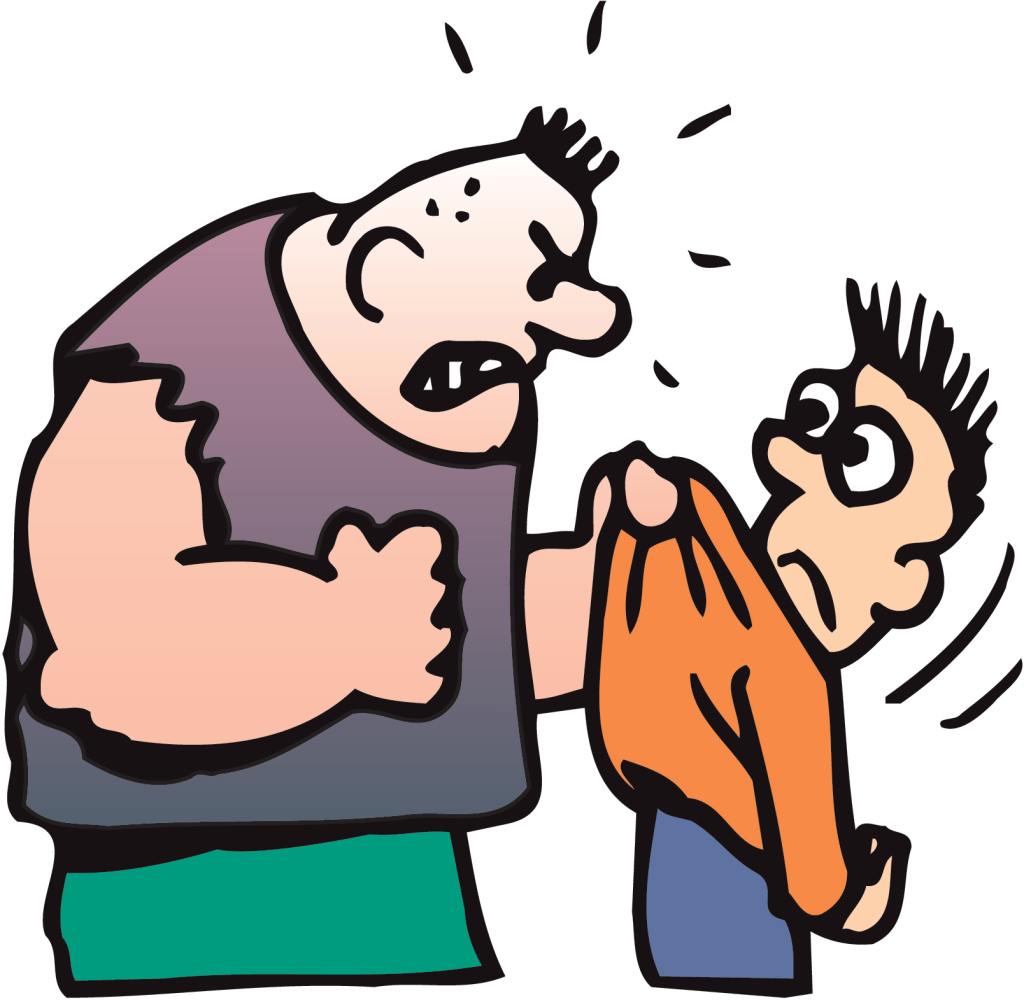
Except no one is standing up to them, are they? Some are positively falling over themselves to show their obedience.

Is anyone surprised that the man who originally created Facebook so that privileged young men at Harvard could objectify their female counterparts was falling over himself to show his allegiance to the old bigotry that couldn’t be spoken of for ages but has suddenly become okay again? Watching him say that there’s been too much “female energy” in companies, smirking as he did so, was sickening. The delight that he could, finally, say what he’s always thought. The misogynistic computer kid going back to where it all started, showing us that a leopard really never does change his spots, and sucking up to the bullies as a bonus.

I can’t really get my head around the fact that the second most powerful person [or possibly the most powerful – I’m really not sure and not sure I really care to work it out] in the most powerful country in the world can throw out Nazi salutes knowing he can get away with it.

How far are we prepared to let this go? To be, or not to be?

I wish it were just the US, I really do. As much as I love that country in so many ways, and for so many reasons, it is being taken down a dangerous path by some dangerous people. But of course the old adege holds here: “when America sneezes, the whole world catches a cold”. And this time, I’m sad to say, America has a virus that is already affecting the rest of the world.

Pepsi, General Motors, Google, Disney, GE, Intel, and PayPal have all removed references to diversity in their Annual Reports. [Disney, for crying out loud. DISNEY! You know, wonderfully diverse, sometimes camp, “we love everything and everyone” Disney? If they don’t think diversity is important then who the hell will?] Last year Pepsi said in their Annual Report that DEI was a “competitive advantage”. Presumably not as much a competitive advantage as dropping all that stuff and trying to get in the vending machines in the White House. [I’ve got news for you Pepsi – Trump prefers Coke]

And then only last week, the company I now work for followed suit, “sunsetting” DEI goals globally. [Lovely word to choose, right? I mean, who doesn’t love a sunset? So much more attractive and natural than just “cancelling”, or “giving up on” isn’t it?]. Word on the street is that my former employer are doing the same. More will come, without doubt.

It may not be on your doorstep yet, but it’s coming. It’s already here in some of the political language we’ve heard in our supposedly progressive and multicultural society in recent weeks: language that would have resulted in immediate denouncement and disgrace at any point in the last 40 or 50 years, but now somehow is just “saying it how it is”.

For various reasons I’ve talked about in these pages, I made a decision a long time ago to be active as an ally in areas relating to diversity, equity and inclusivity. Part of that was because I have loads of privilege myself, and felt I should use that to speak for others who didn’t. Partly it’s because despite all those privileges I’ve always personally felt like I didn’t quite “fit in” [something my ADHD diagnosis gave a reason for a couple of years back]. To be honest there’s also a part which looks back on me as a younger, less thoughtful and considered man and wishes I had done better back then. Stepped up. Occasionally stepped back I guess, too.

Whatever the reason, the fact is that this has become part of me now. So when the question is whether ’tis nobler in the mind to suffer the slings and arrows of outrageous fortune, or to take arms against a sea of troubles and, by opposing, end them, then I know where I stand.

I’m reminded of a quote [largely misattributed to Edmund Burke but he never actually said but let’s not worry about that right now] which says:

The only thing necessary for the triumph of evil is for good men to do nothing

So whatever you decide to do about this virus… this pestilence… don’t do nothing.

You can do something under-the-radar which in a small way will send a small message – a drop in the ocean, sure, but still part of the ocean. Cancel your Twitter account [sorry, it’s “X” isn’t it now? How cool!]. Cancel your Facebook account – or at the very least, “sunset” it for the time being. Decide against buying a Tesla, or sell the one you bought before the whole fascism thing.

Or you can do something more. Get involved in DE&I wherever you work. Make it explicitly clear that you are part of the cure for this world of ours, not part of the pestilence. I dunno: maybe just wear a bloody t-shirt or a badge or post something somewhere so people know where you stand. But do something. This isn’t a time for calm, it’s a time for the fire in your belly to drive you. Get angry. Get involved. Step up.
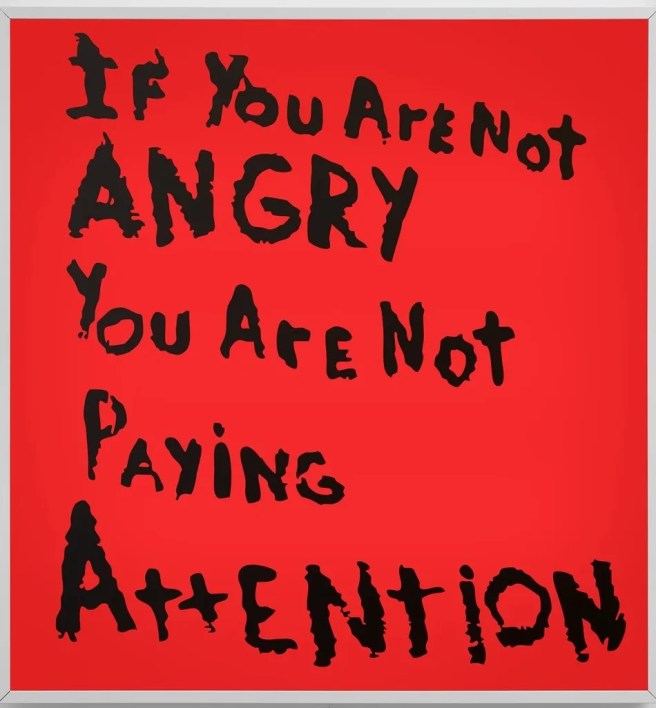
Whatever you decide to do, just don’t do nothing. To be, or not to be, remember?

I know it’s scary to step forward. It’s really hard to decide to stand up and make it clear to the world that you will fight for what you believe to be right, to fight for your rights and for the rights of others. But for the sake of whatever gods you may believe in, or for the people you love, now is the time to take a stand. You can’t stand and watch.

As JFK said in a 1962 speech [about going to the moon, I know, but this fight feels just as big a challenge at the moment:

We choose to… do [these] things, not because they are easy, but because they are hard; because that goal will serve to organise and measure the best of our energies and skills, because that challenge is one that we are willing to accept, one we are unwilling to postpone, and one we intend to win…

Yes it’s hard. Yes it might be difficult to know what to do, or how to respond, or where, or when. But work it out because that is a challenge you are willing to accept, unwilling to postpone, and intend to win.

If you’ve read this far then I know you’re with me on this. Find your space to make your mark. I’ll do the same, I promise.

To be or not to be?

That is the question. You know the answer.
Saying No

When I was a kid, I often received a kind of “holding pattern” answer to the inevitable requests that come from the little humans my patents had created: humans without self-control or judgement or knowledge of nutrition or of money, or of their own limitations, or the incredible responsibility a parent feels for the physical and psychological and moral safety of their progeny…

“Can I have an ice cream?”

“Can I go on the big slide?”

“Can I go to the sweet shop with my sister?”

“Can I have those rugby boots?”

“Can I stay at Caroline’s house on Friday night?” [Hey Caz!]

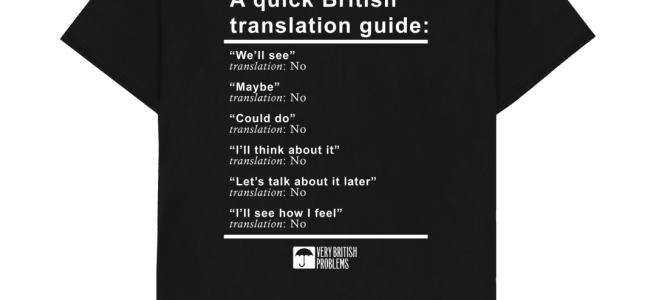
The answer I would get would be meaningless and, for a young human, incredibly frustrating, but something that I now know was just a “please hold, caller” to give my Mum or my Dad the time to consider, or confer, or simply come back to when they had the brain space to do so in their busy lives. But on a fairly regular basis, without the insight that comes with a few more decades around the sun and a couple of sons along the way, I was left with the frustrating:

“We’ll see.”

My sister and I would joke that when Mum said “we’ll see” you were more likely to get a “yes okay” down the line, whereas with Dad it was basically a delayed “no” which delayed the (also inevitable) conflict that response would bring.

I get it now, of course. I don’t use “we’ll see” with my boys not because of any rejection of the phrase from a place of “unresolved childhood trauma” [though let’s be honest, we all have plenty of that knocking around] but because I’m more likely to say something like “I’ll need to talk to your mum about it” or “I haven’t got time to think about that right now, let’s talk about it later”. Still buying myself time, but will at least attempt to give some kind of reason for the delay.

When I (or we) get to the decision I’m also more likely to explain the decision-making process too, all with the intention of being respectful to my boys’ questions but probably having the effect (in the moment at least) of being sanctimonious rather than sympathetic…

If the truth be known, I’m much more likely to bring in the “holding pattern” response if my initial response to it is a fairly obvious “No”. If it’s a fairly obvious “Yes” then I’ll crack on and get the little buzz of being able to give my little human what they wanted. They’re happy, I’m happy.

Happiness is messy

And who doesn’t like making people happy, right?

Yes will do that for you. Yes is, by its very nature, positive. It’s easy. It’s calming. Saying yes protects relationships and, in effect, ends the conversation; or at least that part of it. The tense part where someone asks for something and you have the decision to make. Do I say yes, and make them “happy”, or say no, and make them “unhappy”.

We do it in every part of our lives, in every relationship. Home, friends, work. Everywhere we have demands on our time, our energy, our brain power, and everywhere, every single day, we have to make the decision of whether we say yes or no.

And, let’s be honest, we all shy away from a no, now and then, right?

That’s because no is uncomfortable.

No is complex,

No needs explanation, or resolution,

No could result in conflict.

And no usually needs another conversation.

So we avoid it. Either we put it off – another problem for another day but crucially not now – or we say yes to things we don’t want to do, or don’t think we can do, or aren’t sure about, to avoid having to say NO.

Demands on our time. Social engagements. Work events. Meetings. Projects. Deadlines. Commitments.

Relationships, sometimes. Other people’s problems.

Hell, sometimes we even say yes to things that we know will mean other people have to do things they don’t have time, or won’t want, to do. Saying yes on behalf of other people because we don’t want to say no ourselves.

Since the turn of the century [such a grand way of saying “for over 20 years”!] I’ve worked in advertising: a service industry where we answer to clients who have needs and demands and timelines and deadlines and pressures. There’s an old adage that every client wants everything now, perfect, and free… or as close as possible to each of those, all the time. The pressure so say yes to the people who, effectively, pay your wages and the wages of everyone around you is pretty overwhelming. Nobody likes to hear no, so nobody likes to say no.

And guess what? Pretty much every major issue I’ve ever experienced in work over the years – of my making or the making of others – comes from a point somewhere along the line where someone should have said NO, but instead they said YES.

I started a new job recently and, like anyone in this situation, I find myself wanting to ingratiate myself into my new social group.

The temptation to be agreeable, to fit in, to say yes… that’s something that I have deep, deep inside me, as a social animal who genetically has not moved on one bit from the time where if I didn’t fit in, I might not survive the winter. Like my ancestors thousands of years ago, I’m trying to get closer to the campfire, hoping to get some of that delicious elk that was trapped last week. [No, I’ve no idea if elk is delicious either. But I have feeling my great200 grandparents might have enjoyed a bite or two]

But there’s a phrase for someone who just does that, isn’t there: a “Yes Man”. Someone who just goes along with things for an easy life, whether they agree or not. Someone without conviction, or ideas, or anything to add.

I can be accused of many things, I’m sure, but being a “Yes Man” isn’t one of them.

We are all here, surely, to have a point of view on things, and challenge where there needs to be challenge, and make the point that should be made when it needs to be made? We’re here to question, and grow, and progress, and push things forward.

I think it’s time to reframe how we think about NO.

NO is not negative. Or at least, it doesn’t have to be.

NO is powerful. It denotes that there are boundaries. It shows that there has been thoughtfulness and consideration.

NO is constructive. It’s not the endpoint of a discussion, but the start of a new one which is perhaps more balanced.

NO is courageous. It renounces the path of least resistance and chooses the path that is right for you.

Saying NO is self-care, sometimes. Giving yourself space.

That’s true in all our parts of life.

You know when it’s a NO… so do you say it?

I know it’s not easy but I also know that it’s really, really important.

In fact, I could probably say that some of the most important moments in my life are when I’ve decided to say no. To trust my instincts and say no and accept the personal angst and turmoil that comes with that because I know that’s how I stick close to my values and I know that the outcome will be better if I do so as a result.

To have values. To have boundaries. To have the strength and the fortitude and the courage to say no, when the answer needs to be no. With the knowledge that no doesn’t stop the conversation, but actually opens up another one.

No isn’t negative.

What we choose not to do matters

Our ability to say NO is our ability to take charge of our own destiny: an expression of our self-worth and intellectual honesty.

I’m not saying you should start saying no to everything. You’d very quickly find yourself a good distance away from the campfire if you did, nibbling forlornly on some bits of bark that you’ve found which someone told you were nutritious but taste grim.

I’m also not advising being too British about it, because as you probably know if there were a World championships for beating around the bush rather than saying what you actually mean we would come second because we’d be too busy beating around the bush to be first…

…all in some strange mix of politeness and awkwardness that is, I’m sure, incredibly frustrating for most other people, particularly our straight-talking cousins from “across the pond” who quite rightly think that when we say “hmm, that’s an idea” that we think it’s an idea worth considering rather than the most offensive apology for an idea that we’ve heard since teatime.

All I’m saying is give it a shot. Practice a bit, even. The next time you know the answer isn’t a yes, then please, gracefully and politely, and with an embracing of the conversation to come…

Say no. Or a version of it, at least.

You owe it to yourself, personally and professionally.

Hey, if you want to borrow “we’ll see” from my parents, then you go right ahead. You can have that one courtesy of my childhood.

As long as I get that ice cream, of course.

The Four Agreements

I don’t know about you, but whenever I give someone a book, particularly one very specific to them, I write a little note in the front along with the date. I do it partly because I really appreciate it when someone does it for me, and also perhaps partly because I like the idea of marking the moment in time so that in the future it’ll pop up again.

Perhaps it’ll be read by the person to whom I gave the book, a single tear of reminiscence rolling involuntarily down their face as they recall the thoughtful gesture and how lovely I was. Or perhaps it’ll be read by someone decades from now who’s picked up the book for next to nothing at a charity shop and will never know how lovely I was except to know I’m the kind of person who writes a note in the front of a book. And maybe, just maybe, they will decide that is something they will do from that point on… thereby making the world a slightly better place, forever and ever into the future.

Yes, I do overthink things sometimes, I’ll give you that.

Anyway, it just so happens that in the middle of last year, right in the middle of a very challenging time for me personally (which, if you’re interested in such things, you can read about here), someone I didn’t really know very well came up to me holding a book, and then handed me that book. Their personal copy of a book they carried with them at all times, a book wherein they had highlighted passages, and made the odd note. Handed over now to me, for me toread and to keep.

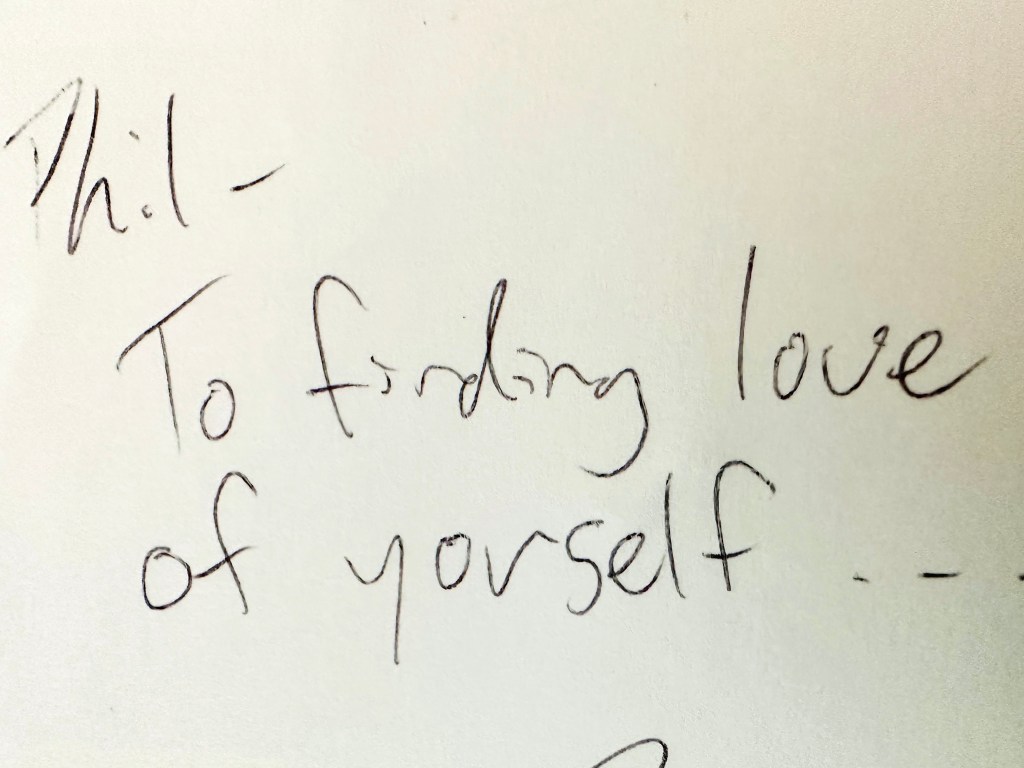
And yes, they had written inside:

Underneath, they’d written their name, and their personal contact details

First off, it struck me then and still does today as an incredibly kind, thoughtful, open gesture. Let me give you something that’s helped me, in the hope that it may help you too.

But just as much as that, I was fascinated as to what the book might be. What is the kind of book that someone carries with them, at all times, and highlights passages and makes little notes in pencil in the margin, and is then moved to inscribe and hand to someone else? It must be a book with such wisdom, such guidance, to drive someone to feel they simply must pass on to someone else in their time of need.

What book holds that kind of potential impact?

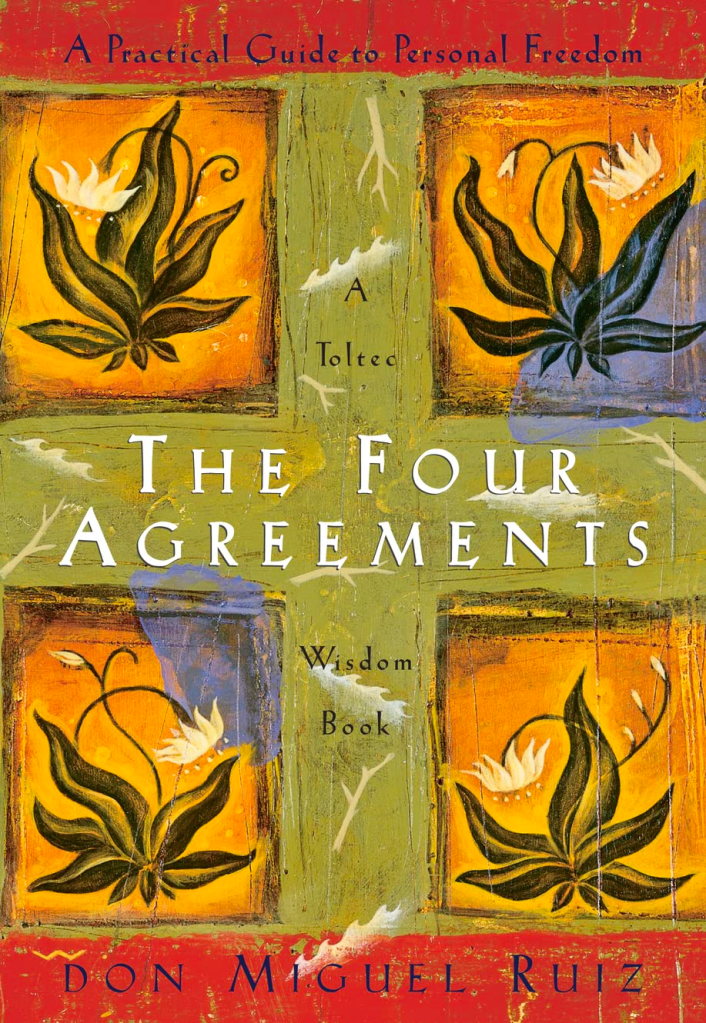
The book in question is called The Four Agreements, written by a chap by the name of Don Miguel Ruiz. I’ll be honest, the first time I started into it I liked the thinking but struggled a little with the way it’s written. That’s because Don Miguel Ruiz is a shamanic teacher and healer, and he writes in a very unconventional, conversational style about teachings from the ancient Toltec culture in central Mexico. It’s not written like a classic business or “self-help*” book because it’s not written by a classic business or “self-help” author, and as you can see below it’s not either of those things anyway, it’s a much more than that: a Practical Guide To Personal Freedom. So you have to get into the way it’s written, or you have to get past the way it’s written. But you can’t ignore the way it’s written.

[I hate that I feel the need to put “self-help” in “” but I do so because it’s been hijacked to be used pejoratively by people who think that “self-help” is the sort of thing that those awful woke snowflake Remoaner lefties need and which any hard-working normal person knows is a load of bloody nonsense and anyway who needs introspection when you can just judge other people from a position of blithe, dismissive self-ignorance? From being a positive, it’s become a negative, despite the fact that every single thing I’ve read with the intention of helping myself has, in some way, actually helped my actual self. But anyway, it’s in “” so we can leave it there and crack on…]

Whether you get into or get past, the idea of a Practical Guide to Personal Freedom is immediately something that appeals, right?. I mean, who doesn’t want Personal Freedom, and what better than a Practical Guide to get there? I’ve been following the Massively Impractical Guide to Personal Angst in my own brain for years and that’s been a bit of a chore at times, to say the least.

And once you’re in, the simplicity of The Four Agreements sing out as a sort of rulebook for a life which doesn’t fall into all the pitfalls we all fall into, all the bloody time. So simple that it’s a bit annoying no one mentioned them before, really.

So to avoid you having to find all this stuff out yourself, I’ll outline them here, with my take on what they’re all about, and you can save yourself a lot of future angst. Sounds like a plan, right? Great, let’s roll.

This is the front cover. You can’t miss it.

1) Be impeccable with your word

Don’t talk shit, basically. Don’t lie, don’t make stuff up, don’t brag, gossip, don’t collude, don’t say unkind things, don’t talk about people behind their backs. Actually, don’t say any of that shit to yourself either. Tell the truth to yourself and to others. As good ole’ Brené Brown would say “Clear is kind, unclear is unkind”.

Am I good at this? Only in parts. I’m not one for collusion and I don’t brag, but I do gossip sometimes and on a bad day I can be quite cutting about people, particularly when I feel I’ve been “wronged” in some way. I can also talk shit about myself, to myself. So this is one I have to come back to, and remind myself of, to keep it fresh and real. This much I do know: nothing good comes of speaking ill.

2) Don’t take anything personally.

Self-explanatory this one. But damn – how can you not take things personally when you are about you? If something happens to you, or someone does something to you, it’s you, right? It’s personal to me because it’s happening to me!

Except, of course, it really isn’t. This is one I’ve kept really close to me since I first read it – the idea that whatever someone does or says, howsoever it may affect you… it’s not about you. It’s about them.

It’s about how they see the world, and themselves in the world; about the pressures they have put on them and the pressures they put on themselves. It may affect you in horrible ways, but even then, it’s not personal. It’s not about you, it’s about them.

If someone treats you badly, it’s because in their mind they are under pressure or under attack somehow. If someone puts you down, it’s because of how they experience themselves when they are with you. If they really, really seem to just hate you for no reason you can work out, then don’t bother trying to work it out because the answer to “what have I done?” is quite possibly “nothing”. Because they don’t actually hate you – the you that you know and know to be fundementally good – they have negative feelings towards the “you” they have created in their mind because of their own issues. It really isn’t about you.

I know this is difficult. Believe me when I say that even with this agreement not to take anything personally sitting happily in your head in all its logical, sensible splendour, it’s still really, really difficult. I’m not saying you should just brush it off or, even worse, get thick-skinned to protect yourself. Those people who claim not to give a fuck about anything people say or do to them are lying to you and to themselves. I’m not saying you can’t be upset. Be upset. Just don’t take it personally. Because it’s not about you, it’s about them.

Oh and by the way, unfortunately, it works both ways. So it’s also true that If someone talks you up or lauds your every minute action and deed, it’s really not about you, it’s about what they think or hope for or need in the relationship. I know you’re brilliant, but just don’t take it personally.

Trust me: this one is a keeper. Don’t take anything personally. It’s not about you, it’s about them.

3) Don’t make assumptions

You know what they say: “Assume” makes an ass out of u and me. That trite little saying doesn’t stop us from doing it though, does it?

We make assumptions because we’re trying to make sense of the world without all the information to hand. Our brains don’t like stories without an ending. We seek reasons and endings, and so without a reason or an ending we just go and make up our own.

Assumptions are the basis of pretty much every conflict you’ve ever had – the story you’ve made up in your head about what someone else is thinking, which you then judge them for without them even knowing. They become the loser in a game they didn’t know they were playing. And let’s be honest, we don’t often cast ourselves as the villains in the piece.

Assumptions leave you wide open to be disappointed, or surprised, or shocked and appalled when things don’t turn out as we guessed they would. Assume it’s in the bag and you’ll find that someone who assumed otherwise put in more effort than you and walked away with the prize. Assume they won’t want to talk to you and you’ll never know what might have been. Assume there’s no point in applying for that job, and I promise you that you 100% will not get that job.

This is my biggest Achilles Heel. I love a good story, and I can’t help telling myself all the stories I’ve created about my assumptions. I know that this is how my brain works, though, so I’m trying to be disciplined in checking those stories as I go and removing the assumptions that may be driving action, inaction, or reaction.

4) Always do your best.

I love this. So simple. The kind of thing we were told as kids and now tell our kids because that’s what you tell kids… without really listening to what we’re saying and taking our own instruction.

If you always, always simply do your very, very best, you can end the day knowing that you couldn’t have done anything more. It’s the drive to get up in the morning and the solace to sleep soundly through the night. Just do your best. Personal to you, and only you know what your best is. Don’t worry about what other people are doing. Don’t cut corners.

And be okay with the idea that your best varies, too. Your best when you’ve had the elusive straight eight hours of uninterrupted sleep and woken to the birdsong and the sun is coming up and the day ahead looks challenging but manageable isn’t the same as your best when you’ve been awake through the night with your mind racing because you know you’ve got that difficult conversation you have to have later and there’s no milk for your morning cuppa and the dog just slobbered on your black jeans so it looks like you’ve had a giant snail crawling. up your leg. But just do your best, no more and no less, every time, in everything, and you simply cannot go far wrong. It’s actually quite freeing.

So there you have it. The Four Agreements, which I was given by a very kind man who felt I needed them at a difficult time in my life. Again, what a lovely gesture.

And what simple agreements they are. I can’t tell you that I stick to them all the time, but I can tell you that whenever I lose my way, it’s because I’ve not done one or more of these.

Maybe just make a note of them somewhere and consider in all honesty, where you’re strongest. on these and where you’re not. Perhaps consider that difficult thing that’s on your mind at the moment and see if there’s a chance that one of these agreements might have avoided it – or might even get you out of it. Be impeccable with your word. Don’t take anything personally. Don’t make assumptions.

And whatever you do today, just do your best. No more, no less. I reckon that’ll be more than enough for whatever today has in store for you,

[If you’re interested in getting a copy of said book for yourself, then you can find it here or at all good remaining physical book shops. I’d give you mine but I’m not quite ready to give it up yet.]

Despair, and Courage

I’ve always been interested in words – where they come from, how they develop and change over time, and how we use them. I love the way that the English language is this crazy melting pot made of Old English, Danish, Norse, French, Latin, Greek, Chinese, Hindi, Japanese, Dutch and Spanish, and a bunch of others in various amounts and we all just use it like it ain’t no thing.

 [For your information, our vocabulary includes words from around 350 other languages according to the Encyclopaedia Brittanica. I know, I thought that was an unrealistically large number too, but apparently, there are 7,117 distinct languages spoken in the world today… although 23 of those cover more than half the world’s population. You’re welcome].

I love how we play with language and how language plays with us, too. The alluring alignment of alliteration. The way words like “imagine” trigger the imagination parts of the brain whether you like it or not. The way that we know that there are rules around how we use our language that we all know but don’t even know that we know…

So when I say that we have a cute little old yellow French wooden ladder in our kitchen, it sounds perfectly fine… but if I said we have a French cute wooden old yellow little ladder, you’d think I had lost my mind.

That’s because there’s an unwritten rule that we do adjectives in a certain order to make it sound right, which [as I know you’re wondering] goes, in order: Opinion; Size; Age; Shape; Colour; Origin; Material; Purpose.

[Don’t take my word for it – there’s a whole book about this and other pleasing peculiarities you can find here]

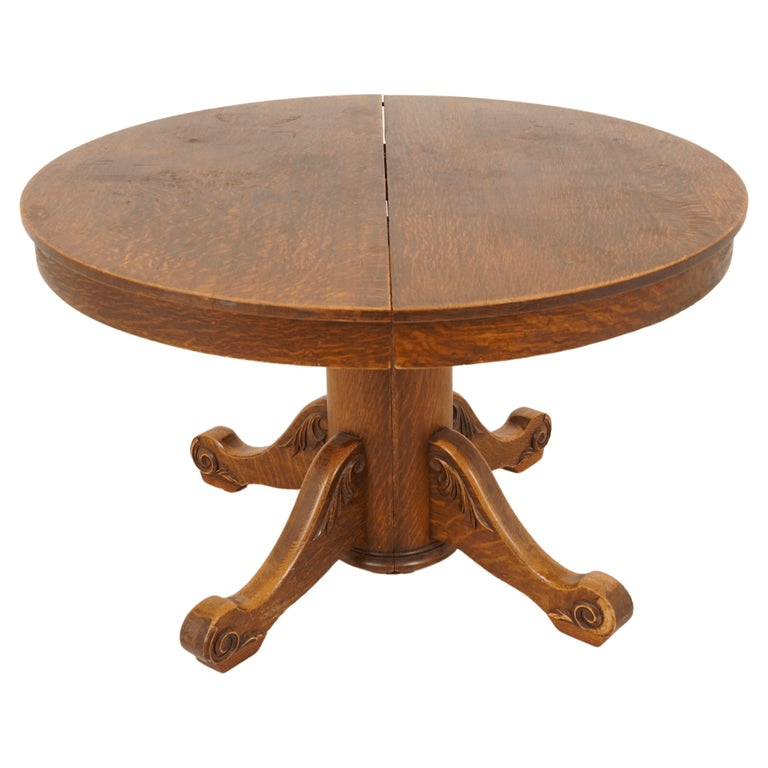
I didn’t even add in the shape in my ladder example above. But you know that an old round wooden table sounds right, whereas a wooden round old table sounds odd.

A wooden round old table

[If you’re reading this as a non-native English speaker this may all sound like nonsense of course, but it’s stuff like this that makes the language such fun to learn, I’m sure! Idiosyncrasies that we wouldn’t be able to tell you, but will know if you get wrong. If it makes you feel better it even happens between English-speaking countries – so as Brits, we would happily say “hello mate” to an individual, but when our American cousins greet a group of us with “hello, mates!” we quietly smirk into our cup of tea.]

So yeah, I’m fascinated by words. They’re interesting.

Oh yeah, and I guess they can be incredibly powerful too. In case you thought this was going to be a lazy wander around our language. We’re going in hot, folks. Hold on tight.

Words can bring comfort, give direction, even show a way towards freedom. And they can close us in too, forcing division and leaving marks on our souls.

[Remember that old kids’ rhyme “sticks and stones may break my bones, but words will never hurt me? Bull, and I can’t stress this enough, shit. I’ve broken a few bones over the years and they heal over time, but the phrase “crushingly dismissive” from some anonymous 360 feedback about a decade back will stay with me until my dying day, believe me.]

Understanding how we use words now versus how they were intended originally can sometimes change the way you think about them too – and here’s this whimsical pootle through the highways and byways of my mind turns onto the slipway and accelerates onto the main carriageway of this little story…

I stumbled across the word despair recently whilst reading a book [an actual book with pages made of wood pulp – remember those??] and once I’d dusted myself down I looked at the word again and did a bit of a think in my head (which is where most of my thinks happen, I find).

As you’ll know if you’ve read these pages over the last couple of years, I’ve had some dalliances with the darkness of despair in my time – never quite giving in to it, but sometimes viewing it carefully from a safe distance, knowing not to go too close. So for me, despair is a word that conjures up a world that is very gloomy and quite final: something hard to come back from. When all hope is gone…

Which is where a tiny little bell somewhere in the back of my mind gave a tiny little ring…

With the knowledge that English is an amalgamation of all those different languages that have come together, I know that there’s a fair bit of French knocking around for all to see. And as it happens, I remember enough A-Level French to know that “I hope” is “j’espère”. And we all get that ‘de-’ basically means the opposite of what follows it – deconstruct, deodorant – or, more classically, the idea of “away from”.

So there we have it: despair is the lack of hope. Or, even more meaningfully: moving away from hope.

But hope is something within us. All hope cannot simply be “lost” if we created it in the first place. Of course, nobody chooses despair. But is there a moment when we decide to move away from hope and into despair?

And if that’s the case, then surely there’s a decision we can make to do the opposite? To refuse to let hope move away. To hold on to hope and bring it closer, especially at our most difficult times.

What do we need to make that decision? Great question. And like any rhetorical question, you’ll be pleased to know I have the answer:

Courage.

Let’s be clear here: courage isn’t bravery – at least not in the ‘running into a burning building’ kind of bravery that my Dad did once, or my little bit of it you can read about here – and it isn’t about just pretending everything is fine and persevering when actually it isn’t. It’s a word with much more to it than daring and valour. The Cowardly Lion from The Wizard Of Oz was lacking bravery; courage is broader than that.

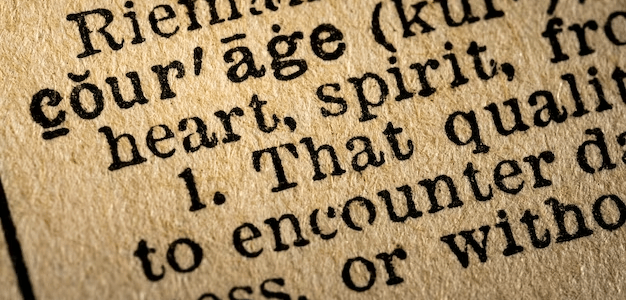
Again I find myself back in A-Level French lessons and recall that “cœur” is the French for ‘heart’. A quick trip down an internet rabbit hole and I find that cœur comes from the Latin word for heart, cor, which connects to the second part of the word which comes from the Latin word ‘agere’, meaning ‘to be’… or ‘to lead’.

So…

Courage isn’t about being bold or daring. Courage is leading from the heart. Putting the head to one side and just letting the heart lead the way.

This, my friends, is where the magic lies. Courage is how we do the thing that logic tells us is impossible. Courage is a decision

Courage is choosing to forgive.

Courage is being the first to say “I love you”.

Courage is holding on to hope.

And here’s where I question whether we create our language or our language somehow guides us through. Because whether or not you already knew that despair means that you actively go away from hope, you definitely will have had the feeling that despair was at the end of the line. When all hope is gone.

And perhaps now you may consider that there’s another choice; another decision: that when all rational hope is gone, it’s time for the emotional hope to endure. To choose courage. To lead with the heart. To know that whatever you are going through, you are still going, and today, that’s enough.

Courage doesn’t need to turn up with a sword and a shield; to smash the door in. Sometimes courage is just picking yourself up and dusting yourself down, and making the decision to go again, even when you know that you may fall once again; the heart taking the lead, because the head is weary.

Whatever happens, however difficult or uncomfortable or unfair you think it may be, however hurt or lonely or lost you may feel, remember you always, always get to decide how you handle it. As the Zen Taxi Driver I once met noted: don’t be so keen to give up control of your mood or feelings to whatever’s happening. No matter how hard things are, or how close you may be to despair, you get to decide what you will allow to affect you and what you will not. I know it’s not easy, but believe me: you are not at the mercy of external influences. You get to choose.

So just take a moment. Let go of whatever expectations you might have about what might happen, because last time I checked you’ve never actually that good at reading the future anyway, right?

And choose courage. Go again. You’ve got this.

What have I done?

Though it was still early in the morning, it was already becoming hot in the Jornado de Muerto desert, about 35 miles southeast of Socorro, New Mexico. On this day, the sixteenth day of July, 1945, the world was about to change forever.

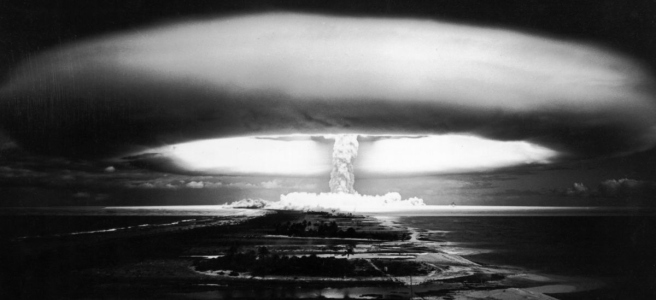
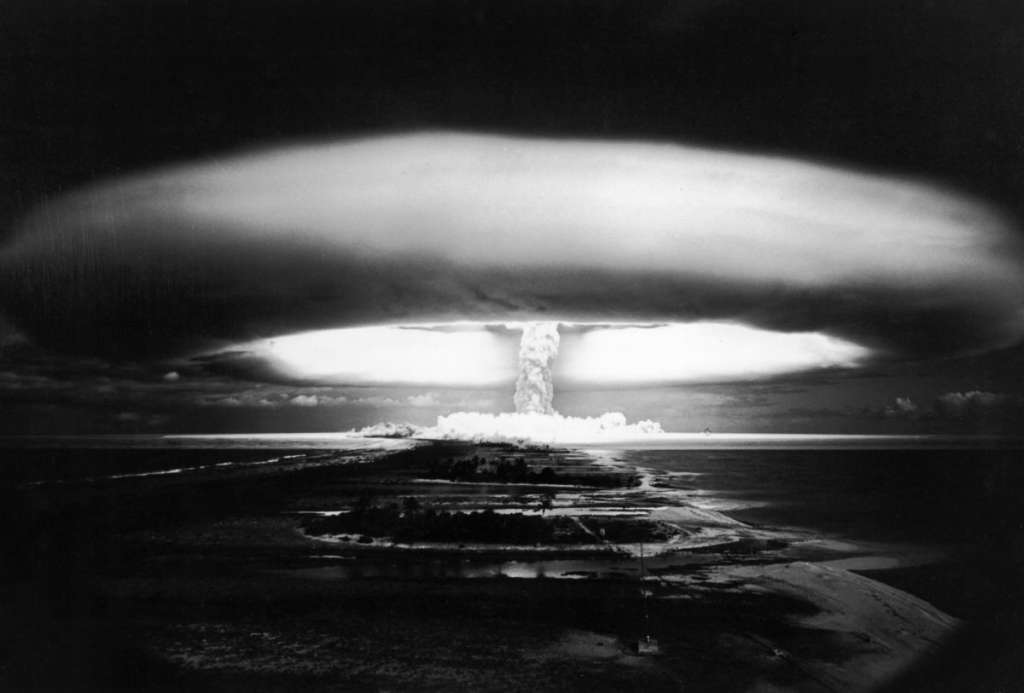
At 05:29, the United States Army detonated the first ever nuclear weapon. As huge sunlight flash subsided and the mushroom cloud rose into the air, amongst the 425 people in attendance was the director of the Los Alamos Laboratory where the bomb had been designed, Dr J Robert Oppenheimer. He later said that the sight of the explosion brought to mind words from the Hindu scripture the Bhagavad Gita:

“Now I am become Death, the destroyer of worlds.”

June 16th, 1945.

Developing the technology behind such a device had been his life’s work, and within days of that morning in the desert the dropping of bombs on Hiroshima and Nagasaki, on August the 6th and 9th respectively, effectively ended the Second World War. The only nuclear bombs to have been used in combat, they killed between 90,000 and 146,000 people in Hiroshima and 39,000 and 80,000 people in Nagasaki, with roughly half of those dying on the first day. 95% of those who died were civilians.

There’s no knowing how long the war might have continued without those bombs of course, or at what cost in terms of lives. History changed course at that point, leaving those stark figures as the epitaph to the largest war the world has ever known.

Oppenheimer’s moral conscience about his place in this history as “the Father of the Atom Bomb” was complex and nuanced. Two years after the bombs had extinguished both life and war at the same time, he would tell his peers that they had “dramatised so mercilessly the inhumanity and evil of modern war”, and connected science to the idea of sin like never before.

Yet when asked to reflect later in his life, he claimed to carry “no weight on my conscience”, seeing the scientist’s role as distinct and detached from the governments who decided to use their work. Scientists do science. Governments do war.

I’m not sure I could disconnect myself from the responsibility for my actions quite like that. But then I’ve never been indirectly responsible for the deaths of thousands of people in a flash. Perhaps that would be the only way to live with it.

And here we are, a month under 67 years later, and the mere threat of those same bombs that Dr Oppenheimer came up with allows a country to invade another and no one can do anything to stop them, just in case.

Oppenheimer never could have imagined. At the very first, it was all about the science. As Jeff Goldblum’s character memorably says in the first Jurassic Park movie:

Your scientists were so preoccupied with whether or not they could, they didn’t stop to think if they should.

It makes me wonder about all the other people who started out with good or decent intentions, and ended up making the world worse.

The people behind Twitter is an obvious one. Created as a way to connect people all over the world, it’s ended up being a place where the positive connections and sharing and love is vastly outnumbered by the division and demarcation and disunion. Where people can anonymously shout and threaten without consequence, and conflicting interested parties can choose to create and curate hatred and vitriol.

Google was set up to “democratise information’. Now they sell our personal data to whomever wants it so they can convince us to buy shit we don’t need, with money we don’t have. They could, and didn’t stop to think if they should.

Facebook was set up by pretty grim people for pretty grim original reasons, and then morphed into something that was nice for a bit but now is as bad if not worse as Twitter. For every local community group, there are ten more sowing dangerous lies, giving legitimacy to lies which in times gone by would have died on the edges of society. Connect enough crackpots and they’ll convince each other they’re all right.

[There’s no question this extreme online discourse has leaked into society as a whole. If you haven’t seen David Baddiel’s excellent documentary on the BBC then check it out in iPlayer here.]

There’s an old cliché that “the road to Hell is paved with good intentions”, but it’s a cliché because it’s true, of course. And on much smaller levels we all have it in our own lives.

As I say, I’ve never invented an atomic bomb, but I have been so desparate to avoid having to make people redundant that I ended up making things worse in the long run. I have allowed loyalty and hope to cloud my judgment. I have had times when the utopian working environment I was aiming for looked more like a sweatshop. I have tried to make someone laugh with a joke that actually made them cry. I have tried to hold everyhing together for everyone else and ended up forgetting myself. It”s no bomb, but I can learn from my “what have I done?” moments anyway.

You’re not Dr Oppenheimer either. But imagine for a second that you could undo the thing you did that’s put you in the situation you never planned for and don’t want to be in right now. Compare that to inventing the atomic bomb. One thing can’t be undone, but I wonder if the thing you’re thinking of can?

If it can, fix it. It doesn’t matter how, although I can give you some tips on a good sorry I wrote earlier here.

If you can’t, then don’t push it away and deny it, like the good doctor. But don’t carry it with you either like a stone in your shoe. We all make mistakes, even when the intentions are good. Instead just acknowledge, learn, and move forward.

It’s not about what you’ve done. Because there isn’t a damn thing you can do about that. It’s about what you’re going to do next which makes things better.

So go. Do that.

Sorry

No, really. I’m really sorry. I know I was wrong and I take full responsibility for the impact this has had. I can probably have a go at trying to explain to you why I acted the way I did, but I am not trying to make excuses and appreciate that, whatever my intention, the actual impact is something for which I must take responsibility.

I’m sorry.

Elton was right – sometimes sorry does seem to be the hardest word.

But bloody hell, isn’t it powerful?

Sorry takes the wind out of the sails of any argument, any conflict. In seconds, it lays the foundation on which reconciliation can be built.

It has to be sincere of course. An insincere apology can be worse than no apology at all. And ‘The Power of But’ is more dangerous here than anywhere else. “I’m sorry, but…” means that actually I’m not really sorry at all.

[In case ‘The Power of But’ is  a new one on you, the word “but” has the power to make anything that came before irrelevant. “I think we’re going to make it but it’s going to be incredibly difficult” makes you think how difficult it’s going to be; “It’s going to be incredibly difficult, but I think we’re going to make it” fills you full of hope and and motivation. Tread ye carefully, for The Power of But can wreak havoc in the wrong place in a sentence.]

I’m not talking about the “sorry” that every British person says when someone bumps into them and it’s not their fault but they’re very British and that’s just what we do. The German stand-up comedian Henning When once said something along the lines that that the way to know someone’s nationality is to take a run up and deliberately ram into them with a shopping trolley. If they turn round and say sorry to you, they’re British.

“Sorry”

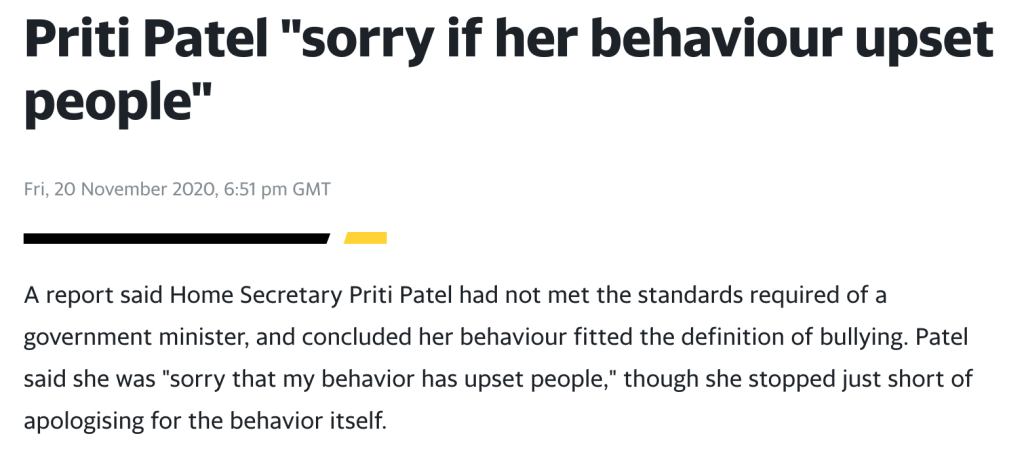
And I’m really not talking about the sly and sneaky non- apology politicians and other kinds of sociopaths and egotists tend to use, which usually goes something like “I’m sorry if you were upset by my actions”. This actually puts the blame on you for your stupid and unnecessary feelings rather than taking the blame for the actions. “I’m sorry you feel that way” fits into that same weaselly passive aggressive bucket. Ugh, and just in case that’s not enough disgust, may I also add UGH.

Ugh

No, I am sorry. I am very sorry.

Sorry says that you accept your part of the conflict, and want the conflict to end. You take responsibility for your own actions.

The best thing about sorry is that it doesn’t mean that you weren’t wronged in some way yourself. There are nearly always two sides to any conflict, with each person sure, in the moment at least, of their own position. But the magic is that it doesn’t matter if you can say sorry. And you always have that simple word with you, ready to drop into the middle of a storm and watch as the wind dies in a second, sails empty and flapping in the memory of the gales that threatened to destroy just a few moments ago.

There’s a powerful phrase I heard a few weeks back which has stuck with me. For the life of me I can’t remember where I heard it, and Google can’t help me which makes me think I actually might have misheard it, but as it exists in my memory it’s perfect….

Leaving aside the wrongdoings of others, we ask ourselves “how was I at fault?”

Clearly it has its roots in counselling or therapy of some kind, because even the phrasing of it is beautifully inclusive: “we ask ourselves” not “you must ask yourself”.

And the simplicity of it really gets me. Yes other people may have done the wrong thing. Yes they need to take responsibility and consider how their words or actions may have affected you or exacerbated an already difficult situation. No one is denying any of that.

But let’s put those things to one side for a moment, take a breath, and consider the idea that we weren’t perfect. That we were at fault in some way – how we phrased something, how we reacted… how we were perceived as a result (because, lest we forget, perception is reality of course).

Find your own fault. And then apologise, sincerely and without expectation or hope of reciprocity.

It’s truthful, and disarming, and vulnerable [that word again, right?] and incredibly, uniquely powerful. It’s the start of the rebuilding process. The first step towards a brighter place.

Give it a try. You know that your mistake was just that – a mistake. It doesn’t mean you’re a bad person, just that (leaving aside the wrongdoings of others, remember?) you’ve examined where you were at fault.

Admit you were wrong, Maybe have a bit of a plan for how you might start to fix things. Ask for forgiveness.

Start with sorry, and you’re making a start.

And if it doesn’t go the way you hope…

I’m really, truly sorry.

Fighting fires

When I was a kid, I watched my father [hi Dad!] walk into a burning building. I was maybe 8 I guess? Our house backed onto a farm and (so the tale goes) some local kids had been smoking in the barn in the evening and it caught fire. Next to the barn was a little cottage where an old lady lived, with a load of cats – like a dozen or something – and she had refused to leave the cottage before all of them were found and she couldn’t find one and “what if it’s still in the house??!!”…

My dad wouldn’t claim to be “brave”, I don’t think. I imagine he’d consider himself much too sensible for daft ideas like that [he reads The Times, for crying out loud] but on that evening [probably with an “oh for fuck’s sake” under his breath if I know him] he walked into the burning cottage to ‘convince’ the lady she really should think about making her way out of the building sometime soon if turning into a roast old lady wasn’t in her immediate life plans.

Anyway, you’ll be pleased to hear that he came out, jostling the old lady in front of him. You’ll be delighted to know that all the cats had, of course, left the cottage some time before, because as we all know cats only care about themselves. My old man [who, come to think of it, would have been younger then then I am now: what a mind fuck that is!] was coughing and his face was black from the smoke and soot and my mum was really cross with him which at the time I thought seemed a bit unfair, because, you know, he was a bloody hero and all that.

And then the fire brigade turned up and we got to watch them putting the fire out, and it was very late and very exciting and I think I got to wear a fireman’s hat [although I might have imagined that because I’ve watched too much TV in my life and that’s the kind of thing that happens in a montage at the end of a TV program about a fire isn’t it?].

My fake memory

Up to now, I haven’t had the opportunity to save an old lady from a burning building [although I did have my bravery tested once – perhaps one for another time!] but that doesn’t mean that I haven’t had fires to put out in my own way over the years. Oh no!

Because that’s what leaders have to do, right? Solving problems, making things better, fixing things. Filling gaps, plugging holes, and “putting out fires” [See what I did there?].

To be honest, I’ve never really liked the phrase “fire-fighting” when talking about work problems. It feels too reactive to me, like you’re forced to jump from the hottest, most urgent thing to the next, constantly on edge, constantly turning to find something else threatening to burn out of control. And so I think the phrase actually makes things worse, somehow.  But I do get the association of course.

Because we know that, left unattended, problems are more likely get bigger and less easy to deal with, just like a fire, until they’re totally unmanageable. And because we know deep within us, through thousands of years of generations upon generations from our earliest times on our planet, that fire has huge power and fearsome energy. Not just in what it does – how it destroys all in its path – but in what it does to us as people.

Just like our ancestors before us, we’re drawn towards fire. It’s deep within us to fan it or fight it, and so all too often we find ourselves simply gazing into it, transfixed, lost in its dancing light.

Nature’s cimena

And just like fire jumping from tree to tree and house to house, the closest possible proximity in which we’re forced to work in our overstuffed offices mean than even the smallest spark can catch, and grow and draw people in to fan or fight or stand and gaze once again.

But as much as we are mesmerised by fire, no matter how wondrous and fearful we find it, what we tend to forget is that the following day the ashes hold only a memory of the fire that once was, and hold no one’s interest for more than a fleeting moment before the winds of time disperse them.  Every fire that ever was ended up as ash in the wind.

And so perhaps one positive thing that I’ve experienced through the maelstrom of Bloody 2020™ is that the forced virtual nature of work has meant that when problems do arise there’s more space for consideration.

I don’t mean there’s more time, of course; not when the line between home and work has completely blurred to the point that it’s not actually visible any more, and I’m working earlier and later than I have in many years because it’s not like I’m going anywhere, and yes it’s getting physically and emotionally exhausting, as the stark sharp split between the imitation intimacy of a video call and the silence when it ends is jarring in a way that as simple, social animals we were never designed to be able to comprehend so we feel somehow empty in the moment, like we’re mourning the human connection that felt so real just a few moments before… [shit, sorry, where was I?]

No, I mean that there’s more physical and emotional space between us – space between the trees, if you like, so fires don’t spread so inexorably. With a watchful eye, some even die out all on their own.

Because with that space, people can consider their actions and consider what they might have done differently. The shared experience of lockdown and everything that’s gone with it means there’s more space for considering what someone else might be going through as well.

And so it seems people find it harder to hold a grudge from afar. People realise that they miss each other, individually and as the office buzz in the background as they work.

Starved of the oxygen of incidental interaction, disagreements become distant, irritations become irrelevant, niggles become nothing. And thus the flames of conflict are dampened, free to fizzle out naturally, quietly, simply.

There’s a lovely quotation I saw recently from a French writer/Aristocrat which goes:

L’absence est à l’amour ce qu’est au feu le vent. Il éteint le petit, il allume le grand.

Roger de Bussy-Rabutin

Which (as I’m sure you know) means:

Absence is to love what the wind is to fire: it extinguishes the small, it inflames the big.

I think that’s true, not just of romantic love but also of the companionship we all miss from our working relationships. The wind of absence has made the ones that were important to us before even more important now.

But perhaps the very same wind can blow out a lot of little fires of little inconsequential problems, too.

All without a fire-fighter to be seen…

Time flies

We all know the feeling of time just flying past. Every year, around September, offices all over the world are filled with conversations about how they can’t believe that it’s September already and hasn’t the year gone quickly and it’ll be Autumn/Spring soon (deleted as geographically appropriate).

And I know I’m not alone feeling like this January went way beyond 31 days. When asked, a friend of mine claimed it was the 87th of January with everyone around giving a “I know, right?” sigh or tut or roll of the eyes.

A meeting about the timeline for a project which seems to go on FOR EVER.

That same project a month later when there’s suddenly a week to go and where the hell did all the time go?

And it’s something we’ve all experienced since we were kids – the extra half an hour before bed that goes by in a split second; the car journey where it feels like you’re going to get to bloody Greenland before you get to the next motorway junction on the way to the Highlands of Scotland from Cheshire when your dad piled you into the Vauxhall Carlton before dawn to “beat the traffic” [sorry got carried away for a second there].

So how come we all still have an unshakeable certainty in the “fact” that time is this constant, steady, objectively measurable thing? When every single one of us has personally experienced something different to that? It’s the exact opposite of faith – rather than believing in something we can’t prove, here we are disbelieving something we have personal proof of, in our own lives…

I know that according to Einstein time is relative (see here for proof that he was actually right) but I’m talking about a more personal relativity here – time being related to an individual’s own experience of a situation.

[By the way, I do believe that one day people look back at our beliefs about constant, linear time with as much derision as we look at the idea of the flat Earth – as something that people used to believe before we knew more and left such fantasies behind us… wait, what? Seriously?? Oh. Oh dear.]

And here’s the thing – my experience of time isn’t the same as yours. Your hour isn’t the same as mine. It depends on what we’re doing. That’s true even if we’re in the same room.

If I find the subject fascinating and wide-reaching and challenging, then the time we’ve got to talk about it goes way too fast. If you’re thinking it’s all bullshit and you’ve got something more important to be doing, then you can’t believe we haven’t ended yet.

It all related to a single, human truth – something that defines every interaction we have with the world in which we live and the people within it:

Perception is reality.

If I think it’s difficult, it’s difficult for me. The fact that you get it really easily doesn’t change that (and you telling me that really doesn’t help!)

If I think it’s hot in here, I’m hot. The fact that you are cold doesn’t change that.

[If anything, it probably reflects that I’ve spent the last twenty-odd years surrounding myself in a protective layer of fat just in case I fall into the North Sea. Always prepared, that’s me.]

If I think it’s boring, then I’m bored. The fact that you think it’s interesting doesn’t change that

And lo and behold if I’m not silently judging you for not thinking it’s boring when it clearly is because that’s my perception and [all together now]…

Perception is reality

I’m not sure that’s getting us anywhere. So let’s rewind, shall we?

Instead of accepting our own, personal perception as the only reality, how about accepting that everyone has their own perception. Their own reality.

Then how about considering what someone else’s perception might be? Trying to see the things from their perspective, understanding their view of the world?

You have to stop for a moment. It’s not always easy to take a step back from your own reality. It’s not always easy, and it takes a good deal of imagination.

But that’s the start. The start of of connection, of empathy, and ultimately of trust. It’s the start of inclusive thinking, and seeking out diverse perspectives on the world. Not less challenge, but more.

So here’s a call to action for you.

Think of a conflict you’re in at the moment. Find that person and take a minute to ask them to share their perception of the world – without judgement. Accept that, for them, that perception is 100% real and, to them, 100% right. Then share your own.

I can’t promise that it’ll solve things in a minute. But I can promise that it’ll open up a much better conversation than the one you were (or more likely weren’t) having.

And I reckon that’s worth a minute of anyone’s time, right?