I’ve always been interested in words – where they come from, how they develop and change over time, and how we use them. I love the way that the English language is this crazy melting pot made of Old English, Danish, Norse, French, Latin, Greek, Chinese, Hindi, Japanese, Dutch and Spanish, and a bunch of others in various amounts and we all just use it like it ain’t no thing.
[For your information, our vocabulary includes words from around 350 other languages according to the Encyclopaedia Brittanica. I know, I thought that was an unrealistically large number too, but apparently, there are 7,117 distinct languages spoken in the world today… although 23 of those cover more than half the world’s population. You’re welcome].
I love how we play with language and how language plays with us, too. The alluring alignment of alliteration. The way words like “imagine” trigger the imagination parts of the brain whether you like it or not. The way that we know that there are rules around how we use our language that we all know but don’t even know that we know…
So when I say that we have a cute little old yellow French wooden ladder in our kitchen, it sounds perfectly fine… but if I said we have a French cute wooden old yellow little ladder, you’d think I had lost my mind.
That’s because there’s an unwritten rule that we do adjectives in a certain order to make it sound right, which [as I know you’re wondering] goes, in order: Opinion; Size; Age; Shape; Colour; Origin; Material; Purpose.
[Don’t take my word for it – there’s a whole book about this and other pleasing peculiarities you can find here]
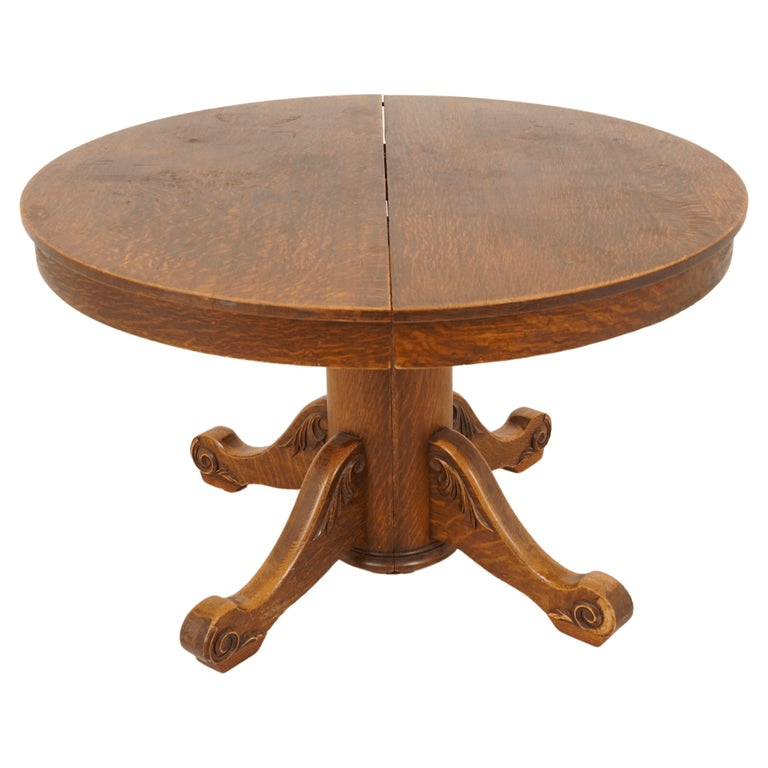
I didn’t even add in the shape in my ladder example above. But you know that an old round wooden table sounds right, whereas a wooden round old table sounds odd.
[If you’re reading this as a non-native English speaker this may all sound like nonsense of course, but it’s stuff like this that makes the language such fun to learn, I’m sure! Idiosyncrasies that we wouldn’t be able to tell you, but will know if you get wrong. If it makes you feel better it even happens between English-speaking countries – so as Brits, we would happily say “hello mate” to an individual, but when our American cousins greet a group of us with “hello, mates!” we quietly smirk into our cup of tea.]
So yeah, I’m fascinated by words. They’re interesting.
Oh yeah, and I guess they can be incredibly powerful too. In case you thought this was going to be a lazy wander around our language. We’re going in hot, folks. Hold on tight.
Words can bring comfort, give direction, even show a way towards freedom. And they can close us in too, forcing division and leaving marks on our souls.
[Remember that old kids’ rhyme “sticks and stones may break my bones, but words will never hurt me? Bull, and I can’t stress this enough, shit. I’ve broken a few bones over the years and they heal over time, but the phrase “crushingly dismissive” from some anonymous 360 feedback about a decade back will stay with me until my dying day, believe me.]
Understanding how we use words now versus how they were intended originally can sometimes change the way you think about them too – and here’s this whimsical pootle through the highways and byways of my mind turns onto the slipway and accelerates onto the main carriageway of this little story…
I stumbled across the word despair recently whilst reading a book [an actual book with pages made of wood pulp – remember those??] and once I’d dusted myself down I looked at the word again and did a bit of a think in my head (which is where most of my thinks happen, I find).
As you’ll know if you’ve read these pages over the last couple of years, I’ve had some dalliances with the darkness of despair in my time – never quite giving in to it, but sometimes viewing it carefully from a safe distance, knowing not to go too close. So for me, despair is a word that conjures up a world that is very gloomy and quite final: something hard to come back from. When all hope is gone…
Which is where a tiny little bell somewhere in the back of my mind gave a tiny little ring…
With the knowledge that English is an amalgamation of all those different languages that have come together, I know that there’s a fair bit of French knocking around for all to see. And as it happens, I remember enough A-Level French to know that “I hope” is “j’espère”. And we all get that ‘de-’ basically means the opposite of what follows it – deconstruct, deodorant – or, more classically, the idea of “away from”.

So there we have it: despair is the lack of hope. Or, even more meaningfully: moving away from hope.
But hope is something within us. All hope cannot simply be “lost” if we created it in the first place. Of course, nobody chooses despair. But is there a moment when we decide to move away from hope and into despair?
And if that’s the case, then surely there’s a decision we can make to do the opposite? To refuse to let hope move away. To hold on to hope and bring it closer, especially at our most difficult times.
What do we need to make that decision? Great question. And like any rhetorical question, you’ll be pleased to know I have the answer:
Courage.

Let’s be clear here: courage isn’t bravery – at least not in the ‘running into a burning building’ kind of bravery that my Dad did once, or my little bit of it you can read about here – and it isn’t about just pretending everything is fine and persevering when actually it isn’t. It’s a word with much more to it than daring and valour. The Cowardly Lion from The Wizard Of Oz was lacking bravery; courage is broader than that.
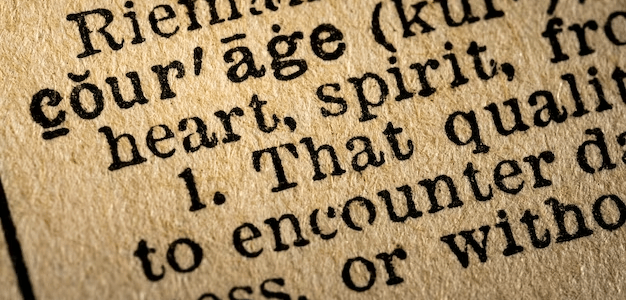
Again I find myself back in A-Level French lessons and recall that “cœur” is the French for ‘heart’. A quick trip down an internet rabbit hole and I find that cœur comes from the Latin word for heart, cor, which connects to the second part of the word which comes from the Latin word ‘agere’, meaning ‘to be’… or ‘to lead’.
So…
Courage isn’t about being bold or daring. Courage is leading from the heart. Putting the head to one side and just letting the heart lead the way.
This, my friends, is where the magic lies. Courage is how we do the thing that logic tells us is impossible. Courage is a decision
Courage is choosing to forgive.
Courage is being the first to say “I love you”.
Courage is holding on to hope.
And here’s where I question whether we create our language or our language somehow guides us through. Because whether or not you already knew that despair means that you actively go away from hope, you definitely will have had the feeling that despair was at the end of the line. When all hope is gone.
And perhaps now you may consider that there’s another choice; another decision: that when all rational hope is gone, it’s time for the emotional hope to endure. To choose courage. To lead with the heart. To know that whatever you are going through, you are still going, and today, that’s enough.
Courage doesn’t need to turn up with a sword and a shield; to smash the door in. Sometimes courage is just picking yourself up and dusting yourself down, and making the decision to go again, even when you know that you may fall once again; the heart taking the lead, because the head is weary.
Whatever happens, however difficult or uncomfortable or unfair you think it may be, however hurt or lonely or lost you may feel, remember you always, always get to decide how you handle it. As the Zen Taxi Driver I once met noted: don’t be so keen to give up control of your mood or feelings to whatever’s happening. No matter how hard things are, or how close you may be to despair, you get to decide what you will allow to affect you and what you will not. I know it’s not easy, but believe me: you are not at the mercy of external influences. You get to choose.
So just take a moment. Let go of whatever expectations you might have about what might happen, because last time I checked you’ve never actually that good at reading the future anyway, right?
And choose courage. Go again. You’ve got this.

 The Bartlett Bubble