Believing in Rom-Communism

Have you watched Ted Lasso? If you have you might already know what I’m talking about here. In which case, stick with me anyway because who knows, I might say something borderline interesting at some point. If you’ve never heard of it, don’t worry because the theme of it isn’t crucial to what I’m going to talk about anyway. Basically, whomever you are, and whatever your current relationship with Ted Lasso, from superfan to total obliviousness, let’s just agree that you carry on reading and I’ll carry on writing, yeah?

[For those novices, suffice to say that Ted Lasso is a comedy series about a football coach from the USA who comes over to London to manage a fictional club in Richmond. Sounds a bit crap, but it’s absolutely brilliant – less piss-taking about Americans saying “soccer” instead of football and more of a case study in vulnerable leadership. And you don’t need to like football to enjoy it either – my wife is Welsh and hates football and we devoured each series like a pack of children at a party devouring the birthday cake which a loving aunt took ages baking but was only actually on display for about 45 seconds before it was cut into irregular size pieces and put in paper napkins to be squashed in a party bag along with a bouncy ball and an almost unbelievably small fun-size Mars bar]

So, with those somewhat unnecessary and [let’s be honest here] rambling introductory passages behind us, let’s get into the bones of this, shall we?

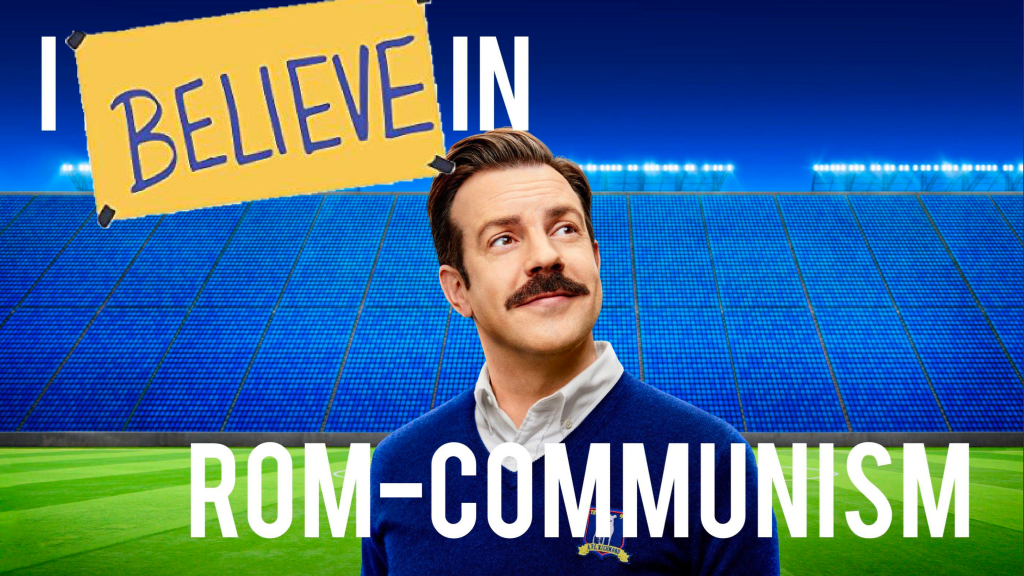
There’s a point in the second series where the team are in a real slump. They’re playing terribly, and losing, and it seems like all might be lost. It’s at this lowest ebb, where the team are starting to come apart at the seams and individuals are blaming individuals for the failing of the whole, that Ted gives an impassioned talk about his belief in “rom-communism”.

The man himself

Rom-communism is a concept borrowed from the classic romantic-comedy movie narrative, where in the middle of the film everything is a right old mess and it looks like the two protagonists aren’t actually going to end up together. Yet by the end of the film, everything tends to work out.

So for Ted, a belief in rom-communism is a belief that everything’s going to work out in the end..

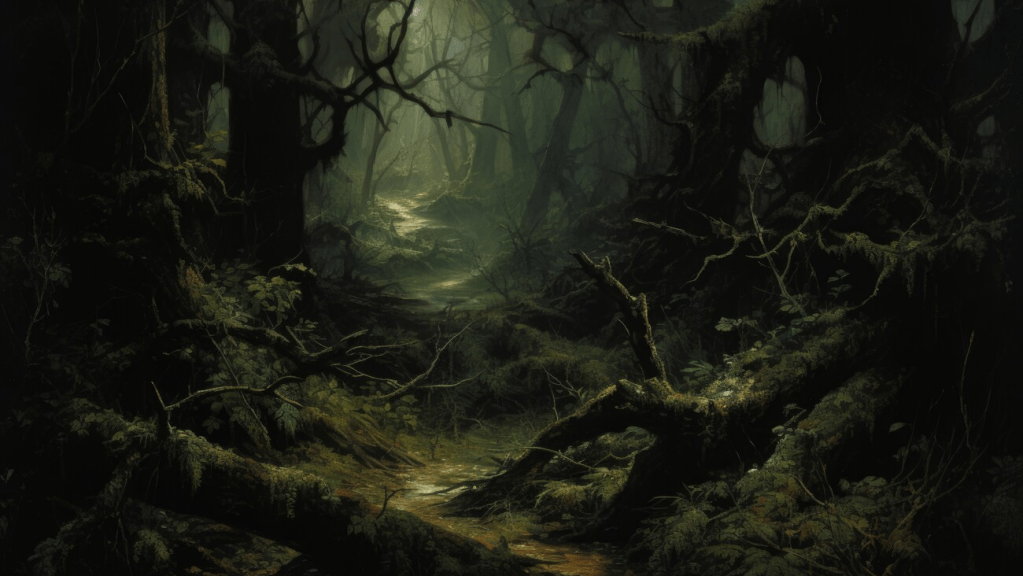
Now these next few months might be tricky, but that’s just ’cause we’re going through our dark forest. Fairy tales do not start, nor do they end, in the dark forest. That son of a gun always shows up smack-dab in the middle of a story. But it will all work out.

Now, it may not work out how you think it will, or how you hope it does, but believe me, it will all work out.

Exactly as it’s supposed to.

Our job is to have zero expectations and just let go.

Ted Lasso: Season 2, Episode 5

It’s stuck with me, this scene. I don’t believe in fate: the idea that our lives are somehow pre-ordained and we are destined for something whether we like it or not. I also don’t really believe in luck, whilst we’re on the subject of things somehow bigger and more mysterious than ourselves. It’s not “lucky” that stick wasn’t closer to our younger son Jack’s eye [true story – he’s currently on course to take the title of “World’s Clumsiest Living Human”] any more than it’s lucky when you don’t stab yourself in the face with your fork when you’re eating. And whilst we’re on this particular soapbox, no, it’s not “spooky” when you ring your friend and they answer and say “oh my God I was literally just about to call you!!” any more than it’s spooky that you didn’t ring them all the dozens of other times they were about to call.

So no, I don’t believe things will work out as they were always going to. But I do believe that things tend to work out as they are supposed to…

Through the middle of last year I had a pretty confusing time of things, particularly with what was going on at work. [I lknow, bloody work, eh?]. Having thought things were going to go one way, it became clear that things were going to go a completely different way and there wasn’t a damn thing I could do about it.

Looking back on it, there were things I could have done differently, and there are things I’d do exactly the same, but the bottom line was that it was really disruptive and difficult for loads of reasons, surprisingly few of which are anything to do with me, actually. Some relationships I thought were solid turned out not to be. Others turned out to be stronger than I’d thought. But whilst I was right in the middle of it, forgetting about the second agreement I made with myself to not take anything personally, I took everything personally. Whoops!

[If you’re wondering about the other agreements, or indeed wondering why I’m going around making agreements with myself and thinking that perhaps I should have a nice cup of tea and a sit down, you can find out more about The Four Agreements in a blog I wrote about it all here. It’s good stuff but don’t just take my word for it: you can ask my mate Caroline’s husband, who told me he liked it (hello Aaron mate!) and he really had no reason to lie to me.]

Yes, that’s right: I was going through my deep, dark forest.

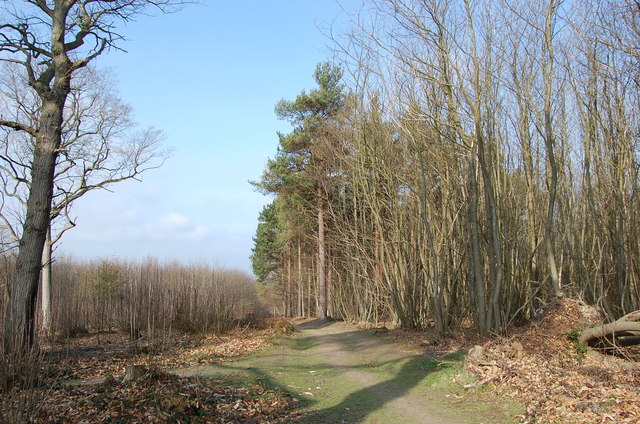
This isn’t actually my forest as such but it’s quite similar

And for a while there, I forgot that fairy tales do not begin, nor do they end, in the dark forest. That they always turn up in the middle of a story.

I won’t apologise for that, because… well because I’m not sorry, basically. I lost my way a bit, and weirdly I didn’t actually realise that I’d lost my way until I stumbled out of the darkness of the forest into a clearing, and saw the wide expanse of the sky for the first time in a long time and suddenly became acutely aware that I’d been holding on so tightly to expectations that I’d lost the plot of my own story and, to a degree, lost myself.

Forgive me for taking a short detour here. That idea of “lost myself” is interesting to me. We’ve all felt a version of this at some point and we’ve got lots of ways of talking about it: I was not feeling myself; I was beside myself. I do think it’s all about how we understand our own sense of “self”, and actually it’s when we are furthest from our own values that we feel most disconnected from ourselves, and most lost in the world as a result.

Actually connecting to that disconnection was, for me, the first step in the next part of the journey.

My good friend, and cherished colleague, Sir Olly of Caporn [take a bow, Oliver] and I were chatting recently and he casually and without ceremony said something very profound, as he tends to occasionally:

The story only makes sense when you reach the end.

Like a great whodunnit, or crime drama, or, yes, even a rom-com… when you get to the end of the story, it all makes sense, and then when you look back you can see how it all fits together.

And that’s how I feel now, With a new world of work opening up, with all the possible roads that I could have taken but didn’t now just sub-plots that didn’t happen or didn’t go anywhere, it seems almost daft to think that things could have ended up any way than the way they’ve actually ended up.

I’m not saying this is the end of the story, because of course it’s the start of a completely new one. But it’s the end of that story, and whilst it did not work out how I thought it would, or how, at the time, I hoped it was going to, dammit if it didn’t all work out. Exactly as it was supposed to, I guess.

You may, as you read this, be in your own dark forest. I’m really sorry if you are. I know how much that sucks.

I also know that sometimes, we need to sit down in the forest, and take a moment. To check on our values and on our sense of self, and just take a moment. I’m the last person to tell you to pick yourself up and dust yourself down and carry on struggling through the thick undergrowth and sharp leaves and grabbing vines before you’re good and ready. Because we both know that has to come from you.

But we both know you will have to decide to pick yourself up and dust yourself down at some point.

And when you make that decision, remember that fairy tales do not start, nor do they end, in the dark forest. This isn’t the end of the story. Your job is to have zero expectations, and just let go.

And know that when you get to the end of the story that you’ll be able to look back and understand it all.

You’ll know that, even though it was hard, things worked out, somehow.

You’ll know more about yourself. Your values., Your principles.

And maybe, just maybe, that’s all part of the story, too.

Not giving a f*ck

Contrary to what the title of this piece might suggest, this actually isn’t about not giving a f*ck in the traditional sense at all. In fact, it’s about choosing to. We’ll get there in a few minutes. But first, let me take you on a little journey I went on recently…

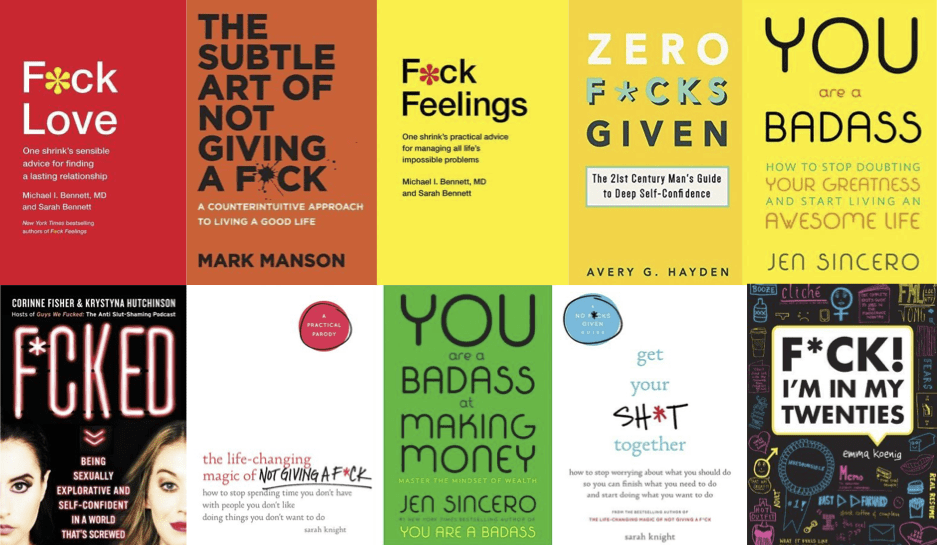
Like me, you may have noticed that there’s a certain genre of book title which… SHOCK HORROR… has a swear word in it. I’ve always thought it’s a bit disingenuous to be honest, designed to capture the attention and titillate and shock and be all rebellious when in actual fact it’s just a plain old gimmick.

If you ask me [and I know you haven’t asked me as such but I have to assume you are reading this by choice and part of the deal is that I get to say what I want and you have to just carry on reading it, so let’s just agree that it’s okay and crack on] there’s nothing clever about putting a swear word on the front cover of a book, especially if you’re going to cop out and put “f*ck” rather than having the strength of your convictions and writing the word “fuck” properly, as God intended. I know that’s because otherwise people might be shocked and appalled, but the idea that somebody may be offended by accidentally being exposed to such utter, deplorable filth and feel so aghast that they have to forego their plans for the day and lie in a darkened room with a cold compress upon their fevered brow is, frankly, a bit self-indulgent in a world where there are much more important things to be offended by. Things we will, in time, get to.

It’s not big and it’s not clever.

[For the record, from here on in I’m using the correct spelling, so if for whatever reason you don’t fancy reading the word “fuck” (without the magical * that somehow makes it acceptable) quite a few more times, now would be the perfect time to carefully back away from the particular high horse I seem to have found myself on, without going round the back of course because we all know that horses can kick.]

It’s with this context that whilst I’d heard of a book that came out a few years back entitled The Subtle Art of Not Giving A F*ck, I hadn’t bothered to check it out.

Part of it was the whole ‘swear word on a book cover’ schtick which just gets on my nerves [in case you hadn’t noticed], and part of it was an assumption that, because the author was American, and male, and white, it could just be a whole book of someone saying how cool they were because they didn’t give a fuck about anything or anyone, in some kind of pseudo macho, ego-heavy, try-hard monstrosity. That’s right, I judged the book by its cover.

[You know people say you shouldn’t judge a book by its cover? I think that’s true of pretty much most things… except books. If I’m in a bookshop (remember them?) and I’m browsing for something to buy and then leave in a pile with all the other books I’ve bought but not read, then what the hell else do I have to go on? If it’s a black cover with a silver dagger on it and big blocky writing, it’s going to be a murder-mystery type thing. If it’s a light brown cover with a tasteful etching or painting and/or a discerning old-fashioned typeface, it’s probably going to be a historical feast with a side order of love story. If it’s white and has a rose on it, it’s a romance. 99% of the time the reason I pick up this book instead of that one will have something to do with the cover. And anyway, if it wasn’t important books wouldn’t have different covers, am I right?? Anyway sorry, where were we?]

Fast forward to this summer, and someone whose opinion I respect told me that the book had recently been made into a documentary with the author (a chap by the name of Mark Manson) talking through it, and that it was really good and I should watch it. I figured that if I could give up 90 minutes or so and get the jist then that was probably worth it. So I downloaded it and watched it on a flight on my way off on holiday.

First thing to tell you is that it is indeed “really good”. It’s charming and thoughtful and engaging, and bit sad at the end too which made me shed a few tears whilst looking out at the clouds below. Admittedly I was in quite an emotional place at the time [in my head: the plane was no more emotional than any other as far as I remember] but on the whole if I feel like crying I’ll go with it and, as ever, it was quite cathartic.

I won’t go through the whole thing because you can find 90 minutes or so too and watch it yourself on one of the streaming subscriptions you’ve forgotten about [and really should probably cancel because you don’t really use it as much as you thought you would but honestly who has the brain space for rationalising subscriptions when they can just think “ah well, it’s only £6.99” and forget about it for another 6 months? Not me!] but there were a few things I took away from it which I will share with you.

Overall, it’s less about ‘not giving a fuck’ and more about being more deliberate about what you decide to give a fuck about. I guess that’s the “subtle art” bit, as I think about it now. You only have so many fucks to give, so don’t go chucking them around willy nilly over things that don’t deserve your fuck-giving.

I was introduced to this way of thinking a few years back by a Zen taxi driver – the idea that you shouldn’t allow every agressive Audi driver [used to be BMW drivers but now it feels Audi have risen to the challenge] full and unfettered access to your emotions. I wrote a whole blog about this guy which you can read here in your own time. But for now, stick with me…

The other concept I picked up was a bit more nuanced, and gets us towards where we’re going with this whole story. It went something like this: if you choose the problem, you can’t also give a fuck about how hard it is.

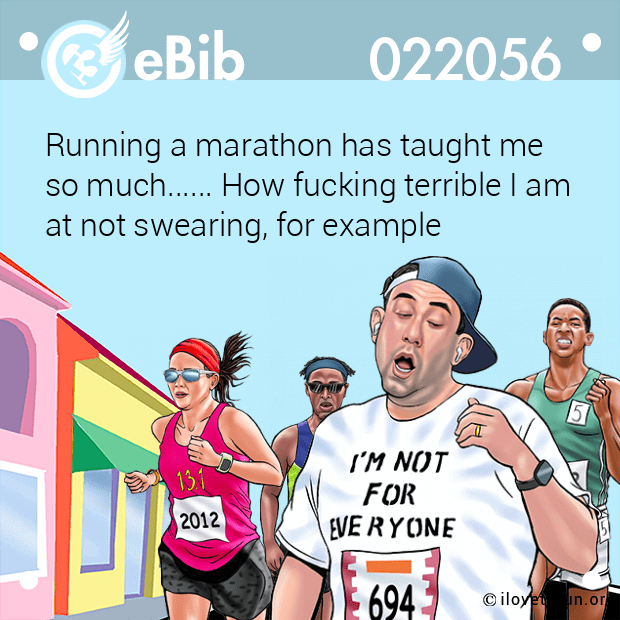
The best analogy that leaps to mind for me is around running a marathon. You decide to do it, knowing that there is no moment between that decision and the end of the marathon that will be anything other than largely awful. Nobody enjoys training to run a marathon, building up to running a marathon, and the majority of the marathon itself. In fact, the only part of the marathon that is actually enjoyable is the actual end of the marathon when you can stop running the marathon and not have to think about the bloody marathon ever again.

But if you choose to do a marathon, you can’t then go around giving a fuck about how ridiculously hard it is. You can’t give a fuck about the cold dark morning runs. You can’t give a fuck about the blisters, and the shin splints, and the bad knees. You can’t give a fuck about the anxiety in the week running up to it, or the fact you need a wee after a few miles, or the feeling near the end when you want to stop or, failing that, simply die.

How apt!
Pic courtesy of https://ilovetorun.org/

If you choose, then you can’t also give a fuck about the difficulties that go with that choice.

So, think for a moment: what have you chosen? Are you stuck in the mud of also giving a fuck about all the stuff that goes with it?

I have chosen to be a “good father”. Maybe even a great father. I want my sons to look back at their time growing up with the certainty that their father loved them, and respected them, and protected them. That their father was always there to support them when they needed support and push them when they needed a push. A father that was honest, and fair, and clear on expectations. A father that they themselves might aspire to be, if they so choose.

Me being a perfect dad with my happy, well-adjusted children

Because that is my choice, I can’t give a fuck about how hard it is sometimes to be that guy. I can’t choose to aim for fatherly greatness and then give a fuck when I can’t dismiss their questions with “because I say so” like I want to. I can’t make that choice then give a fuck about how hard it is to be consistent. I can’t choose to be a supportive and encouraging and attentive father and then give a fuck when it means I have to coach a load of 9- and 10-year-olds football on a Saturday morning and then coach a load of 13- and 14-year olds rugby on a Sunday morning all through the autumn, winter and spring so every single weekend morning from September through to May instead of having a well-earned lie in I have to get up early and find all the relevant kit which they didn’t bother to sort out the night before LIKE WE HAVE DISCUSSED, AT LENGTH, ON SEVERAL OCCASIONS [true story].

I can’t choose to be a father who respects them and their questions and then give a fuck when they ask about what’s happening in Gaza. I can’t give a fuck that I owe them a considered, balanced view because it’s on every news report, every day, and they see and hear everything and it’s fucking heartbreaking.

Not giving a fuck isn’t not caring. It’s the opposite, in fact: caring so much about your goals that you don’t care about any adversity that may stand in the way of your goals. Not giving a fuck is a commitment; a determination, even when it’s hard.

I never really chose to be a leader in my working life. It just kind of happened because wherever I worked, if I had an idea on how things could be better I’d talk to people about it, and I’m good at having ideas and bad at not talking to people, and if you carry on having ideas about how things could be better, people tend to give you more responsibility. I guess along the way I did choose to carry on up the career ladder I was on, driven by ideas and by a good chunk of ego, so it’s not like I didn’t know what I was doing. But the real choice came after, once I was in a position where I could decide what kind of leader I was going to be

I chose to be a “good boss”. Maybe even a great boss. I wanted my people to look back at their time working for me with the certainty that their boss loved them, and respected them, and protected them. That their boss was always there to support them when they needed support and push them when they needed a push. A boss that was honest, and fair, and clear on expectations. A boss that they themselves might aspire to be, if they so choose.

[Hmm yes that does sounds familiar, doesn’t it? A nagging sense of deja vu… almost like I did it on purpose, right? Something for another time, perhaps?]

That choice has given me huge amounts of satisfaction and joy, and it’s been so tough that I’ve balanced on the border of burnout and breakdown. It’s made me friends for life, and broken my heart a couple of times, too. More than once it’s been bad for my mental health, bad for my relationships, even bad for my career.

But I chose to lead with vulnerability and values, with love and loyalty, with trust and truth.

So I can’t give a fuck when that road has bumps in it. Even sizeable bumps that make your stomach flip a bit like those times when you were little and your dad was driving down a country lane [always your dad driving back in those days, never your mum] and went over a narrow brick humpback bridge over a stream and everyone went “woooo” as the momentum of their upward trajectory then the sudden drag down of gravity sent their internal organs all squiffy.

As ever in these situations, I find myself coming back to the words of Brené Brown.

[I won’t apologise for the preponderance of BB in these pages, because I’ve learnt a lot from listening to her and reading her words and I reckon you probably would too, if you haven’t already. But just for the record, I am aware BB does come up a lot. Let’s just say that I’m passing it on to you to save you time and effort in finding it all yourself. You are, as ever, most welcome]

The words she would use for this kind of leadership are “Strong back, soft front, wild heart.”

Strong back because shit is going to be tough sometimes and, as an authentic and open leader, you need to be able to take some of that. You need to have a back flexible but sturdy, like the oak tree that I see in the woods when I’m walking my dog, Ruby [that’s my dog’s name, not the oak tree, which we have given a name but that’s also for another time], which gets whacked by the wind year after year, branches stripped of leaves and boughs broken, but has roots deep in the earth which mean that it buds again in the spring and sows acorns across the clearing for the squirrels to squirrel away into holes that they forget about in the Autumn…

Soft front because that’s how people can find their way in. I won’t go into yet another treatise on the power of vulnerability to build trust, but it really is the only way. Soft front is the way in. In my experience, a closed, hard front is there to protect a brittle back; a shield to defend a lack of confidence, a lack of strong roots in the ground.

Wild heart? Well I’ll leave that up to Brené because I’d just be paraphrasing her anyway:

Two months back I left the company I’d been leading for the best part of a decade; the company I’d put my heart and soul into since I was a mere whippersnapper in my 30s. Leaving was such sweet sorrow, for lots of reasons that I won’t go into here. But for the last 2 months I’ve been unemployed, and I’ve been working hard to change that. It’s going well [thanks for asking!] and in the not-too-distant future I’ll have something new to put my wild heart and soul into.

And I’ll do that with the wildest of hearts. Once you’ve chosen to stand up for what you believe in and committed to it, you really have no other choice but to go again.

And you can’t give a fuck about how hard that might make it.

So, dear reader, I now ask you to think again about the choices you’ve made. Not what you had for breakfast this morning or what you’re going to watch with a glass of red once the kids are in bed [true story], but the ones where you’ve had to stick to your guns a bit, and dig deep.

The choice to be in a profession that maybe doesn’t pay as much as some others but really, really means something to you.

The choice to stay in the relationship and work at fixing it.

The choice to be a working mum and commit to both aspects of that dual existence.

The choice to put in the extra hours because you have pride in your work even though it probably won’t get noticed.

The choice to open yourself up again with the knowledge that yes, you might get hurt again, but “what if” it all works out?

You’ve made choices because of who you are and what you stand for. You’ve chosen what to care about. Be proud of that, and be clear on what that means.

Because not giving a fuck, is all about choosing what to care about and what not to care about. The choice not to care about anything that gets in your way because you know you’re on the right road, on a quest that is noble, and important, and fucking worth it.

I reckon that is something we could all try not giving a fuck about.

[In case you’re wondering, I have peppered this piece with the word “fuck” a total of 28 times. In the famous last words of Dylan Thomas: “I believe that’s a record”. I also popped a “shit” in there for those of you who like a little variation.]

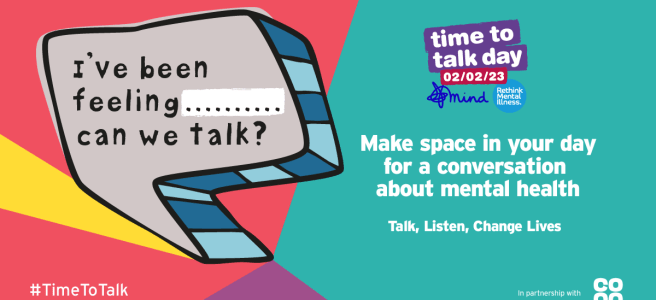
Time To Talk Day – my “little episode”

I’d been feeling a bit lost for a few weeks. Maybe a few months even, I’m not too sure. A while, anyway. Not completely without purpose, but lacking a little… something. “Not feeling it” as they say. It’d been a time of introspection, not all of it particularly useful, coupled with a fair bit of time wishing I weren’t so introspective. It can all get quite meta when I’m thinking about how I feel. And how I feel about how I feel. You get the idea.

I get like that sometimes. It’s kind of exhausting, to be honest. I get into my own head and get stuck there for a bit. Outwardly I’m fine – perhaps a little skittish or distracted – but inside I’m spinning.

When I’ve been like this in the past, there’s always the internal monologue that just says I need to snap out of it. To follow the good old masculine trope and for fuck’s sake just MAN UP.

But of course, I know that bit of me doesn’t solve anything. Rejecting how I’m feeling, pretending it’s not real, or (even worse) beating myself up for even having these silly, selfish, weak things called emotions is a road I’ve been down before, and it’s always ended up at a dead end. [If you’re interested in one of those roads – perhaps the first dead end I found, actually – then you can find my story about my anxiety here.]

Unfortunately knowing all this in your more calm and more rational moments doesn’t necessarily help when you’re in the middle of it, because when you’re in the middle of the forest you can’t see the wood for the trees. And I was right in the middle of the forest.

Allow me to explain…

A long time ago I decided that if I was going to be leading people, in any way, big or small, I’d do that in a way that felt genuine and authentic to me. I’ve always known that the best way to bring people together was to try to connect with them – and to connect them to each other – with shared passion and values and purpose and all that good stuff. I don’t need to tell you that you only build trust through vulnerability, and that’s what I’ve done, for years.

This philosophy requires me to be emotionally open, genuinely caring, and empathetic not just to the individuals but to the group that individual is a part of too. If I’m not all of those things, all the time, then the connection doesn’t work in the same way. I’ve doubled down on vulnerability, time and again, because that’s what I believe in. There’s no question that it’s made my working life richer than I could have hoped for, but I can’t pretend there aren’t times when I’ve wished I could shut off the emotional side because it does take a hell of a lot of energy. You can’t reverse back out once you’ve started with an open, honest, vulnerable relationship because if you were to do so, the trust you’d built up would break into a thousand pieces, never to be put together in quite the same way again. Once you’re in, you’re in. And I’ve always been all in.

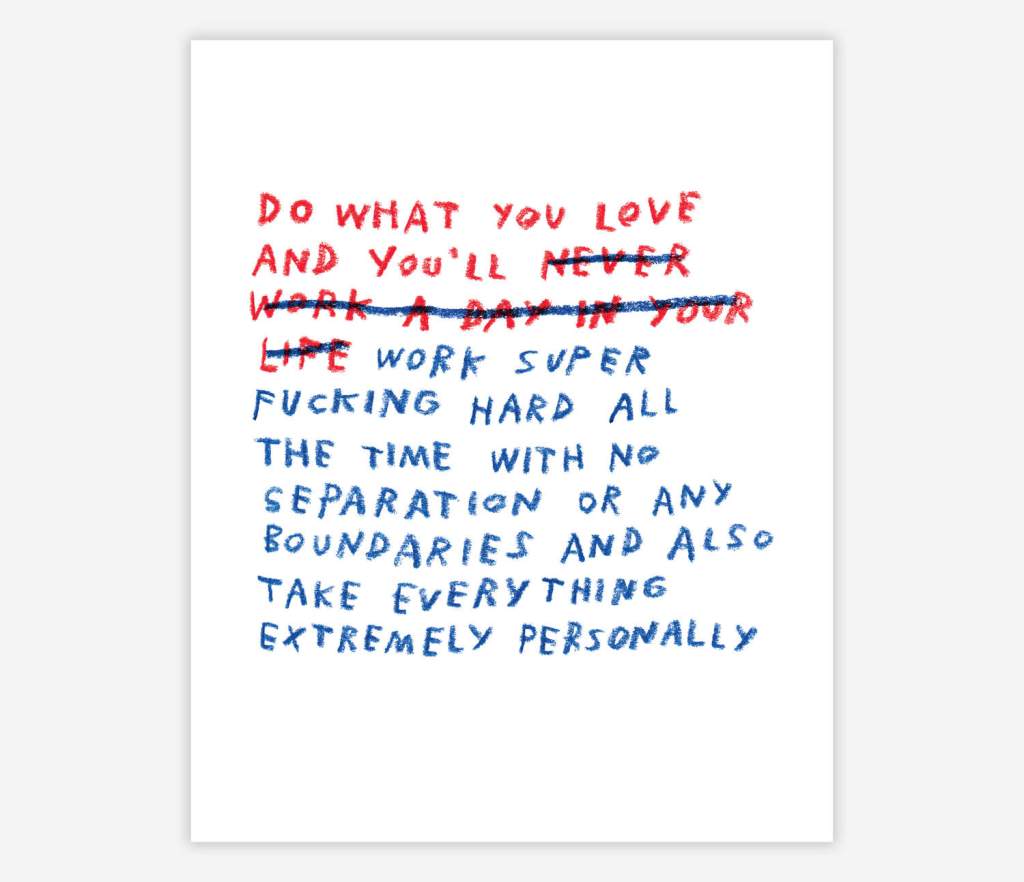
The result of that can be neatly summed up by this little gem from the visual artist Adam JK (you can learn more about him here if you like), who put it thus:

And that, mes amis, is the life of an ‘all-in’ leader, especially in the strange razor-edge world of running an advertising agency, where every success means people are working too hard and burning out and freaking out and you can see that they’re struggling and you wish you could do something… and every little failure means you might have to send someone home without a job. Someone you know, and care about. Someone you really, really like. Whose family you’ve met.

It’s always been personal for me. And the last couple of years only heightened that.

Authentic, vulnerable leadership is hard at the best of times, but leading through two years of global pandemic, where people’s expectations of their employer changed overnight and never changed back, has taken its toll on leaders the world over. I’m no exception to that. Overnight I felt responsible not just for the agency I run or the jobs of the people who work in that agency, but for the people themselves, too. We were the de facto community that people were missing. Work was, for many, the only human contact people had.

And so through two years of sustained growth in lockdown, I knew people were allowing their commute time to be subsumed by work, and working longer hours than ever. To help with that we were trying to hire people so quickly that there was no way we could be doing a decent job of embedding them into the group and setting them up for success. I could feel that we were cashing in all the “emotional currency” we’d been banking through the previous years.

Emotional currency is an idea I’ve talked about for a good few years now, and it’s simple enough – when things are going well and work feels good and morale is good and the mood is good then all that good stuff gets banked in people’s minds but more importantly in their hearts. The more the good continues, the more you bank. And then when things aren’t so good for a while for whatever reason, you have some good in the collective emotional bank which means you get some leeway – some time to get things good again. But here’s the rub – it’s not fair. You might have two years of good in the bank, but once you start withdrawing it’ll be gone in six months.

I could feel that the bank was getting empty. Not in the red, but not snow angels in the banknotes either.

And then as the shared experience of lockdown and Covid became smaller in the rearview mirror, everything happened. All at once.

Work got messy. The razor edge was sharp and painful. We were under pressure and I was out on a limb, fighting for what I thought was the right thing to do time and time again, holding on so tight that I couldn’t release, and in my own head so much that I started to question my instincts on things. And I’ve always trusted my instincts. Always.

Life got messy. An old friend took his own life, which rocked me in ways I still don’t really understand. Family members were in and out of hospital for operations which of course were always going to be fine but of course there’s always that bit of your mind which likes fucking with you in the middle of the night because WHAT IF..?

My head got messy. Losing sleep. Losing perspective. Losing myself.

It all came to a head on an otherwise unremarkable Wednesday morning at the end of June. My wife told me that she was going away with my sons for a few days in the summer holidays and I’d be at home for about 10 days on my own. My reaction wasn’t “sounds great, I’ll sit around eating pizza in my pants and get the lads round to play poker”. It was “I’ll go fucking crazy here on my own”.

The way I’ve described it since is by using the analogy of holding a mental tray. You’ve always got a decent amount of stuff on your personal tray, and most of it you put on there yourself so it’s all balanced in a way that you can handle. But if you keep on putting more and more things on it, then eventually you’re going to struggle. And then if other people stick some stuff on it as well, and aren’t as careful balancing…

I just about managed to put the tray down before I dropped it. Just.

I spoke to my team at work and agreed that I’d take some time off in the summer.

Which I did. A month away. Time to get some more stuff in my toolbox. Started some coaching and some yoga and meditation. Started going to the gym, too.

I can’t say the return to work was gentle, though. If anything it was worse than before the break: intense and toxic and kind of disgusting really. If you ever want a case study on how not to handle the return to work of a leader who’s been suffering with their mental health, give me a shout.

When, like me, you’ve spent your entire adult life ‘showing up’ as self-confident and full of energy, it’s actually pretty easy to fake it. To turn it on and turn up and get through and get out. So I tried to be what I thought people needed me to be. No one needs a leader who can’t trust his instincts. Who can’t trust himself at all, really. I was so wrapped up in my own stuff that I couldn’t really be the support that people needed, but I couldn’t tell them either because that would be putting more on them and they were already covering for me. I thought I was doing okay because the time off had given me a chance to get my nose just above the flood waters so I could breathe, but I was still only one slip from going under again.

I had a panic attack one morning before going into the office. I called my wife and she talked me down and I went into M&S and got some fruit and went into our offices and up in the lift and sat down and didn’t say a word about it to anyone.

I couldn’t take more time away because people needed me. Or at least that’s what I thought. But looking back, I wasn’t completely there anyway. By the time I started getting cluster headaches [read about the delight of those here if you fancy it. TLDR – they are horrible] towards the end of the year I was just limping towards the alluring finish line where 2022 would finally be consigned to history as the shittiest year of my life. Beating the year my mum died takes some doing.

BUT…

Lovely word, right? “But” makes everything that comes before it irrelevant. It turns the story.

But that was last year.

Yeah, I know that nothing magical actually happens at the end of December 31st, and that the whole idea of a “New Year” is just yet another construct that we’ve created – a story we’ve all decided to believe. But I needed to go with the romance of a new beginning. The turning of a page.

And as I sit here today, I do feel like I’ve turned the page.

Over the last six months since what I’ve euphemistically been referring to as my “little episode”, I’ve put a lot of time and energy into getting more things in my self-care toolbox that I can pick out as and when I need them. I’ve been going to the gym with a couple of friends who also could do with reshaping the dad bod [which considering I’ve been “Gym Free Since ’93” is quite a shift for me]. I’ve been doing a 1-2-1 yoga class every week since July. I’ve had some professional coaching which has helped me to get a better sense of my own values and what I need to be fulfilled. I’ve had a sprinkling of therapy along the way. Then just before the break in December, I learnt to meditate and now I’m doing that once or twice every day,. Last year I changed my meds and then this year got some advice and changed the dose which has helped. Hell, I even spent last weekend at a yoga retreat where as well as doing more yoga than I’ve ever done I also opened up to a load of complete strangers and chanted around a fire with a couple of shamen women for crying out loud [don’t worry I’m not converting – I just love a fire]. And perhaps above all, I’ve got my wife, and my two boys, and my dog, and the huge oak tree in the woods over the road.

I’m coming into this year feeling more centred and more solid than I have in a long time. Maybe ever.

At the same time, I’m also very conscious that all this is part of a journey and I can’t let myself be either complacent that somehow I’m magically “fixed” or concerned that “it’s only a matter of time before I crash again”. I just have to be whatever I am right now and be okay with that. I’m okay today. Tomorrow is tomorrow.

So why the hell am I telling you all this?

Well, there are a few reasons, actually.

The first one is then when I’m writing this, you’re not here. So I’m kind of talking to myself really – starting with the man in the mirror and asking him to change his ways [yes that is a Michael Jackson lyric – I couldn’t help myself and it’s lightened the mood a bit hasn’t it?]. It helps me to organise my thoughts, and as a result it’s kind of cathartic.

I’m also telling you because there’s a massive stigma around talking about mental health, especially in men, and if I can talk about it then at least I’m doing something to break down that stigma in some way. For me it’s just health -I’m not ashamed of my mental health problems any more than I’m ashamed of the fact that I need glasses or got diagnosed with gout at the age of 30 [a family disease for the Bartletts]. I take my pills for my brain at the same time as I take the ones for my liver. I take vitamins too. Sometimes I take something for allergies. It’s all the same. Talking breaks down barriers and stigmas and I have a lot of privileges in life so if I can’t talk openly about all this shit, who can?

If you’re a regular visitor to these pages, you may also have gathered that I’m a talker anyway, so this isn’t new news for a whole load of people. My immediate family know, and some of my extended family do too. A decent amount of the friends I’ve spoken to in the last 6 months know, because it would feel horribly inauthentic if they were to say “how have you been” and I were to say “yeah, fine thanks”, so I’ve tended to ditch the small talk and go for the big talk. And at work, I started off telling my immediate team, then thought it felt right to tell the whole agency about it because it’s real and I want them to know that it’s okay to not be okay. And then somehow I found myself in a really open and honest conversation with the new big boss in New York and I took a punt that he would get it and told him and he did get it and that felt good. So now a lot of people know I guess. Everyone, without exception, was kind and considerate and caring.

And now you know.

Which leads me to the last reason, which is actually all about you, dear reader

You see, the reason I overthink things and then write about it here is so that you can learn from my mistakes and avoid them (whilst, of course, making a whole set of completely different ones). Call it a friendly nudge, or wake-up call, or even a kind of non-specific remote intervention, but if you’re carrying your own tray and you’re wobbling, then please trust me, it’s not just going to magically fix itself. Yes, there may be light at the end of the tunnel but it’s no fun living in a tunnel on your own either and maybe, just maybe, a nudge around TIME TO TALK DAY might be the right time to maybe talk to someone about what you’re going through. It will help, I promise, and they will care, just like you would if the tables were turned. The truth is, they probably know already.

And on this day of all days, if you’re actually doing pretty well, actually, then you can make the world a better place by making a point of being emotionally available for the people around you who seem like they’re probably fine but actually might not be…

The colleague who always seems like they’re a step or two behind where they think they should be.

The family member who’s gone a bit quiet recently.

The friend who hasn’t made it the last few times you all got together.

Maybe they are fine, and you just have a nice chat and a catch-up and perhaps arrange a time to spend a bit of time together because it’s been too long, hasn’t it? But maybe they’re not, and you’re exactly the person they needed to talk to but just didn’t realise it. Either way, you get to talk to someone you care about.

Hey, don’t let me keep you. I’ve got a call to make anyway.

How to be a rock star

Rock star. Ooh just the sound of it. It evokes leather trousers, bright lights, screaming guitars and screaming fans. A life of excess – stimulation and perspiration, passion and parties, and never a dull day.

Rock stars bring in the crowds and send them home woozy with exhilaration and energy. They are the people in the bright lights, right at the front, performing and strutting and drinking in the applause and adulation.  They are the people who have that certain something that you can’t make and can’t fake.

In my industry of advertising, it’s both a truism and a cliché [funny how those often come together] to say that talent is everything. And just like in any industry where talent is key you can hear people using “rock stars” to talk about that talent. I once had a boss who always talked about who the “rock stars” were in the agency and across the industry, and that was the highest accolade anyone could get.  If you were someone they considered a “rock star”, you were someone to watch. You were cool, and exciting, and (most crucially) you were “in”. You were going places, goddammit!

So what does real rock ‘n’ roll look like? Allow me to help you take a little peak behind the safety curtain…

I once got VIP backstage passes for the last night of a European tour for a band you’ve probably heard of, which I got because I happen know one of them [in the least rock ‘n’ roll way you can imagine – my goddaughter was best friends with the daughter of one of the band members at nursery]. They were closing at my favourite venue on the planet, Brixton Academy in South London, and the gig was, as ever, absolutely epic.

South London’s finest

As the lights came on and the general public filed blinking out into the foyer, I flashed my Access All Areas wristband at the security guards with the giddy excitement of a kid at Christmas who thinks he might be getting the console he asked for because his dad gave a knowing look to his mum when there was an ad for it on the telly. I knew I was hitting the big time. I could only imagine what it was going to be like.

The closing party of a European tour! At South London’s premier venue. This is it folks:

THIS IS ROCK AND ROLL!!

ROCK

But of course it wasn’t at all. It was a load of very tired people having a quiet bottle of beer (or perhaps two) and sharing crisps from a big bowl.  No one drove a Rolls Royce into a pool. No one bit the head off a bat. No one smashed a guitar. The only drug in evidence was the paracetamol that the wife of one of the band asked for because she had a bit of a headache after all the loud music.

The guy I know from the band thanked me for coming (!) and asked if I’d enjoyed the show. And then he made a ‘ting ting ting’ noise on the side of his beer bottle and thanked all the people from the venue who had made the gig a success, and all the assistants and crew and management for their hard work over the previous weeks of the tour, and said that none of it would have been possible without every single one of them. They all clapped and then the band’s assistant got a bunch of flowers and cried a bit and said she loved her job.

So here we are, trying to bring some rock ‘n’ roll glamour to our weird creative industry, and it turns out the real rock stars aren’t like rock stars.  They’re humble and kind and thoughtful, and most importantly, they know that they’re nothing without the people around them.

Don’t get me wrong – I’m not saying that top, top talent isn’t crucially important. There’s no question that you need someone to come up with a melody that people sing on the way home. You need someone to be at the front to make the right noises at the right times.

What I am saying is perhaps the idea of the “rock star” creative or “rock star” account person or “rock star” strategist is… well… a bit narrow? It’s based on something that doesn’t really exist and it assumes that right up front in lights is where everyone should aspire to be. Which isn’t even the case in real bloody rock bands!

Yes, by all means celebrate the ones with their names in lights. Again, they’re crucial and you’re not going to make much memorable music without a few of them scattered across your organisation like the cushions which get scattered across your bed every single day only to be moved off at bedtime and then wait to get scattered again in the morning… [sorry, is that just me?]

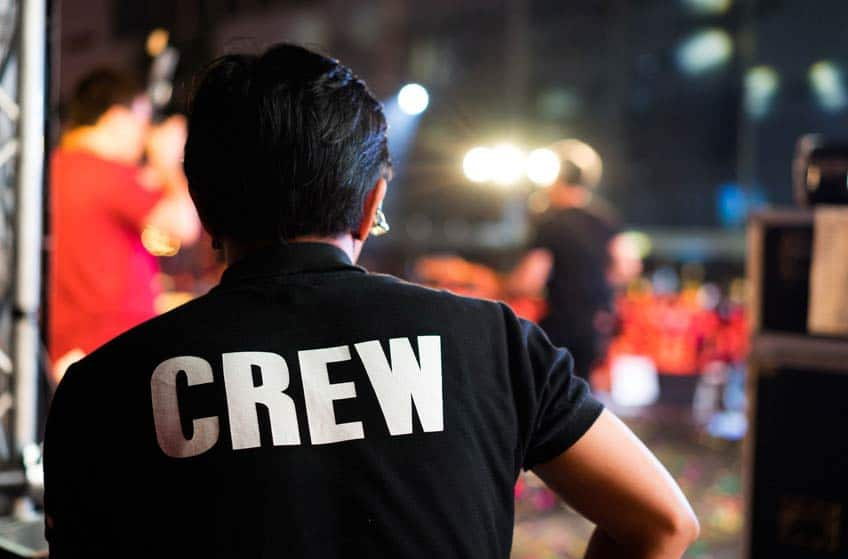
But remember that there’s not a single band in the world who can do a damn thing without the lighting guy from the venue. Or the person who books the travel. Or the backing singers, or the brass section. Or the stage crew guy in black who runs on in a crouch mid-song and fiddles with a wire and runs off in a crouch as though he thinks that by crouching he makes himself invisible. Those are the people who make the night happen at all, let alone one to remember.

“Because I wear black no one can see me”

So take a moment, today if you can, to celebrate those people around you who don’t enjoy the limelight – who in fact would scuttle off stage into the velvety darkness of the curtains like a startled theatre mouse if the limelight came anywhere near them – and give them the appreciation that there’s no show without them.

Wait, before you do that.. maybe bear in mind that they might not enjoy being singled out publicly, so perhaps just a private message or word would do.

Or even just keep it to yourself in a moment of private gratitude, with the hope that the energy of the world will give them a warm feeling about something they can’t quite put their finger on.

Whatever you choose to do, the important thing is to do it. And know that when you do, you’ll be more like a rock star than you ever realised.

Time waits for no man – part two

A good while back* I talked in these pages about my first trip into London since before all this happened. How the familiar felt so alien, and how whilst so much had changed, so much other stuff was just as it always had been.

And the thing that I really can’t stop thinking about, which keeps on popping back into my mind, is the thing that felt like it hadn’t changed at all. And that’s the homeless guy I mentioned, sitting in the place he always sits, just along from London Bridge station, next to the back entrance to Guy’s Hospital.

His stop is by the building on the right, and he’s only there until mid-morning.

Every day for as long as I’d made the trip to our office near the Tate Modern, this guy had been there. Always sitting on the floor, surrounded by old copies of the Big Issue in plastic covers, talking to himself a bit and occasionally saying hello to the regular people who walked by. Sometimes people would stop and squat next to him to talk, but more often than not he was there on his own. Every day.

And there he was when I went into London for the first time… and there he’s been on every day I’ve been since. sitting as he always has, like nothing has changed, still asking passers-by for if they can spare some change for him.

He’d been there every day for years, so why was it so surprising to me that he was there again on the day that I decided to come back into London for the first time in 14 months? Just because I hadn’t been there, why wouldn’t he? Yet it did surprise me, because whilst the whole experience was so very different for me his presence was so very familiar, like the gap from then to now simply didn’t happen. Like Covid was some kind of dystopian daydream I’d had on the train.

And now, it’s become less surprising and is becoming more and more an expected part of my journey to our office. I think I’d be more surprised if he weren’t there. But I’ll never forget the surprise of that first time for as long as I live.

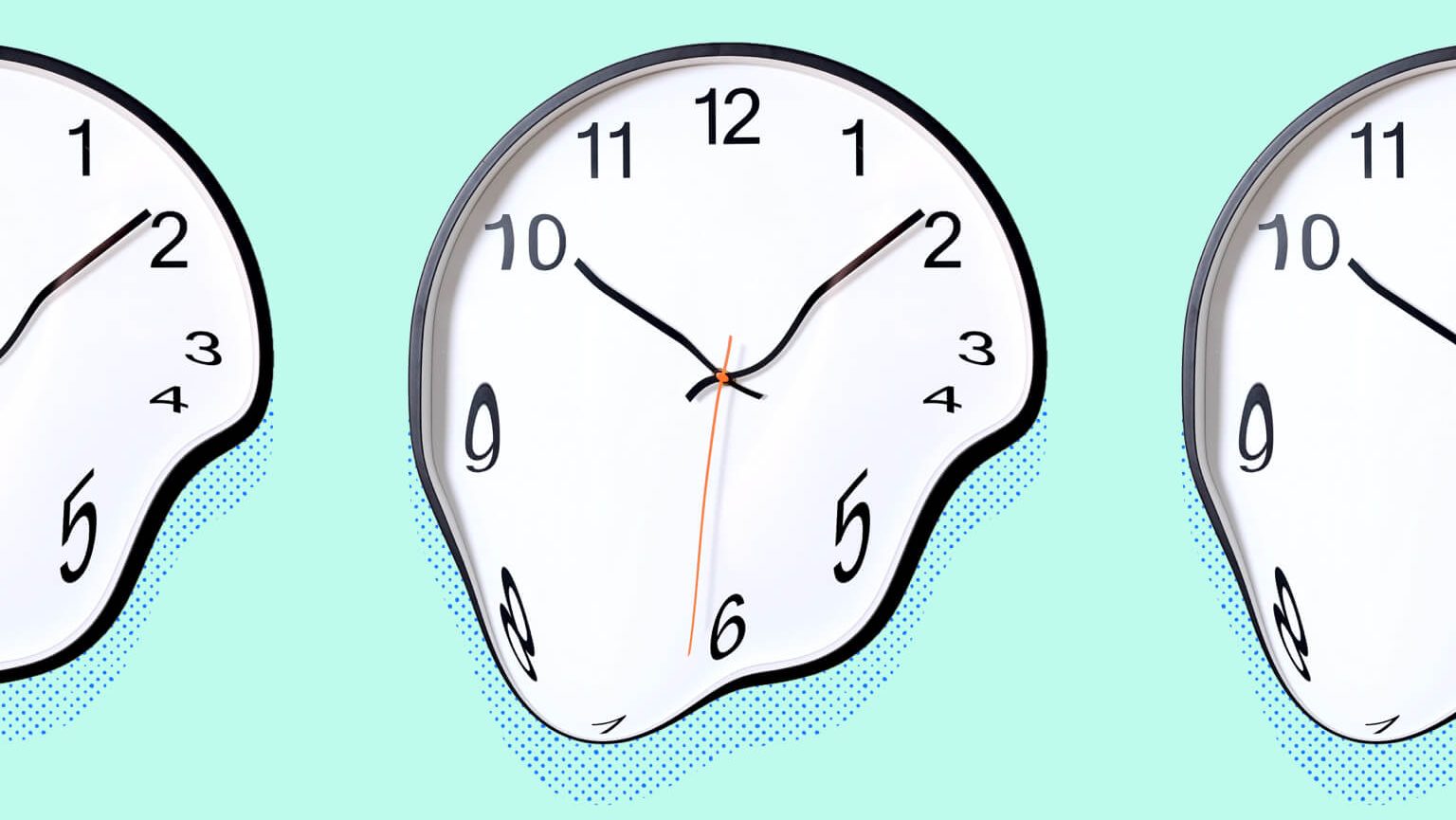
I’ve talked in these pages before about the way that your time and mine aren’t necessarily the same – that perhaps we experience time differently to each other, and even our own experience of time changes depending on what we’re doing. You think this cricket match is fascinating, I think it’s taking longer than the whole of history. This day doing something I love has flown by… this day doing something I find dull will seemingly never end.

On a micro level, that’s self-evident to me – objectively something we all experience.

But this was different. Time was playing with me here, surely. How could time fly and stand still at the same time? Make it feel like yesterday, but with the knowledge that the last time I stood here I was two birthdays younger.

And how did the last year feel to him? Did time drag or did it fly? Did it feel any different to any of the other years he’s had?

Time flies. Yet some people have time to spare, but never any spare change.

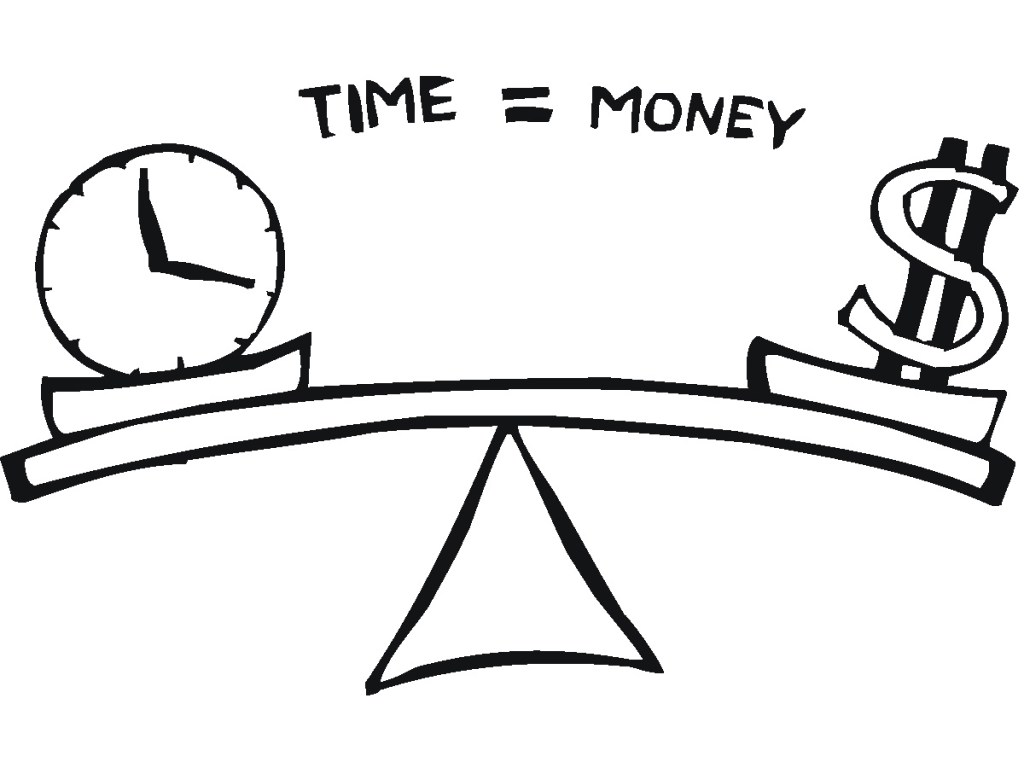
We have time and we spend time. We waste time, and we save time. It’s the same language that we use for money – hell, “time is money” remember? Precious time. We recognise its importance.

And you can tell from the phrases we use that unconsciously we understand our one-sided relationship with time too – our reliance on it but lack of control over it. Time flies. Time waits for no man. We’re on borrowed time, and ultimately only time will tell.

It would be conceited and condescending for me to begin to suppose anything about this man’s life, or about his experience of the last 20 months. Like so many of us I’ve worked out my recent history based on lockdowns – how far I could go from my house; what places I could visit or shop in; whom I could see or hug, how many could be where at any time – and all of those denote privileges and freedoms that this man does not have. For all my insignificant worries, I know where I am sleeping tonight. I know who will hug me in the morning.

What I do know about this man is that it’s doubtful that the few quid he might get from the throngs who pass by will change anything other than the few hours ahead.

Even more than that, I know he doesn’t need my pity, or the thousands of embarrassed half shrugs which mean “sorry I don’t have any change” he gets every day. I know that every time I catch his eye I give him a nod and a smile, and he does the same back, and every time I feel like I should do something more fucking useful, but besides giving him money every day I have no idea what that might be. Maybe the smile is that thing?

Lastly, I know that if there’s a better demonstration of how you might consider someone else’s experience of the world and measure it against your own to see an impossible myriad of differences then I haven’t come across it before, and I’m not sure I ever will.

Perhaps to give myself a purpose from this whole thing – to give it context, beyond just contemplation – I’ll commit to consider other people’s experience of the world even more than I have. Because there’s no question that however they experience the world, it’s unlikely to be anything like the world of which I’m in the middle.

*With noting that yeah it’s been a long while since my last post. If you’re a regular reader then I hope you haven’t missed out too much. If you’re new to the show, then I feel like there might be lots to come in the coming weeks so stay tuned!

Three lessons from a Zen Taxi Driver.

Driving in London isn’t fun. Sometimes it’s bearable, but most of the time it’s crap. Too many cars, too many vans, too many bikes, too many humans. Unending lines of traffic, all trying to get from A to B, perhaps via C and D; all in their own heads and all wishing all the other people would just disappear and leave the roads to them and them alone.

In one of the opening scenes of Danny Boyle’s 2002 zombie classic 28 Days Later, the main character walks across a deserted Westminster Bridge and around a London without a single vehicle. It’s meant to seem like some unreal and eerie waking dystopian nightmare, but for anyone who’s driven or worked around London much it’s an exquisite daydream.

Looks bloody perfect

I drove the streets of London myself for a while in the late 1990s, working as a medical sales rep. Every day I would hammer around the North West of the city trying to speak to doctors about some drug or other. They gave me five minutes of their time; I’d give them some branded tissues, or a car-care kit, or a pen.

I hated it, to be honest. I wasn’t very good at it for a start, because the whole thing – for me at least – seemed so fake. I pretended to be cheerful and chirpy [I know, not really my vibe] to the receptionists who pretended (sometimes) not to hate everything I stood for, hoping eventually that I might be allowed a few moments with doctors who were only after the branded foldable halogen desk lamp. Sometimes they pretended that they would try the drug I was talking about if they got the chance, and I’d pretend to believe them. I was talking to people all day, but not one conversation was authentic. I don’t think I’ve ever been so lonely in my life, and it ended up being quite depressing really – ironic as I had a load of sample anti-depressants in the boot of the Vauxhall Vectra 1.8 16v LS [that’s correct, I had the wheels to match the vibe]

Oh yeah, and the traffic.

On top of everything else, I had to pick my way around Kilburn and Camden, Neasden and North Farm, Holloway and Hampstead, Edgeware and Islington. Traffic everywhere. Every main road blocked, every back road full of people like me, desparately trying to balance a map on their knee as they checked the road signs. For this was a time before Sat Nav or GPS – I had a paper copy of the London A to Z, thumbed to death, covered in the fluff from Wotsits mixed with my own hot, despairing tears.

Okay the late 1990s wasn’t that long ago but this was the same tech

And I guess for a long time I carried that frustration with me whenever I drove around London, the tension I held in my shoulders and chest making my neck ache and my head pound. And I assumed everyone else did too.

And then, one evening, I met a man who changed all that. I met the Zen Taxi Driver.

It was a few years back now, not long after I’d joined CDM. After a long day of authentic and open leadership, I got a taxi back from the office – a car company taxi rather than a black cab – and struck up a conversation with the driver that has stuck with me ever since.

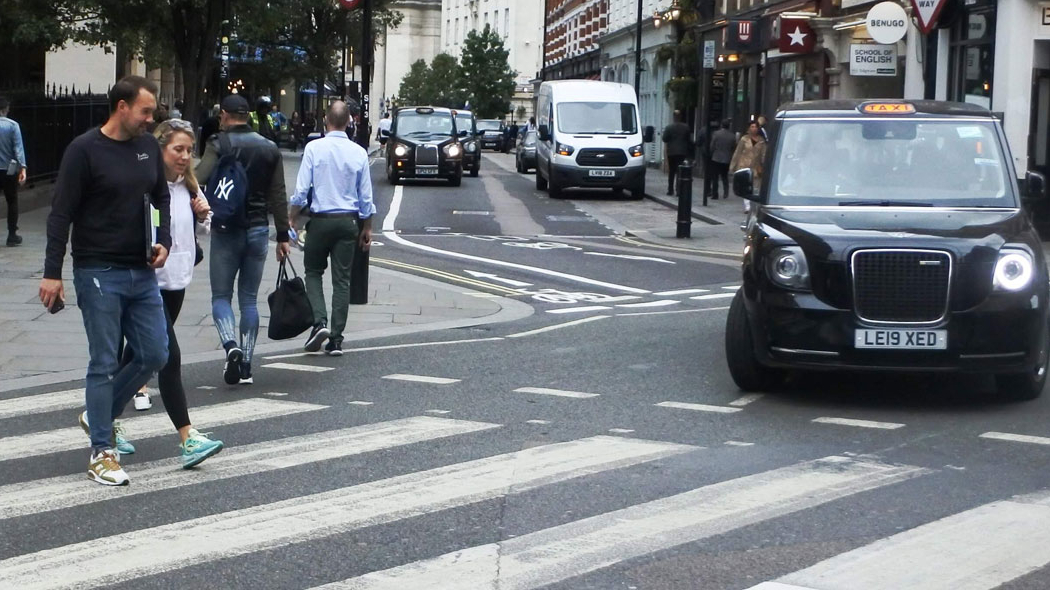
It started when he stopped for a young couple at a zebra crossing, and they moved like aged tortoises actually getting across the road, without acknowledging or even seeming to notice the fact that he had stopped to wait for them. I remarked that this kind of thing must be frustrating for someone driving all day, and rather than giving me the (probably expected) low energy agreement, he disagreed, for three very clear reasons. You may even consider them lessons, if you like…

This is a zebra crossing

The first lesson the driver talked of was about empathy, and honestly I felt a bit embarrassed that he had to point out the very obvious to me: that I had no idea what was going on in the lives of that couple, or the driver who was desperately trying to overtake in those one way, two lane roads through Hammersmith, the lady dithering about whether to turn right, or anyone else you could mention.

Maybe the couple had just had bad news about someone in their family.
Maybe the guy in a hurry was trying to get to his wife who’d gone into labour.
Maybe the lady was trying to remember the road where she had lived during the war.

Or maybe none of those big things. Maybe they just weren’t having the best few minutes, or hour, or day.

Whatever it was, none of them even realised that for that fleeting moment your lives intersected, and you were never relevant to any of them, any more than they should really be relevant to you. You have no right to judge them, nor should you feel the need to do so.

Which led on to the next lesson. My guide had hundreds, perhaps thousands of these micro-meetings every day… ephemeral encounters between people who may well never, ever cross paths again. And his philosophy on this was simple – that none of these people should willingly be given the power to influence your mood or feelings. You have it in yourself to decide what you will allow to affect you and what you will not. So have some respect for yourself, and don’t be so keen to give every passing person access to your emotions and the ability to affect your day. They have no right to affect you, any more than you have any right to judge them.

The third lesson that our teacher talked to me about was the individual experience of time. The way he put it was simplicity itself: “everyone walks to a different beat”. Some people’s internal metronome runs really fast – you’ve seen them doing a walk-jog-walk-jog thing down the pavement just to be half an hour early to work; you’ve seen them frustrated when things are ‘derailed’ or not going fast enough for them. And other people move at a much slower pace. Strolling rather than marching; always time for a ‘by the way’. Everyone has their own pace, one no better or worse than the other: just… different. Except for you, of course: just perfect in the middle, right? Hmm. Perhaps the truth is that to some people you seem incredibly impatient, and to others you’re glacially slow?

Empathy, and acceptance. People walk to a different beat. It’s not for you to judge.

By the time I got back home, I’d had one of the most in depth, introspective and interesting conversations I’d ever had. There was nothing I didn’t already know, as such, but damn if it didn’t make me consider how I was moving through the world.

I won’t say it was an epiphany, because there were so many other things happening in my life at that time which had such a profound effect on me too – new job, new baby, newly without a mum, to name but three [those and many others are in some of the blogs here too, somewhere, if you care to have a look around].

But here I am, probably seven years on, and I’ve decided to sit and write about that man, and the zen-like wisdom that he patiently and clearly articulated like it was all so very simple.

Lessons of self-control, self-respect. Of acceptance, of humility, of empathy. Crucial lessons for a life lived well, and I don’t know about you but I’ll take those with sincere gratitude from wherever I can get them.

In that spirit, I’ll leave you with a couple of thoughts which I’ve carried with me from that moment and likely will continue to carry with me for as long as I wander (and wonder) around this planet of ours.

First, I still have to catch myself sometimes, so I let myself off about that. We are all in our own minds, our own worlds, and so it’s human nature (literally and figuratively) to be wrapped up in what we’re doing and where we are going. We are all the lead actors in our own biopic, and those people whose paths we cross are the extras [and given special effects techonology nowadays they could actually all be CGI and you probably wouldn’t notice]. But still, I make the effort to catch myself; to remind myself that they are in their own world too, that their fleeting actions shouldn’t influence my emotions, and that my beat (at that moment) is different to theirs.

And it’s a simple, kind of daft thing… but since that day, I’ve never said that “I’m in traffic”. Because I’m not in traffic, I am traffic. Okay, it’s not life-changing. But I promise you, it does change one’s attitude to all the other cars around. They’re not deliberately in your way, making you late, any more than you are deliberately in theirs. You’re together, at this moment, just trying to get somewhere.

And here’s the [probably quite obvious to you, dear reader] next bit… none of this is really just about traffic. I don’t think I got that at first, so I make no apologies for holding your hand through it.

Because the truth is that we are all traffic, of course. Human traffic, thrown together into lives that we often don’t really understand and certainly aren’t evolved to be able to manage. But together, fellow travellers, all just trying to get somewhere. Along the way you try to surround yourself with the people and situations that help you along and give you energy, and avoid those which drain you or bring you down. And thus you make your own way, making it up as you go sometimes, but hopefully with some broad idea of where you’re heading, and you criss-cross with other people doing the same. We are all traffic.

Who knows, we might need to ask one another for directions one day. In the meantime, safe travels. Make sure you text me when you get there, okay?

Time waits for no man – part one

So there I am. Poised, ready. Coiled like a leopard ready to leap out onto an unsuspecting prey, every muscle tightened in anticipation. I know I’ve planned everything just perfectly, nothing left to chance after weeks – months even – of analysis and adjustment. And as the moment approaches, I can see the people around me shifting uncomfortably, the realisation dawning on them as slowly yet inexorably as the sun rises, that I am the one whose preparation has paid off; who will, today at least, be triumphant. And almost like it was written in the stars, inch by inch the world seems to shift around us all until the inevitable happens.

For in that moment, I am the man who is standing on the exact spot directly where the train door opens. I need not take a single step to my left nor to my right, but simply step forward and in and find the double seat (the golden ticket!!) that my diligence and meticulousness have earned.

Just a few more metres…

And if you’re thinking that is any train door then bless you, dear reader, but you are naïvely mistaken. For that is the train door which, on the other side of the train, will also be the train door nearest to the escalator when I arrive at my destination station.

Prized seconds have been saved ladies and gentlemen! Perhaps even as many as 30 seconds! That’s half a minute!

Until the world stopped last year, this was only one tiny part of my daily military operation.

Every single second accounted for.

If I leave the house at this time and take this route, I can make the station car park in around 16 minutes (depending on traffic, with 14 minutes as my personal best), then park here rather than there because whilst it’s a little further away from the entrance there’s more space to park quickly so it’s actually quicker. Then, if I have 90 seconds or more before the train is scheduled to arrive, that’s just enough grab a coffee from the coffee shop because the guy recognises me and starts making my “flat white, two sweeteners” as I walk towards him and then I tap and go and still make ‘my spot’ on the platform, this time walking up as the train slows to a halt and almost nonchalantly hit my mark so it looks like it’s coincidence (ha!) but you know, dear reader, that this is anything but.

From the train station to the office I pick the route with the least potential for human traffic, and my pass is in the pocket of my rucksack that I can reach without breaking stride and I’m through the revolving door, quick hello to the security guard and through the gate thing and before I press the button for the lift I see if I can check to see if one of the lifts has my floor illuminated so I can just jump in at the last minute.

Another 40 seconds saved! Hallelujah and praise be to the master of time!

All this in order to get to our office space about 45 minutes before the start of the official working day. Nice to be one of the first in, to say hi to the early morning crew and get myself settled in before the rush of the day to come.

And on the way home, I do it all in reverse.

I know that from the time I come out through the doors I can be on a train (not at the station, actually on the train) if I have 13 minutes. Any less than that and I’m into a weird walk-jog-walk-jog thing which I’m not fond of but will resort to if needed because the next train isn’t for twenty minutes or something monstrous like that and time waits for no man and time flies and yes of course time is money people time is money.

(Yeah, but is it?)

The week before last, I went into our offices in Central London for the first time since the 9th of March last year. Exactly 1.2 years since I’d done the trip which used to be my daily grind. Something that felt so familiar and so alien at the same time.

To be honest I’d forgotten some of the timings, and I didn’t know how long it would take to get a ticket at the station (season ticket having run out last year of course) so this time I left myself a bit longer.

I drove the same route, but without one eye on the clock.

I parked closer to the entrance because the car park was pretty empty. No need to do my weird walk-jog-walk-jog thing anyway, because I had a bit more time.

It was the same guy at the coffee shop as it had been 14 months and 12 days previously, but as I had more than 90 seconds we had time to chat about how long it had been and laugh about how he’d forgotten everyone’s “regular” because no one came in regularly any more.

I didn’t bother walking to “my spot” on the platform.

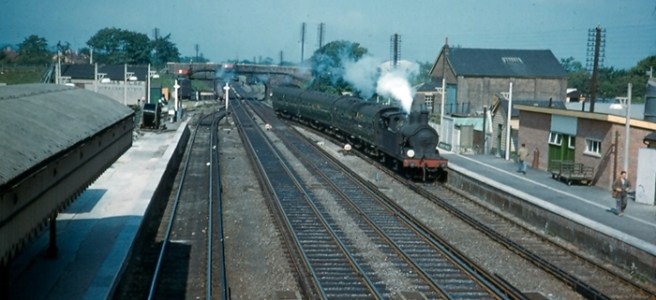
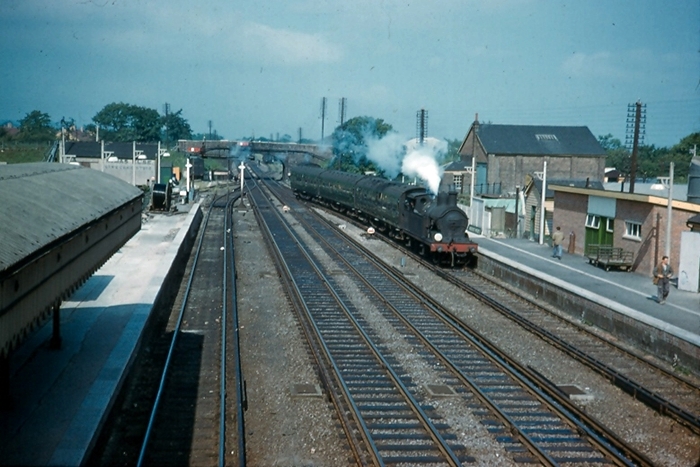
My home station on May 18th, 1961 – exactly 60 years and 2 days before my most recent trip on May 20th this year. Honestly hasn’t changed that much really.

The train ride itself was somewhat dystopian but then it was always going to be wasn’t it? The weirdest bit was coming into London and seeing all the landmarks which in times past would have told me precisely where I was and when I needed to get up to get to the doors at the right time, but not really being sure of the order of them. And it didn’t really matter anyway, because the train was empty of course.

Then from the station to the office, it was like nothing had changed.

That massive building still not finished – not that anyone is going to want Central London office space anyway nowadays…
That human traffic zigzagging across the road and pavement, magically avoiding each other like it was a film and we’d all rehearsed our marks and movements to avoid being within the magical (coincidental or conditioned?) 2 metres of each other…
That homeless guy re-selling copies of the Big Issue. In the same place as he ever was. Wait, has he been there every one of those 438 days…?

[Can that be right? That the world stopped for so many, but for so many others it just… didn’t? I think I’ll come back to that one another time…]

My experience of 10 days back brought something sharply to mind, which I’ve been thinking about a lot since. It’s probably obvious to you, of course

What the hell was I thinking, putting so much self-inflicted time-related stress into my life? So much unnecessary tension thinking so intently about the seconds here and there? So much pressure to get it all so tight that the smallest distraction, diversion or delay would scupper the whole thing?
The car driving too slow on my route, the kids taking my spot on the platform by fluke not by hard graft and painstaking preparation; the tourist with the rolling suitcase going across the flow of human traffic. All purposefully messing with my time.

Turning me into the walking tension headache that needed 45 minutes in the office before work started just to unwind, right?

I’m embarrassed at my own stupidity. I know that anxiety can take hold of me sometimes, yet I created this perfect recipe for stress and gobbled it down willingly every day. I guess it took 1.2 years of not doing it to make me realise that I’d been doing it, in some way or another, for the previous 20 years.

Joni Mitchell once sang that

Don’t it always seem to go, that you don’t know what you’ve got till it’s gone?

Joni Mitchell – Big Yellow Taxi

Too true Joni, too true. And once in a while you notice that the thing that’s gone shouldn’t have been something you were holding onto so tightly in the first place.

So from here I’m going to take the pressure out of my own relationship with time. Less saving and making up, and more ensuring I have a some to spare, so if I lose a little here and there I’ll still have enough.

They say that time waits for no man, but it’s waited 20 years to work that out I probably have as much as I need, and more than I gave myself. I’d love it if you could learn from my mistakes a little quicker than that.

Post-COVID uncertainty and the Rumsfeld Paradox

Okay, before I go on, I’m not going to be able to solve all the uncertainty that we all have about the world that will emerge from COVID, like a young polar bear emerging for the first time from the only home it has known, born through a winter of hibernation and squinting at the sunlight reflecting from the pure, blinding nothingness of the frozen tundra tumbling off as far as the eye can see… and further than the mind can imagine.

If anything, I’m going to add in another level of uncertainty. Sorry.

Anyone who tells you they know how these things are going to play out is a charlatan or a confidence trickster. Or possibly a ‘futurist” [I wonder how many of them predicted this eh?]. We’ve never been in anything like this (obviously) and there has been too much change (obviously) and so even if you’re in the “we’ll probably go back to pretty much how things were with maybe a little more working from home” then sorry, but you’re making it up too.

Right now, I probably have about three or four conversations a week with someone about what we think might happen. I don’t mind having them because each one helps me a little to work out what I think I would like to happen, and perhaps give me another couple of questions which I need to ask or answer which would add to the information I’ve got.

But I’m also okay with the fact that I will never have enough information. I can read every article out there and listen to every bit of gossip about what so-and-so agency are doing (most of which turn out to be nothing more than gossip) and do another loads of employee surveys and fill in a thousand templates for the network [true story] and I’d have all the information and it still won’t be enough. Because it won’t be relevant to me, and my team, because we’re not anyone else. As the Smiths once said:

“This one is different because it’s us.”

The Smiths, Hand In Glove

I don’t know about you, but I think a good segue from a 1980s indie band from Manchester would be to immediately cut to a former two-time US Secretary of Defence, Donald Rumsfeld. Let’s do it!

I’m not going to comment here on the politics of old “Rummy” (as he was affectionately known by people who knew him affectionately) because I don’t know much about them and I’m too lazy to find out. I’m also not going to comment on the fact that between serving as the youngest ever Secretary of Defence under Gerald Ford he worked for various big US pharma companies (my particular niche area of advertising) before then becoming the second oldest Secretary of Defence under George Bush. Again, I know not enough, and care not to find out.

What I am going to pick out from such a busy boy is a comment he made to the US press about the existence of Weapons of Mass Destruction in Iraq.

[Bear with me we are getting somewhere I promise.]

Rummy said the following:

As we know, there are known knowns; there are things we know we know. We also know there are known unknowns; that is to say we know there are some things we do not know. But there are also unknown unknowns: the ones we don’t know we don’t know.

Do me a favour and read that again. I grant you, it’s tough not to get dragged down by the context and by the fact that it’s another politician avoiding answering another question. But give it another read for me.

There’s actually an incredibly astute, and almost philosophical point. And it’s something I’ve been coming back to quite a lot in the conversations about the future world [you remember, the baby polar bear thing].

Because yes, there’s stuff we know.

We know we can work remotely, and do bloody good work. Arguably we’re more efficient, and if we could all have got rid of the real estate sitting dormant in every major city, we’d have been a shitload more profitable.
We know that we can build, nurture and maintain authentic relationships, with each other and with our clients, despite not being (sometimes never having been) in the same room.
We know that this has taken a toll on people’s mental health and wellbeing and boundaries and the flow from home to work (I don’t like “balance”, but that’s another blog).

And there’s some stuff we know that we don’t know

We know that we don’t know how we’ll feel on inevitably crowded public transport.
We know that we don’t know who’s going to want to work where, and how that’s going to affect how we work as teams together.
We know that we don’t know how we’re going to react to the polar bear situation

But hell, if there isn’t also a load of stuff we don’t know we don’t know.

There are problems that haven’t happened yet.
There are opportunities that we can’t imagine yet.
There might even be new kinds of feelings which come about precisely because of this meta-uncertainty.

We’re not good with uncertainty. It causes stress and as animals we’re not good at dealing with that because the society we’ve built up around us is bigger and more complex than, as animals, we have evolved to deal with.

But I think the existence of the “unknown unknowns” can actually be a source of calm. Forget about the things I don’t know about, there are things that I don’t even know I don’t know yet! Yes it demands that we “adjust the sails” and deal with ambiguity, but is there anything more ambiguous than the year we’ve just done?

Yes it was hard, and remains hard, but we did do it. We made it this far, battered and tired but still we made it. And that tells me that we’ll make it again.

It won’t be how we think it’ll be. But there’s a bit of me that’s interested in finding out what I don’t know.

Hope, optimism and faith

First thing yesterday morning, for a change of routine*, I went for a walk with a friend who lives down the road. We walked and talked for an hour or so before the working day began, through the woods, down the hill, round and back up; squelching through the mud and breathing in the cold, damp air as the day woke up around us, the mist lifting from the ground, as the sun strained to force its way through the early morning cloud.

The woods over the road

[* The ‘change of routine’ was, in and of itself, so important, and made such a difference to my mental state. Worth diving into that in more detail another time for sure. Watch this space.]

My friend happens to be a clinical psychologist, which always makes for a fascinating and introspective conversation. So as we walked we talked about the world and how, as simple, habitual creatures, we’re uniquely unable to process or handle the situation in which we find ourselves. Like many domesticated animals we have become defined by routine of one kind or another – and we build our lives around those routines.

Day by day and week by week we have the commute, the office, that place we go for lunch, the coffee shop, the takeaway on a Thursday night, the drinks after work, the visit to the Grandparents, the pub lunch on a Sunday.

Those fit within a more expansive set of routines, too. A couple of weeks somewhere in the Summer, a camping trip with friends, maybe a festival, gigs and plays and birthdays and traditions, getting together for the holidays.

And we’re so caught up in these routines we can’t help but hope and even plan for their return, despite the fact that this planning is a pointless and possibly damaging exercise. Because every time we plan, we create too much hope, and hold that hope tighter and tighter as the plans threaten to break apart once again.

Wondering if the plans for the wedding will go ahead. Plans to visit the family for Christmas. Plans to get the kids back to school. The holiday postponed from last year to this, and now… who knows?

Each time we hope that this milestone or that will be the one. We’ll be out of this by Easter. We might be back in the office by July. Surely it’ll all be over when the kids go back in September. Christmas is still a way away, surely…

And now we’re wondering about half term, and bloody Easter again. Do we just go round again? Keep on rolling the dice? Keep on predicting the future, and feeling so disappointed when we get it so wrong. Perhaps even feeling a bit stupid and bit naïve for thinking it’d be that simple…

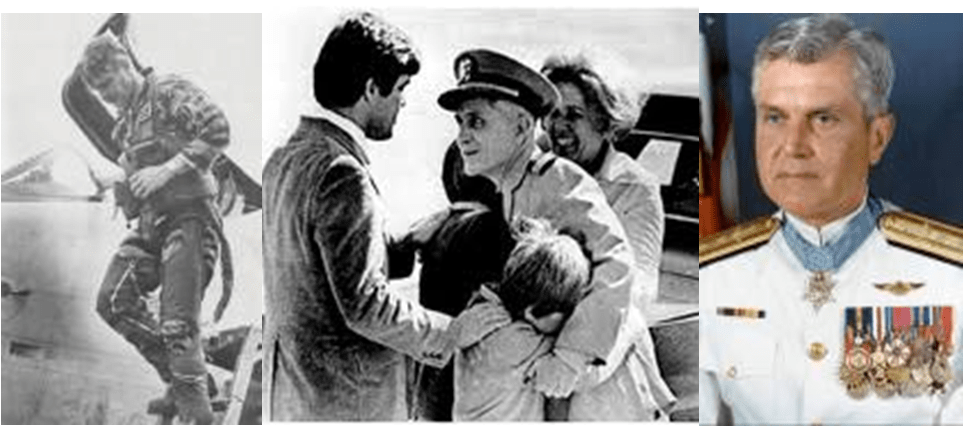
As we walked through the woods [perhaps a little out of breath on the big hills] my psychologist friend told me a tale of an American airman by the name of Jim Stockdale, who was shot down over Vietnam in 1965, captured and sent to the infamous “Hanoi Hilton” – a prisoner-of-war prison where American prisoners were held through the Vietnam War. Stockdale was kept in a windowless cell with a bare light bulb on 24 hours a day. Routinely tortured for information, during his time in captivity he had his leg broken twice. Every night he was locked in leg irons.

Yet where many of his fellow POWs died, he survived. For 8 years until his release, he refused to give up hope. In his words:

“I never lost faith in the end of the story… that I would prevail in the end”

Stockdale, L-R: just hours before his ill-fated flight; being greeted by his son on his return; and later in his career as a highly decorated war veteran

But this isn’t a story about keeping hope. It’s a story about how to keep hold of a kind of hope that doesn’t destroy you bit by bit; piece by piece.

Because when asked in an interview with author Jim Collins about those who didn’t make it, Stockdale was quick to reply:

Oh, that’s easy, the optimists. Oh, they were the ones who said, ‘We’re going to be out by Christmas.’ And Christmas would come, and Christmas would go. Then they’d say, ‘We’re going to be out by Easter.’ And Easter would come, and Easter would go. And then Thanksgiving, and then it would be Christmas again. And they died of a broken heart. This is a very important lesson. You must never confuse faith that you will prevail in the end—which you can never afford to lose—with the discipline to confront the most brutal facts of your current reality, whatever they might be.

US Navy Vice Adm. James B. Stockdale

Personally, I don’t mind a bit of optimism. When we all went to festivals back in the day I was always the one who would always look up at a cloudy morning sky and say “I reckon the sun will burn this off”. Sometimes I was right, too. But I didn’t pin all hope on it, and so if it didn’t that was okay. We had a lot of fun dancing in the rain.

But having the discipline, the fortitude and conviction, to confront the brutal facts? Right now, I think that’s as true for us as individuals as it is for any of us as family members or business leaders; as simple, social animals, desperately missing our connections in ways we cannot comprehend.

Maybe the brutal fact is that this, in some form, is going to be part of life for longer than any of us could possibly have imagined, and rather than predicting the future we must accept the situation as it is and make the very, very best of it, keeping faith that we will prevail in the end.

Maybe the brutal fact is that those most valued friendships will just have to be nurtured over video calls. Yes, young children you’ve known so well will be growing up and changing and you will miss some of that. Maybe the wedding isn’t going to be able to go ahead this year, either; at least, not as it was planned. But remember that you can stay connected, that love is patient; and keep faith you will prevail in the end.

Maybe the brutal fact is that the work will suffer in some way, or change in a way you weren’t expecting, or develop into something that you don’t understand. But be authentic and genuine, keep your integrity, stick to your values. And keep faith you will prevail in the end.

As a leader in times like this, getting the balance right is really important. Mentioned in these pages before, Harvard professor Nancy Koehn ran a webinar last year [when we thought we were in the middle of things but in retrospect perhaps were only at the beginning] about leadership in crisis. In this she talked about getting the balance between brutal honesty and credible hope.

The brutal honesty [interesting that it’s the same visceral, violent word – brutal – as Stockdale used] is that we cannot be certain. That we are at the whim of an enemy we cannot see. That predicting the future is a fools errand, as it always is. That we may yet find even darker days.

The credible hope comes from our dependable dedication to the values and ideas we hold most dear. We show up, every day, in service to the mission we have set. And yes, we can paint a picture of the future, whenever it may come, that has meaning and, yes, even brightness.

Because a bright, fresh, new dawn will come, as sure as day follows night. Perhaps not the one we imagined, or hoped for. But it will come.

So keep faith in the end of the story. We will prevail, in the end.

Decisions, decisions.

I once heard about a checklist for making decisions consisting of three simple, sequential questions. Does a decision need to be made? Do I need to make that decision? Does it need to be made right now? If the answer to any of those is ‘no’, then you’re off the hook, decision-wise.

I’ve always thought it was a slightly flippant way of looking at things, but hey, I’m a slightly flippant kind of chap so I kind of liked it. Sometimes there actually doesn’t need a decision, and rarely right now. So when I have considered it, it’s usually to get more information or opinion so the eventual decision can be more informed and, as a result, better.

But the last one – does a decision need to be made now? – brings danger with it. Because in a dynamic, fast-changing situation every delay could mean another potential option has been lost.

Imagine you’re driving down the motorway. Every time you pass a junction, you’re ruling that way out as a potential part of your journey for the day. A lot of the time that’s because you know where you’re going, so that’s a considered, thought-through and sensible decision. If you want to get to South Wales from London, stick on the M4 and you can’t go wrong.

But what if you’re not sure where you should be going? What if you were thinking of maybe going on holiday for the weekend but every time there was an option you bottled it? On past the junction signposted Oxford, past the Cotswolds, not sure about Dorset and couldn’t decide on whether to pick up the M5 down to Devon or Cornwall. And before you know it, the Severn Bridge is looming into view and you’re going to Wales not because you decided to but because you didn’t decide anything else and now you’re on the bridge and Wales is on the other side and you can’t stop or turn back so guess where you’re going on holiday…?

Wales here we come!

[Apologies here to anyone who isn’t familiar with the geography of the UK – please find details here – suffice to say my wife is from South Wales and it’s probably the trip I’ve done more than any other so it’s etched into my mind. Feel free to transpose your own well-worn road route.]

My point is that if you leave every decision to the final point then actually you’re not making a decision at all. It’s an illusion of decision making served up as leadership, when it’s actually just indecision for starter, procrastination for main course and inevitability for pudding. All followed by a cheese board of bullshit when you claim that the end decision was the only option.

Of course it was the only option in the end, but that’s because all the other possible options whooshed by one by one.

Taken to a completely ridiculous theoretical endpoint, in the current world, that’s how someone might end up having to close all schools the day after the first day of term! I mean, just imagine!!

Copyright @MattCartoonist

Decisions, therefore, come down to a exploration of the information you have in front of you, and a judgement on whether it’s enough.

Yes, bring other people into the decision-making process if you like. People you trust; people who might offer a new perspective; people who’ve experienced something similar perhaps.

By all means check if there really needs to be a decision made right now or whether there’s more time to gather more information.

Perhaps even try it out in a small way, like putting a splodge of paint on the wall to see if you like it as the light changes in the room through the day.

But for crying out loud, at some point just crack on with it, okay? Otherwise you’ll be sitting in Wales on holiday, wondering if you can find somewhere who’ll do a Devon cream tea.

You’ll never have all the information you need to make a decision.  If you did, it would be a foregone conclusion, not a decision.

David J Mahoney, Jr.

Yes, well said sir.