We like things that end cleanly, right? A launch, a decision. a delivery. Something we can point at and say, “that’s done”. Clean endings give us a sense of control. They make the effort feel justified. They let us compress weeks or months of work into a sentence or two, maybe starting with “well, what we did was…”
But most of the time, that’s not where we actually spend the vast majority of our time. Most of the time, we’re somewhere else entirely: right slap bang in the middle. And as I’m sure you don’t need me to tell you, the middle is where things stop behaving
Where the brief seemed pretty clear at first but as soon as you start to pull it apart it disintegrates, like a cartoon character pulling at a thread on their adversary’s jumper and leaving them standing there just in their nik naks.
Where the plan that looked optimistic now looks, with the benefit of lived experience and a deadline hurtling down the tracks towards you, really quite spectacularly so.
It’s the phase where you’re not sure whether the discomfort you’re feeling is creative tension doing its job, or something quietly going wrong.
[Annoyingly, it can be a bit of both. In fact, it’s usually a bit of both.]
The middle is emotionally untidy. Where you feel deeply confident on Monday morning and quietly less so by Thursday. Where you oscillate wildly between “this is coming together nicely” and “I have ruined everything I have ever touched”. Sometimes before lunch.
It’s also the bit we’re least likely to talk about.
Because the middle doesn’t come with a neat story. It doesn’t make for a good Instagram post, let alone a LinkedIn pic of the happy team. It doesn’t reduce easily to a lesson or a takeaway. It’s unresolved, slightly awkward, and often still in motion.
And sometimes it never resolves at all.
The project doesn’t land. The idea gets diluted into something nobody quite owns. The conversation you built up to in your head doesn’t change anything in the way you hoped it would.
[The imagined conversation is always better than the real one, don’t you find? The other person is always calm, and receptive, and says just what you want them to say…]
When things don’t land, there’s a temptation to treat the whole experience as disposable; to tidy it away so there’s no evidence, and move on [all too] quickly. To tell ourselves, “Well, you win some, you lose some.”
Which is true. But also incomplete.
Because even when there isn’t a visible outcome, something has still been happening, right?
The middle leaves an indelible mark on those who were there. The shared crucible of the middle shapes relationships. How it went defines how it goes: with a human bond of endeavour and vulnerability and trust… or not.
If people spoke up and got shut down, guess what will happen next time. The inevitable disagreement that you need to get to alignment either felt safe or they felt combative (or both of those. How did decisions actually get made when there wasn’t a clear right answer?
None of that shows up on a project plan. None of it gets its own slide. But it accumulates anyway, quietly influencing what becomes possible down the line.
A team that has spent time in genuine uncertainty together is not the same team that walked in at the start… even if the project itself never sees daylight. And neither is the person who led the way when they didn’t really know the way.
We tend to judge leadership at the moment of delivery. Who stood up. Who signed it off. Who got the credit. Leadership is much easier when things are going well. The harder test comes earlier, when the path isn’t obvious and the pressure is rising and there’s no guarantee waiting at the end to justify the effort.
What do you do then? Do you project certainty you don’t feel, because uncertainty feels like weakness? Do you shut down disagreement to keep things moving? Do you prioritise speed because slowness feels uncomfortable?
Or do you name what you don’t yet know, invite better thinking than your own, and stay present when it would be far easier to retreat into control?
[For what it’s worth, I’ve covered all of those approaches in my time. Sometimes in quick succession. I try my best to land on the last one nowadays but, like you, I slip up still too.]
I’ve noticed something about myself over time: I’m often better when things are unclear than when they’re polished. When the shape isn’t obvious yet, and the work still needs holding rather than presenting, I tend to be able to work out what to do when I don’t know what to do.
Which is helpful, because that turns out to be most of the job.
One reason I think we struggle to value the middle properly is that it’s hard to measure. Outcomes have metrics. The middle has judgement, learning, and capability, all frustratingly qualitative.
Another reason is that it exposes us. The middle shows doubt and missteps. Endings let us pretend it was all intentional.
There’s also a quieter fear: that talking about the messiness of the middle sounds like making excuses. As if acknowledging the work that happened without a clean result somehow lowers the bar.
Personally I think it raises it.
Because instead of only asking “Did this succeed?” we start asking better questions. Things like:
What did this show us about how we work together? What would we now do differently, having lived through it? What did this strengthen, even if it didn’t stick?
Those aren’t consolation prizes: sometimes they’re the real trophy. But you only get the glory of those insights if you’re willing to look back honestly, without rewriting history to protect your ego.
Of course, this isn’t just about work. Much of life is process-heavy and outcome-light. You can do everything right and still not get the ending you hoped for. We’ve all been there, right?
That doesn’t mean nothing happened. It means you were right there in it.
I’m not suggesting we stop caring about results. Results matter. They keep things moving. They justify the investment and if there were no results at all I think we’d probably need to challenge the “unlucky this time” story and sweat the technique a little. [Additional brownie points to anyone who gets the reference there. If you know, you know.]
But perhaps we could play with the idea that delivery isn’t the only proof that something was worthwhile?
Maybe we get better at noticing what’s being built while we’re waiting for something to finish. Or talk more openly about the messy middle, rather than only sharing the “humbled and proud to announce…” highlight reel.
Maybe we stop wiping the slate spotlessly and antibacterially clean every time something doesn’t deliver, as if the time spent there somehow didn’t count.
And if you’re in the middle of something right now that may never quite land, it might be worth asking yourself a new question:
What is this shaping in you, or in the people around you, while it’s still unfinished?
[Prefer to listen? Here’s an AI generated version of my voice reading this out so you don’t have to. I know, right??]
I’m ill. I’ve been ill for a few days now. Not catastrophically ill. Not heroically ill. Just that grey, flattened version where standing up feels like a negotiation …and your body keeps reminding you it would quite like a word, if that’s okay, when you have time, and yes we’re busy, but honestly it really would be good to have a word.
I went from “a bit run down” to “under the weather” to “oh wow I actually can’t move” over the course of a few days, and truth be told I kind of saw it coming. It certainly didn’t come out of nowhere.
For the past 2 months, I’ve been working flat out on a big, important, complicated project. The “holiday break” was punctured with work and that punctured the “break” part of it so there wasn’t really the end of year decompression I probably needed after a long year. Which meant for some long, sleep-interrupted nights. Then back into long days. Long weekends too.
The long dark teatime of the soul
You’ve had times like this yourself: the kind of sustained intensity where you stop noticing how tired you are because everyone is tired and there’s work to do and this matters. You just knuckle down, crack on, plough through, roll up your sleeves… you know the drill. We’ve all been there, and this week was that.
Sunday and Monday I could barely get out of bed. Tuesday I wasn’t much better, but that was the final delivery day so I did all those things because we needed to (as the delightful phrase goes) “get shit done”. And shit, as it tends to in these situations, did get done.
And here’s the bit I’m not going to pretend away: I’m proud of my contribution. Even sniffling and sneezing and snotting [apologies for the visual here; disgusting but sadly accurate], I showed up, and showed up pretty well, all things considered. Clear when it counted. Calm when it got contentious. Balancing conviction and compromise. That matters to me.
[And yes, I am also chuffed with the alliterative triptych that just tumbled out of my brain like an otter cub tumbling into a woodland stream, briefly shocked, then delighted. And whilst I’m at it, I’m also feeling pretty smug about the phrase “alliterative triptych” too… remarkable what Lemsip can do for a man!]
But pride doesn’t override biology. And, as it turns out, it’s a crap energy source.
The bill arrived anyway. Promptly. Politely. Like a bill placed quietly on the table by a patient yet expectant waiter.
It’s the time of year for viruses. It’s wet, it’s cold, and kids all round the world are dutifully sharing each other’s germs via the social petri dish of the school classroom and bringing them all home for the family to enjoy. My wife has been ill. Young Jack (12) has been ill. Our house has assumed a slightly subterranean feeling: blankets on sofas, muted voices, the kettle working overtime. Somehow Ben, now 15 going on 16 [I know I can’t believe it either], has powered through the whole thing with the constitution of a rhino who gets the idea of illness but doesn’t think it’s really something for them.
What’s struck me isn’t the illness itself; that part was obvious enough.
It’s the pattern.
There’s a familiar story we tell ourselves about pushing through. Sometimes that’s exactly right, and Tuesday was one of those times. But left unchecked, pushing through can quietly drift into pretending there’s no cost.
Your body will accept IOUs. It just has a habit of calling them in all at once.
You can borrow the energy from tomorrow. You can delay the payback. But it always arrives, calmly and on its own terms.
This isn’t about working less, or caring less.
It’s about being aware of when you’re borrowing from tomorrow, and knowing, in the moment, that you’re going to need to give something back. If you need to push through today, you’re going to need to pull back tomorrow.
Not as a reward. As repayment.
Sometimes pushing through is necessary, and worth it. When that’s the case, you go for it. I’ll be there to offer a cuppa and a biscuit when you’re flagging a bit.
Milk no sugar, right? You’re very welcome.
I know you care about what you do, and how you show up. You’re that kind of person. I love that about you, and so do the people who depend on you. So you wouldn’t stop showing up even if I told you to, and that’s just as it should be.
My only nudge would be this: be clear with yourself when you’re borrowing, and do it deliberately, rather than letting the deficit become the default.
That way, perhaps, you avoid defaulting on repayments the body refused to delay.
So do me a favour: maybe just have a quick word with yourself about where you are once in a while. You’ll save a fortune on tissues if nothing else.
I love being silly. LOVE IT. Always have. I got told off for being silly when I was little, then got told off for it when I got a bit older, which turned into getting into a decent amount of trouble for it when I was in my teens, and then, as I wandered into adulthood like a young gazelle wandering innocently into the open savannah without a care for the pride of lions on the near horizon, I found that my silliness was both a curse and a blessing.
A curse because, yes, it got me into some sticky spots, and made me seem less serious and more childish which, let’s be honest, some people find really, really annoying.
And a blessing because I found that my silliness connected me to other innately silly people in the world, a number of whom became friends for life; connected forever by the ability to lighten the mood by doing or saying something ridiculous. One of them I ended up married to: potentially the silliest decision she ever made.
It’s easy to see where that came from for me. My family was a family of jokes and teasing and fun and silliness, from top to bottom. There was always a joke to be had; a tease to be teased; a daft tale to be told. We didn’t necessarily always get on brilliantly all the time any more than any family do, but there’s no question we laughed, a lot, at things that were daft.
When I was young, whenever someone said “must admit”, we would shout “Pepper Paws”. Because… you know… “Mustard Mitt”… therefore “Pepper Paws”. I know, silly, right? I only found out that this wasn’t something that all families did when I was about 6 or 7 and my teacher said “I must admit” in class and I confidently shouted out “Pepper Paws” at the top of my voice and was sent to sit on the naughty chair for being “silly”
When my big sister [hey Sal!] and I were little we would go and stay with our grandparents (on my Mum’s side) in Richmond (SW London for those not acquainted with our capital’s leafy suburbs) for a couple of weeks in the summer holidays, and Grandpa would pretend to be a tiger and chase us around the house, up and down the stairs, for what felt like hours, with my sister and I screaming with a mixture of delirious joy, uncontrollable excitement and abject terror until Grannie would demand he stopped because it was nearly bedtime and it was all getting very “silly”
One day when I was maybe 10 or so, my mum came home with a cast on her arm, and told us all she’d slipped on some ice outside the hospital where she worked and broken it. All evening we made sure she was comfy and got her cups of tea and looked after her, and at one point I saw tears running down her face. “Don’t worry,” Dad said quietly to me, “she’s just in shock”. A few minutes later she pulled the fake cast off her arm and revealed they were tears of laughter which of course we all agreed was just “silly”.
And then I discovered silliness on the telly, and felt the connection which has continued to this day
Despite what the ever expanding wrinkles and white bits in the hair and beard might suggest, I’m much too young to remember Monty Python’s Flying Circus first time round, but it seemed to be on constant repeat when I was a kid. Popping up here and there is a character called The Colonel, a classic, stuffy British Army officer-type played by Graham Chapman, who would interrupt a sketch if it got “silly”.
My personal favourite appearance was a sketch about gangs of old ladies – Hell’s Grannies – “attacking fit, defenceless young men”. Obviously completely daft from the beginning, it brings in other, ever more “silly” ideas (a group of men dressed as babies kidnapping a 48-year-old man from outside a shop; vicious gangs of ‘keep left’ signs attacking a vicar) until The Colonel feels the need to step in.
Very silly
Right! Stop that, it’s silly. Very silly indeed. Started off as a nice little idea about old ladies attacking young men, but now it’s just got silly!
The Colonel – Hell’s Grannies sketch by Monty Python
It was the silliness that made Monty Python, of course. You never really had a clue what would happen next, and the anticipation that creates makes the whole thing exciting. The folks from Monty Python didn’t invent silliness, but they took inspiration from radio shows like The Goon Show in the early 1950s [which, lest we forget, was an extremely sensible time in a post-war Britain run by people born when Queen Victoria was on the throne, and still reeling from the costs of the war on society and the economy] and broadcast it into every living rooms of the 70s and 80s. giving life to the surrealism of Vic Reeves & Bob Mortimer in the 90s and beyond to the likes of The Mighty Boosh.
[BTW, if you want to see something really, really silly, check out Vic and Bob as Donald and Davey Stott interviewing Sting via the link here – yeah that’s right: tantric, The Police, “Shape Of My Heart” Sting. It’s totally ridiculous]
Donald & Davey Stott
Over the last couple of years I’ve re-discovered the original radio series of The Mighty Boosh set in a zoo called Bob Fossil’s Funworld and it’s as box fresh streamed today on Spotify [other streaming services were still available at time of writing] as it was when it came out two decades back. It doesn’t age because it always was completely mad.
The Mighty Boosh: Howard, Bollo the talking gorilla, and Vince.
Which is why kids today would still love Monty Python. Because a load of old grannies beating up young people will always be silly. Silly, silly, silly. It’s why my kids love The Mighty Boosh.
It’s all silly. Childish at times. Pointless and annoying to those who don’t like it, I’m sure. But I love it. LOVE IT.
My English teacher told me when I was 11 that “humour is incongruity”: when the thing you least expect happens and you can’t help but be surprised by the “what the hell was that?!” and then be delighted when you ‘get it’. Quite a lot for an 11-year-old but it’s stuck with me, and the idea that humour is incongruity is every joke, every punchline, every laugh you’ve ever had, right there.
Add in a sprinkle of silliness and you get a much deeper flavour to your humour.
Most “jokes” are formulaic really. And the vast majority of stand-up comedy is just a series of observations dressed up in a fairly predictable, never-actually-happened anecdote. It’s obvious. It’s conventional. Yet silliness [you can call it surrealism or absurdity if you want to go a bit more highbrow] is deliberate freedom from any convention; from expectations. There are no rules – apart from incongruity, perhaps.
Which is why silliness has such a strong connection to childhood. You can imagine someone being called a ‘silly boy’ but never a ‘silly man’ (or if they are, there’s a suggestion of childishness, immaturity, a lack of common sense) and that’s because despite there being plenty of rules about what to do when you’re a kid (bedtime, homework) there’s also so much more freedom in how you think.
Kids love being silly, and love it even more when adults are silly with them. You tell a 7-year-old you once jumped up so high you hit your head on the moon and came down with cheese in your hair and you’re in an absurd conversation that will last as long as you both want it to.
Cheesy moon, courtesy of AI
My younger son had his last day at primary school a couple of weeks back [I know, I can’t believe it either; another reminder of my ever-increasing age], and as tends to happen towards the end of term towards the end of primary school, it all got a bit loosely goosey in the last few weeks. The learning was all done, and things just became about making sure the kids had a good experience in their final days in the safe, loving bubble of being the oldest in the school before they were sent off to be the youngest in a much bigger, much less structured and much more scary school environment.
It was in one of these final weeks that I dropped him off, and as they were all lined up to go inside their teacher came out and they all started chatting with her and joking and you could tell how much they all really liked her. As I walked out of the playground, another parent and I were talking about that and came to the agreement that it was because whilst she was strict and stern when she needed to be, she also allowed them to be silly sometimes, and did that by being silly herself sometimes too. Allowing herself to play the fool enabled her to connect with the kids on their level, in a way that not all teachers do. In fact, in a way that some of his previous teachers definitely would not do, ever. So much so that you couldn’t really imagine them ever being anything other than strict and stern.
And I was left wondering – why do some adults keep hold of that silliness when others don’t? Why do some people put it away in a box in the attic along with their old school memorabilia, whereas some people just refuse to ever let it be out of arm’s reach?
I’m silly at least once a day I reckon. Just for the hell of it, more often than not. I might tell my wife that my legs are broken so unfortunately unable get the milk out of the fridge, for example. I might tell my kids that I’ve run out of “Cuddle Power”, which they know means I am totally paralysed until they come and give me a hug. If I believe I have been slighted whilst in public by one of my family, I may well stop totally still, put my head down to my chest and say “meh, meh, meh” in a sad voice over and over again until everyone is nice to me. It’s incredibly effective. And yes, you’re right, incredibly silly. Just this morning, as my wife was lying in bed, I stood at the end of the bed, pretended I was an Olympic high diver, went through all the prep and breathing and hands up in the air and then dived onto the bed and her.
A few years ago on a road trip through California I made up a character called Jerry who’s an old guy who used to be in the movies and is still in love with his former wife, Margie (or Marsha – it varies), but also has a crush on my actual wife. To this day, my younger son, Jack, will ask me if he can speak to Jerry, and now and then Jerry will pop out to say hello to the family. Jack once told me that of all the people in the world he knows, Jerry holds the joint gold medal position alongside me, his mum and his big brother. There was a point where Jerry was coming out on top.
Being silly with kids is a joy, because they immediately, instinctively ‘get it’. And with some kids you can find yourself in an impromptu improvisation where the only rule is you have just to build on whatever the last person said, no matter how silly: “yes, and…”
And I love being silly with fellow “grown-ups” too. Sometimes it’s slightly surprising but the incongruity of it – particularly in lives bound by so many societal and social conventions – brings back a childishness and suddenly we’re all kids again. Thinking about it, all my strongest relationships have a foundation of silliness; the comforting certainty that we can be as deliberately idiotic as we like, without judgement or boundaries.
Funnily enough, I find that elderly people enjoy silliness too. Perhaps it’s because, like children, they are more free – from the pressures of work, the worries of looking after their own children. Watch a grandfather (or, if you’re lucky, a great-grandfather) with his young (great-) grandkids and it’s like there’s no adult there at all.
Gramps back on the see-saw for the first time in 60 years
Yet we all know so many “grown-ups” who eschew silliness in all its forms. Hell, I even knew a lot of kids growing up who would sneer at something being “just silly”, without ever getting that was the whole point. People who are always serious and ‘businesslike’ [like business doesn’t actually need freedom to think and humour to raise the spirits?!] and for whom silliness is just… well… silly.
And trust me: I have not a single doubt in my tiny mind that all the above will not only sound “silly” to some people, but actually really annoying. Unbearable, actually. I’ve met some of them over the years. People who find me really, really childish and irritating. That’s okay: I’m aware that I’m not for everyone. But even if I wanted to change to be less silly to keep those people on the Bartlett Train, I’m really not sure I’d be able to. And, as you might have gathered, I don’t want to. I love being silly. LOVE IT.
I believe that people choose to leave silliness behind because they don’t think there’s a place for it in the adult world. But I also believe it’s still in there somewhere, waiting to be found again like that old band t-shirt/stripy dress/straw hat/banana costume [delete as appropriate] you used to wear all the time but had been shoved behind the sham and drudgery of broken dreams in your second drawer down.
It’s still in there because the child you once were is still part of you. In fact, there are even a couple of bits of you that haven’t even grown since you were born – the cornea of the eye and part of the inner ear. So you see and hear with the same exact bits as that kid you used to be. You can be them again, with a little bit of silliness now and then.
So go on, give it a try. You don’t have to start big. Maybe just try out a silly walk, on your own. Pull a silly face in the mirror. Hey, you can just think something silly when you’re in a “grown-up” conversation, and you’re in it.
And you’ll find that silliness is a unique combination of freedom from convention and the incongruity that creates humour.
A generous helping of liberty with a side order of laughter? Tell me you don’t fancy some of that, and I’ll tell you not to be so silly.
I planted an oak tree a couple of weeks ago. I’ll come on to why I had an oak tree to plant in a bit, but I was surprised how interesting the planting turned out to be. Because quite unexpectedly, the very act of kneeling down out at the front of my house on the edge of a little village in the South East corner of our little country and planting a little 6-inch tree in the soil attracted more attention than usual from the usual stream of passers-by.
To give you a bit of context, I live right on the edge of a big forest, and the path into said forest is right over the road from my front door, and on a sunny Sunday like we had that particular weekend, there are always a fair few people who park up in the village to wander into the woods, perhaps walking their dog, perhaps walking their kids [we all know that kids need the energy running out of them just as much as any dog], or perhaps just walking themselves with their friends, and they all go past the front of my house.
And so when I’m out there of a weekend doing classic middle-aged man things like tidying the hedge or putting stuff in the back of the car to take to the tip [our British word for the local recycling centre, and a mainstay of classic weekend activity for those of you who aren’t Brits and are wondering what I’m on about] or taking Jack [10-year old human male] to football training or Ben [14-year-old human male] to rugby training or Ruby [3-year-old canine female] for a walk [yes, this is the rock-n-roll lifestyle I lead] I often end up in a lot of smalltalk chitchat “lovely weather we’re having” conversations with strangers.
More than I’d ideally like, if I’m honest, because in my heart of hearts I’m not really quite as outgoing and gregarious and social as I might seem. [I’ve discovered over the years that I’m what can be described as an “extroverted introvert”, in that I’ll happily talk to anyone and everyone but I’ll also resent the fact that I have to and will be exhausted from the energy the interaction requires. But that feels like another blog…]
This time, though, it was different.
For a start, virtually everyone who came past felt the urge to point out to me what I was doing, mostly with a mixture of surprise and delight in their voice:
Oh, you’re planting an oak tree!
[Which actually doesn’t happen that often, when you think about it. It’s not often complete strangers totally succumb to the urge to tell you what you’re doing at the time. Imagine how odd the world would be if they did. “You’re walking down the street”. “You’re sitting on a train”. It would end up feeling like you were in some weird kids’ TV show where adults dressed in primary colours point out the blindingly obvious to an audience of tiny, no-nothing humans.]
And then, as a follow-up, virtually everyone would say something about how long it would take to grow, often with a bit of low level comedy in there:
I’ll have to come back in 30 years to see how it’s going.
That’ll look lovely in 100 years!
Quite a few people talked about their own mortality…
I won’t be around to see that fully grown…
Or indeed, about mine:
That’ll be one for your grandchildren to enjoy!
When the first person stopped and pointed out that I was, indeed, planting an oak tree and that yes, it would be a long time until it was fully grown, I said something along the lines of…
“They say that the best time to plant an oak tree is 100 years ago, and the second best time is today!”
…which got a great reaction, and so I basically recycled versions of that same line over and over with everyone who came past, honing my delivery each time, every new set of people blissfully unaware that they had unknowingly wandered into my perfectly curated and planned out set-piece interaction where I knew what they would say and what I would say before anyone said anything, all people playing their parts perfectly, my supporting actors never knowing that they weren’t the first to point out what I was doing, or experience the seemingly off-the-cuff remembering of an old quotation.
I knew I’d picked that line up from somewhere, but because I couldn’t remember where and because the people I was talking to probably wouldn’t know either, by the end I was making out it was a famous quotation which I knew and making up who had said it. Thomas Jefferson sounded realistic, as did Benjamin Franklin [not sure why the American forefathers leapt to mind, but I vaguely remember something about one of them chopping down a tree and then lying about it… or not lying about it… or some such thing; if you’re from that side of the ocean perhaps you can enlighten me!], and Lord Byron, for some reason, and then of course you can always drop in Churchill because all quotations sound like they come from him.
[As it happens, having put an appropriate amount of effort into researching this, it turns out it’s none of them: it’s actually (as far as I can ascertain, anyway) from an old Chinese proverb, and it’s not about an oak tree specifically, it’s about trees in general, and it’s not 100 years, it’s 30 or 20, depending on where you look. But as Mark Twain/Ernest Hemingway/Jonathan Swift/etc might or might not have once said: “Never let the truth get in the way of a good story”.]
And so, as the sky started to bruise and late afternoon made its lazy way towards early evening, I kept myself occupied with making up new attributions for this “quotation” and had a bunch of very small, but very enjoyable and (for me, at least) playful little interactions, all ending with an “enjoy your walk” from me and a variation on “enjoy your tree!” from them.
[I tell a lie: there was one more negative exception which proved the rule: a very prim and proper woman who took the time to point out that because of where I’d planted it, in 50 years time “that tree” would be getting in the way of the electricity and telephone wires criss-crossing above and I should perhaps plant it somewhere else. Knowing me as you do, dear reader, you will be most proud and a little surprised to hear that I didn’t simply say “oh sod off you grumpy old bag”, but instead said that in 50 years the tech would have moved on and there probably wouldn’t be wires above and anyway I’d be long dead by then and it wouldn’t be my problem to worry about. Which, considering she was maybe 25 years older than me, probably gave her a little jolting reminder of her own mortality and, perhaps, made her consider whether being such a naysayer was really how she wanted to spend her Autumn years. But we didn’t get into that next conversation because by that point it was clear we weren’t going to be friends anyway.]
And as I stood back, brushing the soil from my hands and admiring my handiwork – this funny little baby tree in the middle of a patch of grass, containing every piece of genetic information it needed to become a huge oak towering over the house – I had quite a deep feeling of accomplishment, and even a little pride.
I’m someone who plants an oak tree, with the knowledge that I won’t be here to see its majesty. It felt like a pure act of altruism, of outward-looking connection to the future. To people I’d never know, who would never know that I planted this tree, all those years ago.
And there he is!
Perhaps, in 60 or 70 years’ time, my own sons might visit the village in which they grew up, perhaps bringing their own grandchildren, or great-grandchildren even, and say “I remember when my dad planted that tree”. And they could all point out that as it turned out it had really got in the way of all the electricity cables and made a right mess of things, and remember how the great power cut of 2078 that had all been traced back to me planting that very tree back in 2024…
Last Sunday, I have to say, they were both pretty underwhelmed. But they could see I was chuffed to bits with it so they kept their lack of enthusiasm to grunts of “it’s not very big” and “is that it?” and we left it at that.
So why, I hear you cry? Why was I planting an oak tree, of all things?
Good question. Well done you. There are a few reasons, and they probably make the most sense if I explain them in reverse order…
This little oak tree had actually been living in my house for a few weeks by the time it eventually got to experience the wild wonders of the world, but had arrived just before the twentieth day of the third month of this year which I’m sure you will have spotted is indeed my birthday.
If you’re also wondering why it took so long to plant it, well that’s symbolic of how my brain works – an often constant cycle between “I must do that important thing” followed by a gap, followed by a reminder and “shit I forgot to do that important thing” and then a gap and then repeat. A cycle between frustration and guilt and self flaggelation which is only broken by actually just doing the important thing which often doesn’t even take that long once I get down to it.
This is how it was with our oak tree. When it arrived it was just a little twig with roots in a bit of soil in a little plastic bag within a little hessian draw-string bag, and it sat on the windowsill in the kitchen [you know, the one behind the kitchen sink, by the window]. Every time I noticed it again, perhaps once a week or maybe a little more often, I’d go through the cycle of self flagelation above and give it a little drink from the kitchen tap, and think “definitely this weekend”. Then I’d forget all about it until the next time.
But this is an oak tree, remember? These things last for hundreds of years, and a few weeks being forgotten about by some bloke with a fuzzy brain wasn’t going to stand in the way of that.
So it grew leaves anyway. Beautiful, perfect little oak tree leaves like the ones you’d get if you googled “oak tree leaves”. Leaves of life, and determination. Leaves that demonstrated that this was a living thing, demanding to be planted so the roots living in a hessian draw-string bag could dive down deep into the earth to find their own water source.
Putting together all this information, and if you’re not only observant but also somewhat sleuth-like, you may well have worked out that this little oak tree friend of ours was indeed a birthday present.
The next question your inquisitive mind might ask could be “why on earth would someone buy you an oak tree sapling as a birthday present?”
Well, this particular oak tree was a surprise present from the person who’s been coaching me for the last couple of years, another Sarah in my life [alongside my wife and my big sis], who lives on the the other side of the world in Australia. And when she sent me an oak tree, she knew that I would know the meaning behind that gift.
Which takes me right back to the chronological start of this (surprisingly long) tale.
If you’re a regular reader you’ll know that I’ve had my struggles with mental health over the years, and you’ll also know that I’m now thinking that some of those struggles could well be connected to undiagnosed and untreated ADHD, which I had diagnosed and then treated from last year.
So over the years I’ve occasionally found myself right in the middle of the deep dark forest [you can jump into the Ted Lasso story around that idea here if you feel the need], where everything seems tough and scary and you don’t know which way to turn. You know how that feels too, I’m sure. I hope you’re not in there right now.
But as Coach Lasso pointed out, fairy tales do not begin, nor do they end, in the deep dark forest. “That son-of-a-gun always shows up smack-dab in the middle of a story”. Things do get better, and things do work out.
What I’ve found is that it’s not until you start to find your way out, coming out into the open air, seeing the sky and the clouds and the sunlight, that things start to get some context.
I’ve also found that there is a huge temptation, at that point of being able to look back, to curse the forest for all its darkness and danger and discomfort.
And that’s where the oak tree changed things for me, and why it’s become such a theme for me, and why Sarah gave me an oak tree for my birthday, and why planting it meant more to me than it would have if I had planted a beech, or ash, or horse chestnut.
Because the oak tree doesn’t represent the forest. The oak tree isn’t the forest, or part of the forest. The Oak Tree is a poem.
[Listen, if you’re sitting there reading this and thinking “oh for crying out loud, what is he banging on about”, or possibly words with the same meaning but with more expletives, then I get it. I wouldn’t blame you if you decided that you’ve had enough of this story which started with some amateur horticulture and has ended up here, talking poetry. It’s been quite a journey to this point, I grant you. But going through the forest often means you need to take some strange turns along the way, right? So stick with me. It’s worth it, I promise.]
It’s a poem that my yoga teacher, Lucy, read out during one of our yoga therapy sessions just as I was coming out of a deep dark forest of my own. It’s called, simply, The Oak Tree, and it goes like this:
The Oak Tree
A mighty wind blew night and day It stole the oak tree’s leaves away Then snapped its boughs and pulled its bark Until the oak was tired and stark
But still the oak tree held its ground While other trees fell all around The weary wind gave up and spoke, “How can you still be standing Oak?”
The oak tree said, “I know that you Can break each branch of mine in two, Carry every leaf away, Shake my limbs, and make me sway.”
But I have roots stretched in the earth Growing stronger since my birth You’ll never touch them, for you see They are the deepest part of me.
Until today, I wasn’t sure Of just how much I could endure But now I have found, with thanks to you I’m stronger than I ever knew.”
It’s that last verse that got me. The idea that I could look back not with horror of what I’d come through, but with gratitude for what it showed me about myself, was brand new to me.
I’m sure that you, like me, have the tendency to look back at difficult times and revile them. Perhaps you’ve even put a whole calendar year in a box marked “CRAP” and now you talk about it like it something real and evil rather than just the social construct that it was. 2023 sucked, right?
Whatever the situation you experienced [the one you’re thinking about right now, for example], whether it was a difficult friendship, or a toxic work environment, or a bereavement, or a break-up, or just the end of an era, the urge is there to put it in a neat little box and then burn that box in the eternal fires of Hades because the wind was battering you and your branches were breaking and your leaves got carried away and you were swaying all over the place and you just want to forget about it.
But here you are. You made it from then, which seemed so huge and impassable and desperate, to now. And like it or not, you learnt something along the way.
About your values.
About your friends.
About what’s really important to you.
About yourself, and what you can endure.
It feels a bit unfair perhaps, but you don’t get to learn those things when you’re wandering carefree through the meadows. You only get to learn those things when you’re being tested. So whilst you may not feel like it now, perhaps one day you might even look back with a kind of gratitude, for showing you those things.
For showing you just how deep your roots go.
I’m not saying that’s an easy shift. But once made, it’s a shift that can release some of the tension you’ve built up around those more difficult times. It certainly allowed me to shift the way I look at the bad things that happen. Bad things will always happen. Of that there can, I’m sorry to say, be no doubt. But how you look back on them? That, dear reader, is always up to you. You didn’t get to decide what happened. But you do get to decide what place these things occupy in your mind, and what energy you give them. You do have choices now.
Me? I chose to plant an oak tree, to symbolise all these things. Time moving inexorably on from a made-up, one-sided story we tell ourselves about the past, through the reality of right now, towards another fantasy which we call the future. My own mortality within that. Friendship and support. Trials and tribulations. Resilience, and choices. My own roots. Stronger than I ever knew.
Not bad for a 6-inch high twig with a dozen or so leaves.
Have you watched Ted Lasso? If you have you might already know what I’m talking about here. In which case, stick with me anyway because who knows, I might say something borderline interesting at some point. If you’ve never heard of it, don’t worry because the theme of it isn’t crucial to what I’m going to talk about anyway. Basically, whomever you are, and whatever your current relationship with Ted Lasso, from superfan to total obliviousness, let’s just agree that you carry on reading and I’ll carry on writing, yeah?
[For those novices, suffice to say that Ted Lasso is a comedy series about a football coach from the USA who comes over to London to manage a fictional club in Richmond. Sounds a bit crap, but it’s absolutely brilliant – less piss-taking about Americans saying “soccer” instead of football and more of a case study in vulnerable leadership. And you don’t need to like football to enjoy it either – my wife is Welsh and hates football and we devoured each series like a pack of children at a party devouring the birthday cake which a loving aunt took ages baking but was only actually on display for about 45 seconds before it was cut into irregular size pieces and put in paper napkins to be squashed in a party bag along with a bouncy ball and an almost unbelievably small fun-size Mars bar]
So, with those somewhat unnecessary and [let’s be honest here] rambling introductory passages behind us, let’s get into the bones of this, shall we?
There’s a point in the second series where the team are in a real slump. They’re playing terribly, and losing, and it seems like all might be lost. It’s at this lowest ebb, where the team are starting to come apart at the seams and individuals are blaming individuals for the failing of the whole, that Ted gives an impassioned talk about his belief in “rom-communism”.
The man himself
Rom-communism is a concept borrowed from the classic romantic-comedy movie narrative, where in the middle of the film everything is a right old mess and it looks like the two protagonists aren’t actually going to end up together. Yet by the end of the film, everything tends to work out.
So for Ted, a belief in rom-communism is a belief that everything’s going to work out in the end..
Now these next few months might be tricky, but that’s just ’cause we’re going through our dark forest. Fairy tales do not start, nor do they end, in the dark forest. That son of a gun always shows up smack-dab in the middle of a story. But it will all work out.
Now, it may not work out how you think it will, or how you hope it does, but believe me, it will all work out.
Exactly as it’s supposed to.
Our job is to have zero expectations and just let go.
Ted Lasso: Season 2, Episode 5
It’s stuck with me, this scene. I don’t believe in fate: the idea that our lives are somehow pre-ordained and we are destined for something whether we like it or not. I also don’t really believe in luck, whilst we’re on the subject of things somehow bigger and more mysterious than ourselves. It’s not “lucky” that stick wasn’t closer to our younger son Jack’s eye [true story – he’s currently on course to take the title of “World’s Clumsiest Living Human”] any more than it’s lucky when you don’t stab yourself in the face with your fork when you’re eating. And whilst we’re on this particular soapbox, no, it’s not “spooky” when you ring your friend and they answer and say “oh my God I was literally just about to call you!!” any more than it’s spooky that you didn’t ring them all the dozens of other times they were about to call.
So no, I don’t believe things will work out as they were always going to. But I do believe that things tend to work out as they are supposed to…
Through the middle of last year I had a pretty confusing time of things, particularly with what was going on at work. [I lknow, bloody work, eh?]. Having thought things were going to go one way, it became clear that things were going to go a completely different way and there wasn’t a damn thing I could do about it.
Looking back on it, there were things I could have done differently, and there are things I’d do exactly the same, but the bottom line was that it was really disruptive and difficult for loads of reasons, surprisingly few of which are anything to do with me, actually. Some relationships I thought were solid turned out not to be. Others turned out to be stronger than I’d thought. But whilst I was right in the middle of it, forgetting about the second agreement I made with myself to not take anything personally, I took everything personally. Whoops!
[If you’re wondering about the other agreements, or indeed wondering why I’m going around making agreements with myself and thinking that perhaps I should have a nice cup of tea and a sit down, you can find out more about The Four Agreements in a blog I wrote about it all here. It’s good stuff but don’t just take my word for it: you can ask my mate Caroline’s husband, who told me he liked it (hello Aaron mate!) and he really had no reason to lie to me.]
Yes, that’s right: I was going through my deep, dark forest.
This isn’t actually my forest as such but it’s quite similar
And for a while there, I forgot that fairy tales do not begin, nor do they end, in the dark forest. That they always turn up in the middle of a story.
I won’t apologise for that, because… well because I’m not sorry, basically. I lost my way a bit, and weirdly I didn’t actually realise that I’d lost my way until I stumbled out of the darkness of the forest into a clearing, and saw the wide expanse of the sky for the first time in a long time and suddenly became acutely aware that I’d been holding on so tightly to expectations that I’d lost the plot of my own story and, to a degree, lost myself.
Forgive me for taking a short detour here. That idea of “lost myself” is interesting to me. We’ve all felt a version of this at some point and we’ve got lots of ways of talking about it: I was not feeling myself; I was beside myself. I do think it’s all about how we understand our own sense of “self”, and actually it’s when we are furthest from our own values that we feel most disconnected from ourselves, and most lost in the world as a result.
Actually connecting to that disconnection was, for me, the first step in the next part of the journey.
My good friend, and cherished colleague, Sir Olly of Caporn [take a bow, Oliver] and I were chatting recently and he casually and without ceremony said something very profound, as he tends to occasionally:
The story only makes sense when you reach the end.
Like a great whodunnit, or crime drama, or, yes, even a rom-com… when you get to the end of the story, it all makes sense, and then when you look back you can see how it all fits together.
And that’s how I feel now, With a new world of work opening up, with all the possible roads that I could have taken but didn’t now just sub-plots that didn’t happen or didn’t go anywhere, it seems almost daft to think that things could have ended up any way than the way they’ve actually ended up.
I’m not saying this is the end of the story, because of course it’s the start of a completely new one. But it’s the end of that story, and whilst it did not work out how I thought it would, or how, at the time, I hoped it was going to, dammit if it didn’t all work out. Exactly as it was supposed to, I guess.
You may, as you read this, be in your own dark forest. I’m really sorry if you are. I know how much that sucks.
I also know that sometimes, we need to sit down in the forest, and take a moment. To check on our values and on our sense of self, and just take a moment. I’m the last person to tell you to pick yourself up and dust yourself down and carry on struggling through the thick undergrowth and sharp leaves and grabbing vines before you’re good and ready. Because we both know that has to come from you.
But we both know you will have to decide to pick yourself up and dust yourself down at some point.
And when you make that decision, remember that fairy tales do not start, nor do they end, in the dark forest. This isn’t the end of the story. Your job is to have zero expectations, and just let go.
And know that when you get to the end of the story that you’ll be able to look back and understand it all.
You’ll know that, even though it was hard, things worked out, somehow.
You’ll know more about yourself. Your values., Your principles.
And maybe, just maybe, that’s all part of the story, too.
As you may or may not know, October is ADHD Awareness Month. Now that I missed the entire month, meaning to write something about it but procrastinating for a bit then forgetting about it for a bit then meaning to get round to it but getting distracted by something or other [is that a Jay I can see out of the window? They really are quite beautiful aren’t they?] I think it’s probably about time I let you, dear reader, into the incredible time of enlightenment and understanding that I’ve experienced in the last few months.
In a nutshell, I have ADHD.
If you know me even at all well, that revelation will likely illicit the response “no shit, Sherlock” [please feel free to replace this wonderfully idiosyncratic British term with anything you might prefer which shows a total lack of surprise at something you probably assumed anyway] because it’s kind of obvious really in the way I act and interact, the way and, I suppose, in the way I write as well [I mean, what kind of person has all these parenthesised ‘by the way’ bits throughout everything they write? Yes, that’s right, someone whose brain flits off in different directions like a hummingbird seeking out the finest, sweetest droplets of nectar from the flowers in the forest. Someone with ADHD, basically].
Certainly my father [hi Dad – hope you’re enjoying your holiday] wasn’t exactly surprised. “It does explain all your school reports I suppose” was his reaction to my telling him about my diagnosis. And he’s right: my memory of those reports was littered with talk of my “potential”, “easily distracted” and of course “distracting”, talkative, . And the times where I really got into proper “trouble” it was never malicious: more often than not it was just something that happened on the spur of the moment where I impulsively did something daft to make people laugh and it all went wrong somehow.
So yeah, I’ve got ADHD. No massive surprise to lots of people. And actually, not really a surprise for me, either, which needs a little explanation. If I’ve suspected it for a while, why bother getting assessed and diagnosed? What difference does it make?
For quite a long time I’ve had the thought in my head [which is where most of my thoughts tend to wander, in case you were wondering] that, had ADHD been a ‘thing’ when I was a kid, I would have been diagnosed. I’ve even said that to people. After all, I left school in 1993 [I know, you’re shocked because I look so youthful, right?] and ADHD wasn’t recognised as a valid condition in the UK until 2000 when the National Institute of Clinical Excellence (the organisation who decide about conditions and treatments – they’re the ones who you hear about in news reports referred to as NICE) brought out their first report on the condition. I hadn’t heard of it until after I’d long gone from the school room, and to be honest, I thought ADHD was just a childhood thing anyway: more about behaviour and self-discipline than anything else. So I thought I might have had it. But adults can’t have it, and I am an adult so I must have grown out of it.
I can’t remember when I first heard about Adult ADHD. “A while back” is about as accurate as I’m going to get on that one. But I do remember still getting hooked up on the H bit of it.
The H of ADHD stands for hyperactivity of course, and whilst yeah, I fidget a bit and jig my leg when I’m sitting down and I sometimes stand up whilst I’m in a meeting because I need to stretch my legs and I’m always fiddling with whatever’s on the table in front of me… (!!) I’ve always thought that hyperactivity is about not being able to sit down and constantly jumping all over the place and running around and that ain’t me. I’m really pretty good at sitting in one place for ages when I’m doing something I’m into, like playing the piano or reading or writing something like this…
That’s another thing. I’ve always had the sense that if I concentrate on something I can be absolutely prolific. Especially if there’s a deadline coming. I’ve always had this belief that I can get things done really, really quickly when I need to. I’ve never, ever been phased by a deadline. In fact, I’ve found that I work better under pressure. I’ve even said, to close friends or colleagues in the past, that I’ve got this belief that I can smash through 4 or 5 days’ work in a couple of days, but I know that after I’ll be exhausted so if I’ve got a weeks’ work to do I’ll do it in 2 or 3 days and then coast a bit for a couple of days.
I’ve always felt that my brain worked differently from other people’s brains.
But what got me thinking that I should get a diagnosis in the first place, it in the first place and what I’ve learnt since? That’s been surprising, and enlightening, and actually life-changing. Let’s start at the beginning.
As regular readers of these pages will know, I’ve had my fair share of struggles with anxiety over the last few years. In fact, I think I’ve always struggled with it, really. I’ve always felt that if I could just turn my brain off, just for a bit, then I’d be able to relax more. I’ve always thought that I overthink things. I’ve always had a really uneasy sense of self – of who I really am. Sometimes I’m the joker, who’s irreverent and somewhat rebellious and makes people laugh and is good fun to be around, and yet in my heart of hearts I’m actually very thoughtful and introspective and sensitive and actually quite an introvert… all wrapped up in a very (sometimes excessively) extroverted package. Which one is the “real me”? Does anyone really know me at all?
I’ve always felt that it’s exhausting, being me.
[Yes, I know that using the phrase “psychodrama” underplays the emotional strain of that time and that making light of things can be counterproductive and reinforce the outdated notion that emotions and feelings are somehow not appropriate, particularly for men who find themselves, as we all do, constrained by the shackles of expectations that come with the tropes of masculinity. But if I want to make light of things for comedic effect as a way of avoiding having to get into things from time to time then by great Zeus’ mighty beard I shall do precisely that and there’s nothing you can do about it.]
If I’m honest, the end of the year once I’d come back wasn’t great either. I was pretending to be okay most of the time, whilst trying to convince myself that I was okay too. Whilst very much not being okay. Some of the pressures that had built up had dissipated but I can tell you from experience that if you ever get to the point where you feel you need to take a month off, you probably need to take more than a month off.
Anyway, I made it through with a few bumps and bruises along the way. Other things I picked up along the way included a rediscovered love of poetry, mostly via my new yoga teacher [hi Lucy – see you Friday!] which I also picked up and now can’t imagine my life without. I also learned to meditate and started journaling. Basically, all the good things that I always thought I should do but never really got round to because… well, because I have ADHD and actually getting round to things is actually quite difficult with my brain.
And perhaps the most important thing I stumbled across this year is the diagnosis itself.
That came about through a colleague who became a friend. Nice when that happens, isn’t it. [And hello to you Farhat – looking forward to eventually sorting out that date for lunch!]. This woman is probably more open and honest and direct than anyone I’ve ever met, yet kind and thoughtful with it. Deeply committed to driving change in all aspects of diversity and inclusivity, she pushes me to consider my own perspective on lots of things. I find myself questioning my beliefs in anticipation that I might need to have a friendly and vulnerable toe-to-toe debate with her, and that forces me to challenge my own thinking along the way which always ends up with a clearer perspective, more considered and more rounded than when I started. Sounds good, right?
Perhaps part of the reason for her directness, and something she was disarmingly open about from our first meeting, was that she knew she was neurodiverse, and had recently been diagnosed with autism. I have both friends and family who are “on the spectrum” and there’s a clarity of thought that can result from a neurodiverse mind that I always find fascinating to be honest.
So when she told me that she’d also been previously diagnosed with adult ADHD, I was intrigued. I knew that Adult ADHD was a thing, but I’d always had that thing about the H bit that I didn’t connect with. But my friend isn’t physically hyperactive either, really. I was keen to hear more.
She talked about how she had had to learn about how to use her energy to allow for, or indeed take advantage of, her ADHD. She told me that she was able to “hyperfocus” on a subject that interested her, but would then be exhausted afterwards…
Hmm.
She told me that sometimes she struggled to focus on things, and would jump from one thing to another and back again. I always thought I was good at multi-tasking, but she pointed out that really I was just jumping from one thing to another and back again…
Hmm.
We talked a lot about her ADHD as I was keen to learn how to make sure she felt included and that she belonged, and also so I could make sure I knew how to get the best out of her. Because the level of work that she was able to produce through harnessing that hyperfocus was just off-the-chart incredible.
The more she told me about what she had learned about her ADHD, the more I found myself sitting there thinking “That’s me”. Eventually, I asked her how she started her assessment, and she smiled and said “I do see a lot of me in you”.
That’s where the ADHD part of the story started for me. I did an assessment and I ticked virtually every box. I then did the full clinical assessment and got my diagnosis.
So, what’s changed?
Honestly, pretty much everything.
For years I’d been suffering under a cloud of anxiety, and in the end it drove me right to the edge of breakdown and depression. Yet now I felt I could reframe that anxiety as the result of undiagnosed and untreated ADHD, and now I’m being treated for the ADHD, I don’t have the anxiety in the same way at all.
As I was just starting to explore the idea of Adult ADHD I saw this tweet, and it really summed up not just my childhood but large swathes of my adult life too:
In another nutshell, this is me.
The way I’ve come to describe ADHD is that it’s your mind, and then immediately afterwards your body, overreacting to outside stimuli. The mind sees fun, or threat, or danger, or excitement and primes the body to deal with it. I’ve never been able to stop myself from making a joke, even when it’s probably not the right time. I’ve never been good at taking criticism in the moment.
ADHD doesn’t define me. But damn, it sure explains a hell of a lot.
ADHD often comes with a lower ability to regulate emotions, so it’s hard to put the breaks on when emotions start off. It’s why I’ve always worried about being very ‘up and down’ emotionally and the impact that has on the people I care about and who care about me.
The name of it really doesn’t help. ADHD isn’t a lack of attention: it causes us to pay too much attention, to everything, most of the time. Not being able to stop reacting to outside stimuli. A lack of filter.
And the hyperactivity sounds like something physical, but in fact:
The vast majority of adults with an adhd nervous system are not overtly hyperactive. They are hyperactive internally
Dr William Dodson, M.D., LF-APA
A hyperactive mind. A mind that doesn’t stop. No wonder I’ve always felt like it’s exhausting being me.
What I’ve learnt about my ADHD is just as important as getting the right treatment for it. As much as the new meds have made a big difference, just understanding myself (and my self) has allowed me to reassess how I can manage things differently in the future. In my view, it’s about pills and skills, not either/or.
Last year I was worried that my mental health problems would overwhelm me. I don’t worry about that any more. I’ve got lots more to learn, but whilst I don’t subscribe to the “ADHD is my superpower” idea I’ve seen a lot of on social media, I also don’t think it’s a burden that will drag me down either.
I was sitting up after watching the Rugby World Cup Final with an old school friend of mine last weekend [hello Nobby – hope the whisky hangover has completely gone by now] and he pointed out that whilst the ADHD might have made things difficult sometimes, on balance I’ve also had a shitload of fun along the way, and it’s probably made me good fun to be around too. He’s a wise man, my friend.
Now that I understand it better, I’m better able to understand how to harness the benefits and manage the difficulties. Now I understand it better, I can see that whilst it’s caused me problems, my ADHD has also been part of my successes too.
Now that I understand it better, I’m not sure I’d want to get rid of it even if I could.
ADHD awareness month has come and gone, but for me the awareness of my own, personal experience of ADHD has only just begun. I’m going to learn more as I go, and as I learn I’ll fill you in on anything that I think you’ll find interesting if that’s cool?
Until then, I’m just off to change a lightbulb which will end up with me having to fix my car. To find out what the hell I’m talking about – and to see the most perfect example of an ADHD day that I’ve ever come across, have a look at this little clip.
I’ve always been interested in words – where they come from, how they develop and change over time, and how we use them. I love the way that the English language is this crazy melting pot made of Old English, Danish, Norse, French, Latin, Greek, Chinese, Hindi, Japanese, Dutch and Spanish, and a bunch of others in various amounts and we all just use it like it ain’t no thing.
[For your information, our vocabulary includes words from around 350 other languages according to the Encyclopaedia Brittanica. I know, I thought that was an unrealistically large number too, but apparently, there are 7,117 distinct languages spoken in the world today… although 23 of those cover more than half the world’s population. You’re welcome].
I love how we play with language and how language plays with us, too. The alluring alignment of alliteration. The way words like “imagine” trigger the imagination parts of the brain whether you like it or not. The way that we know that there are rules around how we use our language that we all know but don’t even know that we know…
So when I say that we have a cute little old yellow French wooden ladder in our kitchen, it sounds perfectly fine… but if I said we have a French cute wooden old yellow little ladder, you’d think I had lost my mind.
That’s because there’s an unwritten rule that we do adjectives in a certain order to make it sound right, which [as I know you’re wondering] goes, in order: Opinion; Size; Age; Shape; Colour; Origin; Material; Purpose.
[Don’t take my word for it – there’s a whole book about this and other pleasing peculiarities you can find here]
I didn’t even add in the shape in my ladder example above. But you know that an old round wooden table sounds right, whereas a wooden round old table sounds odd.
A wooden round old table
[If you’re reading this as a non-native English speaker this may all sound like nonsense of course, but it’s stuff like this that makes the language such fun to learn, I’m sure! Idiosyncrasies that we wouldn’t be able to tell you, but will know if you get wrong. If it makes you feel better it even happens between English-speaking countries – so as Brits, we would happily say “hello mate” to an individual, but when our American cousins greet a group of us with “hello, mates!” we quietly smirk into our cup of tea.]
So yeah, I’m fascinated by words. They’re interesting.
Oh yeah, and I guess they can be incredibly powerful too. In case you thought this was going to be a lazy wander around our language. We’re going in hot, folks. Hold on tight.
Words can bring comfort, give direction, even show a way towards freedom. And they can close us in too, forcing division and leaving marks on our souls.
[Remember that old kids’ rhyme “sticks and stones may break my bones, but words will never hurt me? Bull, and I can’t stress this enough, shit. I’ve broken a few bones over the years and they heal over time, but the phrase “crushingly dismissive” from some anonymous 360 feedback about a decade back will stay with me until my dying day, believe me.]
Understanding how we use words now versus how they were intended originally can sometimes change the way you think about them too – and here’s this whimsical pootle through the highways and byways of my mind turns onto the slipway and accelerates onto the main carriageway of this little story…
I stumbled across the word despair recently whilst reading a book [an actual book with pages made of wood pulp – remember those??] and once I’d dusted myself down I looked at the word again and did a bit of a think in my head (which is where most of my thinks happen, I find).
As you’ll know if you’ve read these pages over the last couple of years, I’ve had some dalliances with the darkness of despair in my time – never quite giving in to it, but sometimes viewing it carefully from a safe distance, knowing not to go too close. So for me, despair is a word that conjures up a world that is very gloomy and quite final: something hard to come back from. When all hope is gone…
Which is where a tiny little bell somewhere in the back of my mind gave a tiny little ring…
With the knowledge that English is an amalgamation of all those different languages that have come together, I know that there’s a fair bit of French knocking around for all to see. And as it happens, I remember enough A-Level French to know that “I hope” is “j’espère”. And we all get that ‘de-’ basically means the opposite of what follows it – deconstruct, deodorant – or, more classically, the idea of “away from”.
So there we have it: despair is the lack of hope. Or, even more meaningfully: moving away from hope.
But hope is something within us. All hope cannot simply be “lost” if we created it in the first place. Of course, nobody chooses despair. But is there a moment when we decide to move away from hope and into despair?
And if that’s the case, then surely there’s a decision we can make to do the opposite? To refuse to let hope move away. To hold on to hope and bring it closer, especially at our most difficult times.
What do we need to make that decision? Great question. And like any rhetorical question, you’ll be pleased to know I have the answer:
Courage.
Let’s be clear here: courage isn’t bravery – at least not in the ‘running into a burning building’ kind of bravery that my Dad did once, or my little bit of it you can read about here – and it isn’t about just pretending everything is fine and persevering when actually it isn’t. It’s a word with much more to it than daring and valour. The Cowardly Lion from The Wizard Of Oz was lacking bravery; courage is broader than that.
Again I find myself back in A-Level French lessons and recall that “cœur” is the French for ‘heart’. A quick trip down an internet rabbit hole and I find that cœur comes from the Latin word for heart, cor, which connects to the second part of the word which comes from the Latin word ‘agere’, meaning ‘to be’… or ‘to lead’.
So…
Courage isn’t about being bold or daring. Courage is leading from the heart. Putting the head to one side and just letting the heart lead the way.
This, my friends, is where the magic lies. Courage is how we do the thing that logic tells us is impossible. Courage is a decision
Courage is choosing to forgive.
Courage is being the first to say “I love you”.
Courage is holding on to hope.
And here’s where I question whether we create our language or our language somehow guides us through. Because whether or not you already knew that despair means that you actively go away from hope, you definitely will have had the feeling that despair was at the end of the line. When all hope is gone.
And perhaps now you may consider that there’s another choice; another decision: that when all rational hope is gone, it’s time for the emotional hope to endure. To choose courage. To lead with the heart. To know that whatever you are going through, you are still going, and today, that’s enough.
Courage doesn’t need to turn up with a sword and a shield; to smash the door in. Sometimes courage is just picking yourself up and dusting yourself down, and making the decision to go again, even when you know that you may fall once again; the heart taking the lead, because the head is weary.
Whatever happens, however difficult or uncomfortable or unfair you think it may be, however hurt or lonely or lost you may feel, remember you always, always get to decide how you handle it. As the Zen Taxi Driver I once met noted: don’t be so keen to give up control of your mood or feelings to whatever’s happening. No matter how hard things are, or how close you may be to despair, you get to decide what you will allow to affect you and what you will not. I know it’s not easy, but believe me: you are not at the mercy of external influences. You get to choose.
So just take a moment. Let go of whatever expectations you might have about what might happen, because last time I checked you’ve never actually that good at reading the future anyway, right?
In Spring of last year, on the 28th of May, in fact [the significance of which we’ll come to], I happened to save someone’s life, and I’ve only ever told a couple of people about it. It’s a bit of a hard one to slip into a conversation if I’m honest, certainly without a great deal of tangential segueing anyway. And the longer ago it gets, day by day by day, the less relevant it seems to bring up, or the less likely I would be to get away with bringing it up with at least a passing glance at nonchalance.
And also, it seems like such a weird experience – so heightened, so very vivid and memorable, yet at the same time so ephemeral and unbelievable and isolated from the rest of my life – that now it almost feel like a dream I once had.
The couple of times that I did bring it up, it felt weird too. I knew once I started I would have to get to the end, but I also knew that it did all seem like a dream and there are few things more boring in life than listening to someone else’s dream [I always have an overwhelming urge to interrupt and scream “NONE OF THIS HAPPENED IN REAL LIFE” at the top of my voice] but of course this wasn’t a dream and I know because I was there.
So let’s get to it shall we? I’ll give you a run down of what happened and then I’ll tell you what it’s left me with.
I will warn you at this stage that a lot happened in a short space of time so if you think I’m going to “cut to the chase” you’re in for a disappointment. This is the director’s cut. So if you were also thinking of reading this then making a nice cup of tea, I’d suggest making the tea before you start.
Right, we ready? Lovely.
Now come with me, if you will, back to the end of May.
It’s a lovely sunny Saturday, and we have my wife’s cousin and his family visiting us in Kent from their home in Cardiff in South Wales. Cousin, wife, ridiculously cute baby of almost exactly 18 months, and a big shaggy dog [a Canadian Duck Tolling Retriever, for the caninophiles amongst you] all descend and because it’s a lovely day and we have a dog too we decide to head down to the seaside in Rye, East Sussex, which is just down the road.
This is the actual dog mentioned above. He’s called Dougie.
We decide to go to Rye Harbour Nature Reserve, and once there, after stopping to get an ice-cream for the kids, we head off along the path towards the beach.
This walk takes us alongside the River Rother which has wound its merry way for 35 miles through Sussex and Kent and is now looking forward to fulfilling its destiny of spilling out into the English Channel.
Who knows, in a few weeks the water herein could be enjoying a nice weekend as waves lapping against the beach of Boulogne-sur-Mer on the French coast, closer to where we are walking than London as the crow flies. Or any bird actually. But for the moment it is trapped in by high brick walls on either side, designed to stop the tides completely flooding the unspoilt salt marshes of the nature reserve on one side and totally spoilt members of Rye Golf Club on the other.
About halfway towards the beach, my younger son (8 years old at the time) decides he has a stone in his shoe. I say “decides” because he doesn’t have a stone in his shoe at all: he’s just a bit tired and being a bit of a pain in the arse. I love him with all my heart, but he does have “pain in the arse” in his locker and trust me, he will pull it out whenever he feels the need.
So there I am, sitting on a bench, taking his shoe off for the third time and considering whether I can get away with just leaving him here forever. My wife and elder son have carried on walking with our dog and the visiting Welsh folk. If you look at the pic below, I’m at point 1. [Yes that’s correct, dear reader: I have done a bloody diagram. You are most welcome.]
Then there is a commotion. Something is going down. This is a quiet, peaceful place, and yet someone is shouting. A ruckus! I’m instantly titillated. This has potential for drama, and who doesn’t like a bit of drama, eh? So I’m half listening to my son’s whining and half trying to work out what’s happening when I hear a woman shout out with the unmistakable timbre of fear in her voice.:
Somebody help, please!
I’m not sure what happens in my mind at this point, but before I know what I’m doing, I’m ushering my youngster to run over to mum and I’m running towards the lady and her two young kids, and over towards where she’s pointing. Another shout as I come towards her:
My dog has fallen into the river
I’ll be honest, at this point I’m a little less urgent all of a sudden. I mean, I have a dog, and I love dogs, but surely the dog just swims to the edge and gets out, right?
When I get to the edge, I realise that isn’t going to happen.
The woman’s husband is lying face down on the ground, right on the edge of the river [point 2 on our diagram]. The tide is going out so it’s a good four feet down to the water, and he can’t reach the small black dog, who’s desperately swimming against the river flowing out through the narrow channel, the tide pulling it along towards its French holiday destination.
The current is really, really strong. The dog is getting tired. The kids are crying, and the woman is shouting at the man:
He’s getting tired. You’ll have to jump in and get him
To which the man shouts back:
If I go in there I’ll fucking drown.
I’m glad he says that, because I think he’s right. This is like one of those news reports you hear on the radio where someone has gone into a river or a lake or the sea to save their dog or climbed onto the roof to save their cat and they end up dead and the animal ends up fine. Let’s not do that, eh mate?
But the woman is right, too. The little dog is getting very tired.
At this point the woman runs off back towards the café which has just opened [point 3 on the diagram which you’re now glad you were supplied] to “call for help”. As she does this I’m wondering what kind of help that might be. No one is going to send a chopper out for a little dog.
And the little dog is getting very, very tired.
I shout to one of our group to hand me my dog’s lead, and for a few extremely unsuccessful seconds the man tries to lasso the little dog’s head with the lead. We both then try to encourage the little dog to bite onto the end of the lead. But the little dog doesn’t understand what we’re shouting at him to do because he speaks dog and we’re shouting at him in English. A couple of times he drifts downstream a few inches and pushes himself to swim back to us.
The little dog is really fucking tired now.
The man looks at me and says:
I’m going to have to go in.
I’ve never met this bloke before but it’s very clear I’m in this with him now. If he’s going to have to go in, I’m going to have to help him get out.
I have the dog’s lead in my hand and in the split second I have to think, I tell him to hold one end and I’ll hold onto the other and help him out.
I’ve got you mate. I won’t let you go.
So he quickly takes off his jacket and shoes, holds onto the other end of the lead to the one that I’m holding, and jumps into the dark, fast-flowing water.
He goes completely under for a moment, and when he comes up I can see the panic in his eyes. The water is so cold it’s taken his breath away completely. And the current is stronger than either of us could tell, and immediately I’m straining to hold him where he is. That little dog’s done bloody well against this unrelenting flow.
In another moment, the man catches his breath, grabs his dog and shoves it upwards out of the water, where a set of hands snatch it up. The little dog has been saved. But as I think you’ll probably have guessed, that isn’t the life I’m talking about,
So what next? A grown man is in a fast-flowing tidal current, four feet below the ground. I’m holding on to him but I’m starting to slip in the mud at the edge.
I start to pull him up but as I pull, the back of his hands, gripping the rope of the dog lead, are getting cut to ribbons against the barnacles on the side of the brick wall designed to hold the sea tides at bay. It’s too painful to continue.
I’m slipping more and more. I grab onto a rusty metal pole that is sticking out of the ground to steady myself.
It’s now that I realise I’ve got the end of the dog lead which has a slip on it, designed to stop the dog pulling. What it’s doing now is pulling tighter and tighter and cutting into my wrist and pulling my shoulder. I’m attached to this man and I’m the only thing that’s stopping him from floating off into the sea. And we all know how that news story ends, right?
Don’t get the bottom bit stuck around your wrist
I’m not going to be able to pull him out. I can’t let him go even if I wanted to, and in any case I don’t want to. I decide that I’m going to take him along the edge of the river wall towards the sea and just hope, hope that something comes up which means I don’t end up in the water with the man.
It’s the only option. And it’s just hope. And whilst we all know that hope is not a strategy, right now I don’t have anything else.
But as I let go of the pole and start walking along, I’m slipping more and more. My cherished Adidas Nite Joggers [other cool-ass trainers are available] are great for wandering along a path but they’re not great for trying to grip in a grey mixture of sea mud and sand. A couple of times I slip forward, leaning back so my body weight holds me until my Adidas get a grip.
At this point I’m kind of thinking I’m going to end up in the water unless something happens pretty soon, and then both me and this bloke are in trouble. In deep water, you may say.
I shout for help, and my wife’s cousin (who up to this point had his toddler strapped to his chest) runs down the beach and grabs onto my hand. Another, older man turns up and suddenly it’s not just me and the man, and now I think we’re going to be okay.
And then the universe decides that we need a break here, and out of nowhere there’s a set of steps cut into the wall a few yards away. I keep hold of the man and kind of lead him along to the steps, pulling him through the water like I’m trying to land a massive fish. At the steps, I and the other people help him out.
The next bits are quite strange as the world that was always all around comes back into focus. I see my wife looking after the man’s small children who are both crying. Her cousin’s wife has the tiny, shivering little dog wrapped up in her jacket to warm it up. My younger son is crying because he’s been watching the whole thing and has been scared for my safety.
And the man is more embarrassed than anything. He’s trying to say everything’s fine and thanks for your help and is the dog okay and where’s my wife, and everyone is telling him to just take a minute, and helping him on with his jacket.
He’s bleeding quite a lot from where his hands scraped on the wall and he’s shivering a lot too. I ask him to hold on while I gently clean the blood off his hands with a spare tissue I got from the ice cream van [ONLY ABOUT FOUR MINUTES AGO] and see that his cuts aren’t too bad. I tell him I’m a first -aider and then hear myself say:
I don’t think you need any further medical attention
Which sounds weird as it comes out as it’s not a phrase I’ve used before or probably will ever use again. How very formal.
We walk up across the rough ground and pebbles towards the path, and I see my elder son running back down the path from the café. I later found out that he was told to run to the café but when he got there wasn’t sure what he was supposed to do, or say, or get, so just ran back.
The man is telling his kids that he’s fine and the dog is fine and when we get to the path we see the woman running back down from the café too, and we all wave and say everything’s fine. She runs up and thanks everyone and gets the dog and holds it to her chest under her coat and tells the kids that everything is fine. All fine.
And I hug both my sons, and my wife. I’ve cut my leg and my hand and they’re wet so the blood is running a bit and makes everything look worse than it is, and my wrist has a nasty rope burn on it. But I tell them everything is fine, because in the grand scheme of things, it really is.
As the metaphorical dust settles, my wife and I offer to help the man, the woman, the little dog and the two kids back to the car park. It seems necessary because there’s a lot happened and the man is almost certainly in shock. So we say we’ll catch up with our own family and we’re walking just in front carrying a bag and a kids tricycle and telling the people no honestly it’s no trouble.
It’s only at this point that the woman asks the man why he’s so wet and I realise she doesn’t even know he went in the water because she was up at the café the whole time. So he tells her he went in the water and she asks how he got out, and he gestures at me and says:
That man saved my life.
Which is not something you ever expect to hear someone saying about you.
A few yards on and now the man and the woman have calmed a bit and around about the same time it starts to seem a bit odd to all of us that my wife and I are just carrying their stuff for no clear reason, so they say they will be fine from here and we say are you sure and they say yes.
The man and I face each other for the first time properly, and he notices that I’m wearing a Nike sweatshirt where instead of NIKE it says YNWA in big letters, denoting “You’ll Never Walk Alone”: the anthem of Liverpool Football Club, who are playing in the European Champions League Final that very evening. Which of course is how I know the date.
The man asks me if I’m a Liverpool fan, and I tell him I am, and he says that he is too. And I say:
You’ll never walk alone, mate
Which felt a little cheesy at the time and still does in retrospect but it was an emotional moment so I’ll let myself off.
And then we hug each other with real meaning, knowing we would, in all probability, never see each other again, but that for a few moments on this Saturday lunchtime we were connected in a way that neither of us will ever forget.
Then the woman says that they are on holiday and they ended up in hospital the day before because the little boy had hurt himself, and then this today, and “bad things always come in threes” and we all laugh and say we hope not and we all go our separate ways.
And unbeknown to either of us, she will be proved right when our beloved Liverpool lose 1-0 to Real Madrid just a few hours later.
And as we walk away my wife holds my hand and squeezes it and says:
Are you okay?
And, of course, I start to cry because I am okay but also that was about as hectic as things get and all a bit overwhelming and I could do with a hug. Which, of course, I duly get.
And that’s it. Every tiny detail of something that lasted maybe 5 minutes in total from start to finish.
And, of course, that’s the first thing that intrigues me about this: a reaffirmation of my belief that time just has to be relative [as mentioned in these pages before here] to your own personal experience. This was 5 minutes of my life which felt like so much more, with time to take in the detail of every single moment like I was rewinding it and watching it again and again.
Details burnt into my brain. The look in the man’s eyes as he came up from under the water. My foot slipping forward through the mud and catching on a brick at the top of the wall. The little black dog shivering as he was shoved up out of the river. “Time stood still”, as of course it would.
The next thing is about my instinctive reaction.
If you’d asked me beforehand if I were the type of person who runs towards a commotion and then puts himself in danger in order to help, I think I would have said ‘no’. But as it turns out, I am. I’m not sure what you call that? Brave or brainless? Courageous or crazy? Heroic or hasty? Probably a bit of all of these. But an interesting thing to learn about oneself, that’s for sure.
There’s also a “what if” element to it all too. What if we hadn’t stopped for an ice cream? What if my son hadn’t started complaining of a stone in his shoe? We would have been up the path by the beach. So many things aligned to make all this happen. I don’t believe in fate any more than I believe in luck. But I do like considering the magic of coincidence in our life experiences.
And the last thing that sticks with me about this is [it’s me, so of course it’s going to be…] all about how people connect.
Author and speaker Brené Brown [yes you’re right I do mention her quite a bit] has done more research into vulnerability than probably anyone in the world, and her work has come to the conclusion that vulnerability is made of three things: uncertainty, a degree of risk, and emotional exposure. You don’t know how things are going to go. There’s a chance that things might go wrong. This could be emotionally difficult. But you do it anyway. That’s vulnerability.
I can’t think of any better description of what the man and I experienced together. Uncertainty, risk and emotional exposure. And because you know this stuff, you don’t need me to tell you that vulnerability is the irreplaceable, elemental, catalytic basis of human connection.
I will never, ever, forget the man I met that day. Never. And he won’t ever forget me, either. What we experienced, together, was so intense, so short-lived but so unforgettable, and so totally, totally vulnerable that we’re connected forever.
If I could change one thing – just one part of the whole experience – it’s that he could have had another bit of bad luck in the afternoon (nothing big: a seagull pooing on his head or something) to satisfy the “bad things happen in threes” rule. Then the man and I could have been further connected by the shared enjoyment of winning the footy that evening…
YNWA friends. Go safely… and keep your dog on the lead near water yeah?
P.S. Apologies for such a long post – in the words of French mathematician and philosopher Blaise Pascal in his 1657 work “Lettres Provinciales”: Je n’ai fait celle-ci plus longue que parce que je n’ai pas eu le loisir de la faire plus courte”, or as you or I might have it: “I have made this longer than usual because I have not had time to make it shorter.” Except of course I did have time, I just decided to spend it elsewhere.
Rock star. Ooh just the sound of it. It evokes leather trousers, bright lights, screaming guitars and screaming fans. A life of excess – stimulation and perspiration, passion and parties, and never a dull day.
Rock stars bring in the crowds and send them home woozy with exhilaration and energy. They are the people in the bright lights, right at the front, performing and strutting and drinking in the applause and adulation. They are the people who have that certain something that you can’t make and can’t fake.
In my industry of advertising, it’s both a truism and a cliché [funny how those often come together] to say that talent is everything. And just like in any industry where talent is key you can hear people using “rock stars” to talk about that talent. I once had a boss who always talked about who the “rock stars” were in the agency and across the industry, and that was the highest accolade anyone could get. If you were someone they considered a “rock star”, you were someone to watch. You were cool, and exciting, and (most crucially) you were “in”. You were going places, goddammit!
So what does real rock ‘n’ roll look like? Allow me to help you take a little peak behind the safety curtain…
I once got VIP backstage passes for the last night of a European tour for a band you’ve probably heard of, which I got because I happen know one of them [in the least rock ‘n’ roll way you can imagine – my goddaughter was best friends with the daughter of one of the band members at nursery]. They were closing at my favourite venue on the planet, Brixton Academy in South London, and the gig was, as ever, absolutely epic.
South London’s finest
As the lights came on and the general public filed blinking out into the foyer, I flashed my Access All Areas wristband at the security guards with the giddy excitement of a kid at Christmas who thinks he might be getting the console he asked for because his dad gave a knowing look to his mum when there was an ad for it on the telly. I knew I was hitting the big time. I could only imagine what it was going to be like.
The closing party of a European tour! At South London’s premier venue. This is it folks:
THIS IS ROCK AND ROLL!!
ROCK
But of course it wasn’t at all. It was a load of very tired people having a quiet bottle of beer (or perhaps two) and sharing crisps from a big bowl. No one drove a Rolls Royce into a pool. No one bit the head off a bat. No one smashed a guitar. The only drug in evidence was the paracetamol that the wife of one of the band asked for because she had a bit of a headache after all the loud music.
The guy I know from the band thanked me for coming (!) and asked if I’d enjoyed the show. And then he made a ‘ting ting ting’ noise on the side of his beer bottle and thanked all the people from the venue who had made the gig a success, and all the assistants and crew and management for their hard work over the previous weeks of the tour, and said that none of it would have been possible without every single one of them. They all clapped and then the band’s assistant got a bunch of flowers and cried a bit and said she loved her job.
So here we are, trying to bring some rock ‘n’ roll glamour to our weird creative industry, and it turns out the real rock stars aren’t like rock stars. They’re humble and kind and thoughtful, and most importantly, they know that they’re nothing without the people around them.
Don’t get me wrong – I’m not saying that top, top talent isn’t crucially important. There’s no question that you need someone to come up with a melody that people sing on the way home. You need someone to be at the front to make the right noises at the right times.
What I am saying is perhaps the idea of the “rock star” creative or “rock star” account person or “rock star” strategist is… well… a bit narrow? It’s based on something that doesn’t really exist and it assumes that right up front in lights is where everyone should aspire to be. Which isn’t even the case in real bloody rock bands!
Yes, by all means celebrate the ones with their names in lights. Again, they’re crucial and you’re not going to make much memorable music without a few of them scattered across your organisation like the cushions which get scattered across your bed every single day only to be moved off at bedtime and then wait to get scattered again in the morning… [sorry, is that just me?]
But remember that there’s not a single band in the world who can do a damn thing without the lighting guy from the venue. Or the person who books the travel. Or the backing singers, or the brass section. Or the stage crew guy in black who runs on in a crouch mid-song and fiddles with a wire and runs off in a crouch as though he thinks that by crouching he makes himself invisible. Those are the people who make the night happen at all, let alone one to remember.
“Because I wear black no one can see me”
So take a moment, today if you can, to celebrate those people around you who don’t enjoy the limelight – who in fact would scuttle off stage into the velvety darkness of the curtains like a startled theatre mouse if the limelight came anywhere near them – and give them the appreciation that there’s no show without them.
Wait, before you do that.. maybe bear in mind that they might not enjoy being singled out publicly, so perhaps just a private message or word would do.
Or even just keep it to yourself in a moment of private gratitude, with the hope that the energy of the world will give them a warm feeling about something they can’t quite put their finger on.
Whatever you choose to do, the important thing is to do it. And know that when you do, you’ll be more like a rock star than you ever realised.
Okay, you’re going to need to stick with me on this one. It’s been one of those ideas that has rattled around in the back of my brain for as long as I can remember, and over the years I keep coming back to it and trying to explain it to people a bit and then getting a bit self-conscious about it and letting it tail off.
Thankfully, in the last couple of years I’ve found a couple of willing (by which I mean captive) listeners who have kind of got into it… or at least pretended to because a) I’m driving and they’re in the passenger seat and can’t escape, and b) they know that by humouring me they may get to stay up a bit later than usual. [Clever boys!] Of course I’m very aware that you’re not one of my children, so if at any point you want to hit the figurative ‘eject button’ then feel free. But I do think there’s something in all this, somewhere.
With all that said, I’ll give you the overall theme and see how we go from there. It is, quite simply:
WATER.
Still with me? Great. You’re already doing better than some people.
Some water
On a macro level, we really have no concept of water – or only a very, very basic understanding which really isn’t all that connected to anything we actually get.
For a moment let’s set aside the metric vs imperial measurements – whether we’re talking about a teaspoon or a half a pint or half a litre is less relevant than an idea. And because I was born in the 70s in the UK, I dance happily between the two without really noticing, like a bumblebee flitting from lily flower to lilac flower without ever really getting the difference. Or something like that.
So here’s the thing. I know what a pint* of water looks like, and I know what it feels like to drink one. It’s not an unusual thing. Yet what never fails to be shocking is just how very wet you can be when what looks like a relatively small amount of water is knocked into your lap by one of the aforementioned passengers. You’re totally soaked. Like, ‘ruined meal’ soaked. Trust me on that. If I had a pound etc etc…
A pint* of water
So let’s take it up a notch from there. How many pints in a sink full of water? Depends on the sink, obviously, but you could probably have a guess, right? Maybe 20, or 30? But it’s already pretty vague. Now imagine a nice, steaming hot bath. How many in that? 100? 150? One hundred and fifty times the thing that gets you totally soaked and ruins the meal? Maybe double that??
Get to a garden pond, let alone a swimming pool, and unless you happen to know then you’re just guessing. How many pints in an Olympic swimming pool? A million? A billion??*
The point where this always gets me is when I go to the seaside. I’m lucky enough to live only 40 minutes’ drive or so from the beach, and we’re often drawn there of a weekend. And looking out at that huge expanse, as far as the eye can see, creating the very horizon, I can’t help thinking the following:
It doesn’t just go unimaginably far… it also goes down.
A lot of water
As far as the eye can see. And down further than the highest mountain. And I can’t work out how much there is in a pond. It’s a level of incomprehensibility that frankly I find hard to comprehend.
We have a strong connection with water which we also don’t really understand. Countless studies have shown that being close to water increases the levels of hormones that make us feel motivated (dopamine) or calm and safe (oxytocin) whilst reducing our stress hormone (cortisol) [If you’re interested in this bit then check out the book Blue Mind available here and at all non-globally monopolistic bookshops.]
Who knew that “Oh, I do like to be beside the seaside” was actually a tune about hormonal balance and psychological welfare?
We humans are about 60% water. Our brains are more like 80%. Perhaps there’s something in that? That we feel connected to water because… well… we actually are connected. At a molecular level?
[Right, this is where I’m going to go for it. Strap in compadre]
From the macro of the depth of the sea, the micro of our molecular structure then drags me inexorably into my own mind.
Our planet, the place we call Earth, is effectively a closed system. Stuff just moves around within it. So every molecule of water that has ever existed, and will ever exist, is on Earth right now as you read this.
More water, this time really really small and close up
Some of it is in you. Some of it is in me. Some of it is in the tree just outside. A decent chunk of it is in the seas and oceans of course. If you look up, you can see some of it in the sky, tiny drops condensed into clouds, which will continue to grow until they can’t float any more and fall out of the sky as rain.
You know when you go outside in the winter and you can see your breath? What you’re seeing there is water. The water coming out of your body as a vapour which cools and forms little droplets of water. You are making a personal cloud of your very own.
Your own little cloud.
So come with me on this little journey…
Imagine you go outside on a crisp winter’s morning, and your breath pours out as this little cloud. As you watch it drifts up and dissipates and you think no more of it. In time one of those little water molecules in the air drifts up and become part of a bigger cloud, high up in the sky, buffeted by the wind. This molecule travels in the wind for hundreds of miles, over land and sea and eventually over to Spain, where it falls on a lemon grove. Taken up by the lemon tree, it travels through the roots and the trunk and the branch to end up in a lemon.
Don’t ask me how, but by incredible coincidence, 6 months down the line I’m sitting with my wife after a long day considering the universe, and we decide that we deserve a little gin with a little tonic. A couple of pieces of ice and we’re ready to chink glasses and go. But no! We are not heathens after all, and we know that a drop or two of lemon will turn good into great. So I reach for the lemon we bought at the weekend, cut out a couple of chunks and with a squeeze there we have it.
You and me
Yes, my wife and I are living the dream. But also yes – a molecule that was once part of you is now part of me.
We are connected in a way that neither of us can ever really comprehend, but trust me: this is as real as the hand at the end of your arm. It’s not an idea, or an ideal. This is science, and the great thing about science is that it’ll be as true in a thousand years as it is today.
If you’re still with me all this way down into my psyche [and bless you for your perseverance if you are] then you’ll be glad that we’ve arrived at the point.
On a molecular level we are, subjectively and scientifically speaking, all one.
You, me, them. Us. Every person on Earth, every animal, every plant and flower. The people you love and the people you don’t even like. The fish in the ocean, the birds in the sky. Insects in the garden and every blade of grass. Like it or not, you could have a bit of Piers Morgan in you right now and not know anything about it apart from a vague sense of nausea.
Once you get into that, suddenly the interconnectedness of all living things isn’t just some kind of spiritual, sitting on a mountain top, crystals and horoscopes level of bullshit: it’s biochemistry.
And once it’s true, and real, and scientifically accurate that we are all connected like this, then surely the idea of selfishness or conflict or division just disappears, just like your breath on that cold day?
I know, I know: I have just massively overcomplicated the concept of a body of water, and then followed that up by just massively oversimplifying the solution for world peace. Not bad for a couple of pages eh?
But there we have it. All the stuff that goes on in my brain to do with water. My brain which is, lest we forget, basically a load of water held together by the odd bit of something else.
Now we’ve come all this way together, through macro and micro, I think that rather than leave you hanging, I should probably leave you with a couple of suggestions…
First, get yourself down by some water in the next few days. Doesn’t need to be the coast – a lake or pond or even the “dirty old river” Thames will do. And stop for a moment, to consider how you feel when you’re doing it. Perhaps you might get a little boost of the ‘feel good’ hormones and a bit less of the stress one if you’re lucky.
And second… just take a moment to look around at the people and things around you – the water going into your morning cuppa; the tree you always go past on your commute; that bloke on the train – and consider how that maybe one day a little piece of that might be a little piece of you. It might just give you that little feeling of connectedness, or the idea of it, if only for a second.
And lastly, just forget about that thing I mentioned about Piers Morgan – I’m not sure any of us need to think too much about that.
[Incidentally, Buddhist teaching came up with the interconnectedness of all things thousands of years before anyone had heard of a molecule – if you want to learn more about that then I’ll share the book I read a while back which, alongside a modern understanding of psychology, discusses Why Buddhism Is True with a good dose of common sense and wit along the way]
*In doing the “research” [pushing it a bit there] for this, I found out that a pint is different in the US than in the UK***. For our purposes here, I am specifically thinking of an “imperial” pint of 568ml, not the freakish and frankly unnecessary US version which comes in at a paltry 473ml.
**In case you won’t be able to sleep for wondering, an Olympic swimming pool contains almost 4.5 million (UK) pints of water. 2.5 million litres to be precise.
***I also found out that the US have more than one kind of pint for liquids and dry stuff. From the website Britannica: “a U.S. dry pint is 33.6 cubic inches (550.6 cubic cm), while a U.S. liquid pint is 28.9 cubic inches (473.2 cubic cm)”. I know, right? No wonder they can’t make their mind up about gun laws.

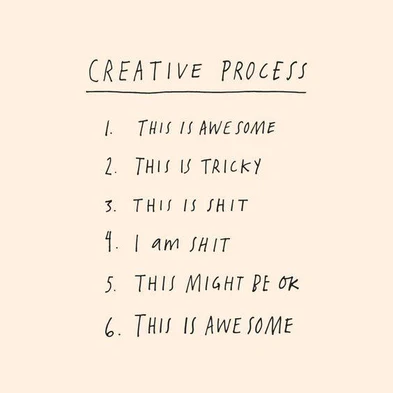


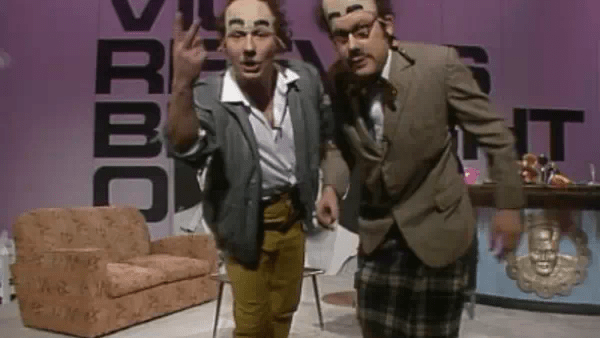
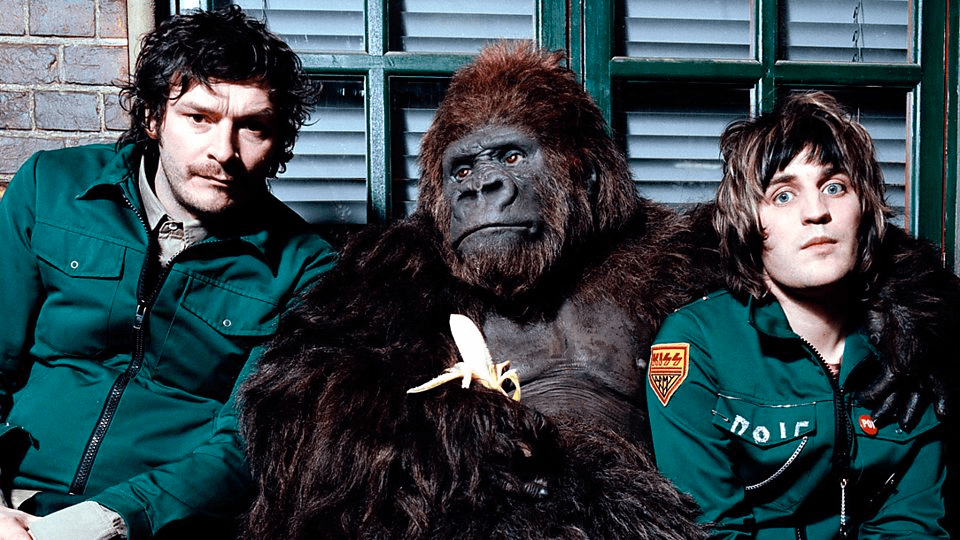

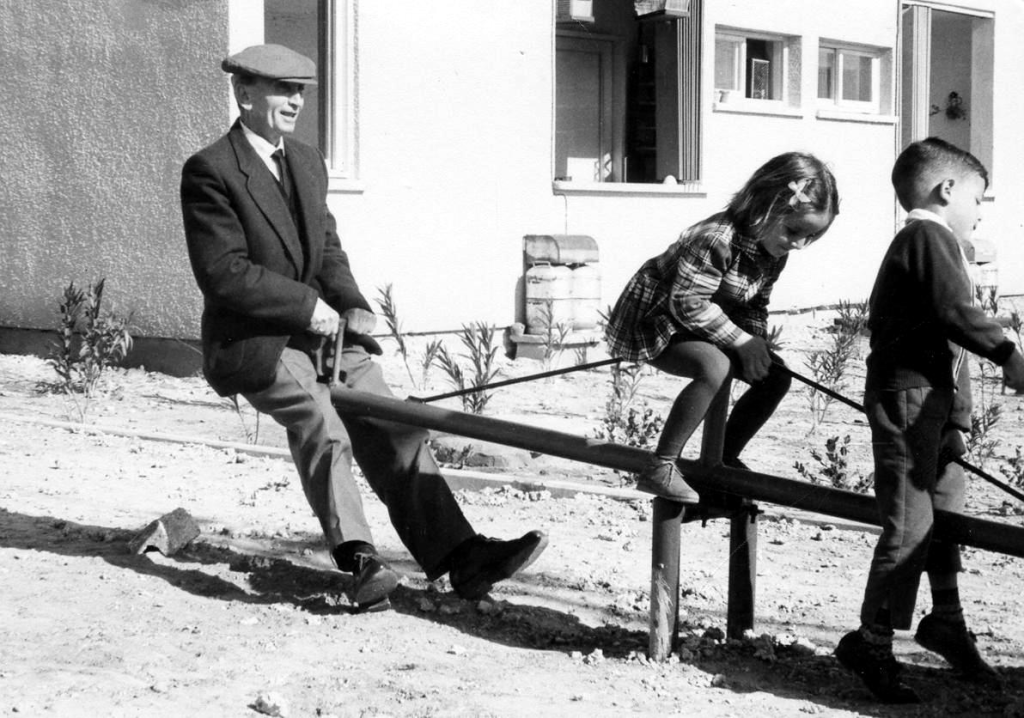
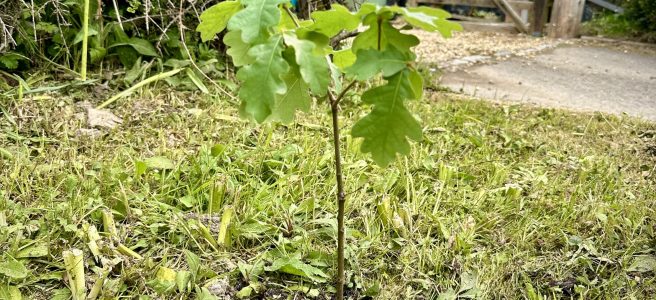
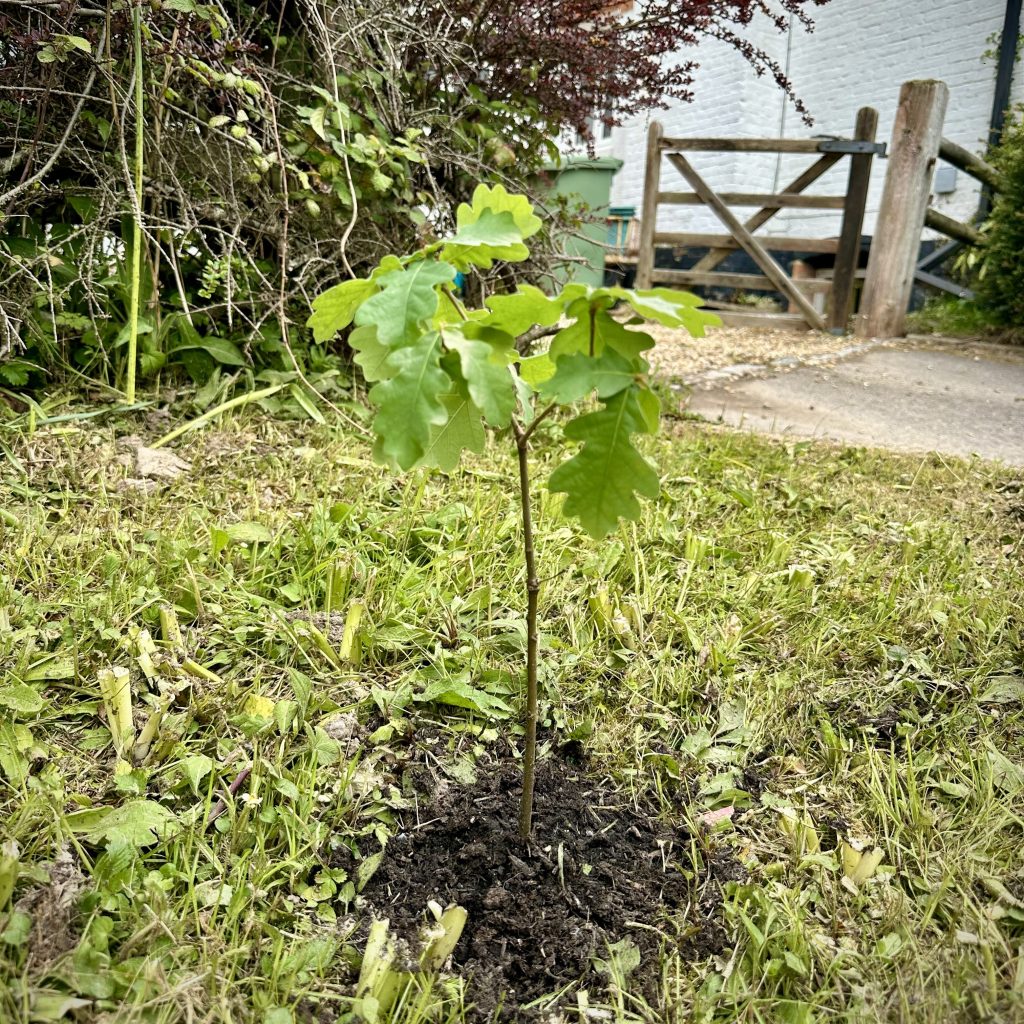
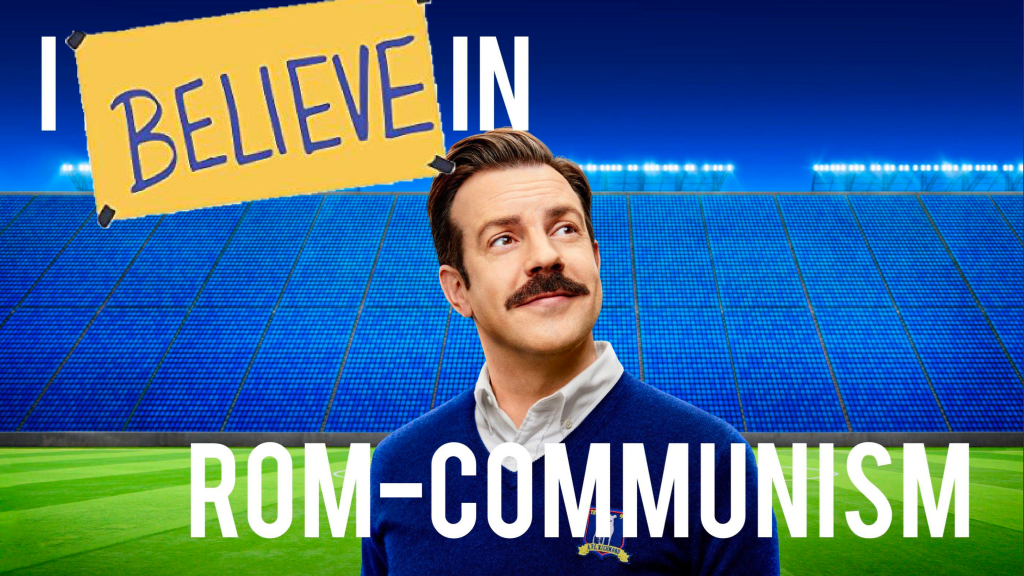
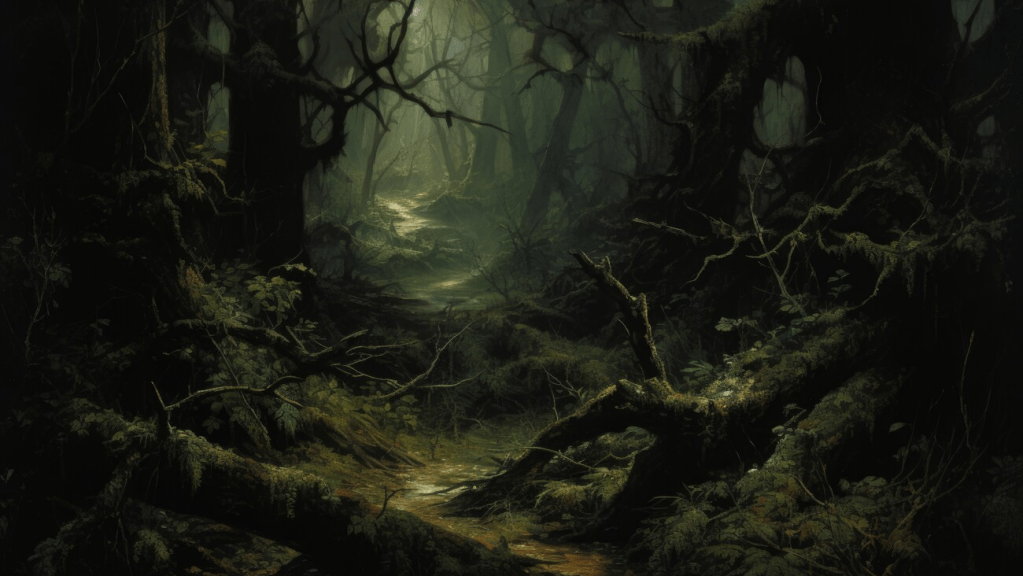
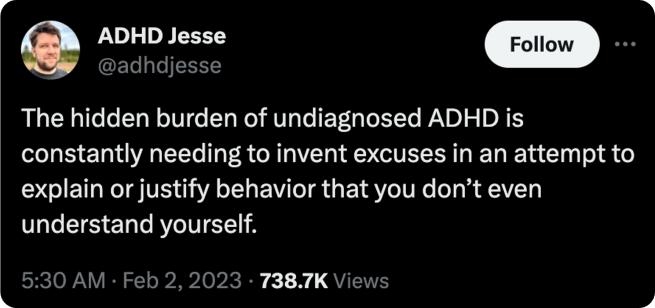
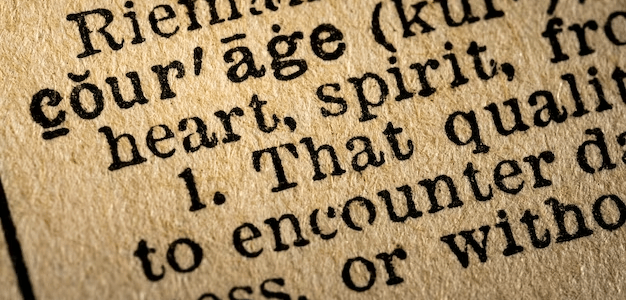
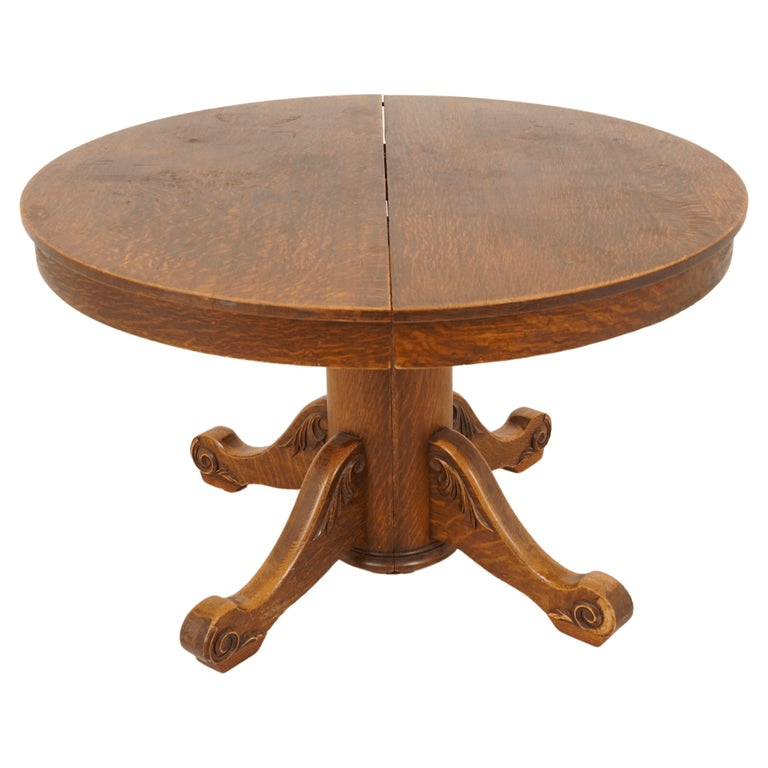



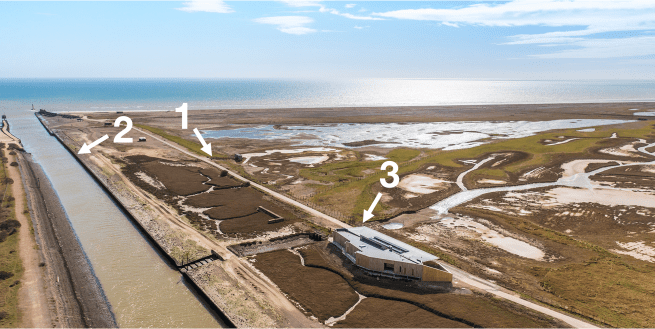
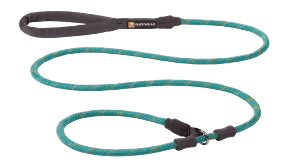




 The Bartlett Bubble