Not giving a f*ck

Contrary to what the title of this piece might suggest, this actually isn’t about not giving a f*ck in the traditional sense at all. In fact, it’s about choosing to. We’ll get there in a few minutes. But first, let me take you on a little journey I went on recently…

Like me, you may have noticed that there’s a certain genre of book title which… SHOCK HORROR… has a swear word in it. I’ve always thought it’s a bit disingenuous to be honest, designed to capture the attention and titillate and shock and be all rebellious when in actual fact it’s just a plain old gimmick.

If you ask me [and I know you haven’t asked me as such but I have to assume you are reading this by choice and part of the deal is that I get to say what I want and you have to just carry on reading it, so let’s just agree that it’s okay and crack on] there’s nothing clever about putting a swear word on the front cover of a book, especially if you’re going to cop out and put “f*ck” rather than having the strength of your convictions and writing the word “fuck” properly, as God intended. I know that’s because otherwise people might be shocked and appalled, but the idea that somebody may be offended by accidentally being exposed to such utter, deplorable filth and feel so aghast that they have to forego their plans for the day and lie in a darkened room with a cold compress upon their fevered brow is, frankly, a bit self-indulgent in a world where there are much more important things to be offended by. Things we will, in time, get to.
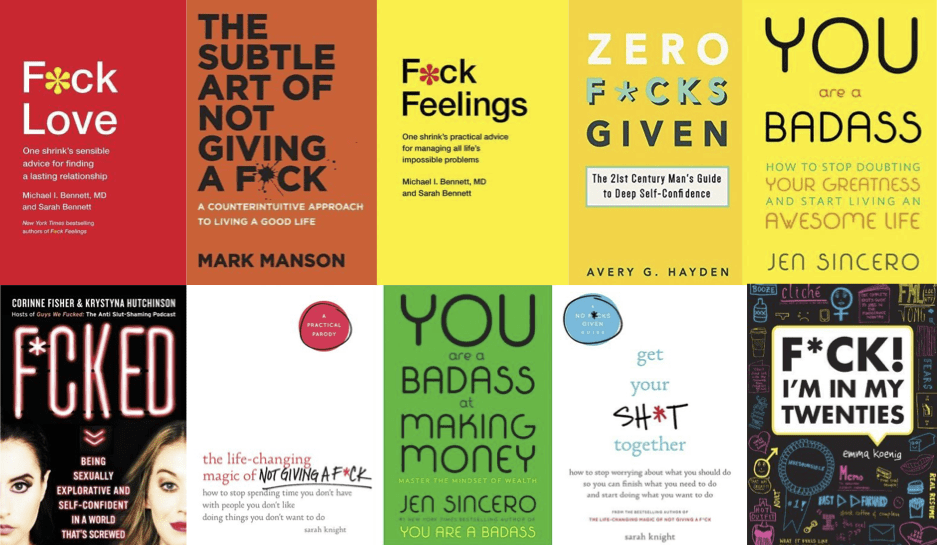
It’s not big and it’s not clever.

[For the record, from here on in I’m using the correct spelling, so if for whatever reason you don’t fancy reading the word “fuck” (without the magical * that somehow makes it acceptable) quite a few more times, now would be the perfect time to carefully back away from the particular high horse I seem to have found myself on, without going round the back of course because we all know that horses can kick.]

It’s with this context that whilst I’d heard of a book that came out a few years back entitled The Subtle Art of Not Giving A F*ck, I hadn’t bothered to check it out.

Part of it was the whole ‘swear word on a book cover’ schtick which just gets on my nerves [in case you hadn’t noticed], and part of it was an assumption that, because the author was American, and male, and white, it could just be a whole book of someone saying how cool they were because they didn’t give a fuck about anything or anyone, in some kind of pseudo macho, ego-heavy, try-hard monstrosity. That’s right, I judged the book by its cover.

[You know people say you shouldn’t judge a book by its cover? I think that’s true of pretty much most things… except books. If I’m in a bookshop (remember them?) and I’m browsing for something to buy and then leave in a pile with all the other books I’ve bought but not read, then what the hell else do I have to go on? If it’s a black cover with a silver dagger on it and big blocky writing, it’s going to be a murder-mystery type thing. If it’s a light brown cover with a tasteful etching or painting and/or a discerning old-fashioned typeface, it’s probably going to be a historical feast with a side order of love story. If it’s white and has a rose on it, it’s a romance. 99% of the time the reason I pick up this book instead of that one will have something to do with the cover. And anyway, if it wasn’t important books wouldn’t have different covers, am I right?? Anyway sorry, where were we?]

Fast forward to this summer, and someone whose opinion I respect told me that the book had recently been made into a documentary with the author (a chap by the name of Mark Manson) talking through it, and that it was really good and I should watch it. I figured that if I could give up 90 minutes or so and get the jist then that was probably worth it. So I downloaded it and watched it on a flight on my way off on holiday.

First thing to tell you is that it is indeed “really good”. It’s charming and thoughtful and engaging, and bit sad at the end too which made me shed a few tears whilst looking out at the clouds below. Admittedly I was in quite an emotional place at the time [in my head: the plane was no more emotional than any other as far as I remember] but on the whole if I feel like crying I’ll go with it and, as ever, it was quite cathartic.

I won’t go through the whole thing because you can find 90 minutes or so too and watch it yourself on one of the streaming subscriptions you’ve forgotten about [and really should probably cancel because you don’t really use it as much as you thought you would but honestly who has the brain space for rationalising subscriptions when they can just think “ah well, it’s only £6.99” and forget about it for another 6 months? Not me!] but there were a few things I took away from it which I will share with you.

Overall, it’s less about ‘not giving a fuck’ and more about being more deliberate about what you decide to give a fuck about. I guess that’s the “subtle art” bit, as I think about it now. You only have so many fucks to give, so don’t go chucking them around willy nilly over things that don’t deserve your fuck-giving.

I was introduced to this way of thinking a few years back by a Zen taxi driver – the idea that you shouldn’t allow every agressive Audi driver [used to be BMW drivers but now it feels Audi have risen to the challenge] full and unfettered access to your emotions. I wrote a whole blog about this guy which you can read here in your own time. But for now, stick with me…

The other concept I picked up was a bit more nuanced, and gets us towards where we’re going with this whole story. It went something like this: if you choose the problem, you can’t also give a fuck about how hard it is.

The best analogy that leaps to mind for me is around running a marathon. You decide to do it, knowing that there is no moment between that decision and the end of the marathon that will be anything other than largely awful. Nobody enjoys training to run a marathon, building up to running a marathon, and the majority of the marathon itself. In fact, the only part of the marathon that is actually enjoyable is the actual end of the marathon when you can stop running the marathon and not have to think about the bloody marathon ever again.

But if you choose to do a marathon, you can’t then go around giving a fuck about how ridiculously hard it is. You can’t give a fuck about the cold dark morning runs. You can’t give a fuck about the blisters, and the shin splints, and the bad knees. You can’t give a fuck about the anxiety in the week running up to it, or the fact you need a wee after a few miles, or the feeling near the end when you want to stop or, failing that, simply die.
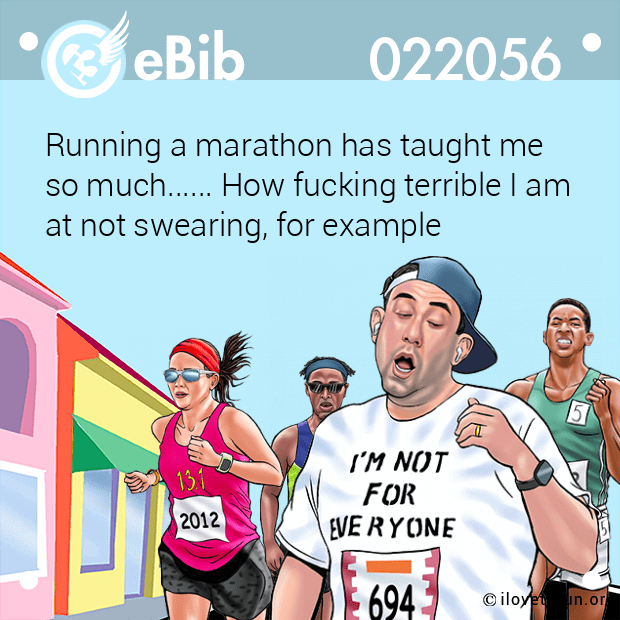
How apt!
Pic courtesy of https://ilovetorun.org/

If you choose, then you can’t also give a fuck about the difficulties that go with that choice.

So, think for a moment: what have you chosen? Are you stuck in the mud of also giving a fuck about all the stuff that goes with it?

I have chosen to be a “good father”. Maybe even a great father. I want my sons to look back at their time growing up with the certainty that their father loved them, and respected them, and protected them. That their father was always there to support them when they needed support and push them when they needed a push. A father that was honest, and fair, and clear on expectations. A father that they themselves might aspire to be, if they so choose.

Me being a perfect dad with my happy, well-adjusted children

Because that is my choice, I can’t give a fuck about how hard it is sometimes to be that guy. I can’t choose to aim for fatherly greatness and then give a fuck when I can’t dismiss their questions with “because I say so” like I want to. I can’t make that choice then give a fuck about how hard it is to be consistent. I can’t choose to be a supportive and encouraging and attentive father and then give a fuck when it means I have to coach a load of 9- and 10-year-olds football on a Saturday morning and then coach a load of 13- and 14-year olds rugby on a Sunday morning all through the autumn, winter and spring so every single weekend morning from September through to May instead of having a well-earned lie in I have to get up early and find all the relevant kit which they didn’t bother to sort out the night before LIKE WE HAVE DISCUSSED, AT LENGTH, ON SEVERAL OCCASIONS [true story].

I can’t choose to be a father who respects them and their questions and then give a fuck when they ask about what’s happening in Gaza. I can’t give a fuck that I owe them a considered, balanced view because it’s on every news report, every day, and they see and hear everything and it’s fucking heartbreaking.

Not giving a fuck isn’t not caring. It’s the opposite, in fact: caring so much about your goals that you don’t care about any adversity that may stand in the way of your goals. Not giving a fuck is a commitment; a determination, even when it’s hard.

I never really chose to be a leader in my working life. It just kind of happened because wherever I worked, if I had an idea on how things could be better I’d talk to people about it, and I’m good at having ideas and bad at not talking to people, and if you carry on having ideas about how things could be better, people tend to give you more responsibility. I guess along the way I did choose to carry on up the career ladder I was on, driven by ideas and by a good chunk of ego, so it’s not like I didn’t know what I was doing. But the real choice came after, once I was in a position where I could decide what kind of leader I was going to be

I chose to be a “good boss”. Maybe even a great boss. I wanted my people to look back at their time working for me with the certainty that their boss loved them, and respected them, and protected them. That their boss was always there to support them when they needed support and push them when they needed a push. A boss that was honest, and fair, and clear on expectations. A boss that they themselves might aspire to be, if they so choose.

[Hmm yes that does sounds familiar, doesn’t it? A nagging sense of deja vu… almost like I did it on purpose, right? Something for another time, perhaps?]

That choice has given me huge amounts of satisfaction and joy, and it’s been so tough that I’ve balanced on the border of burnout and breakdown. It’s made me friends for life, and broken my heart a couple of times, too. More than once it’s been bad for my mental health, bad for my relationships, even bad for my career.

But I chose to lead with vulnerability and values, with love and loyalty, with trust and truth.

So I can’t give a fuck when that road has bumps in it. Even sizeable bumps that make your stomach flip a bit like those times when you were little and your dad was driving down a country lane [always your dad driving back in those days, never your mum] and went over a narrow brick humpback bridge over a stream and everyone went “woooo” as the momentum of their upward trajectory then the sudden drag down of gravity sent their internal organs all squiffy.

As ever in these situations, I find myself coming back to the words of Brené Brown.

[I won’t apologise for the preponderance of BB in these pages, because I’ve learnt a lot from listening to her and reading her words and I reckon you probably would too, if you haven’t already. But just for the record, I am aware BB does come up a lot. Let’s just say that I’m passing it on to you to save you time and effort in finding it all yourself. You are, as ever, most welcome]

The words she would use for this kind of leadership are “Strong back, soft front, wild heart.”

Strong back because shit is going to be tough sometimes and, as an authentic and open leader, you need to be able to take some of that. You need to have a back flexible but sturdy, like the oak tree that I see in the woods when I’m walking my dog, Ruby [that’s my dog’s name, not the oak tree, which we have given a name but that’s also for another time], which gets whacked by the wind year after year, branches stripped of leaves and boughs broken, but has roots deep in the earth which mean that it buds again in the spring and sows acorns across the clearing for the squirrels to squirrel away into holes that they forget about in the Autumn…

Soft front because that’s how people can find their way in. I won’t go into yet another treatise on the power of vulnerability to build trust, but it really is the only way. Soft front is the way in. In my experience, a closed, hard front is there to protect a brittle back; a shield to defend a lack of confidence, a lack of strong roots in the ground.

Wild heart? Well I’ll leave that up to Brené because I’d just be paraphrasing her anyway:

Two months back I left the company I’d been leading for the best part of a decade; the company I’d put my heart and soul into since I was a mere whippersnapper in my 30s. Leaving was such sweet sorrow, for lots of reasons that I won’t go into here. But for the last 2 months I’ve been unemployed, and I’ve been working hard to change that. It’s going well [thanks for asking!] and in the not-too-distant future I’ll have something new to put my wild heart and soul into.

And I’ll do that with the wildest of hearts. Once you’ve chosen to stand up for what you believe in and committed to it, you really have no other choice but to go again.

And you can’t give a fuck about how hard that might make it.

So, dear reader, I now ask you to think again about the choices you’ve made. Not what you had for breakfast this morning or what you’re going to watch with a glass of red once the kids are in bed [true story], but the ones where you’ve had to stick to your guns a bit, and dig deep.

The choice to be in a profession that maybe doesn’t pay as much as some others but really, really means something to you.

The choice to stay in the relationship and work at fixing it.

The choice to be a working mum and commit to both aspects of that dual existence.

The choice to put in the extra hours because you have pride in your work even though it probably won’t get noticed.

The choice to open yourself up again with the knowledge that yes, you might get hurt again, but “what if” it all works out?

You’ve made choices because of who you are and what you stand for. You’ve chosen what to care about. Be proud of that, and be clear on what that means.

Because not giving a fuck, is all about choosing what to care about and what not to care about. The choice not to care about anything that gets in your way because you know you’re on the right road, on a quest that is noble, and important, and fucking worth it.

I reckon that is something we could all try not giving a fuck about.

[In case you’re wondering, I have peppered this piece with the word “fuck” a total of 28 times. In the famous last words of Dylan Thomas: “I believe that’s a record”. I also popped a “shit” in there for those of you who like a little variation.]
ADHD and me

As you may or may not know, October is ADHD Awareness Month. Now that I missed the entire month, meaning to write something about it but procrastinating for a bit then forgetting about it for a bit then meaning to get round to it but getting distracted by something or other [is that a Jay I can see out of the window? They really are quite beautiful aren’t they?] I think it’s probably about time I let you, dear reader, into the incredible time of enlightenment and understanding that I’ve experienced in the last few months.

In a nutshell, I have ADHD.

If you know me even at all well, that revelation will likely illicit the response “no shit, Sherlock” [please feel free to replace this wonderfully idiosyncratic British term with anything you might prefer which shows a total lack of surprise at something you probably assumed anyway] because it’s kind of obvious really in the way I act and interact, the way and, I suppose, in the way I write as well [I mean, what kind of person has all these parenthesised ‘by the way’ bits throughout everything they write? Yes, that’s right, someone whose brain flits off in different directions like a hummingbird seeking out the finest, sweetest droplets of nectar from the flowers in the forest. Someone with ADHD, basically].

Certainly my father [hi Dad – hope you’re enjoying your holiday] wasn’t exactly surprised. “It does explain all your school reports I suppose” was his reaction to my telling him about my diagnosis. And he’s right: my memory of those reports was littered with talk of my “potential”, “easily distracted” and of course “distracting”, talkative, . And the times where I really got into proper “trouble” it was never malicious: more often than not it was just something that happened on the spur of the moment where I impulsively did something daft to make people laugh and it all went wrong somehow.

So yeah, I’ve got ADHD. No massive surprise to lots of people. And actually, not really a surprise for me, either, which needs a little explanation. If I’ve suspected it for a while, why bother getting assessed and diagnosed? What difference does it make?

For quite a long time I’ve had the thought in my head [which is where most of my thoughts tend to wander, in case you were wondering] that, had ADHD been a ‘thing’ when I was a kid, I would have been diagnosed. I’ve even said that to people. After all, I left school in 1993 [I know, you’re shocked because I look so youthful, right?] and ADHD wasn’t recognised as a valid condition in the UK until 2000 when the National Institute of Clinical Excellence (the organisation who decide about conditions and treatments – they’re the ones who you hear about in news reports referred to as NICE) brought out their first report on the condition. I hadn’t heard of it until after I’d long gone from the school room, and to be honest, I thought ADHD was just a childhood thing anyway: more about behaviour and self-discipline than anything else. So I thought I might have had it. But adults can’t have it, and I am an adult so I must have grown out of it.

I can’t remember when I first heard about Adult ADHD. “A while back” is about as accurate as I’m going to get on that one. But I do remember still getting hooked up on the H bit of it.

The H of ADHD stands for hyperactivity of course, and whilst yeah, I fidget a bit and jig my leg when I’m sitting down and I sometimes stand up whilst I’m in a meeting because I need to stretch my legs and I’m always fiddling with whatever’s on the table in front of me… (!!) I’ve always thought that hyperactivity is about not being able to sit down and constantly jumping all over the place and running around and that ain’t me. I’m really pretty good at sitting in one place for ages when I’m doing something I’m into, like playing the piano or reading or writing something like this…

That’s another thing. I’ve always had the sense that if I concentrate on something I can be absolutely prolific. Especially if there’s a deadline coming. I’ve always had this belief that I can get things done really, really quickly when I need to. I’ve never, ever been phased by a deadline. In fact, I’ve found that I work better under pressure. I’ve even said, to close friends or colleagues in the past, that I’ve got this belief that I can smash through 4 or 5 days’ work in a couple of days, but I know that after I’ll be exhausted so if I’ve got a weeks’ work to do I’ll do it in 2 or 3 days and then coast a bit for a couple of days.

I’ve always felt that my brain worked differently from other people’s brains.

But what got me thinking that I should get a diagnosis in the first place, it in the first place and what I’ve learnt since? That’s been surprising, and enlightening, and actually life-changing. Let’s start at the beginning.

As regular readers of these pages will know, I’ve had my fair share of struggles with anxiety over the last few years. In fact, I think I’ve always struggled with it, really. I’ve always felt that if I could just turn my brain off, just for a bit, then I’d be able to relax more. I’ve always thought that I overthink things. I’ve always had a really uneasy sense of self – of who I really am. Sometimes I’m the joker, who’s irreverent and somewhat rebellious and makes people laugh and is good fun to be around, and yet in my heart of hearts I’m actually very thoughtful and introspective and sensitive and actually quite an introvert… all wrapped up in a very (sometimes excessively) extroverted package. Which one is the “real me”? Does anyone really know me at all?

I’ve always felt that it’s exhausting, being me.

[Yes, I know that using the phrase “psychodrama” underplays the emotional strain of that time and that making light of things can be counterproductive and reinforce the outdated notion that emotions and feelings are somehow not appropriate, particularly for men who find themselves, as we all do, constrained by the shackles of expectations that come with the tropes of masculinity. But if I want to make light of things for comedic effect as a way of avoiding having to get into things from time to time then by great Zeus’ mighty beard I shall do precisely that and there’s nothing you can do about it.]

If I’m honest, the end of the year once I’d come back wasn’t great either. I was pretending to be okay most of the time, whilst trying to convince myself that I was okay too. Whilst very much not being okay. Some of the pressures that had built up had dissipated but I can tell you from experience that if you ever get to the point where you feel you need to take a month off, you probably need to take more than a month off.

Anyway, I made it through with a few bumps and bruises along the way. Other things I picked up along the way included a rediscovered love of poetry, mostly via my new yoga teacher [hi Lucy – see you Friday!] which I also picked up and now can’t imagine my life without. I also learned to meditate and started journaling. Basically, all the good things that I always thought I should do but never really got round to because… well, because I have ADHD and actually getting round to things is actually quite difficult with my brain.

And perhaps the most important thing I stumbled across this year is the diagnosis itself.

That came about through a colleague who became a friend. Nice when that happens, isn’t it. [And hello to you Farhat – looking forward to eventually sorting out that date for lunch!]. This woman is probably more open and honest and direct than anyone I’ve ever met, yet kind and thoughtful with it. Deeply committed to driving change in all aspects of diversity and inclusivity, she pushes me to consider my own perspective on lots of things. I find myself questioning my beliefs in anticipation that I might need to have a friendly and vulnerable toe-to-toe debate with her, and that forces me to challenge my own thinking along the way which always ends up with a clearer perspective, more considered and more rounded than when I started. Sounds good, right?

Perhaps part of the reason for her directness, and something she was disarmingly open about from our first meeting, was that she knew she was neurodiverse, and had recently been diagnosed with autism. I have both friends and family who are “on the spectrum” and there’s a clarity of thought that can result from a neurodiverse mind that I always find fascinating to be honest.

So when she told me that she’d also been previously diagnosed with adult ADHD, I was intrigued. I knew that Adult ADHD was a thing, but I’d always had that thing about the H bit that I didn’t connect with. But my friend isn’t physically hyperactive either, really. I was keen to hear more.

She talked about how she had had to learn about how to use her energy to allow for, or indeed take advantage of, her ADHD. She told me that she was able to “hyperfocus” on a subject that interested her, but would then be exhausted afterwards…

Hmm.

She told me that sometimes she struggled to focus on things, and would jump from one thing to another and back again. I always thought I was good at multi-tasking, but she pointed out that really I was just jumping from one thing to another and back again…

Hmm.

We talked a lot about her ADHD as I was keen to learn how to make sure she felt included and that she belonged, and also so I could make sure I knew how to get the best out of her. Because the level of work that she was able to produce through harnessing that hyperfocus was just off-the-chart incredible.

The more she told me about what she had learned about her ADHD, the more I found myself sitting there thinking “That’s me”. Eventually, I asked her how she started her assessment, and she smiled and said “I do see a lot of me in you”.

That’s where the ADHD part of the story started for me. I did an assessment and I ticked virtually every box. I then did the full clinical assessment and got my diagnosis.

So, what’s changed?

Honestly, pretty much everything.

For years I’d been suffering under a cloud of anxiety, and in the end it drove me right to the edge of breakdown and depression. Yet now I felt I could reframe that anxiety as the result of undiagnosed and untreated ADHD, and now I’m being treated for the ADHD, I don’t have the anxiety in the same way at all.

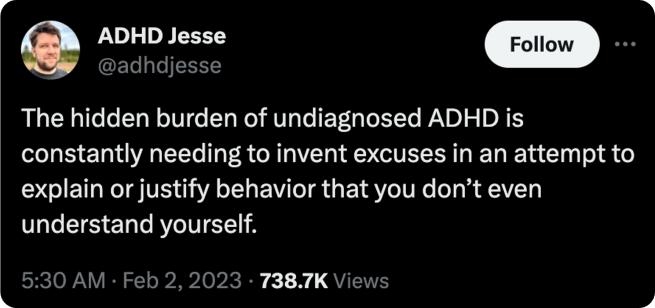
As I was just starting to explore the idea of Adult ADHD I saw this tweet, and it really summed up not just my childhood but large swathes of my adult life too:

In another nutshell, this is me.

The way I’ve come to describe ADHD is that it’s your mind, and then immediately afterwards your body, overreacting to outside stimuli. The mind sees fun, or threat, or danger, or excitement and primes the body to deal with it. I’ve never been able to stop myself from making a joke, even when it’s probably not the right time. I’ve never been good at taking criticism in the moment.

ADHD doesn’t define me. But damn, it sure explains a hell of a lot.

ADHD often comes with a lower ability to regulate emotions, so it’s hard to put the breaks on when emotions start off. It’s why I’ve always worried about being very ‘up and down’ emotionally and the impact that has on the people I care about and who care about me.

The name of it really doesn’t help. ADHD isn’t a lack of attention: it causes us to pay too much attention, to everything, most of the time. Not being able to stop reacting to outside stimuli. A lack of filter.

And the hyperactivity sounds like something physical, but in fact:

The vast majority of adults with an adhd nervous system are not overtly hyperactive. They are hyperactive internally

Dr William Dodson, M.D., LF-APA

A hyperactive mind. A mind that doesn’t stop. No wonder I’ve always felt like it’s exhausting being me.

What I’ve learnt about my ADHD is just as important as getting the right treatment for it. As much as the new meds have made a big difference, just understanding myself (and my self) has allowed me to reassess how I can manage things differently in the future. In my view, it’s about pills and skills, not either/or.

Last year I was worried that my mental health problems would overwhelm me. I don’t worry about that any more. I’ve got lots more to learn, but whilst I don’t subscribe to the “ADHD is my superpower” idea I’ve seen a lot of on social media, I also don’t think it’s a burden that will drag me down either.

I was sitting up after watching the Rugby World Cup Final with an old school friend of mine last weekend [hello Nobby – hope the whisky hangover has completely gone by now] and he pointed out that whilst the ADHD might have made things difficult sometimes, on balance I’ve also had a shitload of fun along the way, and it’s probably made me good fun to be around too. He’s a wise man, my friend.

Now that I understand it better, I’m better able to understand how to harness the benefits and manage the difficulties. Now I understand it better, I can see that whilst it’s caused me problems, my ADHD has also been part of my successes too.

Now that I understand it better, I’m not sure I’d want to get rid of it even if I could.

ADHD awareness month has come and gone, but for me the awareness of my own, personal experience of ADHD has only just begun. I’m going to learn more as I go, and as I learn I’ll fill you in on anything that I think you’ll find interesting if that’s cool?

Until then, I’m just off to change a lightbulb which will end up with me having to fix my car. To find out what the hell I’m talking about – and to see the most perfect example of an ADHD day that I’ve ever come across, have a look at this little clip.

Speak again soon. Love and peace x

The Four Agreements

I don’t know about you, but whenever I give someone a book, particularly one very specific to them, I write a little note in the front along with the date. I do it partly because I really appreciate it when someone does it for me, and also perhaps partly because I like the idea of marking the moment in time so that in the future it’ll pop up again.

Perhaps it’ll be read by the person to whom I gave the book, a single tear of reminiscence rolling involuntarily down their face as they recall the thoughtful gesture and how lovely I was. Or perhaps it’ll be read by someone decades from now who’s picked up the book for next to nothing at a charity shop and will never know how lovely I was except to know I’m the kind of person who writes a note in the front of a book. And maybe, just maybe, they will decide that is something they will do from that point on… thereby making the world a slightly better place, forever and ever into the future.

Yes, I do overthink things sometimes, I’ll give you that.

Anyway, it just so happens that in the middle of last year, right in the middle of a very challenging time for me personally (which, if you’re interested in such things, you can read about here), someone I didn’t really know very well came up to me holding a book, and then handed me that book. Their personal copy of a book they carried with them at all times, a book wherein they had highlighted passages, and made the odd note. Handed over now to me, for me toread and to keep.

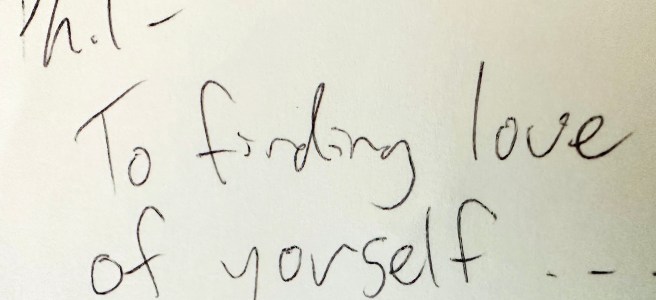
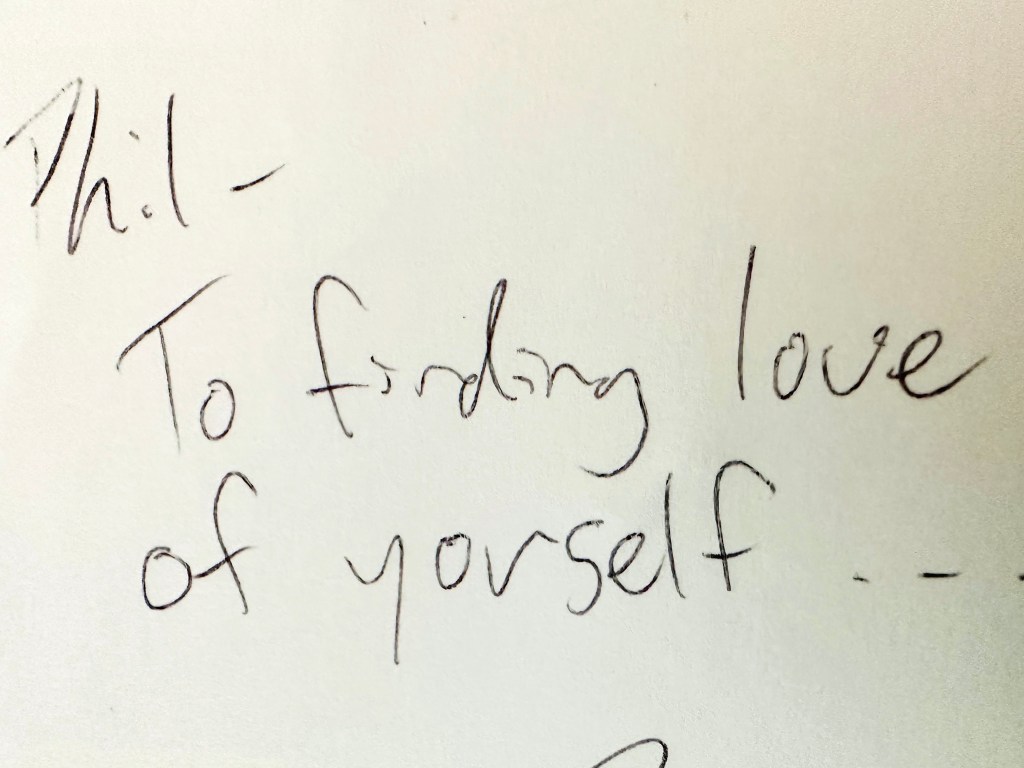
And yes, they had written inside:

Underneath, they’d written their name, and their personal contact details

First off, it struck me then and still does today as an incredibly kind, thoughtful, open gesture. Let me give you something that’s helped me, in the hope that it may help you too.

But just as much as that, I was fascinated as to what the book might be. What is the kind of book that someone carries with them, at all times, and highlights passages and makes little notes in pencil in the margin, and is then moved to inscribe and hand to someone else? It must be a book with such wisdom, such guidance, to drive someone to feel they simply must pass on to someone else in their time of need.

What book holds that kind of potential impact?

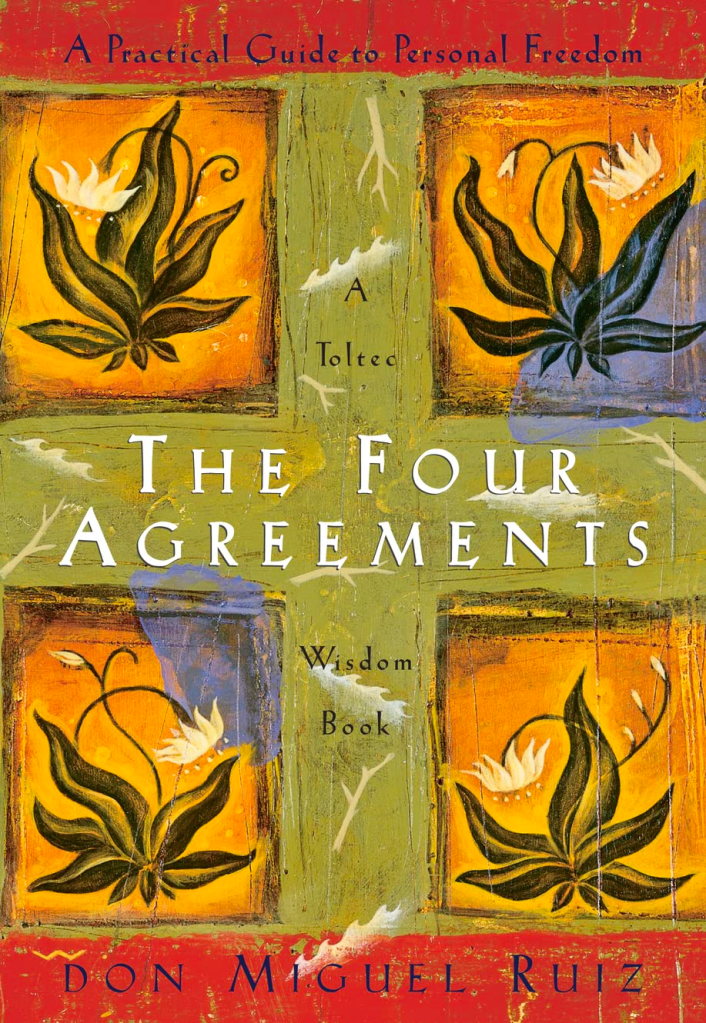
The book in question is called The Four Agreements, written by a chap by the name of Don Miguel Ruiz. I’ll be honest, the first time I started into it I liked the thinking but struggled a little with the way it’s written. That’s because Don Miguel Ruiz is a shamanic teacher and healer, and he writes in a very unconventional, conversational style about teachings from the ancient Toltec culture in central Mexico. It’s not written like a classic business or “self-help*” book because it’s not written by a classic business or “self-help” author, and as you can see below it’s not either of those things anyway, it’s a much more than that: a Practical Guide To Personal Freedom. So you have to get into the way it’s written, or you have to get past the way it’s written. But you can’t ignore the way it’s written.

[I hate that I feel the need to put “self-help” in “” but I do so because it’s been hijacked to be used pejoratively by people who think that “self-help” is the sort of thing that those awful woke snowflake Remoaner lefties need and which any hard-working normal person knows is a load of bloody nonsense and anyway who needs introspection when you can just judge other people from a position of blithe, dismissive self-ignorance? From being a positive, it’s become a negative, despite the fact that every single thing I’ve read with the intention of helping myself has, in some way, actually helped my actual self. But anyway, it’s in “” so we can leave it there and crack on…]

Whether you get into or get past, the idea of a Practical Guide to Personal Freedom is immediately something that appeals, right?. I mean, who doesn’t want Personal Freedom, and what better than a Practical Guide to get there? I’ve been following the Massively Impractical Guide to Personal Angst in my own brain for years and that’s been a bit of a chore at times, to say the least.

And once you’re in, the simplicity of The Four Agreements sing out as a sort of rulebook for a life which doesn’t fall into all the pitfalls we all fall into, all the bloody time. So simple that it’s a bit annoying no one mentioned them before, really.

So to avoid you having to find all this stuff out yourself, I’ll outline them here, with my take on what they’re all about, and you can save yourself a lot of future angst. Sounds like a plan, right? Great, let’s roll.

This is the front cover. You can’t miss it.

1) Be impeccable with your word

Don’t talk shit, basically. Don’t lie, don’t make stuff up, don’t brag, gossip, don’t collude, don’t say unkind things, don’t talk about people behind their backs. Actually, don’t say any of that shit to yourself either. Tell the truth to yourself and to others. As good ole’ Brené Brown would say “Clear is kind, unclear is unkind”.

Am I good at this? Only in parts. I’m not one for collusion and I don’t brag, but I do gossip sometimes and on a bad day I can be quite cutting about people, particularly when I feel I’ve been “wronged” in some way. I can also talk shit about myself, to myself. So this is one I have to come back to, and remind myself of, to keep it fresh and real. This much I do know: nothing good comes of speaking ill.

2) Don’t take anything personally.

Self-explanatory this one. But damn – how can you not take things personally when you are about you? If something happens to you, or someone does something to you, it’s you, right? It’s personal to me because it’s happening to me!

Except, of course, it really isn’t. This is one I’ve kept really close to me since I first read it – the idea that whatever someone does or says, howsoever it may affect you… it’s not about you. It’s about them.

It’s about how they see the world, and themselves in the world; about the pressures they have put on them and the pressures they put on themselves. It may affect you in horrible ways, but even then, it’s not personal. It’s not about you, it’s about them.

If someone treats you badly, it’s because in their mind they are under pressure or under attack somehow. If someone puts you down, it’s because of how they experience themselves when they are with you. If they really, really seem to just hate you for no reason you can work out, then don’t bother trying to work it out because the answer to “what have I done?” is quite possibly “nothing”. Because they don’t actually hate you – the you that you know and know to be fundementally good – they have negative feelings towards the “you” they have created in their mind because of their own issues. It really isn’t about you.

I know this is difficult. Believe me when I say that even with this agreement not to take anything personally sitting happily in your head in all its logical, sensible splendour, it’s still really, really difficult. I’m not saying you should just brush it off or, even worse, get thick-skinned to protect yourself. Those people who claim not to give a fuck about anything people say or do to them are lying to you and to themselves. I’m not saying you can’t be upset. Be upset. Just don’t take it personally. Because it’s not about you, it’s about them.

Oh and by the way, unfortunately, it works both ways. So it’s also true that If someone talks you up or lauds your every minute action and deed, it’s really not about you, it’s about what they think or hope for or need in the relationship. I know you’re brilliant, but just don’t take it personally.

Trust me: this one is a keeper. Don’t take anything personally. It’s not about you, it’s about them.

3) Don’t make assumptions

You know what they say: “Assume” makes an ass out of u and me. That trite little saying doesn’t stop us from doing it though, does it?

We make assumptions because we’re trying to make sense of the world without all the information to hand. Our brains don’t like stories without an ending. We seek reasons and endings, and so without a reason or an ending we just go and make up our own.

Assumptions are the basis of pretty much every conflict you’ve ever had – the story you’ve made up in your head about what someone else is thinking, which you then judge them for without them even knowing. They become the loser in a game they didn’t know they were playing. And let’s be honest, we don’t often cast ourselves as the villains in the piece.

Assumptions leave you wide open to be disappointed, or surprised, or shocked and appalled when things don’t turn out as we guessed they would. Assume it’s in the bag and you’ll find that someone who assumed otherwise put in more effort than you and walked away with the prize. Assume they won’t want to talk to you and you’ll never know what might have been. Assume there’s no point in applying for that job, and I promise you that you 100% will not get that job.

This is my biggest Achilles Heel. I love a good story, and I can’t help telling myself all the stories I’ve created about my assumptions. I know that this is how my brain works, though, so I’m trying to be disciplined in checking those stories as I go and removing the assumptions that may be driving action, inaction, or reaction.

4) Always do your best.

I love this. So simple. The kind of thing we were told as kids and now tell our kids because that’s what you tell kids… without really listening to what we’re saying and taking our own instruction.

If you always, always simply do your very, very best, you can end the day knowing that you couldn’t have done anything more. It’s the drive to get up in the morning and the solace to sleep soundly through the night. Just do your best. Personal to you, and only you know what your best is. Don’t worry about what other people are doing. Don’t cut corners.

And be okay with the idea that your best varies, too. Your best when you’ve had the elusive straight eight hours of uninterrupted sleep and woken to the birdsong and the sun is coming up and the day ahead looks challenging but manageable isn’t the same as your best when you’ve been awake through the night with your mind racing because you know you’ve got that difficult conversation you have to have later and there’s no milk for your morning cuppa and the dog just slobbered on your black jeans so it looks like you’ve had a giant snail crawling. up your leg. But just do your best, no more and no less, every time, in everything, and you simply cannot go far wrong. It’s actually quite freeing.

So there you have it. The Four Agreements, which I was given by a very kind man who felt I needed them at a difficult time in my life. Again, what a lovely gesture.

And what simple agreements they are. I can’t tell you that I stick to them all the time, but I can tell you that whenever I lose my way, it’s because I’ve not done one or more of these.

Maybe just make a note of them somewhere and consider in all honesty, where you’re strongest. on these and where you’re not. Perhaps consider that difficult thing that’s on your mind at the moment and see if there’s a chance that one of these agreements might have avoided it – or might even get you out of it. Be impeccable with your word. Don’t take anything personally. Don’t make assumptions.

And whatever you do today, just do your best. No more, no less. I reckon that’ll be more than enough for whatever today has in store for you,

[If you’re interested in getting a copy of said book for yourself, then you can find it here or at all good remaining physical book shops. I’d give you mine but I’m not quite ready to give it up yet.]

Despair, and Courage

I’ve always been interested in words – where they come from, how they develop and change over time, and how we use them. I love the way that the English language is this crazy melting pot made of Old English, Danish, Norse, French, Latin, Greek, Chinese, Hindi, Japanese, Dutch and Spanish, and a bunch of others in various amounts and we all just use it like it ain’t no thing.

 [For your information, our vocabulary includes words from around 350 other languages according to the Encyclopaedia Brittanica. I know, I thought that was an unrealistically large number too, but apparently, there are 7,117 distinct languages spoken in the world today… although 23 of those cover more than half the world’s population. You’re welcome].

I love how we play with language and how language plays with us, too. The alluring alignment of alliteration. The way words like “imagine” trigger the imagination parts of the brain whether you like it or not. The way that we know that there are rules around how we use our language that we all know but don’t even know that we know…

So when I say that we have a cute little old yellow French wooden ladder in our kitchen, it sounds perfectly fine… but if I said we have a French cute wooden old yellow little ladder, you’d think I had lost my mind.

That’s because there’s an unwritten rule that we do adjectives in a certain order to make it sound right, which [as I know you’re wondering] goes, in order: Opinion; Size; Age; Shape; Colour; Origin; Material; Purpose.

[Don’t take my word for it – there’s a whole book about this and other pleasing peculiarities you can find here]

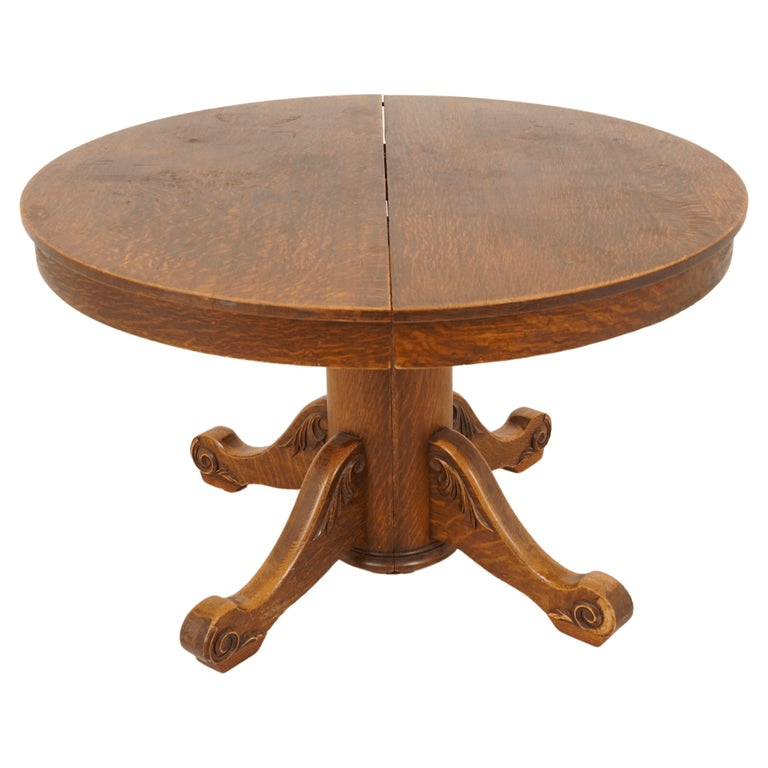
I didn’t even add in the shape in my ladder example above. But you know that an old round wooden table sounds right, whereas a wooden round old table sounds odd.

A wooden round old table

[If you’re reading this as a non-native English speaker this may all sound like nonsense of course, but it’s stuff like this that makes the language such fun to learn, I’m sure! Idiosyncrasies that we wouldn’t be able to tell you, but will know if you get wrong. If it makes you feel better it even happens between English-speaking countries – so as Brits, we would happily say “hello mate” to an individual, but when our American cousins greet a group of us with “hello, mates!” we quietly smirk into our cup of tea.]

So yeah, I’m fascinated by words. They’re interesting.

Oh yeah, and I guess they can be incredibly powerful too. In case you thought this was going to be a lazy wander around our language. We’re going in hot, folks. Hold on tight.

Words can bring comfort, give direction, even show a way towards freedom. And they can close us in too, forcing division and leaving marks on our souls.

[Remember that old kids’ rhyme “sticks and stones may break my bones, but words will never hurt me? Bull, and I can’t stress this enough, shit. I’ve broken a few bones over the years and they heal over time, but the phrase “crushingly dismissive” from some anonymous 360 feedback about a decade back will stay with me until my dying day, believe me.]

Understanding how we use words now versus how they were intended originally can sometimes change the way you think about them too – and here’s this whimsical pootle through the highways and byways of my mind turns onto the slipway and accelerates onto the main carriageway of this little story…

I stumbled across the word despair recently whilst reading a book [an actual book with pages made of wood pulp – remember those??] and once I’d dusted myself down I looked at the word again and did a bit of a think in my head (which is where most of my thinks happen, I find).

As you’ll know if you’ve read these pages over the last couple of years, I’ve had some dalliances with the darkness of despair in my time – never quite giving in to it, but sometimes viewing it carefully from a safe distance, knowing not to go too close. So for me, despair is a word that conjures up a world that is very gloomy and quite final: something hard to come back from. When all hope is gone…

Which is where a tiny little bell somewhere in the back of my mind gave a tiny little ring…

With the knowledge that English is an amalgamation of all those different languages that have come together, I know that there’s a fair bit of French knocking around for all to see. And as it happens, I remember enough A-Level French to know that “I hope” is “j’espère”. And we all get that ‘de-’ basically means the opposite of what follows it – deconstruct, deodorant – or, more classically, the idea of “away from”.

So there we have it: despair is the lack of hope. Or, even more meaningfully: moving away from hope.

But hope is something within us. All hope cannot simply be “lost” if we created it in the first place. Of course, nobody chooses despair. But is there a moment when we decide to move away from hope and into despair?

And if that’s the case, then surely there’s a decision we can make to do the opposite? To refuse to let hope move away. To hold on to hope and bring it closer, especially at our most difficult times.

What do we need to make that decision? Great question. And like any rhetorical question, you’ll be pleased to know I have the answer:

Courage.

Let’s be clear here: courage isn’t bravery – at least not in the ‘running into a burning building’ kind of bravery that my Dad did once, or my little bit of it you can read about here – and it isn’t about just pretending everything is fine and persevering when actually it isn’t. It’s a word with much more to it than daring and valour. The Cowardly Lion from The Wizard Of Oz was lacking bravery; courage is broader than that.

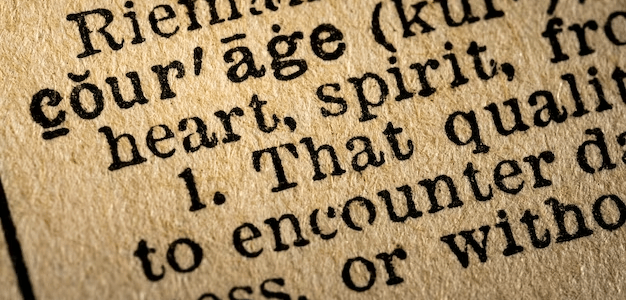
Again I find myself back in A-Level French lessons and recall that “cœur” is the French for ‘heart’. A quick trip down an internet rabbit hole and I find that cœur comes from the Latin word for heart, cor, which connects to the second part of the word which comes from the Latin word ‘agere’, meaning ‘to be’… or ‘to lead’.

So…

Courage isn’t about being bold or daring. Courage is leading from the heart. Putting the head to one side and just letting the heart lead the way.

This, my friends, is where the magic lies. Courage is how we do the thing that logic tells us is impossible. Courage is a decision

Courage is choosing to forgive.

Courage is being the first to say “I love you”.

Courage is holding on to hope.

And here’s where I question whether we create our language or our language somehow guides us through. Because whether or not you already knew that despair means that you actively go away from hope, you definitely will have had the feeling that despair was at the end of the line. When all hope is gone.

And perhaps now you may consider that there’s another choice; another decision: that when all rational hope is gone, it’s time for the emotional hope to endure. To choose courage. To lead with the heart. To know that whatever you are going through, you are still going, and today, that’s enough.

Courage doesn’t need to turn up with a sword and a shield; to smash the door in. Sometimes courage is just picking yourself up and dusting yourself down, and making the decision to go again, even when you know that you may fall once again; the heart taking the lead, because the head is weary.

Whatever happens, however difficult or uncomfortable or unfair you think it may be, however hurt or lonely or lost you may feel, remember you always, always get to decide how you handle it. As the Zen Taxi Driver I once met noted: don’t be so keen to give up control of your mood or feelings to whatever’s happening. No matter how hard things are, or how close you may be to despair, you get to decide what you will allow to affect you and what you will not. I know it’s not easy, but believe me: you are not at the mercy of external influences. You get to choose.

So just take a moment. Let go of whatever expectations you might have about what might happen, because last time I checked you’ve never actually that good at reading the future anyway, right?

And choose courage. Go again. You’ve got this.

What if?

When you’re a 9-year-old boy, where things fit in the world seems very important. I know this because at any one time, my 9-year-old son Jack can tell you where he fits amongst his friends and classmates. Who’s older and who’s younger (very important). Who’s taller than him and who’s shorter (also very important). Who’s a faster runner and who is slower (you get the idea).

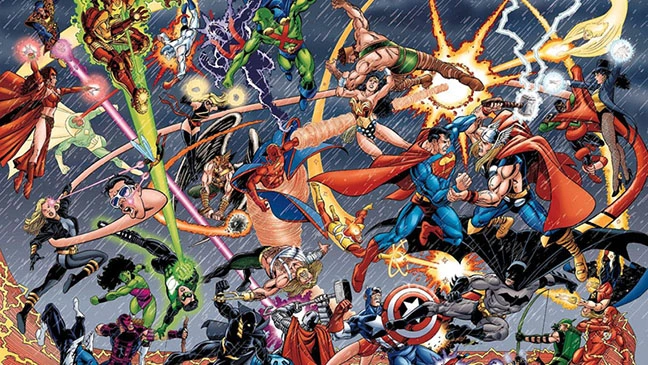
Comparison is how Jack sees the world at the moment. What’s better, what’s worse? He could tell you his favourite chocolate bar, and his second favourite soft drink or tree. Jack, dear reader, could tell you his third favourite colour. He also has a long list of favourite songs and can give you information on how those have been carefully stratified. Within that, there will, I am sure, be a specific sub-list for songs by his favourite artists. He can tell you, quite specifically, what he likes about playing football and how that tracks against what he likes about playing rugby. He has clear views on whether that superhero would beat that superhero in a fight.

“First: Superman; Second: Thor; Third: Iron Man”. Took him about 10 seconds.

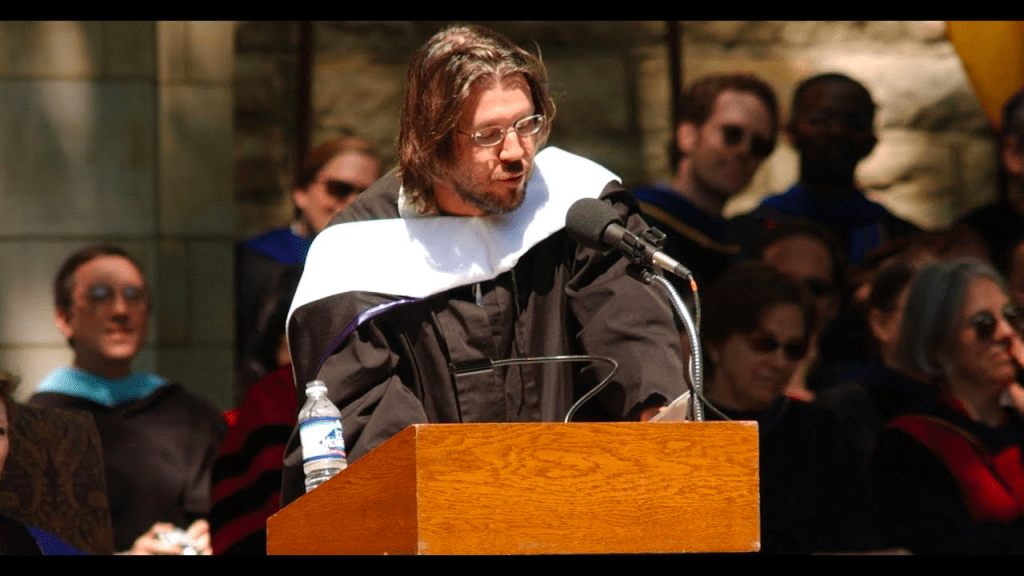
Because that’s the way Jack thinks, he thinks other people think that way too. As the brilliant and heartbreakingly short-lived American writer, David Foster Wallace once noted (with irony, of course):

“Everything in my own immediate experience supports my deep belief that I am the absolute centre of the universe; the realist, most vivid and important person in existence.”

David Foster Wallace
[If you want to put this snippet in context, I urge you to listen to the speech it comes from, a 2005 commencement speech to graduates at Kenyon College in Ohio in the US. It’s all about the importance of living in the trenches of adult life with awareness and compassion, but I can’t do it justice so you can hear it for yourself here, or get a copy here. He struggled with depression and tragically took his own life just three years later in 2008.]

So it’s not surprising that a 9-year-old thinks that everyone thinks like him, because his only experience of thinking is the thinking he does, right?

The result is that you don’t have to spend much time at all with Jack before he’s asking you what your favourite something is. He expects you to have a favourite, and he will push you if you say you don’t. I now have a third favourite colour, because it’s easier than not having one.

On the whole, I go along with Jack’s world of categorisation because it’s interesting to question your own view of the world in a way that you usually don’t. Hang on a minute… what is my third favourite colour??*

The other morning as we drove through the hedgerow-lined country lanes between our house and Jack’s school, which sits in the village perched on top of a hill on the other side of the valley [yeah it does sound pretty idyllic, doesn’t it?] we chatted about his tendency to rank things and why he did it. After a couple of failed attempts to get some insight (“I like it because it’s good to know what you like the best”), I hit a breakthrough…

“I like asking myself questions. It makes me think about what I think about things.”

Woah. Pretty deep for the school run, right?

So once I’d managed the massive hit of dopamine that paternal pride dropped into my system which made we want to hug him and burst into tears and shout his name from the top of the church tower in the distance all at the same time, I gathered myself and told him I was proud of him and that asking himself questions was really important and he should never, ever stop.

Then, once I’d dropped him off at the drive-through turning bit [he doesn’t need me to come into the playground any more because he’s Year 4… I also haven’t got a hug from him at school for quite some time, but we do have a “Bartlett Boys Fist Bump™” – my little man is growing up too fast] I found myself thinking about what he’d said.

He doesn’t know this, but what he’s doing is called ‘meta-cognition’: the process of thinking about one’s own thinking. It’s what David Foster Wallace was talking about, and taken to the next level you get to meta-emotion which is considering how you feel about your feelings. Being able to take a step back and consider your thoughts and feelings with objectivity and ‘detachment’ is actually the fundamental idea of Buddhism, and much of meditative teaching: you are not your thoughts; you are not your feelings.

I’m not saying Jack is on the road to enlightenment just yet – he’s much too ‘attached’ to the idea of getting the football into the top corner of his little goal in the garden, for a start – but I’m not sure I was thinking about my thinking at his age.

But the point of all this stuff is not just to get you thinking about what you think, or even exploring how you feel about your feelings.  It’s to tell you about what this desire to question and categorise has led young Jack, and where I’ve gone with him on the journey.

Ladies and gentlemen and all those who identify as they wish, I give you:

The Power of IF

Allow me to explain. A little while back Jack came to me and asked who I thought would win in a match between his beloved Liverpool Football Club [YNWA] and England. At the time there were a couple of Liverpool players who would be in the England team, and so I told him that wasn’t possible – who would they play for? To which Jack replied…

“Yes but what IF they played each other”

For Jack, IF is the get-out clause – the escape from the realm of reality into a place where anything is possible. Because whilst you can know that in reality, it wouldn’t be possible for a team to play another team with some of the same players on each side, there remains the question of IF they did, who would win?

I know a grizzly bear won’t ever fight a tiger in the wild, but IF they did, who would win?

I love the freedom of that thinking. It’s the stuff we leave behind when we become adults and become constrained by the things we know to be true, rather than exhilarated by the potential of those things that could never actually be, but what if they could?

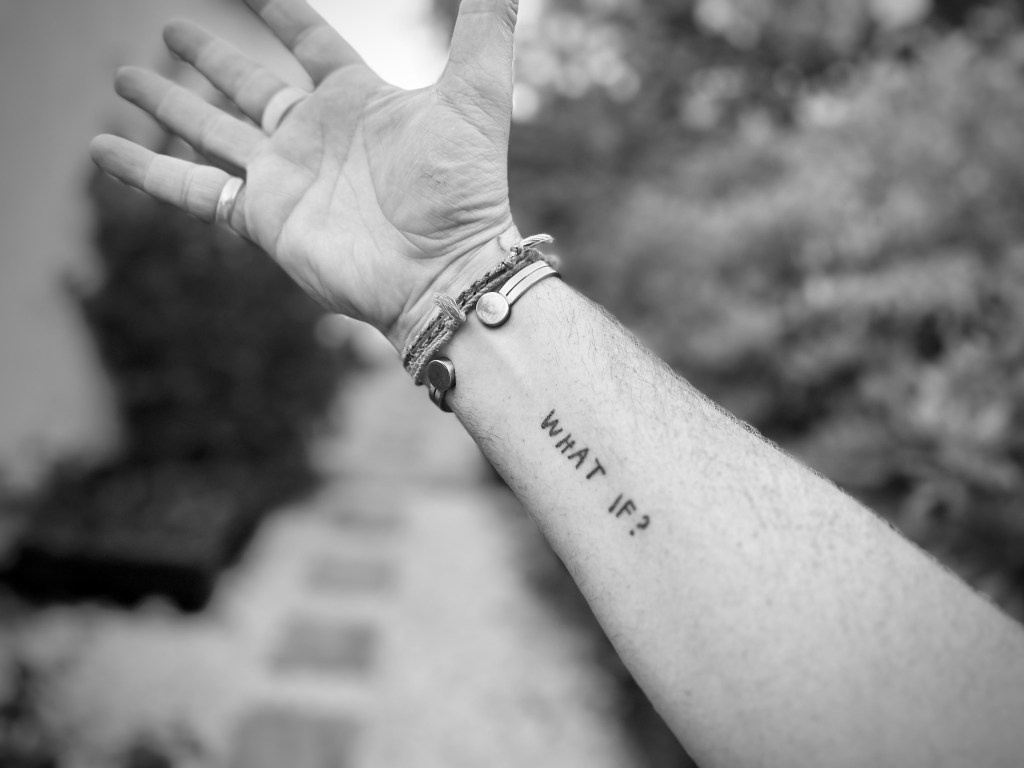
And it’s that additional word, turning IF into WHAT IF that has become something of a guiding principle for me over the last year or so since “my little episode”. WHAT IF? is a commitment to the possible. And the magic of this little phrase is that the positive always, without exception, has the ability to trump the negative.

What if it doesn’t work?

Yeah, but what if it does??

What if we could create this amazing thing that feels impossible? Wouldn’t that be cool? Well shall we try to actually do it then? Rather than dwelling on all the reasons why it’ll be too difficult?

What if you could get past the difficult conversation that you’re worried about starting because you don’t get to choose how the other person takes it? What if it works out? That would be pretty great, right? So go and work out how you’re going to at least try to do it.

What if you say “I love you” first and they say “I love you too”? Yeah, I get it’s one of the most vulnerable things possible, and yeah, what if they don’t? But what if they do??

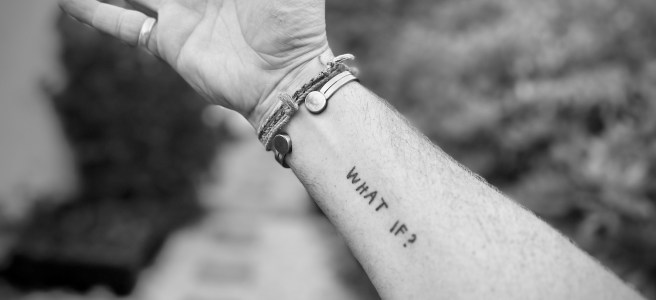
It’s become such a positive influence in my life that I’ve done what I tend to do in this situation and had it tattooed onto my arm, so that whenever things get stuck I can envisage the positive endpoint and make a commitment to go for that.

My right arm

And that, dear reader, is what I’m going to ask of you today. No, not the tattoo. You don’t have to do that if you’re not up for it. No, I’m asking for a commitment, just with yourself, that the next time someone uses ‘what if’ negatively you flip it to the positive and embrace the possibility of a positive outcome, and commit to go towards that.

So yeah, what if we lose? What if they hate it? What if they say no?

I get that you’re nervous. It’s a big deal. But we’ve done all we can. And what if we win?

Yes, there’s a risk of that. They may hate it. But what if they absolutely love it?

And just imagine, for a second. Let yourself go, and give a little thought to this…

What if they say yes?

Good luck. And let me know how it goes.

*[I thought about this only this morning for the first time. My favourite colour is yellow – always has been. Bright, positive, unmistakable. Next (because I had to choose) comes blue, because of the sea and the sky and calmness and all that. And I thought my third was green, but when I told Jack he said “Oh, I thought it would be orange”. And actually, I think he’s right. So it turns out that not only does Jack know his own third favourite colour (turquoise, surprisingly), but he also has a better idea about mine. He can probably help you with yours, too.]

Life saver

In Spring of last year, on the 28th of May, in fact [the significance of which we’ll come to], I happened to save someone’s life, and I’ve only ever told a couple of people about it. It’s a bit of a hard one to slip into a conversation if I’m honest, certainly without a great deal of tangential segueing anyway. And the longer ago it gets, day by day by day, the less relevant it seems to bring up, or the less likely I would be to get away with bringing it up with at least a passing glance at nonchalance.

And also, it seems like such a weird experience – so heightened, so very vivid and memorable, yet at the same time so ephemeral and unbelievable and isolated from the rest of my life – that now it almost feel like a dream I once had.

The couple of times that I did bring it up, it felt weird too. I knew once I started I would have to get to the end, but I also knew that it did all seem like a dream and there are few things more boring in life than listening to someone else’s dream [I always have an overwhelming urge to interrupt and scream “NONE OF THIS HAPPENED IN REAL LIFE” at the top of my voice] but of course this wasn’t a dream and I know because I was there.

So let’s get to it shall we? I’ll give you a run down of what happened and then I’ll tell you what it’s left me with.

I will warn you at this stage that a lot happened in a short space of time so if you think I’m going to “cut to the chase” you’re in for a disappointment. This is the director’s cut. So if you were also thinking of reading this then making a nice cup of tea, I’d suggest making the tea before you start.

Right, we ready? Lovely.

Now come with me, if you will, back to the end of May.

It’s a lovely sunny Saturday, and we have my wife’s cousin and his family visiting us in Kent from their home in Cardiff in South Wales. Cousin, wife, ridiculously cute baby of almost exactly 18 months, and a big shaggy dog [a Canadian Duck Tolling Retriever, for the caninophiles amongst you] all descend and because it’s a lovely day and we have a dog too we decide to head down to the seaside in Rye, East Sussex, which is just down the road.

This is the actual dog mentioned above. He’s called Dougie.

We decide to go to Rye Harbour Nature Reserve, and once there, after stopping to get an ice-cream for the kids, we head off along the path towards the beach.

This walk takes us alongside the River Rother which has wound its merry way for 35 miles through Sussex and Kent and is now looking forward to fulfilling its destiny of spilling out into the English Channel.

Who knows, in a few weeks the water herein could be enjoying a nice weekend as waves lapping against the beach of Boulogne-sur-Mer on the French coast, closer to where we are walking than London as the crow flies. Or any bird actually. But for the moment it is trapped in by high brick walls on either side, designed to stop the tides completely flooding the unspoilt salt marshes of the nature reserve on one side and totally spoilt members of Rye Golf Club on the other.

About halfway towards the beach, my younger son (8 years old at the time) decides he has a stone in his shoe. I say “decides” because he doesn’t have a stone in his shoe at all: he’s just a bit tired and being a bit of a pain in the arse. I love him with all my heart, but he does have “pain in the arse” in his locker and trust me, he will pull it out whenever he feels the need.

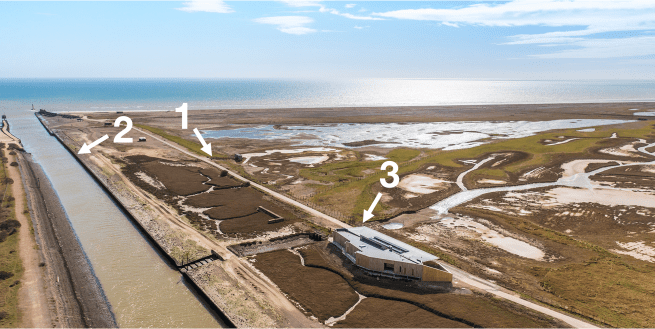
So there I am, sitting on a bench, taking his shoe off for the third time and considering whether I can get away with just leaving him here forever. My wife and elder son have carried on walking with our dog and the visiting Welsh folk. If you look at the pic below, I’m at point 1. [Yes that’s correct, dear reader: I have done a bloody diagram. You are most welcome.]

Then there is a commotion. Something is going down. This is a quiet, peaceful place, and yet someone is shouting. A ruckus! I’m instantly titillated. This has potential for drama, and who doesn’t like a bit of drama, eh? So I’m half listening to my son’s whining and half trying to work out what’s happening when I hear a woman shout out with the unmistakable timbre of fear in her voice.:

Somebody help, please!

I’m not sure what happens in my mind at this point, but before I know what I’m doing, I’m ushering my youngster to run over to mum and I’m running towards the lady and her two young kids, and over towards where she’s pointing. Another shout as I come towards her:

My dog has fallen into the river

I’ll be honest, at this point I’m a little less urgent all of a sudden. I mean, I have a dog, and I love dogs, but surely the dog just swims to the edge and gets out, right?

When I get to the edge, I realise that isn’t going to happen.

The woman’s husband is lying face down on the ground, right on the edge of the river [point 2 on our diagram]. The tide is going out so it’s a good four feet down to the water, and he can’t reach the small black dog, who’s desperately swimming against the river flowing out through the narrow channel, the tide pulling it along towards its French holiday destination.

The current is really, really strong. The dog is getting tired. The kids are crying, and the woman is shouting at the man:

He’s getting tired. You’ll have to jump in and get him

To which the man shouts back:

If I go in there I’ll fucking drown.

I’m glad he says that, because I think he’s right. This is like one of those news reports you hear on the radio where someone has gone into a river or a lake or the sea to save their dog or climbed onto the roof to save their cat and they end up dead and the animal ends up fine. Let’s not do that, eh mate?

But the woman is right, too. The little dog is getting very tired.

At this point the woman runs off back towards the café which has just opened [point 3 on the diagram which you’re now glad you were supplied] to “call for help”. As she does this I’m wondering what kind of help that might be. No one is going to send a chopper out for a little dog.

And the little dog is getting very, very tired.

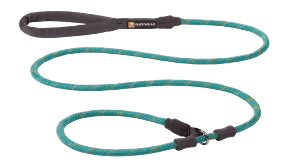
I shout to one of our group to hand me my dog’s lead, and for a few extremely unsuccessful seconds the man tries to lasso the little dog’s head with the lead. We both then try to encourage the little dog to bite onto the end of the lead. But the little dog doesn’t understand what we’re shouting at him to do because he speaks dog and we’re shouting at him in English. A couple of times he drifts downstream a few inches and pushes himself to swim back to us.

The little dog is really fucking tired now.

The man looks at me and says:

I’m going to have to go in.

I’ve never met this bloke before but it’s very clear I’m in this with him now. If he’s going to have to go in, I’m going to have to help him get out.

I have the dog’s lead in my hand and in the split second I have to think, I tell him to hold one end and I’ll hold onto the other and help him out.

I’ve got you mate. I won’t let you go.

So he quickly takes off his jacket and shoes, holds onto the other end of the lead to the one that I’m holding, and jumps into the dark, fast-flowing water.

He goes completely under for a moment, and when he comes up I can see the panic in his eyes. The water is so cold it’s taken his breath away completely. And the current is stronger than either of us could tell, and immediately I’m straining to hold him where he is. That little dog’s done bloody well against this unrelenting flow.

In another moment, the man catches his breath, grabs his dog and shoves it upwards out of the water, where a set of hands snatch it up. The little dog has been saved. But as I think you’ll probably have guessed, that isn’t the life I’m talking about,

So what next? A grown man is in a fast-flowing tidal current, four feet below the ground. I’m holding on to him but I’m starting to slip in the mud at the edge.

I start to pull him up but as I pull, the back of his hands, gripping the rope of the dog lead, are getting cut to ribbons against the barnacles on the side of the brick wall designed to hold the sea tides at bay. It’s too painful to continue.

I’m slipping more and more. I grab onto a rusty metal pole that is sticking out of the ground to steady myself.

It’s now that I realise I’ve got the end of the dog lead which has a slip on it, designed to stop the dog pulling. What it’s doing now is pulling tighter and tighter and cutting into my wrist and pulling my shoulder. I’m attached to this man and I’m the only thing that’s stopping him from floating off into the sea. And we all know how that news story ends, right?

Don’t get the bottom bit stuck around your wrist

I’m not going to be able to pull him out. I can’t let him go even if I wanted to, and in any case I don’t want to. I decide that I’m going to take him along the edge of the river wall towards the sea and just hope, hope that something comes up which means I don’t end up in the water with the man.

It’s the only option. And it’s just hope. And whilst we all know that hope is not a strategy, right now I don’t have anything else.

But as I let go of the pole and start walking along, I’m slipping more and more. My cherished Adidas Nite Joggers [other cool-ass trainers are available] are great for wandering along a path but they’re not great for trying to grip in a grey mixture of sea mud and sand. A couple of times I slip forward, leaning back so my body weight holds me until my Adidas get a grip.

At this point I’m kind of thinking I’m going to end up in the water unless something happens pretty soon, and then both me and this bloke are in trouble. In deep water, you may say.

I shout for help, and my wife’s cousin (who up to this point had his toddler strapped to his chest) runs down the beach and grabs onto my hand. Another, older man turns up and suddenly it’s not just me and the man, and now I think we’re going to be okay.

And then the universe decides that we need a break here, and out of nowhere there’s a set of steps cut into the wall a few yards away. I keep hold of the man and kind of lead him along to the steps, pulling him through the water like I’m trying to land a massive fish. At the steps, I and the other people help him out.

The next bits are quite strange as the world that was always all around comes back into focus. I see my wife looking after the man’s small children who are both crying. Her cousin’s wife has the tiny, shivering little dog wrapped up in her jacket to warm it up. My younger son is crying because he’s been watching the whole thing and has been scared for my safety.

And the man is more embarrassed than anything. He’s trying to say everything’s fine and thanks for your help and is the dog okay and where’s my wife, and everyone is telling him to just take a minute, and helping him on with his jacket.

He’s bleeding quite a lot from where his hands scraped on the wall and he’s shivering a lot too. I ask him to hold on while I gently clean the blood off his hands with a spare tissue I got from the ice cream van [ONLY ABOUT FOUR MINUTES AGO] and see that his cuts aren’t too bad. I tell him I’m a first -aider and then hear myself say:

I don’t think you need any further medical attention

Which sounds weird as it comes out as it’s not a phrase I’ve used before or probably will ever use again. How very formal.

We walk up across the rough ground and pebbles towards the path, and I see my elder son running back down the path from the café. I later found out that he was told to run to the café but when he got there wasn’t sure what he was supposed to do, or say, or get, so just ran back.

The man is telling his kids that he’s fine and the dog is fine and when we get to the path we see the woman running back down from the café too, and we all wave and say everything’s fine. She runs up and thanks everyone and gets the dog and holds it to her chest under her coat and tells the kids that everything is fine. All fine.

And I hug both my sons, and my wife. I’ve cut my leg and my hand and they’re wet so the blood is running a bit and makes everything look worse than it is, and my wrist has a nasty rope burn on it. But I tell them everything is fine, because in the grand scheme of things, it really is.

As the metaphorical dust settles, my wife and I offer to help the man, the woman, the little dog and the two kids back to the car park. It seems necessary because there’s a lot happened and the man is almost certainly in shock. So we say we’ll catch up with our own family and we’re walking just in front carrying a bag and a kids tricycle and telling the people no honestly it’s no trouble.

It’s only at this point that the woman asks the man why he’s so wet and I realise she doesn’t even know he went in the water because she was up at the café the whole time. So he tells her he went in the water and she asks how he got out, and he gestures at me and says:

That man saved my life.

Which is not something you ever expect to hear someone saying about you.

A few yards on and now the man and the woman have calmed a bit and around about the same time it starts to seem a bit odd to all of us that my wife and I are just carrying their stuff for no clear reason, so they say they will be fine from here and we say are you sure and they say yes.

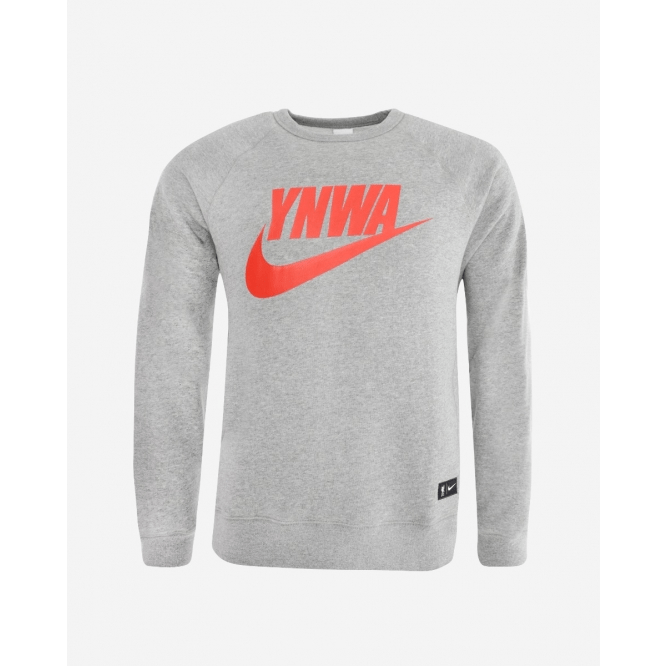
The man and I face each other for the first time properly, and he notices that I’m wearing a Nike sweatshirt where instead of NIKE it says YNWA in big letters, denoting “You’ll Never Walk Alone”: the anthem of Liverpool Football Club, who are playing in the European Champions League Final that very evening. Which of course is how I know the date.

The man asks me if I’m a Liverpool fan, and I tell him I am, and he says that he is too. And I say:

You’ll never walk alone, mate

Which felt a little cheesy at the time and still does in retrospect but it was an emotional moment so I’ll let myself off.

And then we hug each other with real meaning, knowing we would, in all probability, never see each other again, but that for a few moments on this Saturday lunchtime we were connected in a way that neither of us will ever forget.

Then the woman says that they are on holiday and they ended up in hospital the day before because the little boy had hurt himself, and then this today, and “bad things always come in threes” and we all laugh and say we hope not and we all go our separate ways.

And unbeknown to either of us, she will be proved right when our beloved Liverpool lose 1-0 to Real Madrid just a few hours later.

And as we walk away my wife holds my hand and squeezes it and says:

Are you okay?

And, of course, I start to cry because I am okay but also that was about as hectic as things get and all a bit overwhelming and I could do with a hug. Which, of course, I duly get.

And that’s it. Every tiny detail of something that lasted maybe 5 minutes in total from start to finish.

And, of course, that’s the first thing that intrigues me about this: a reaffirmation of my belief that time just has to be relative [as mentioned in these pages before here] to your own personal experience. This was 5 minutes of my life which felt like so much more, with time to take in the detail of every single moment like I was rewinding it and watching it again and again.

Details burnt into my brain. The look in the man’s eyes as he came up from under the water. My foot slipping forward through the mud and catching on a brick at the top of the wall. The little black dog shivering as he was shoved up out of the river. “Time stood still”, as of course it would.

The next thing is about my instinctive reaction.

If you’d asked me beforehand if I were the type of person who runs towards a commotion and then puts himself in danger in order to help, I think I would have said ‘no’. But as it turns out, I am. I’m not sure what you call that? Brave or brainless? Courageous or crazy? Heroic or hasty? Probably a bit of all of these. But an interesting thing to learn about oneself, that’s for sure.

There’s also a “what if” element to it all too. What if we hadn’t stopped for an ice cream? What if my son hadn’t started complaining of a stone in his shoe? We would have been up the path by the beach. So many things aligned to make all this happen. I don’t believe in fate any more than I believe in luck. But I do like considering the magic of coincidence in our life experiences.

And the last thing that sticks with me about this is [it’s me, so of course it’s going to be…] all about how people connect.

Author and speaker Brené Brown [yes you’re right I do mention her quite a bit] has done more research into vulnerability than probably anyone in the world, and her work has come to the conclusion that vulnerability is made of three things: uncertainty, a degree of risk, and emotional exposure. You don’t know how things are going to go. There’s a chance that things might go wrong. This could be emotionally difficult. But you do it anyway. That’s vulnerability.

I can’t think of any better description of what the man and I experienced together. Uncertainty, risk and emotional exposure. And because you know this stuff, you don’t need me to tell you that vulnerability is the irreplaceable, elemental, catalytic basis of human connection.

I will never, ever, forget the man I met that day. Never. And he won’t ever forget me, either. What we experienced, together, was so intense, so short-lived but so unforgettable, and so totally, totally vulnerable that we’re connected forever.

If I could change one thing – just one part of the whole experience – it’s that he could have had another bit of bad luck in the afternoon (nothing big: a seagull pooing on his head or something) to satisfy the “bad things happen in threes” rule. Then the man and I could have been further connected by the shared enjoyment of winning the footy that evening…

YNWA friends. Go safely… and keep your dog on the lead near water yeah?

P.S. Apologies for such a long post – in the words of French mathematician and philosopher Blaise Pascal in his 1657 work “Lettres Provinciales”: Je n’ai fait celle-ci plus longue que parce que je n’ai pas eu le loisir de la faire plus courte”, or as you or I might have it: “I have made this longer than usual because I have not had time to make it shorter.” Except of course I did have time, I just decided to spend it elsewhere.

Time To Talk Day – my “little episode”

I’d been feeling a bit lost for a few weeks. Maybe a few months even, I’m not too sure. A while, anyway. Not completely without purpose, but lacking a little… something. “Not feeling it” as they say. It’d been a time of introspection, not all of it particularly useful, coupled with a fair bit of time wishing I weren’t so introspective. It can all get quite meta when I’m thinking about how I feel. And how I feel about how I feel. You get the idea.

I get like that sometimes. It’s kind of exhausting, to be honest. I get into my own head and get stuck there for a bit. Outwardly I’m fine – perhaps a little skittish or distracted – but inside I’m spinning.

When I’ve been like this in the past, there’s always the internal monologue that just says I need to snap out of it. To follow the good old masculine trope and for fuck’s sake just MAN UP.

But of course, I know that bit of me doesn’t solve anything. Rejecting how I’m feeling, pretending it’s not real, or (even worse) beating myself up for even having these silly, selfish, weak things called emotions is a road I’ve been down before, and it’s always ended up at a dead end. [If you’re interested in one of those roads – perhaps the first dead end I found, actually – then you can find my story about my anxiety here.]

Unfortunately knowing all this in your more calm and more rational moments doesn’t necessarily help when you’re in the middle of it, because when you’re in the middle of the forest you can’t see the wood for the trees. And I was right in the middle of the forest.

Allow me to explain…

A long time ago I decided that if I was going to be leading people, in any way, big or small, I’d do that in a way that felt genuine and authentic to me. I’ve always known that the best way to bring people together was to try to connect with them – and to connect them to each other – with shared passion and values and purpose and all that good stuff. I don’t need to tell you that you only build trust through vulnerability, and that’s what I’ve done, for years.

This philosophy requires me to be emotionally open, genuinely caring, and empathetic not just to the individuals but to the group that individual is a part of too. If I’m not all of those things, all the time, then the connection doesn’t work in the same way. I’ve doubled down on vulnerability, time and again, because that’s what I believe in. There’s no question that it’s made my working life richer than I could have hoped for, but I can’t pretend there aren’t times when I’ve wished I could shut off the emotional side because it does take a hell of a lot of energy. You can’t reverse back out once you’ve started with an open, honest, vulnerable relationship because if you were to do so, the trust you’d built up would break into a thousand pieces, never to be put together in quite the same way again. Once you’re in, you’re in. And I’ve always been all in.

The result of that can be neatly summed up by this little gem from the visual artist Adam JK (you can learn more about him here if you like), who put it thus:

And that, mes amis, is the life of an ‘all-in’ leader, especially in the strange razor-edge world of running an advertising agency, where every success means people are working too hard and burning out and freaking out and you can see that they’re struggling and you wish you could do something… and every little failure means you might have to send someone home without a job. Someone you know, and care about. Someone you really, really like. Whose family you’ve met.

It’s always been personal for me. And the last couple of years only heightened that.

Authentic, vulnerable leadership is hard at the best of times, but leading through two years of global pandemic, where people’s expectations of their employer changed overnight and never changed back, has taken its toll on leaders the world over. I’m no exception to that. Overnight I felt responsible not just for the agency I run or the jobs of the people who work in that agency, but for the people themselves, too. We were the de facto community that people were missing. Work was, for many, the only human contact people had.

And so through two years of sustained growth in lockdown, I knew people were allowing their commute time to be subsumed by work, and working longer hours than ever. To help with that we were trying to hire people so quickly that there was no way we could be doing a decent job of embedding them into the group and setting them up for success. I could feel that we were cashing in all the “emotional currency” we’d been banking through the previous years.

Emotional currency is an idea I’ve talked about for a good few years now, and it’s simple enough – when things are going well and work feels good and morale is good and the mood is good then all that good stuff gets banked in people’s minds but more importantly in their hearts. The more the good continues, the more you bank. And then when things aren’t so good for a while for whatever reason, you have some good in the collective emotional bank which means you get some leeway – some time to get things good again. But here’s the rub – it’s not fair. You might have two years of good in the bank, but once you start withdrawing it’ll be gone in six months.

I could feel that the bank was getting empty. Not in the red, but not snow angels in the banknotes either.

And then as the shared experience of lockdown and Covid became smaller in the rearview mirror, everything happened. All at once.

Work got messy. The razor edge was sharp and painful. We were under pressure and I was out on a limb, fighting for what I thought was the right thing to do time and time again, holding on so tight that I couldn’t release, and in my own head so much that I started to question my instincts on things. And I’ve always trusted my instincts. Always.

Life got messy. An old friend took his own life, which rocked me in ways I still don’t really understand. Family members were in and out of hospital for operations which of course were always going to be fine but of course there’s always that bit of your mind which likes fucking with you in the middle of the night because WHAT IF..?

My head got messy. Losing sleep. Losing perspective. Losing myself.

It all came to a head on an otherwise unremarkable Wednesday morning at the end of June. My wife told me that she was going away with my sons for a few days in the summer holidays and I’d be at home for about 10 days on my own. My reaction wasn’t “sounds great, I’ll sit around eating pizza in my pants and get the lads round to play poker”. It was “I’ll go fucking crazy here on my own”.

The way I’ve described it since is by using the analogy of holding a mental tray. You’ve always got a decent amount of stuff on your personal tray, and most of it you put on there yourself so it’s all balanced in a way that you can handle. But if you keep on putting more and more things on it, then eventually you’re going to struggle. And then if other people stick some stuff on it as well, and aren’t as careful balancing…

I just about managed to put the tray down before I dropped it. Just.

I spoke to my team at work and agreed that I’d take some time off in the summer.

Which I did. A month away. Time to get some more stuff in my toolbox. Started some coaching and some yoga and meditation. Started going to the gym, too.

I can’t say the return to work was gentle, though. If anything it was worse than before the break: intense and toxic and kind of disgusting really. If you ever want a case study on how not to handle the return to work of a leader who’s been suffering with their mental health, give me a shout.

When, like me, you’ve spent your entire adult life ‘showing up’ as self-confident and full of energy, it’s actually pretty easy to fake it. To turn it on and turn up and get through and get out. So I tried to be what I thought people needed me to be. No one needs a leader who can’t trust his instincts. Who can’t trust himself at all, really. I was so wrapped up in my own stuff that I couldn’t really be the support that people needed, but I couldn’t tell them either because that would be putting more on them and they were already covering for me. I thought I was doing okay because the time off had given me a chance to get my nose just above the flood waters so I could breathe, but I was still only one slip from going under again.

I had a panic attack one morning before going into the office. I called my wife and she talked me down and I went into M&S and got some fruit and went into our offices and up in the lift and sat down and didn’t say a word about it to anyone.

I couldn’t take more time away because people needed me. Or at least that’s what I thought. But looking back, I wasn’t completely there anyway. By the time I started getting cluster headaches [read about the delight of those here if you fancy it. TLDR – they are horrible] towards the end of the year I was just limping towards the alluring finish line where 2022 would finally be consigned to history as the shittiest year of my life. Beating the year my mum died takes some doing.

BUT…

Lovely word, right? “But” makes everything that comes before it irrelevant. It turns the story.

But that was last year.

Yeah, I know that nothing magical actually happens at the end of December 31st, and that the whole idea of a “New Year” is just yet another construct that we’ve created – a story we’ve all decided to believe. But I needed to go with the romance of a new beginning. The turning of a page.

And as I sit here today, I do feel like I’ve turned the page.

Over the last six months since what I’ve euphemistically been referring to as my “little episode”, I’ve put a lot of time and energy into getting more things in my self-care toolbox that I can pick out as and when I need them. I’ve been going to the gym with a couple of friends who also could do with reshaping the dad bod [which considering I’ve been “Gym Free Since ’93” is quite a shift for me]. I’ve been doing a 1-2-1 yoga class every week since July. I’ve had some professional coaching which has helped me to get a better sense of my own values and what I need to be fulfilled. I’ve had a sprinkling of therapy along the way. Then just before the break in December, I learnt to meditate and now I’m doing that once or twice every day,. Last year I changed my meds and then this year got some advice and changed the dose which has helped. Hell, I even spent last weekend at a yoga retreat where as well as doing more yoga than I’ve ever done I also opened up to a load of complete strangers and chanted around a fire with a couple of shamen women for crying out loud [don’t worry I’m not converting – I just love a fire]. And perhaps above all, I’ve got my wife, and my two boys, and my dog, and the huge oak tree in the woods over the road.

I’m coming into this year feeling more centred and more solid than I have in a long time. Maybe ever.

At the same time, I’m also very conscious that all this is part of a journey and I can’t let myself be either complacent that somehow I’m magically “fixed” or concerned that “it’s only a matter of time before I crash again”. I just have to be whatever I am right now and be okay with that. I’m okay today. Tomorrow is tomorrow.

So why the hell am I telling you all this?

Well, there are a few reasons, actually.

The first one is then when I’m writing this, you’re not here. So I’m kind of talking to myself really – starting with the man in the mirror and asking him to change his ways [yes that is a Michael Jackson lyric – I couldn’t help myself and it’s lightened the mood a bit hasn’t it?]. It helps me to organise my thoughts, and as a result it’s kind of cathartic.

I’m also telling you because there’s a massive stigma around talking about mental health, especially in men, and if I can talk about it then at least I’m doing something to break down that stigma in some way. For me it’s just health -I’m not ashamed of my mental health problems any more than I’m ashamed of the fact that I need glasses or got diagnosed with gout at the age of 30 [a family disease for the Bartletts]. I take my pills for my brain at the same time as I take the ones for my liver. I take vitamins too. Sometimes I take something for allergies. It’s all the same. Talking breaks down barriers and stigmas and I have a lot of privileges in life so if I can’t talk openly about all this shit, who can?

If you’re a regular visitor to these pages, you may also have gathered that I’m a talker anyway, so this isn’t new news for a whole load of people. My immediate family know, and some of my extended family do too. A decent amount of the friends I’ve spoken to in the last 6 months know, because it would feel horribly inauthentic if they were to say “how have you been” and I were to say “yeah, fine thanks”, so I’ve tended to ditch the small talk and go for the big talk. And at work, I started off telling my immediate team, then thought it felt right to tell the whole agency about it because it’s real and I want them to know that it’s okay to not be okay. And then somehow I found myself in a really open and honest conversation with the new big boss in New York and I took a punt that he would get it and told him and he did get it and that felt good. So now a lot of people know I guess. Everyone, without exception, was kind and considerate and caring.

And now you know.

Which leads me to the last reason, which is actually all about you, dear reader

You see, the reason I overthink things and then write about it here is so that you can learn from my mistakes and avoid them (whilst, of course, making a whole set of completely different ones). Call it a friendly nudge, or wake-up call, or even a kind of non-specific remote intervention, but if you’re carrying your own tray and you’re wobbling, then please trust me, it’s not just going to magically fix itself. Yes, there may be light at the end of the tunnel but it’s no fun living in a tunnel on your own either and maybe, just maybe, a nudge around TIME TO TALK DAY might be the right time to maybe talk to someone about what you’re going through. It will help, I promise, and they will care, just like you would if the tables were turned. The truth is, they probably know already.

And on this day of all days, if you’re actually doing pretty well, actually, then you can make the world a better place by making a point of being emotionally available for the people around you who seem like they’re probably fine but actually might not be…

The colleague who always seems like they’re a step or two behind where they think they should be.

The family member who’s gone a bit quiet recently.

The friend who hasn’t made it the last few times you all got together.

Maybe they are fine, and you just have a nice chat and a catch-up and perhaps arrange a time to spend a bit of time together because it’s been too long, hasn’t it? But maybe they’re not, and you’re exactly the person they needed to talk to but just didn’t realise it. Either way, you get to talk to someone you care about.

Hey, don’t let me keep you. I’ve got a call to make anyway.

What have I done?

Though it was still early in the morning, it was already becoming hot in the Jornado de Muerto desert, about 35 miles southeast of Socorro, New Mexico. On this day, the sixteenth day of July, 1945, the world was about to change forever.

At 05:29, the United States Army detonated the first ever nuclear weapon. As huge sunlight flash subsided and the mushroom cloud rose into the air, amongst the 425 people in attendance was the director of the Los Alamos Laboratory where the bomb had been designed, Dr J Robert Oppenheimer. He later said that the sight of the explosion brought to mind words from the Hindu scripture the Bhagavad Gita:

“Now I am become Death, the destroyer of worlds.”

June 16th, 1945.

Developing the technology behind such a device had been his life’s work, and within days of that morning in the desert the dropping of bombs on Hiroshima and Nagasaki, on August the 6th and 9th respectively, effectively ended the Second World War. The only nuclear bombs to have been used in combat, they killed between 90,000 and 146,000 people in Hiroshima and 39,000 and 80,000 people in Nagasaki, with roughly half of those dying on the first day. 95% of those who died were civilians.

There’s no knowing how long the war might have continued without those bombs of course, or at what cost in terms of lives. History changed course at that point, leaving those stark figures as the epitaph to the largest war the world has ever known.

Oppenheimer’s moral conscience about his place in this history as “the Father of the Atom Bomb” was complex and nuanced. Two years after the bombs had extinguished both life and war at the same time, he would tell his peers that they had “dramatised so mercilessly the inhumanity and evil of modern war”, and connected science to the idea of sin like never before.

Yet when asked to reflect later in his life, he claimed to carry “no weight on my conscience”, seeing the scientist’s role as distinct and detached from the governments who decided to use their work. Scientists do science. Governments do war.

I’m not sure I could disconnect myself from the responsibility for my actions quite like that. But then I’ve never been indirectly responsible for the deaths of thousands of people in a flash. Perhaps that would be the only way to live with it.

And here we are, a month under 67 years later, and the mere threat of those same bombs that Dr Oppenheimer came up with allows a country to invade another and no one can do anything to stop them, just in case.

Oppenheimer never could have imagined. At the very first, it was all about the science. As Jeff Goldblum’s character memorably says in the first Jurassic Park movie:

Your scientists were so preoccupied with whether or not they could, they didn’t stop to think if they should.

It makes me wonder about all the other people who started out with good or decent intentions, and ended up making the world worse.

The people behind Twitter is an obvious one. Created as a way to connect people all over the world, it’s ended up being a place where the positive connections and sharing and love is vastly outnumbered by the division and demarcation and disunion. Where people can anonymously shout and threaten without consequence, and conflicting interested parties can choose to create and curate hatred and vitriol.

Google was set up to “democratise information’. Now they sell our personal data to whomever wants it so they can convince us to buy shit we don’t need, with money we don’t have. They could, and didn’t stop to think if they should.

Facebook was set up by pretty grim people for pretty grim original reasons, and then morphed into something that was nice for a bit but now is as bad if not worse as Twitter. For every local community group, there are ten more sowing dangerous lies, giving legitimacy to lies which in times gone by would have died on the edges of society. Connect enough crackpots and they’ll convince each other they’re all right.

[There’s no question this extreme online discourse has leaked into society as a whole. If you haven’t seen David Baddiel’s excellent documentary on the BBC then check it out in iPlayer here.]

There’s an old cliché that “the road to Hell is paved with good intentions”, but it’s a cliché because it’s true, of course. And on much smaller levels we all have it in our own lives.

As I say, I’ve never invented an atomic bomb, but I have been so desparate to avoid having to make people redundant that I ended up making things worse in the long run. I have allowed loyalty and hope to cloud my judgment. I have had times when the utopian working environment I was aiming for looked more like a sweatshop. I have tried to make someone laugh with a joke that actually made them cry. I have tried to hold everyhing together for everyone else and ended up forgetting myself. It”s no bomb, but I can learn from my “what have I done?” moments anyway.

You’re not Dr Oppenheimer either. But imagine for a second that you could undo the thing you did that’s put you in the situation you never planned for and don’t want to be in right now. Compare that to inventing the atomic bomb. One thing can’t be undone, but I wonder if the thing you’re thinking of can?

If it can, fix it. It doesn’t matter how, although I can give you some tips on a good sorry I wrote earlier here.

If you can’t, then don’t push it away and deny it, like the good doctor. But don’t carry it with you either like a stone in your shoe. We all make mistakes, even when the intentions are good. Instead just acknowledge, learn, and move forward.

It’s not about what you’ve done. Because there isn’t a damn thing you can do about that. It’s about what you’re going to do next which makes things better.

So go. Do that.

The interconnectedness of all things (via a pint of water).

Okay, you’re going to need to stick with me on this one. It’s been one of those ideas that has rattled around in the back of my brain for as long as I can remember, and over the years I keep coming back to it and trying to explain it to people a bit and then getting a bit self-conscious about it and letting it tail off. 

Thankfully, in the last couple of years I’ve found a couple of willing (by which I mean captive) listeners who have kind of got into it… or at least pretended to because a) I’m driving and they’re in the passenger seat and can’t escape, and b) they know that by humouring me they may get to stay up a bit later than usual. [Clever boys!] Of course I’m very aware that you’re not one of my children, so if at any point you want to hit the figurative ‘eject button’ then feel free. But I do think there’s something in all this, somewhere.

With all that said, I’ll give you the overall theme and see how we go from there. It is, quite simply:

WATER.

Still with me? Great. You’re already doing better than some people.

Some water

On a macro level, we really have no concept of water – or only a very, very basic understanding which really isn’t all that connected to anything we actually get.

For a moment let’s set aside the metric vs imperial measurements – whether we’re talking about a teaspoon or a half a pint or half a litre is less relevant than an idea. And because I was born in the 70s in the UK, I dance happily between the two without really noticing, like a bumblebee flitting from lily flower to lilac flower without ever really getting the difference. Or something like that.

So here’s the thing. I know what a pint* of water looks like, and I know what it feels like to drink one. It’s not an unusual thing. Yet what never fails to be shocking is just how very wet you can be when what looks like a relatively small amount of water is knocked into your lap by one of the aforementioned passengers. You’re totally soaked. Like, ‘ruined meal’ soaked. Trust me on that. If I had a pound etc etc…

A pint* of water

So let’s take it up a notch from there. How many pints in a sink full of water? Depends on the sink, obviously, but you could probably have a guess, right? Maybe 20, or 30? But it’s already pretty vague. Now imagine a nice, steaming hot bath. How many in that? 100? 150? One hundred and fifty times the thing that gets you totally soaked and ruins the meal? Maybe double that??

Get to a garden pond, let alone a swimming pool, and unless you happen to know then you’re just guessing. How many pints in an Olympic swimming pool? A million? A billion??*

The point where this always gets me is when I go to the seaside. I’m lucky enough to live only 40 minutes’ drive or so from the beach, and we’re often drawn there of a weekend. And looking out at that huge expanse, as far as the eye can see, creating the very horizon, I can’t help thinking the following:

It doesn’t just go unimaginably far… it also goes down.

A lot of water

As far as the eye can see. And down further than the highest mountain. And I can’t work out how much there is in a pond. It’s a level of incomprehensibility that frankly I find hard to comprehend.

We have a strong connection with water which we also don’t really understand. Countless studies have shown that being close to water increases the levels of hormones that make us feel motivated (dopamine) or calm and safe (oxytocin) whilst reducing our stress hormone (cortisol) [If you’re interested in this bit then check out the book Blue Mind available here and at all non-globally monopolistic bookshops.]

Who knew that “Oh, I do like to be beside the seaside” was actually a tune about hormonal balance and psychological welfare?

We humans are about 60% water. Our brains are more like 80%. Perhaps there’s something in that? That we feel connected to water because… well… we actually are connected. At a molecular level?

[Right, this is where I’m going to go for it. Strap in compadre]

From the macro of the depth of the sea, the micro of our molecular structure then drags me inexorably into my own mind.

Our planet, the place we call Earth, is effectively a closed system. Stuff just moves around within it. So every molecule of water that has ever existed, and will ever exist, is on Earth right now as you read this.

More water, this time really really small and close up

Some of it is in you. Some of it is in me. Some of it is in the tree just outside. A decent chunk of it is in the seas and oceans of course. If you look up, you can see some of it in the sky, tiny drops condensed into clouds, which will continue to grow until they can’t float any more and fall out of the sky as rain.

You know when you go outside in the winter and you can see your breath? What you’re seeing there is water. The water coming out of your body as a vapour which cools and forms little droplets of water. You are making a personal cloud of your very own.

Your own little cloud.

So come with me on this little journey…

Imagine you go outside on a crisp winter’s morning, and your breath pours out as this little cloud. As you watch it drifts up and dissipates and you think no more of it. In time one of those little water molecules in the air drifts up and become part of a bigger cloud, high up in the sky, buffeted by the wind. This molecule travels in the wind for hundreds of miles, over land and sea and eventually over to Spain, where it falls on a lemon grove. Taken up by the lemon tree, it travels through the roots and the trunk and the branch to end up in a lemon.

Don’t ask me how, but by incredible coincidence, 6 months down the line I’m sitting with my wife after a long day considering the universe, and we decide that we deserve a little gin with a little tonic. A couple of pieces of ice and we’re ready to chink glasses and go. But no! We are not heathens after all, and we know that a drop or two of lemon will turn good into great. So I reach for the lemon we bought at the weekend, cut out a couple of chunks and with a squeeze there we have it.

You and me

Yes, my wife and I are living the dream. But also yes – a molecule that was once part of you is now part of me.

We are connected in a way that neither of us can ever really comprehend, but trust me: this is as real as the hand at the end of your arm. It’s not an idea, or an ideal. This is science, and the great thing about science is that it’ll be as true in a thousand years as it is today.

If you’re still with me all this way down into my psyche [and bless you for your perseverance if you are] then you’ll be glad that we’ve arrived at the point.

On a molecular level we are, subjectively and scientifically speaking, all one.

You, me, them. Us. Every person on Earth, every animal, every plant and flower. The people you love and the people you don’t even like. The fish in the ocean, the birds in the sky. Insects in the garden and every blade of grass. Like it or not, you could have a bit of Piers Morgan in you right now and not know anything about it apart from a vague sense of nausea.

Once you get into that, suddenly the interconnectedness of all living things isn’t just some kind of spiritual, sitting on a mountain top, crystals and horoscopes level of bullshit: it’s biochemistry.

And once it’s true, and real, and scientifically accurate that we are all connected like this, then surely the idea of selfishness or conflict or division just disappears, just like your breath on that cold day?

I know, I know: I have just massively overcomplicated the concept of a body of water, and then followed that up by just massively oversimplifying the solution for world peace. Not bad for a couple of pages eh?

But there we have it. All the stuff that goes on in my brain to do with water. My brain which is, lest we forget, basically a load of water held together by the odd bit of something else.

Now we’ve come all this way together, through macro and micro, I think that rather than leave you hanging, I should probably leave you with a couple of suggestions…

First, get yourself down by some water in the next few days. Doesn’t need to be the coast – a lake or pond or even the “dirty old river” Thames will do. And stop for a moment, to consider how you feel when you’re doing it. Perhaps you might get a little boost of the ‘feel good’ hormones and a bit less of the stress one if you’re lucky.

And second… just take a moment to look around at the people and things around you – the water going into your morning cuppa; the tree you always go past on your commute; that bloke on the train – and consider how that maybe one day a little piece of that might be a little piece of you. It might just give you that little feeling of connectedness, or the idea of it, if only for a second.

And lastly, just forget about that thing I mentioned about Piers Morgan – I’m not sure any of us need to think too much about that.

[Incidentally, Buddhist teaching came up with the interconnectedness of all things thousands of years before anyone had heard of a molecule – if you want to learn more about that then I’ll share the book I read a while back which, alongside a modern understanding of psychology, discusses Why Buddhism Is True with a good dose of common sense and wit along the way]

*In doing the “research” [pushing it a bit there] for this, I found out that a pint is different in the US than in the UK***. For our purposes here, I am specifically thinking of an “imperial” pint of 568ml, not the freakish and frankly unnecessary US version which comes in at a paltry 473ml.

**In case you won’t be able to sleep for wondering, an Olympic swimming pool contains almost 4.5 million (UK) pints of water. 2.5 million litres to be precise.

***I also found out that the US have more than one kind of pint for liquids and dry stuff. From the website Britannica: “a U.S. dry pint is 33.6 cubic inches (550.6 cubic cm), while a U.S. liquid pint is 28.9 cubic inches (473.2 cubic cm)”. I know, right? No wonder they can’t make their mind up about gun laws.

Death of a brother

I’m not sure about writing this. It feels a bit… I don’t know… self-indulgent somehow? But then I can’t help thinking that the fact that we don’t talk enough about this could even be one of the reasons why it happens so much. Plus, there are things I want to say. So, here we go.

We buried one of my oldest friends yesterday. He had taken his own life.

First, I’m really not sure if that’s the best phrase for it. “He killed himself” feels too blunt and visceral. The idea of “committed” suicide brings with it the idea that it was a crime for much of history. I don’t know what to call it, but you get the idea.

He was someone I’d known since I was 8 years old. We were close friends right through high school. Played rugby together for years, and then even ended up (coincidentally) at the same university. One of my close gang from then right into our 40s.

“Never dull” is how I’ll remember him. In some ways he was always a bloody handful to be honest. The one who would get lippy in a bar or club and get us into a scrap or two. Not a hard nut – just cocky and never backed down.

But God, he was good company. A force of nature. Irrepressible, high energy and energising to be with, and full of love. Part of my life for as long as I can remember.

In the same way as you don’t choose your family, you don’t really choose your school mates either. They just happen to go to the same school as you at the same time and you end up with them. So over the years the ones who stick around end up more like family than friends. So he was kind of like a pain in the arse brother who was kind of exhausting sometimes… but a brother nonetheless. And did I mention bloody good company?

Looking back, I think he was always quite erratic, and always very intense too. But he was most intense about his friendships and about his love for them. He was someone I knew that if I called, in the middle of the night, and said I needed help, he would drop everything and come anywhere in the world. That’s quite special, isn’t it?

Over the years, we’d not seen each other as much, particularly since I’d been married and had kids. He was still free and easy (or seemed so to those who didn’t know him) and our lives were very different. He was buying a new Porsche when I was buying a new buggy. But he was always “there”. Whatever that means.

Shit happens, right? Sometimes you can control things, and sometimes you end up in the middle of things you never wanted to be in the middle of, and didn’t want to get dragged into. I won’t go into the details, because to be honest I don’t really think I know the real details, but suffice to say I’d been sort of “estranged” from him for the last 4 years or so. Shit happened. Complicated and painful for everyone involved. We’d had a couple of touchpoints along the way, but always strained and difficult. I cut myself off in self-protection in a way. I couldn’t be what he wanted from me.

I know that hurt him. I know that he really wanted everything to just be okay. Like it used to be. And maybe one day it might have been, after the dust settled. But the dust hadn’t had time to settle.

In a weird kind of self-flagellation, last week I looked back at the last messages I got from him, from a couple of years ago. I said he needed help, and that I couldn’t be the person to give that to him. I told him to take care. He said the same.

As I sit here, I’m feeling guilty as hell. Guilty that I cut myself off, and guilty that I could have done more. Before you think “oh you mustn’t”, I’ve learnt in the last few weeks that actually it’s okay to feel whatever I feel. Guilty, sad, angry. Fucking angry actually. But mostly sad.

That’s the point of writing this I think. Not to just unload, but to acknowledge the feelings.

As men, we’re conditioned not to feel things. We’re taught resilience from the moment we fall and skin a knee and are told to be brave. Boys don’t cry, remember? As a result we don’t talk about our feelings or address them. The only feeling men are “allowed” to have is anger, and that’s how so many things come out.

It’s a commonly quoted statistic that suicide is the leading cause of death for men under 40. As someone who studied statistics that annoys me a bit, because for all the shock factor of it, I can’t help wondering “what else would be??”. Too young for heart disease or cancer really. Maybe road traffic accidents? It’s information without context or insight.

But when I’ve put the pedant in me away, it’s still real.

In the last couple of weeks, there are so many men I’ve spoken to who have told me about a friend of theirs who killed themselves too. Most times we’d never spoken about it before. Everyone had an element of guilt for what they didn’t do. That feeling again.

I’ve mentioned Grayson Perry’s amazing, life-changing book, “The Descent of Man” previously in these pages. I encourage you to read it. It’s about all of the expectations of masculinity and all the issues they create for individuals, societies and ultimately the world. But one bit sticks out for me:

Grayson Perry – The Descent Of Man (read it)

I am all these things. The last one is the most difficult of course.

I told my 2 sons that a friend of mine had died, and that I was going to a funeral. After a silence, my eldest son (11) asked how he died.

What to say? Do I tell them or do I hide it? I really wasn’t sure, and I looked over a my wife who was sitting with us. Without breaking gaze with me, she said that he’d taken his own life.

We then had a conversation about how people get to a point where they think that is the best thing for everyone. How talking about how we’re feeling is so, so crucial. How being all the things above takes guts, actually. A massive part of setting them up for success in life is in giving them the rights of man – that they see them in me, and see that it makes our relationships stronger.

By all accounts, the last couple of years have been extremely tough for my friend and those around him. Those who didn’t let go, or refused to be pushed away. And honestly, talking about feelings was never a problem for him. But fuck, if he’d seen the sadness in the faces of the people who came together at his funeral, he would have known that it wasn’t better. For him, or us, or anyone.

So there we are. It would be arrogant for me to think that me being connected would have made the difference, so I won’t put that on myself, or on you as you may think of the person you have lost touch with, for whatever reason.

What I will say is that, as men, the more we talk and share the better we will be.

And however bad things may seem, you have ‘family’ who love you. Even if they aren’t there to tell you.