In celebration of silliness

One day when I was maybe 10 or so, my mum came home with a cast on her arm, and told us all she’d slipped on some ice outside the hospital where she worked and broken it. All evening we made sure she was comfy and got her cups of tea and looked after her, and at one point I saw tears running down her face. “Don’t worry,” Dad said quietly to me, “she’s just in shock”. A few minutes later she pulled the fake cast off her arm and revealed they were tears of laughter which of course we all agreed was just “silly”.

And then I discovered silliness on the telly, and felt the connection which has continued to this day

Despite what the ever expanding wrinkles and white bits in the hair and beard might suggest, I’m much too young to remember Monty Python’s Flying Circus first time round, but it seemed to be on constant repeat when I was a kid. Popping up here and there is a character called The Colonel, a classic, stuffy British Army officer-type played by Graham Chapman, who would interrupt a sketch if it got “silly”.

My personal favourite appearance was a sketch about gangs of old ladies – Hell’s Grannies – “attacking fit, defenceless young men”. Obviously completely daft from the beginning, it brings in other, ever more “silly” ideas (a group of men dressed as babies kidnapping a 48-year-old man from outside a shop; vicious gangs of ‘keep left’ signs attacking a vicar) until The Colonel feels the need to step in.

Very silly
The Colonel – Hell’s Grannies sketch by Monty Python
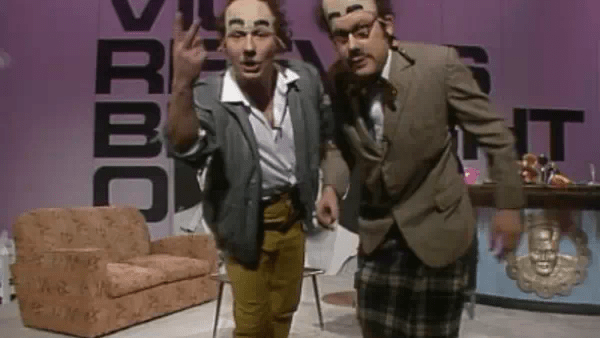
Donald & Davey Stott
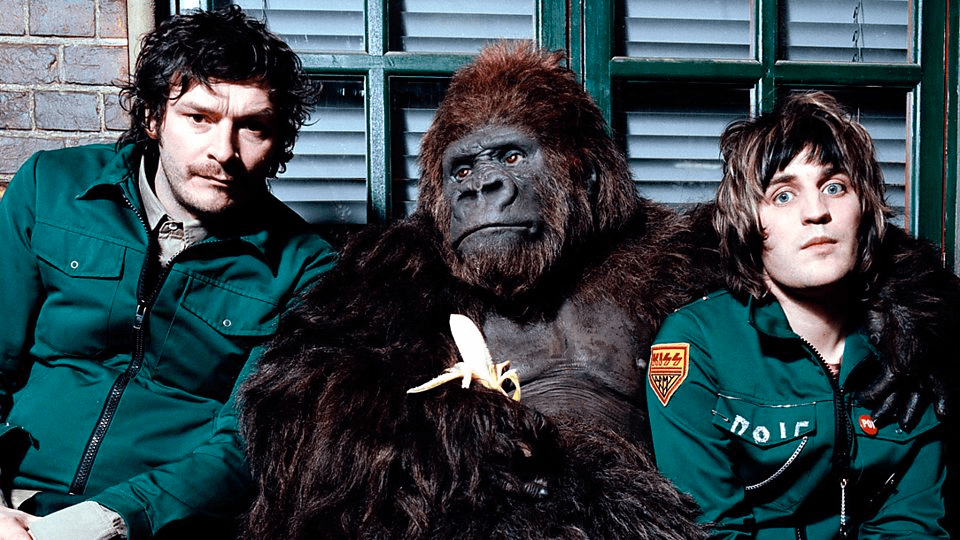
The Mighty Boosh: Howard, Bollo the talking gorilla, and Vince.
Cheesy moon, courtesy of AI
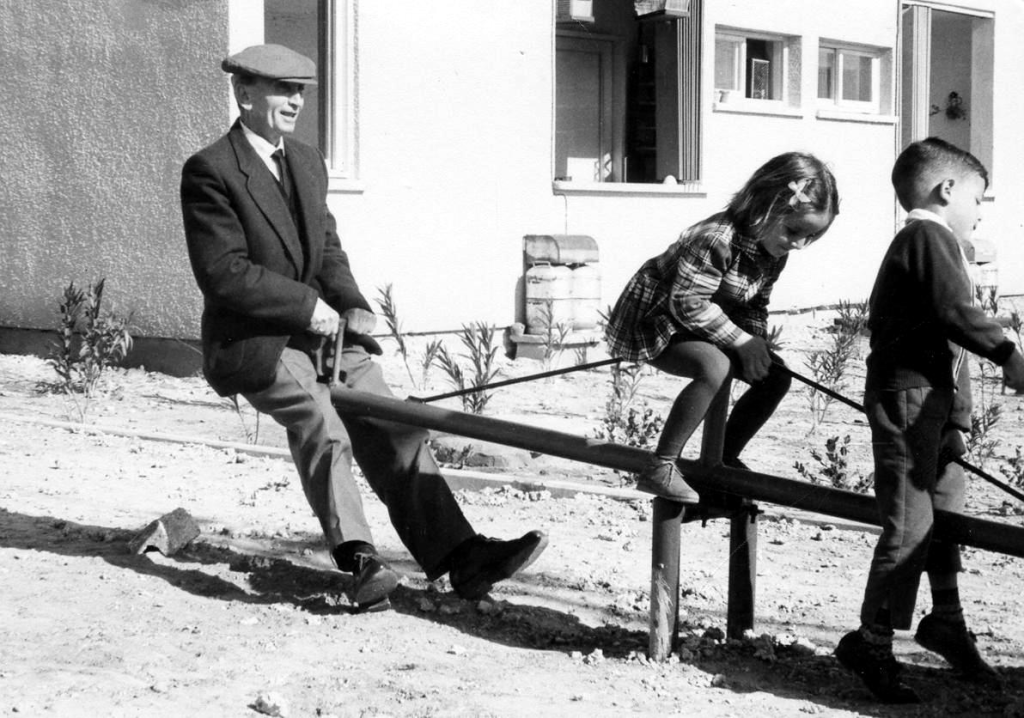
Gramps back on the see-saw for the first time in 60 years

To know, or not to know?

The fact that this is the example given here is also not lost on me. The universe has a funny way of giving you a nudge sometimes, doesn’t it?
Probably best to know about this one?
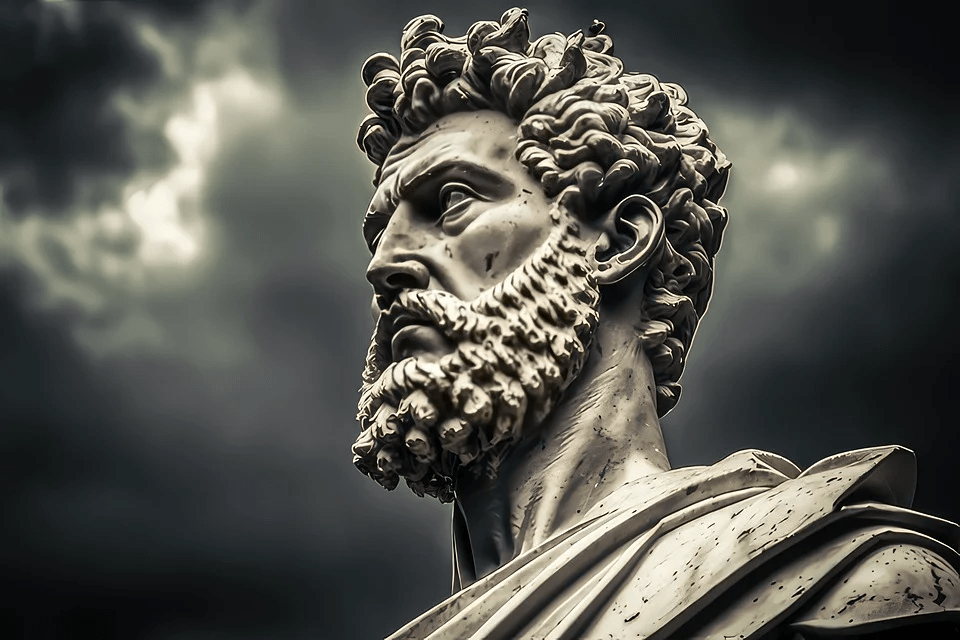
Gen AI Marcus Aurelius demands “MORE LARK’S TONGUES!”

To be, or not to be?

Right now, with the world as it is, and as it seems to be becoming, day by day by day, that really is the question, isn’t it? When the hits just keep on coming, do you unflinchingly absorb them all without complaint or word of dissent? Or do you step forward, perhaps exposing yourself a little, and be?

So this isn’t a time for being resolute, if you ask me. This is a time to stand up and be counted. Being calm in a messed up situation never made much sense to me ever since I read this line in a book long time ago:

If you can keep your head while others are losing theirs, perhaps you have misjudged the situation

Right now it feels like the world it’s losing its head.

I don’t feel I can really do anything about Gaza, or Ukraine, or Sudan, Syria, Ethiopia, Myanmar, Congo. War and Death riding around all over the place with their good friend Famine following dutifully behind. I can be outraged, and saddened,. I can speak to people about the rights and wrongs. I can talk to my kids about it so they understand that things aren’t all Playstation and football clips on YouTube. I can make the decision to continue to watch and read about these because shutting off from them because “it’s all too much” is one privilege I can decide to do without. But I can’t affect change in any meaningful way.

But there’s another one of that horse-riding frat party, isn’t there? Pestilence. Kind of the forgotten guy, Pestilence hangs around without anyone really knowing what he does or really what he means. But he knows he’s just as dangerous, and potentially more pernicious, than the others. Actually, he sets up the whole thing.

Four horsemen as frat party, imagined by AI. No, I can’t see AI replacing creativity any time soon either.

Pestilence is broadly understood to mean a plague or disease of some kind. Bubonic, Spanish Flu, Covid; they all fit the bill nicely. But the plague doesn’t have to just be a bacteria, or a virus. An idea, or set of ideas, can be as viral, and as invasive, as any biological threat..

There is a pestilence today that I can stand up to. That I can reject, and fight against with renewed vigour. That is the idea that equality or equity for a group has been under-represented, or oppressed, or otherwise not been given the opportunities that others have had, is somehow discriminatory to the majority. What self-serving, narrow-minded, deliberately reductive bullshit.

And it’s spreading.

More and more over recent years, and months, and now weeks and days, I’ve heard the idea that “DE&I has gone too far”. We’ve basically done the job on gender, right? In fact, you could say women’s rights have gone way too far – I mean, ” “International Women’s Day”?? When is International Men’s Day, eh?? [It’s November 19th. Or, if you ask a lot of women, it’s every single other day of the year too].. The whole LGBTQI+ stuff – every time I look they’ve added another letter haven’t they? Race too – I mean, we’ve had a black President and a brown Prime Minister, right? And everyone has one of these neuro-diversity labels nowadays, don’t they? And most of them are made up, or self-diagnosed anyway. “You can’t get promoted round here unless you’re a black one-legged lesbian”. I put that in quotes because I’ve heard of someone saying those exact words. Just banter though, yeah?

How far are we prepared to let this go? To be, or not to be?

A colleague and friend of mine who lives in LA told me that recently she (who is from Spain) and her husband (who is from Mexico) and their children who are born and bred in the USA had someone shout at them in the street to “go back to where you came from”. In their faces. In the faces of children. In California, of all places – supposedly the nerve centre of the “woke agenda” that tries to suppress the rights of people who want to be racist, or sexist, or xenophobic, or homophobic, just like they used to be able to.

And that was before the tsunami of executive orders, fired off with vindictive, revengeful, smug delight with the certainty that the world would bow down and comply in fear of retribution from them and their faithful followers. Personal, aggressive, arrogant retribution, meted out by billionaires who, despite the incredible power that money has given them, time and time again show themselves to have egos just as egg-shell thin as you would expect from a school bully, all powerful until someone stands up to them and sits them down in the playground with a fat lip.

Except no one is standing up to them, are they? Some are positively falling over themselves to show their obedience.

Is anyone surprised that the man who originally created Facebook so that privileged young men at Harvard could objectify their female counterparts was falling over himself to show his allegiance to the old bigotry that couldn’t be spoken of for ages but has suddenly become okay again? Watching him say that there’s been too much “female energy” in companies, smirking as he did so, was sickening. The delight that he could, finally, say what he’s always thought. The misogynistic computer kid going back to where it all started, showing us that a leopard really never does change his spots, and sucking up to the bullies as a bonus.

I can’t really get my head around the fact that the second most powerful person [or possibly the most powerful – I’m really not sure and not sure I really care to work it out] in the most powerful country in the world can throw out Nazi salutes knowing he can get away with it.

How far are we prepared to let this go? To be, or not to be?

I wish it were just the US, I really do. As much as I love that country in so many ways, and for so many reasons, it is being taken down a dangerous path by some dangerous people. But of course the old adege holds here: “when America sneezes, the whole world catches a cold”. And this time, I’m sad to say, America has a virus that is already affecting the rest of the world.

Pepsi, General Motors, Google, Disney, GE, Intel, and PayPal have all removed references to diversity in their Annual Reports. [Disney, for crying out loud. DISNEY! You know, wonderfully diverse, sometimes camp, “we love everything and everyone” Disney? If they don’t think diversity is important then who the hell will?] Last year Pepsi said in their Annual Report that DEI was a “competitive advantage”. Presumably not as much a competitive advantage as dropping all that stuff and trying to get in the vending machines in the White House. [I’ve got news for you Pepsi – Trump prefers Coke]

And then only last week, the company I now work for followed suit, “sunsetting” DEI goals globally. [Lovely word to choose, right? I mean, who doesn’t love a sunset? So much more attractive and natural than just “cancelling”, or “giving up on” isn’t it?]. Word on the street is that my former employer are doing the same. More will come, without doubt.

It may not be on your doorstep yet, but it’s coming. It’s already here in some of the political language we’ve heard in our supposedly progressive and multicultural society in recent weeks: language that would have resulted in immediate denouncement and disgrace at any point in the last 40 or 50 years, but now somehow is just “saying it how it is”.

For various reasons I’ve talked about in these pages, I made a decision a long time ago to be active as an ally in areas relating to diversity, equity and inclusivity. Part of that was because I have loads of privilege myself, and felt I should use that to speak for others who didn’t. Partly it’s because despite all those privileges I’ve always personally felt like I didn’t quite “fit in” [something my ADHD diagnosis gave a reason for a couple of years back]. To be honest there’s also a part which looks back on me as a younger, less thoughtful and considered man and wishes I had done better back then. Stepped up. Occasionally stepped back I guess, too.

Whatever the reason, the fact is that this has become part of me now. So when the question is whether ’tis nobler in the mind to suffer the slings and arrows of outrageous fortune, or to take arms against a sea of troubles and, by opposing, end them, then I know where I stand.

I’m reminded of a quote [largely misattributed to Edmund Burke but he never actually said but let’s not worry about that right now] which says:

The only thing necessary for the triumph of evil is for good men to do nothing

So whatever you decide to do about this virus… this pestilence… don’t do nothing.

You can do something under-the-radar which in a small way will send a small message – a drop in the ocean, sure, but still part of the ocean. Cancel your Twitter account [sorry, it’s “X” isn’t it now? How cool!]. Cancel your Facebook account – or at the very least, “sunset” it for the time being. Decide against buying a Tesla, or sell the one you bought before the whole fascism thing.

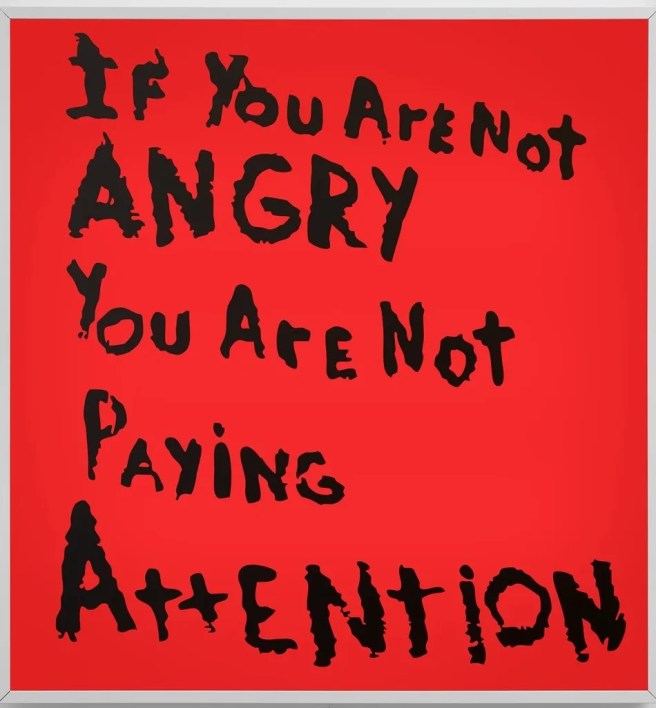
Or you can do something more. Get involved in DE&I wherever you work. Make it explicitly clear that you are part of the cure for this world of ours, not part of the pestilence. I dunno: maybe just wear a bloody t-shirt or a badge or post something somewhere so people know where you stand. But do something. This isn’t a time for calm, it’s a time for the fire in your belly to drive you. Get angry. Get involved. Step up.

Whatever you decide to do, just don’t do nothing. To be, or not to be, remember?

I know it’s scary to step forward. It’s really hard to decide to stand up and make it clear to the world that you will fight for what you believe to be right, to fight for your rights and for the rights of others. But for the sake of whatever gods you may believe in, or for the people you love, now is the time to take a stand. You can’t stand and watch.

As JFK said in a 1962 speech [about going to the moon, I know, but this fight feels just as big a challenge at the moment:

We choose to… do [these] things, not because they are easy, but because they are hard; because that goal will serve to organise and measure the best of our energies and skills, because that challenge is one that we are willing to accept, one we are unwilling to postpone, and one we intend to win…

Yes it’s hard. Yes it might be difficult to know what to do, or how to respond, or where, or when. But work it out because that is a challenge you are willing to accept, unwilling to postpone, and intend to win.

If you’ve read this far then I know you’re with me on this. Find your space to make your mark. I’ll do the same, I promise.

To be or not to be?

That is the question. You know the answer.

Sorry (again)

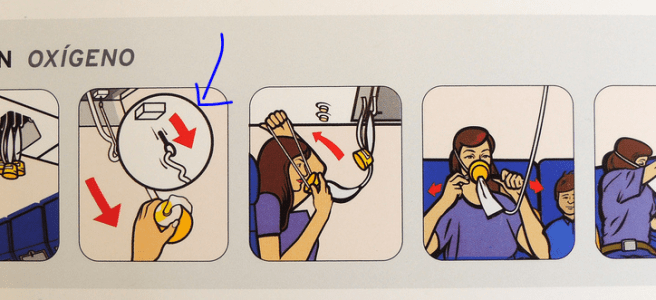
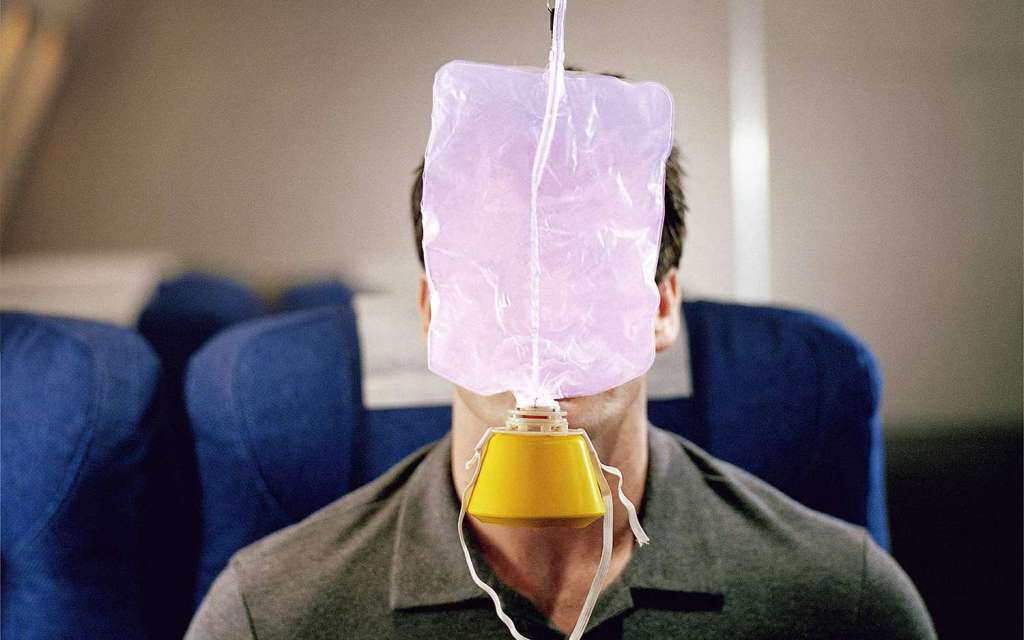
Eating last and the oxygen mask

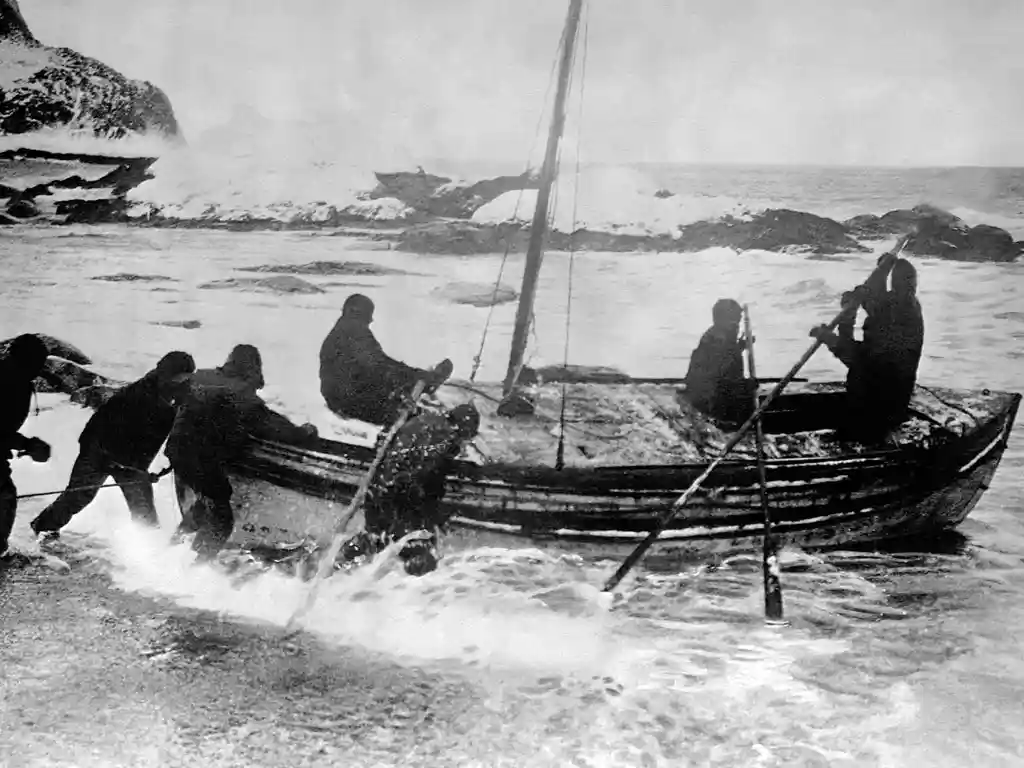
Shackleton and his chums setting off on the boat to find help
Here’s hoping we never have to remember how to do it for real

Every day is school day

Even I can spot that one

Saying No

When I was a kid, I often received a kind of “holding pattern” answer to the inevitable requests that come from the little humans my patents had created: humans without self-control or judgement or knowledge of nutrition or of money, or of their own limitations, or the incredible responsibility a parent feels for the physical and psychological and moral safety of their progeny…

“Can I have an ice cream?”

“Can I go on the big slide?”

“Can I go to the sweet shop with my sister?”

“Can I have those rugby boots?”

“Can I stay at Caroline’s house on Friday night?” [Hey Caz!]

The answer I would get would be meaningless and, for a young human, incredibly frustrating, but something that I now know was just a “please hold, caller” to give my Mum or my Dad the time to consider, or confer, or simply come back to when they had the brain space to do so in their busy lives. But on a fairly regular basis, without the insight that comes with a few more decades around the sun and a couple of sons along the way, I was left with the frustrating:

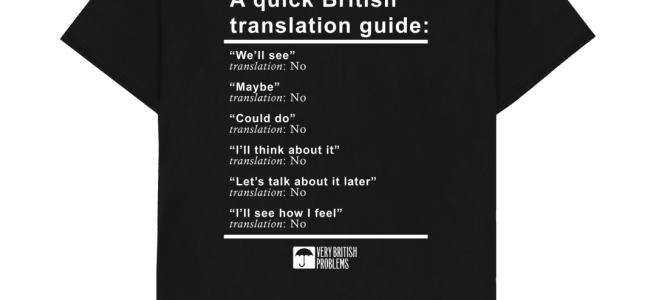
“We’ll see.”

My sister and I would joke that when Mum said “we’ll see” you were more likely to get a “yes okay” down the line, whereas with Dad it was basically a delayed “no” which delayed the (also inevitable) conflict that response would bring.

I get it now, of course. I don’t use “we’ll see” with my boys not because of any rejection of the phrase from a place of “unresolved childhood trauma” [though let’s be honest, we all have plenty of that knocking around] but because I’m more likely to say something like “I’ll need to talk to your mum about it” or “I haven’t got time to think about that right now, let’s talk about it later”. Still buying myself time, but will at least attempt to give some kind of reason for the delay.

When I (or we) get to the decision I’m also more likely to explain the decision-making process too, all with the intention of being respectful to my boys’ questions but probably having the effect (in the moment at least) of being sanctimonious rather than sympathetic…

If the truth be known, I’m much more likely to bring in the “holding pattern” response if my initial response to it is a fairly obvious “No”. If it’s a fairly obvious “Yes” then I’ll crack on and get the little buzz of being able to give my little human what they wanted. They’re happy, I’m happy.

Happiness is messy

And who doesn’t like making people happy, right?

Yes will do that for you. Yes is, by its very nature, positive. It’s easy. It’s calming. Saying yes protects relationships and, in effect, ends the conversation; or at least that part of it. The tense part where someone asks for something and you have the decision to make. Do I say yes, and make them “happy”, or say no, and make them “unhappy”.

We do it in every part of our lives, in every relationship. Home, friends, work. Everywhere we have demands on our time, our energy, our brain power, and everywhere, every single day, we have to make the decision of whether we say yes or no.

And, let’s be honest, we all shy away from a no, now and then, right?

That’s because no is uncomfortable.

No is complex,

No needs explanation, or resolution,

No could result in conflict.

And no usually needs another conversation.

So we avoid it. Either we put it off – another problem for another day but crucially not now – or we say yes to things we don’t want to do, or don’t think we can do, or aren’t sure about, to avoid having to say NO.

Demands on our time. Social engagements. Work events. Meetings. Projects. Deadlines. Commitments.

Relationships, sometimes. Other people’s problems.

Hell, sometimes we even say yes to things that we know will mean other people have to do things they don’t have time, or won’t want, to do. Saying yes on behalf of other people because we don’t want to say no ourselves.

Since the turn of the century [such a grand way of saying “for over 20 years”!] I’ve worked in advertising: a service industry where we answer to clients who have needs and demands and timelines and deadlines and pressures. There’s an old adage that every client wants everything now, perfect, and free… or as close as possible to each of those, all the time. The pressure so say yes to the people who, effectively, pay your wages and the wages of everyone around you is pretty overwhelming. Nobody likes to hear no, so nobody likes to say no.

And guess what? Pretty much every major issue I’ve ever experienced in work over the years – of my making or the making of others – comes from a point somewhere along the line where someone should have said NO, but instead they said YES.

I started a new job recently and, like anyone in this situation, I find myself wanting to ingratiate myself into my new social group.

The temptation to be agreeable, to fit in, to say yes… that’s something that I have deep, deep inside me, as a social animal who genetically has not moved on one bit from the time where if I didn’t fit in, I might not survive the winter. Like my ancestors thousands of years ago, I’m trying to get closer to the campfire, hoping to get some of that delicious elk that was trapped last week. [No, I’ve no idea if elk is delicious either. But I have feeling my great200 grandparents might have enjoyed a bite or two]

But there’s a phrase for someone who just does that, isn’t there: a “Yes Man”. Someone who just goes along with things for an easy life, whether they agree or not. Someone without conviction, or ideas, or anything to add.

I can be accused of many things, I’m sure, but being a “Yes Man” isn’t one of them.

We are all here, surely, to have a point of view on things, and challenge where there needs to be challenge, and make the point that should be made when it needs to be made? We’re here to question, and grow, and progress, and push things forward.

I think it’s time to reframe how we think about NO.

NO is not negative. Or at least, it doesn’t have to be.

NO is powerful. It denotes that there are boundaries. It shows that there has been thoughtfulness and consideration.

NO is constructive. It’s not the endpoint of a discussion, but the start of a new one which is perhaps more balanced.

NO is courageous. It renounces the path of least resistance and chooses the path that is right for you.

Saying NO is self-care, sometimes. Giving yourself space.

That’s true in all our parts of life.

You know when it’s a NO… so do you say it?

I know it’s not easy but I also know that it’s really, really important.

In fact, I could probably say that some of the most important moments in my life are when I’ve decided to say no. To trust my instincts and say no and accept the personal angst and turmoil that comes with that because I know that’s how I stick close to my values and I know that the outcome will be better if I do so as a result.

To have values. To have boundaries. To have the strength and the fortitude and the courage to say no, when the answer needs to be no. With the knowledge that no doesn’t stop the conversation, but actually opens up another one.

No isn’t negative.

What we choose not to do matters

Our ability to say NO is our ability to take charge of our own destiny: an expression of our self-worth and intellectual honesty.

I’m not saying you should start saying no to everything. You’d very quickly find yourself a good distance away from the campfire if you did, nibbling forlornly on some bits of bark that you’ve found which someone told you were nutritious but taste grim.

I’m also not advising being too British about it, because as you probably know if there were a World championships for beating around the bush rather than saying what you actually mean we would come second because we’d be too busy beating around the bush to be first…

…all in some strange mix of politeness and awkwardness that is, I’m sure, incredibly frustrating for most other people, particularly our straight-talking cousins from “across the pond” who quite rightly think that when we say “hmm, that’s an idea” that we think it’s an idea worth considering rather than the most offensive apology for an idea that we’ve heard since teatime.

All I’m saying is give it a shot. Practice a bit, even. The next time you know the answer isn’t a yes, then please, gracefully and politely, and with an embracing of the conversation to come…

Say no. Or a version of it, at least.

You owe it to yourself, personally and professionally.

Hey, if you want to borrow “we’ll see” from my parents, then you go right ahead. You can have that one courtesy of my childhood.

As long as I get that ice cream, of course.

What got you here won’t get you there

I started a new job recently. First time in the best part of a decade that I’ve been the ‘new kid on the block’, and this time, I’m far from being a kid, too. The “new middle-aged man with white in his beard that makes him look like one of his parents was a badger… on the block” might be closer to the mark. If a little less punchy, and almost infinitely less likely to be used as the basis of a boy band name as a result…

A long time ago, I stumbled across a book called “What got you here won’t get you there”. The idea of this [or at least my recollection of it in the dusty corner of my feeble memory] is that whenever you move into a new job, or new role, or any new situation in life really, you have to let go of some of the specific things that actually got you into that new job or new role or new situation. An interesting thought, and one that I’ve kept with me since. So every time my job has changed, I’ve been quite deliberate in considering what were the things that got me that move, and what of those might be things I need to actively decide to leave behind rather than bring with me.

Sometimes that can be really hard. Over the years I’ve seen a number of people really struggle when they move from being the person who knows everything to being the person who can’t possibly know everything any more but has a team of people who do. That reassessment of what an individual has come to think of as their “value” can be jarring, and scary, and bloody difficult. I’ve seen people who never quite made that leap of faith, and ended up lost in the middle, never taking the half step away, and ending up in a limbo world of micro-management which limited them and frustrated the team around them.

But sometimes it’s gloriously easy because really you know that what go you here actually included some behaviours or habits that weren’t actually that good for you…

[If you’re sitting there reading this thinking “hang on a minute… he’s talking about himself, isn’t he?” then, Dear Reader, you are right again, you insightful delightful sprite you. Give yourself a high five…which is really just you clapping, I guess, but I only realised that once I’d written it and I can’t go back and delete it now or we’ll never get to the end of this little distraction now will we?]

Self five in action

Some of the things that got me here, also got me into some hot water along the way too.

I’m happy talking about this stuff because I’ve been almost evangelically open about my issues with anxiety through the last few years, in these pages and in person, and I’ve also talked here about my ADHD too, and how it’s now becoming clear to me that the former was the result of not understanding and accepting and learning to live with the latter. I subscribe to the idea that more people talk about this stuff the more people feel they can talk about this stuff: “it’s okay to not be okay”.

So with that in mind, it’s pretty obvious to me now, looking back with the clarity that only time and space can give, that the way I managed myself, and my “self” was almost a recipe for disaster. Give someone with a brain like mine – overthinking every possible outcome, empathetic to the point of paralysis, needing to love and be loved – responsibility for the hopes and dreams of a bunch of really nice, really bright people and I’ll pull myself apart trying to keep everything together.

I’ve also said before in these pages that I really think lockdown heightened everything for the empathetic leader, Suddenly we really were “all in this together” in way that the brands and politicians who spouted all that stuff could never comprehend. We were each others extended families through that, and I know I’m not alone in having felt the need to step up as the head of a frightened, often dysfunctional, understandably needy group of people. People whose careers I always felt “responsible” for in some way or other, but whose mental health and wellbeing and hope I suddenly felt were my responsibility too…

So much of that never changed back to “how it was”, of course – practically perhaps more than any other way. The idea of travelling into the middle of London to sit in an office every single day of the working week – and the fact that I did this for 20 years without question, seems faintly absurd to me now; like a dream I once had. [Someone asked if I wanted to meet for lunch in London on a Friday a couple of weeks ago and I honestly thought they had completely lost their mind.]

But beyond where I worked, how I worked had changed too. The feeling of being needed was intoxicating, and became way too personal. When anything needed fixing, even with a capable and committed crew around me I felt the responsibility myself to fix it, and I became so frantic trying to put out fires, small and large, that I didn’t realise I was burning up myself.

Yeah, I know. Not healthy, right?

It wasn’t all burns, of course. I had a lot of fun too, and made some relationships that will endure across time and despite a little more distance, and we did some bloody good work too. But I didn’t need to give all of myself so willingly to the whims of a wild working world. [Yes, I am quite pleased with that little stream of alliteration, you’re right.]

And so, as I sit here on a plane flying to Copenhagen for the second time in a week, next to a nice young lady who has to keep nudging me every time the flight attendant wants to ask me if I want a tiny pack of mixed nuts or the smallest bottle of water I’ve ever seen [international business travel isn’t what it used to be] because I’m too busy writing this for you to realise I’m being spoken to, I’m very conscious of the opportunity that comes with a new start. The opportunity to remember that some of what got me here, won’t get me there

It’s not as simple as changing the logo at the bottom of the PowerPoint document and uploading the new brand typeface [although God knows I do love a typeface] and just carrying on.

You can’t just shift one one place to another and expect that to be the change you need, because whether you like it or not there’s an inescapable fact that wherever you go, and whatever the new start is…

You take yourself with you

[Thanks to my coach for that memorable phrase – nice one Sarah!]

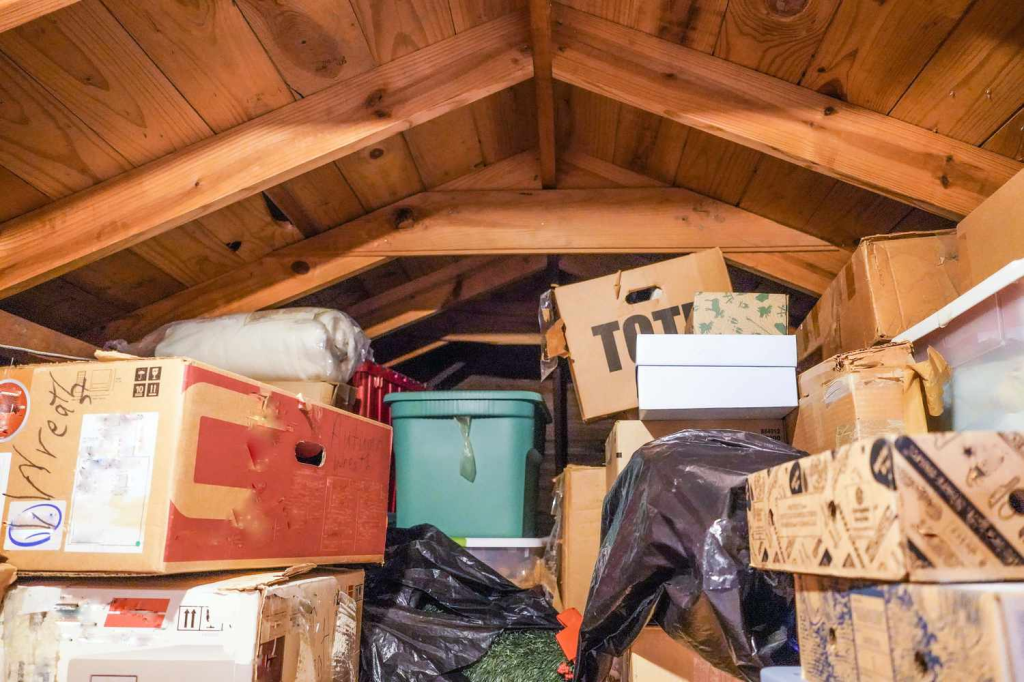
If you’re not deliberate about what you bring, you’ll bring the lot. Like that box in the attic from the last time you moved which never actually got opened because it just said “ODDS AND ENDS” on it in hastily scrawled marker pen.

“ODDS & ENDS”

You take yourself with you, with all the good and all the bad. Put another way: if we don’t learn from the past, we’re destined to repeat it.

Don’t get me wrong, there are massive parts of what got me here that will get me there, wherever “there” is. I’m always going to be ‘all in’. I’m always going to look for connections with people and try to build trust quickly. I’m always going to want to change things that I think need changing. I’m always going to be true to my values. I’m always, always, going to look for the chance to raise a smile and make this work thing we all spend so much time doing actually fun, because if it’s not fun then why the fuck am I doing it anyway?

Yeah, there’s a lot I’m bringing with me. Just not all of it.

So here’s where you come in. You didn’t think this was all about me, did you??

Take a moment. Ask yourself: what are you bringing with you that perhaps you should be leaving behind?

A belief about your ‘value’ that doesn’t actually help you transform, rather than transition?

A way of connecting that leaves you too open? Or too closed?

A story you keep telling yourself about your triumphs or (more likely) your failings?

Well here’s the magic about a new start. About “what got you here won’t get you there”…

Here is just wherever you are, right now.

There is whatever’s next.

You get to decide now, right now, about what you leave behind here, so you can get there.

And if you fuck it up and take it all with you again, the good and the bad?

Well I’ve got yet more magic for you right here, because you get to decide again. And again. You can always start again, whenever you decide to.

You get to choose.

And that choice, Dear Reader, that choice is a freedom that you carry with you everywhere you go, every single day of your life.

You got here. Now, what is going to get you there?

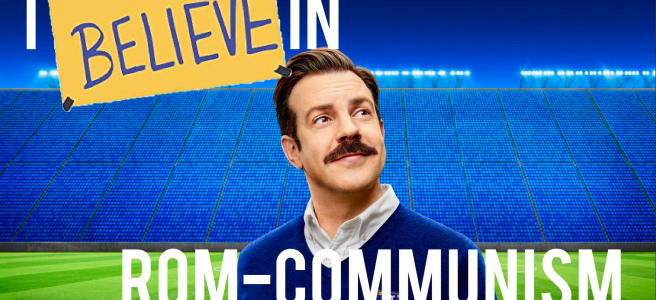
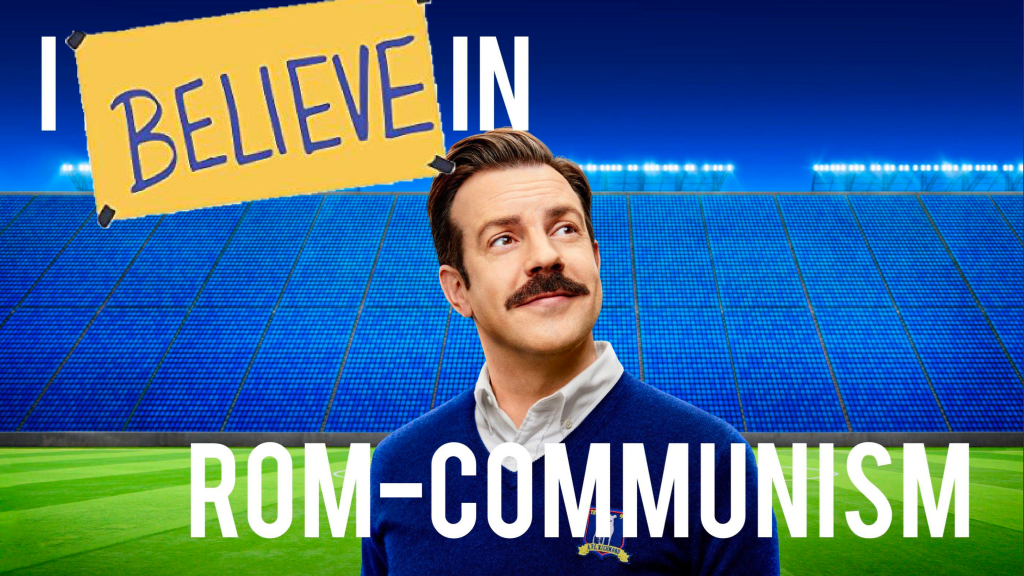
Believing in Rom-Communism

Have you watched Ted Lasso? If you have you might already know what I’m talking about here. In which case, stick with me anyway because who knows, I might say something borderline interesting at some point. If you’ve never heard of it, don’t worry because the theme of it isn’t crucial to what I’m going to talk about anyway. Basically, whomever you are, and whatever your current relationship with Ted Lasso, from superfan to total obliviousness, let’s just agree that you carry on reading and I’ll carry on writing, yeah?

[For those novices, suffice to say that Ted Lasso is a comedy series about a football coach from the USA who comes over to London to manage a fictional club in Richmond. Sounds a bit crap, but it’s absolutely brilliant – less piss-taking about Americans saying “soccer” instead of football and more of a case study in vulnerable leadership. And you don’t need to like football to enjoy it either – my wife is Welsh and hates football and we devoured each series like a pack of children at a party devouring the birthday cake which a loving aunt took ages baking but was only actually on display for about 45 seconds before it was cut into irregular size pieces and put in paper napkins to be squashed in a party bag along with a bouncy ball and an almost unbelievably small fun-size Mars bar]

So, with those somewhat unnecessary and [let’s be honest here] rambling introductory passages behind us, let’s get into the bones of this, shall we?

There’s a point in the second series where the team are in a real slump. They’re playing terribly, and losing, and it seems like all might be lost. It’s at this lowest ebb, where the team are starting to come apart at the seams and individuals are blaming individuals for the failing of the whole, that Ted gives an impassioned talk about his belief in “rom-communism”.

The man himself

Rom-communism is a concept borrowed from the classic romantic-comedy movie narrative, where in the middle of the film everything is a right old mess and it looks like the two protagonists aren’t actually going to end up together. Yet by the end of the film, everything tends to work out.

So for Ted, a belief in rom-communism is a belief that everything’s going to work out in the end..

Now these next few months might be tricky, but that’s just ’cause we’re going through our dark forest. Fairy tales do not start, nor do they end, in the dark forest. That son of a gun always shows up smack-dab in the middle of a story. But it will all work out.

Now, it may not work out how you think it will, or how you hope it does, but believe me, it will all work out.

Exactly as it’s supposed to.

Our job is to have zero expectations and just let go.

Ted Lasso: Season 2, Episode 5

It’s stuck with me, this scene. I don’t believe in fate: the idea that our lives are somehow pre-ordained and we are destined for something whether we like it or not. I also don’t really believe in luck, whilst we’re on the subject of things somehow bigger and more mysterious than ourselves. It’s not “lucky” that stick wasn’t closer to our younger son Jack’s eye [true story – he’s currently on course to take the title of “World’s Clumsiest Living Human”] any more than it’s lucky when you don’t stab yourself in the face with your fork when you’re eating. And whilst we’re on this particular soapbox, no, it’s not “spooky” when you ring your friend and they answer and say “oh my God I was literally just about to call you!!” any more than it’s spooky that you didn’t ring them all the dozens of other times they were about to call.

So no, I don’t believe things will work out as they were always going to. But I do believe that things tend to work out as they are supposed to…

Through the middle of last year I had a pretty confusing time of things, particularly with what was going on at work. [I lknow, bloody work, eh?]. Having thought things were going to go one way, it became clear that things were going to go a completely different way and there wasn’t a damn thing I could do about it.

Looking back on it, there were things I could have done differently, and there are things I’d do exactly the same, but the bottom line was that it was really disruptive and difficult for loads of reasons, surprisingly few of which are anything to do with me, actually. Some relationships I thought were solid turned out not to be. Others turned out to be stronger than I’d thought. But whilst I was right in the middle of it, forgetting about the second agreement I made with myself to not take anything personally, I took everything personally. Whoops!

[If you’re wondering about the other agreements, or indeed wondering why I’m going around making agreements with myself and thinking that perhaps I should have a nice cup of tea and a sit down, you can find out more about The Four Agreements in a blog I wrote about it all here. It’s good stuff but don’t just take my word for it: you can ask my mate Caroline’s husband, who told me he liked it (hello Aaron mate!) and he really had no reason to lie to me.]

Yes, that’s right: I was going through my deep, dark forest.

This isn’t actually my forest as such but it’s quite similar

And for a while there, I forgot that fairy tales do not begin, nor do they end, in the dark forest. That they always turn up in the middle of a story.

I won’t apologise for that, because… well because I’m not sorry, basically. I lost my way a bit, and weirdly I didn’t actually realise that I’d lost my way until I stumbled out of the darkness of the forest into a clearing, and saw the wide expanse of the sky for the first time in a long time and suddenly became acutely aware that I’d been holding on so tightly to expectations that I’d lost the plot of my own story and, to a degree, lost myself.

Forgive me for taking a short detour here. That idea of “lost myself” is interesting to me. We’ve all felt a version of this at some point and we’ve got lots of ways of talking about it: I was not feeling myself; I was beside myself. I do think it’s all about how we understand our own sense of “self”, and actually it’s when we are furthest from our own values that we feel most disconnected from ourselves, and most lost in the world as a result.

Actually connecting to that disconnection was, for me, the first step in the next part of the journey.

My good friend, and cherished colleague, Sir Olly of Caporn [take a bow, Oliver] and I were chatting recently and he casually and without ceremony said something very profound, as he tends to occasionally:

The story only makes sense when you reach the end.

Like a great whodunnit, or crime drama, or, yes, even a rom-com… when you get to the end of the story, it all makes sense, and then when you look back you can see how it all fits together.

And that’s how I feel now, With a new world of work opening up, with all the possible roads that I could have taken but didn’t now just sub-plots that didn’t happen or didn’t go anywhere, it seems almost daft to think that things could have ended up any way than the way they’ve actually ended up.

I’m not saying this is the end of the story, because of course it’s the start of a completely new one. But it’s the end of that story, and whilst it did not work out how I thought it would, or how, at the time, I hoped it was going to, dammit if it didn’t all work out. Exactly as it was supposed to, I guess.

You may, as you read this, be in your own dark forest. I’m really sorry if you are. I know how much that sucks.

I also know that sometimes, we need to sit down in the forest, and take a moment. To check on our values and on our sense of self, and just take a moment. I’m the last person to tell you to pick yourself up and dust yourself down and carry on struggling through the thick undergrowth and sharp leaves and grabbing vines before you’re good and ready. Because we both know that has to come from you.

But we both know you will have to decide to pick yourself up and dust yourself down at some point.

And when you make that decision, remember that fairy tales do not start, nor do they end, in the dark forest. This isn’t the end of the story. Your job is to have zero expectations, and just let go.

And know that when you get to the end of the story that you’ll be able to look back and understand it all.

You’ll know that, even though it was hard, things worked out, somehow.

You’ll know more about yourself. Your values., Your principles.

And maybe, just maybe, that’s all part of the story, too.

ADHD and me

As you may or may not know, October is ADHD Awareness Month. Now that I missed the entire month, meaning to write something about it but procrastinating for a bit then forgetting about it for a bit then meaning to get round to it but getting distracted by something or other [is that a Jay I can see out of the window? They really are quite beautiful aren’t they?] I think it’s probably about time I let you, dear reader, into the incredible time of enlightenment and understanding that I’ve experienced in the last few months.

In a nutshell, I have ADHD.

If you know me even at all well, that revelation will likely illicit the response “no shit, Sherlock” [please feel free to replace this wonderfully idiosyncratic British term with anything you might prefer which shows a total lack of surprise at something you probably assumed anyway] because it’s kind of obvious really in the way I act and interact, the way and, I suppose, in the way I write as well [I mean, what kind of person has all these parenthesised ‘by the way’ bits throughout everything they write? Yes, that’s right, someone whose brain flits off in different directions like a hummingbird seeking out the finest, sweetest droplets of nectar from the flowers in the forest. Someone with ADHD, basically].

Certainly my father [hi Dad – hope you’re enjoying your holiday] wasn’t exactly surprised. “It does explain all your school reports I suppose” was his reaction to my telling him about my diagnosis. And he’s right: my memory of those reports was littered with talk of my “potential”, “easily distracted” and of course “distracting”, talkative, . And the times where I really got into proper “trouble” it was never malicious: more often than not it was just something that happened on the spur of the moment where I impulsively did something daft to make people laugh and it all went wrong somehow.

So yeah, I’ve got ADHD. No massive surprise to lots of people. And actually, not really a surprise for me, either, which needs a little explanation. If I’ve suspected it for a while, why bother getting assessed and diagnosed? What difference does it make?

For quite a long time I’ve had the thought in my head [which is where most of my thoughts tend to wander, in case you were wondering] that, had ADHD been a ‘thing’ when I was a kid, I would have been diagnosed. I’ve even said that to people. After all, I left school in 1993 [I know, you’re shocked because I look so youthful, right?] and ADHD wasn’t recognised as a valid condition in the UK until 2000 when the National Institute of Clinical Excellence (the organisation who decide about conditions and treatments – they’re the ones who you hear about in news reports referred to as NICE) brought out their first report on the condition. I hadn’t heard of it until after I’d long gone from the school room, and to be honest, I thought ADHD was just a childhood thing anyway: more about behaviour and self-discipline than anything else. So I thought I might have had it. But adults can’t have it, and I am an adult so I must have grown out of it.

I can’t remember when I first heard about Adult ADHD. “A while back” is about as accurate as I’m going to get on that one. But I do remember still getting hooked up on the H bit of it.

The H of ADHD stands for hyperactivity of course, and whilst yeah, I fidget a bit and jig my leg when I’m sitting down and I sometimes stand up whilst I’m in a meeting because I need to stretch my legs and I’m always fiddling with whatever’s on the table in front of me… (!!) I’ve always thought that hyperactivity is about not being able to sit down and constantly jumping all over the place and running around and that ain’t me. I’m really pretty good at sitting in one place for ages when I’m doing something I’m into, like playing the piano or reading or writing something like this…

That’s another thing. I’ve always had the sense that if I concentrate on something I can be absolutely prolific. Especially if there’s a deadline coming. I’ve always had this belief that I can get things done really, really quickly when I need to. I’ve never, ever been phased by a deadline. In fact, I’ve found that I work better under pressure. I’ve even said, to close friends or colleagues in the past, that I’ve got this belief that I can smash through 4 or 5 days’ work in a couple of days, but I know that after I’ll be exhausted so if I’ve got a weeks’ work to do I’ll do it in 2 or 3 days and then coast a bit for a couple of days.

I’ve always felt that my brain worked differently from other people’s brains.

But what got me thinking that I should get a diagnosis in the first place, it in the first place and what I’ve learnt since? That’s been surprising, and enlightening, and actually life-changing. Let’s start at the beginning.

As regular readers of these pages will know, I’ve had my fair share of struggles with anxiety over the last few years. In fact, I think I’ve always struggled with it, really. I’ve always felt that if I could just turn my brain off, just for a bit, then I’d be able to relax more. I’ve always thought that I overthink things. I’ve always had a really uneasy sense of self – of who I really am. Sometimes I’m the joker, who’s irreverent and somewhat rebellious and makes people laugh and is good fun to be around, and yet in my heart of hearts I’m actually very thoughtful and introspective and sensitive and actually quite an introvert… all wrapped up in a very (sometimes excessively) extroverted package. Which one is the “real me”? Does anyone really know me at all?

I’ve always felt that it’s exhausting, being me.

[Yes, I know that using the phrase “psychodrama” underplays the emotional strain of that time and that making light of things can be counterproductive and reinforce the outdated notion that emotions and feelings are somehow not appropriate, particularly for men who find themselves, as we all do, constrained by the shackles of expectations that come with the tropes of masculinity. But if I want to make light of things for comedic effect as a way of avoiding having to get into things from time to time then by great Zeus’ mighty beard I shall do precisely that and there’s nothing you can do about it.]

If I’m honest, the end of the year once I’d come back wasn’t great either. I was pretending to be okay most of the time, whilst trying to convince myself that I was okay too. Whilst very much not being okay. Some of the pressures that had built up had dissipated but I can tell you from experience that if you ever get to the point where you feel you need to take a month off, you probably need to take more than a month off.

Anyway, I made it through with a few bumps and bruises along the way. Other things I picked up along the way included a rediscovered love of poetry, mostly via my new yoga teacher [hi Lucy – see you Friday!] which I also picked up and now can’t imagine my life without. I also learned to meditate and started journaling. Basically, all the good things that I always thought I should do but never really got round to because… well, because I have ADHD and actually getting round to things is actually quite difficult with my brain.

And perhaps the most important thing I stumbled across this year is the diagnosis itself.

That came about through a colleague who became a friend. Nice when that happens, isn’t it. [And hello to you Farhat – looking forward to eventually sorting out that date for lunch!]. This woman is probably more open and honest and direct than anyone I’ve ever met, yet kind and thoughtful with it. Deeply committed to driving change in all aspects of diversity and inclusivity, she pushes me to consider my own perspective on lots of things. I find myself questioning my beliefs in anticipation that I might need to have a friendly and vulnerable toe-to-toe debate with her, and that forces me to challenge my own thinking along the way which always ends up with a clearer perspective, more considered and more rounded than when I started. Sounds good, right?

Perhaps part of the reason for her directness, and something she was disarmingly open about from our first meeting, was that she knew she was neurodiverse, and had recently been diagnosed with autism. I have both friends and family who are “on the spectrum” and there’s a clarity of thought that can result from a neurodiverse mind that I always find fascinating to be honest.

So when she told me that she’d also been previously diagnosed with adult ADHD, I was intrigued. I knew that Adult ADHD was a thing, but I’d always had that thing about the H bit that I didn’t connect with. But my friend isn’t physically hyperactive either, really. I was keen to hear more.

She talked about how she had had to learn about how to use her energy to allow for, or indeed take advantage of, her ADHD. She told me that she was able to “hyperfocus” on a subject that interested her, but would then be exhausted afterwards…

Hmm.

She told me that sometimes she struggled to focus on things, and would jump from one thing to another and back again. I always thought I was good at multi-tasking, but she pointed out that really I was just jumping from one thing to another and back again…

Hmm.

We talked a lot about her ADHD as I was keen to learn how to make sure she felt included and that she belonged, and also so I could make sure I knew how to get the best out of her. Because the level of work that she was able to produce through harnessing that hyperfocus was just off-the-chart incredible.

The more she told me about what she had learned about her ADHD, the more I found myself sitting there thinking “That’s me”. Eventually, I asked her how she started her assessment, and she smiled and said “I do see a lot of me in you”.

That’s where the ADHD part of the story started for me. I did an assessment and I ticked virtually every box. I then did the full clinical assessment and got my diagnosis.

So, what’s changed?

Honestly, pretty much everything.

For years I’d been suffering under a cloud of anxiety, and in the end it drove me right to the edge of breakdown and depression. Yet now I felt I could reframe that anxiety as the result of undiagnosed and untreated ADHD, and now I’m being treated for the ADHD, I don’t have the anxiety in the same way at all.

As I was just starting to explore the idea of Adult ADHD I saw this tweet, and it really summed up not just my childhood but large swathes of my adult life too:

In another nutshell, this is me.

The way I’ve come to describe ADHD is that it’s your mind, and then immediately afterwards your body, overreacting to outside stimuli. The mind sees fun, or threat, or danger, or excitement and primes the body to deal with it. I’ve never been able to stop myself from making a joke, even when it’s probably not the right time. I’ve never been good at taking criticism in the moment.

ADHD doesn’t define me. But damn, it sure explains a hell of a lot.

ADHD often comes with a lower ability to regulate emotions, so it’s hard to put the breaks on when emotions start off. It’s why I’ve always worried about being very ‘up and down’ emotionally and the impact that has on the people I care about and who care about me.

The name of it really doesn’t help. ADHD isn’t a lack of attention: it causes us to pay too much attention, to everything, most of the time. Not being able to stop reacting to outside stimuli. A lack of filter.

And the hyperactivity sounds like something physical, but in fact:

The vast majority of adults with an adhd nervous system are not overtly hyperactive. They are hyperactive internally

Dr William Dodson, M.D., LF-APA

A hyperactive mind. A mind that doesn’t stop. No wonder I’ve always felt like it’s exhausting being me.

What I’ve learnt about my ADHD is just as important as getting the right treatment for it. As much as the new meds have made a big difference, just understanding myself (and my self) has allowed me to reassess how I can manage things differently in the future. In my view, it’s about pills and skills, not either/or.

Last year I was worried that my mental health problems would overwhelm me. I don’t worry about that any more. I’ve got lots more to learn, but whilst I don’t subscribe to the “ADHD is my superpower” idea I’ve seen a lot of on social media, I also don’t think it’s a burden that will drag me down either.

I was sitting up after watching the Rugby World Cup Final with an old school friend of mine last weekend [hello Nobby – hope the whisky hangover has completely gone by now] and he pointed out that whilst the ADHD might have made things difficult sometimes, on balance I’ve also had a shitload of fun along the way, and it’s probably made me good fun to be around too. He’s a wise man, my friend.

Now that I understand it better, I’m better able to understand how to harness the benefits and manage the difficulties. Now I understand it better, I can see that whilst it’s caused me problems, my ADHD has also been part of my successes too.

Now that I understand it better, I’m not sure I’d want to get rid of it even if I could.

ADHD awareness month has come and gone, but for me the awareness of my own, personal experience of ADHD has only just begun. I’m going to learn more as I go, and as I learn I’ll fill you in on anything that I think you’ll find interesting if that’s cool?

Until then, I’m just off to change a lightbulb which will end up with me having to fix my car. To find out what the hell I’m talking about – and to see the most perfect example of an ADHD day that I’ve ever come across, have a look at this little clip.

Speak again soon. Love and peace x