I don’t know about you, but whenever I give someone a book, particularly one very specific to them, I write a little note in the front along with the date. I do it partly because I really appreciate it when someone does it for me, and also perhaps partly because I like the idea of marking the moment in time so that in the future it’ll pop up again.
Perhaps it’ll be read by the person to whom I gave the book, a single tear of reminiscence rolling involuntarily down their face as they recall the thoughtful gesture and how lovely I was. Or perhaps it’ll be read by someone decades from now who’s picked up the book for next to nothing at a charity shop and will never know how lovely I was except to know I’m the kind of person who writes a note in the front of a book. And maybe, just maybe, they will decide that is something they will do from that point on… thereby making the world a slightly better place, forever and ever into the future.
Yes, I do overthink things sometimes, I’ll give you that.
Anyway, it just so happens that in the middle of last year, right in the middle of a very challenging time for me personally (which, if you’re interested in such things, you can read about here), someone I didn’t really know very well came up to me holding a book, and then handed me that book. Their personal copy of a book they carried with them at all times, a book wherein they had highlighted passages, and made the odd note. Handed over now to me, for me toread and to keep.
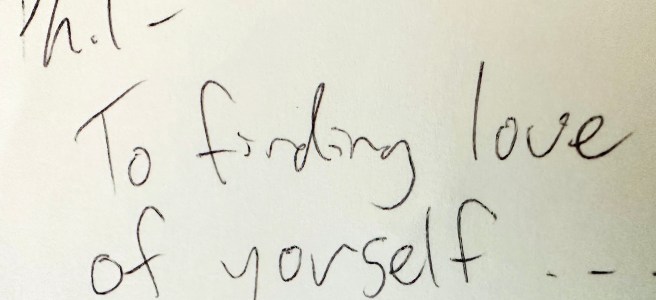
And yes, they had written inside:
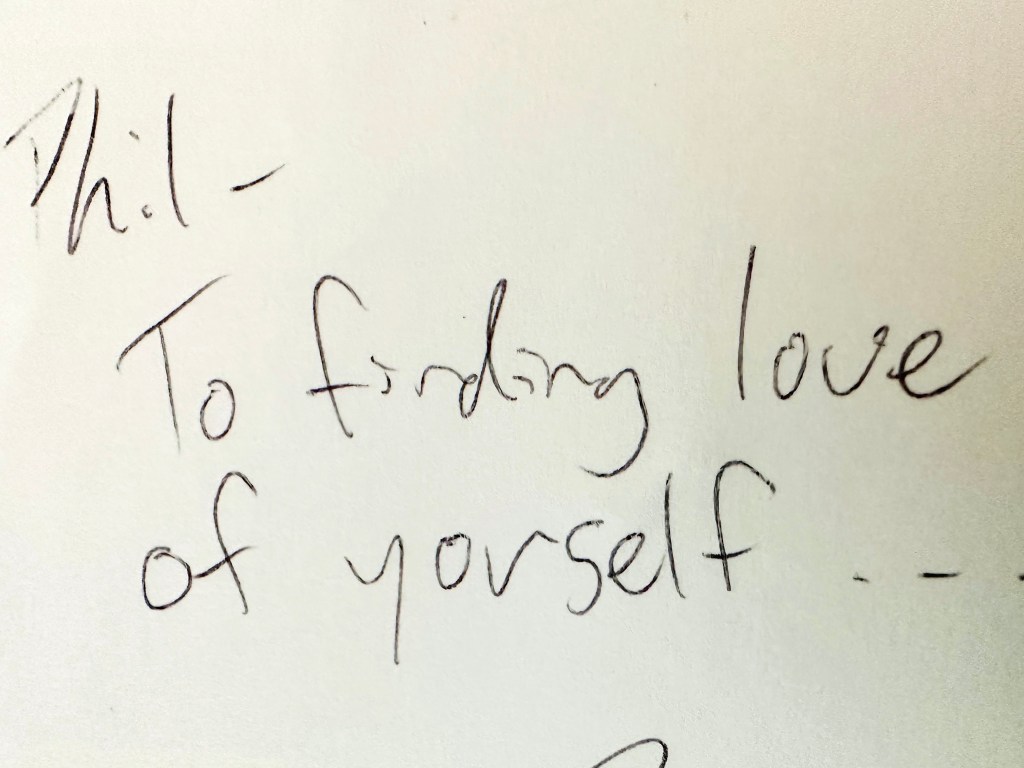
Underneath, they’d written their name, and their personal contact details
First off, it struck me then and still does today as an incredibly kind, thoughtful, open gesture. Let me give you something that’s helped me, in the hope that it may help you too.
But just as much as that, I was fascinated as to what the book might be. What is the kind of book that someone carries with them, at all times, and highlights passages and makes little notes in pencil in the margin, and is then moved to inscribe and hand to someone else? It must be a book with such wisdom, such guidance, to drive someone to feel they simply must pass on to someone else in their time of need.
What book holds that kind of potential impact?
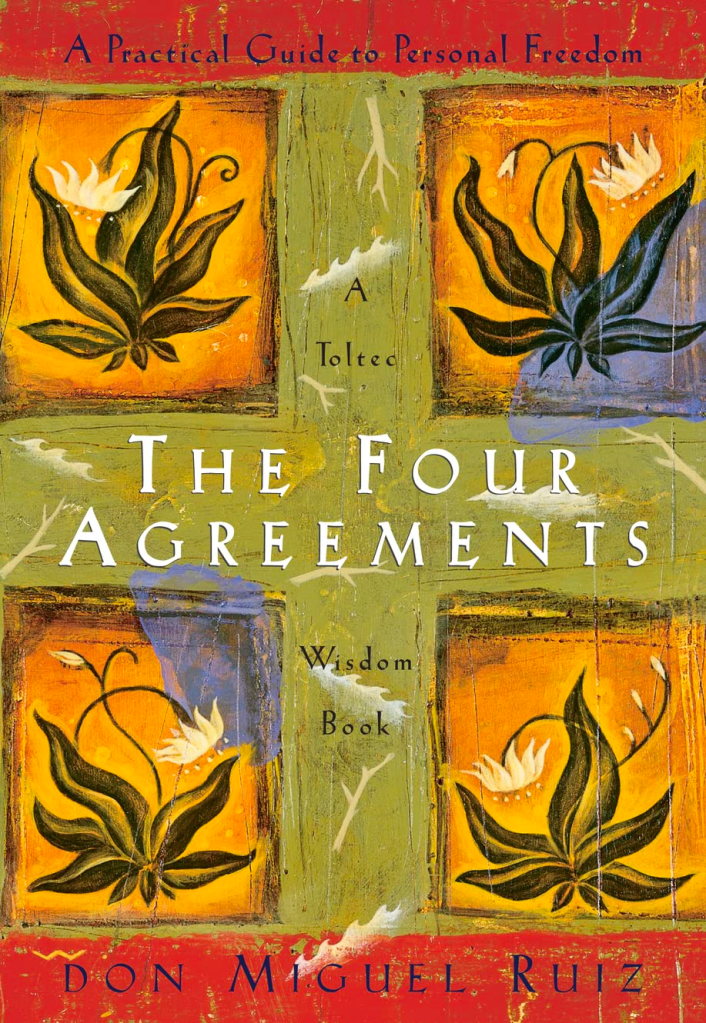
The book in question is called The Four Agreements, written by a chap by the name of Don Miguel Ruiz. I’ll be honest, the first time I started into it I liked the thinking but struggled a little with the way it’s written. That’s because Don Miguel Ruiz is a shamanic teacher and healer, and he writes in a very unconventional, conversational style about teachings from the ancient Toltec culture in central Mexico. It’s not written like a classic business or “self-help*” book because it’s not written by a classic business or “self-help” author, and as you can see below it’s not either of those things anyway, it’s a much more than that: a Practical Guide To Personal Freedom. So you have to get into the way it’s written, or you have to get past the way it’s written. But you can’t ignore the way it’s written.
[I hate that I feel the need to put “self-help” in “” but I do so because it’s been hijacked to be used pejoratively by people who think that “self-help” is the sort of thing that those awful woke snowflake Remoaner lefties need and which any hard-working normal person knows is a load of bloody nonsense and anyway who needs introspection when you can just judge other people from a position of blithe, dismissive self-ignorance? From being a positive, it’s become a negative, despite the fact that every single thing I’ve read with the intention of helping myself has, in some way, actually helped my actual self. But anyway, it’s in “” so we can leave it there and crack on…]
Whether you get into or get past, the idea of a Practical Guide to Personal Freedom is immediately something that appeals, right?. I mean, who doesn’t want Personal Freedom, and what better than a Practical Guide to get there? I’ve been following the Massively Impractical Guide to Personal Angst in my own brain for years and that’s been a bit of a chore at times, to say the least.
And once you’re in, the simplicity of The Four Agreements sing out as a sort of rulebook for a life which doesn’t fall into all the pitfalls we all fall into, all the bloody time. So simple that it’s a bit annoying no one mentioned them before, really.
So to avoid you having to find all this stuff out yourself, I’ll outline them here, with my take on what they’re all about, and you can save yourself a lot of future angst. Sounds like a plan, right? Great, let’s roll.
1) Be impeccable with your word
Don’t talk shit, basically. Don’t lie, don’t make stuff up, don’t brag, gossip, don’t collude, don’t say unkind things, don’t talk about people behind their backs. Actually, don’t say any of that shit to yourself either. Tell the truth to yourself and to others. As good ole’ Brené Brown would say “Clear is kind, unclear is unkind”.
Am I good at this? Only in parts. I’m not one for collusion and I don’t brag, but I do gossip sometimes and on a bad day I can be quite cutting about people, particularly when I feel I’ve been “wronged” in some way. I can also talk shit about myself, to myself. So this is one I have to come back to, and remind myself of, to keep it fresh and real. This much I do know: nothing good comes of speaking ill.
2) Don’t take anything personally.
Self-explanatory this one. But damn – how can you not take things personally when you are about you? If something happens to you, or someone does something to you, it’s you, right? It’s personal to me because it’s happening to me!
Except, of course, it really isn’t. This is one I’ve kept really close to me since I first read it – the idea that whatever someone does or says, howsoever it may affect you… it’s not about you. It’s about them.
It’s about how they see the world, and themselves in the world; about the pressures they have put on them and the pressures they put on themselves. It may affect you in horrible ways, but even then, it’s not personal. It’s not about you, it’s about them.
If someone treats you badly, it’s because in their mind they are under pressure or under attack somehow. If someone puts you down, it’s because of how they experience themselves when they are with you. If they really, really seem to just hate you for no reason you can work out, then don’t bother trying to work it out because the answer to “what have I done?” is quite possibly “nothing”. Because they don’t actually hate you – the you that you know and know to be fundementally good – they have negative feelings towards the “you” they have created in their mind because of their own issues. It really isn’t about you.
I know this is difficult. Believe me when I say that even with this agreement not to take anything personally sitting happily in your head in all its logical, sensible splendour, it’s still really, really difficult. I’m not saying you should just brush it off or, even worse, get thick-skinned to protect yourself. Those people who claim not to give a fuck about anything people say or do to them are lying to you and to themselves. I’m not saying you can’t be upset. Be upset. Just don’t take it personally. Because it’s not about you, it’s about them.
Oh and by the way, unfortunately, it works both ways. So it’s also true that If someone talks you up or lauds your every minute action and deed, it’s really not about you, it’s about what they think or hope for or need in the relationship. I know you’re brilliant, but just don’t take it personally.
Trust me: this one is a keeper. Don’t take anything personally. It’s not about you, it’s about them.
3) Don’t make assumptions
You know what they say: “Assume” makes an ass out of u and me. That trite little saying doesn’t stop us from doing it though, does it?
We make assumptions because we’re trying to make sense of the world without all the information to hand. Our brains don’t like stories without an ending. We seek reasons and endings, and so without a reason or an ending we just go and make up our own.
Assumptions are the basis of pretty much every conflict you’ve ever had – the story you’ve made up in your head about what someone else is thinking, which you then judge them for without them even knowing. They become the loser in a game they didn’t know they were playing. And let’s be honest, we don’t often cast ourselves as the villains in the piece.
Assumptions leave you wide open to be disappointed, or surprised, or shocked and appalled when things don’t turn out as we guessed they would. Assume it’s in the bag and you’ll find that someone who assumed otherwise put in more effort than you and walked away with the prize. Assume they won’t want to talk to you and you’ll never know what might have been. Assume there’s no point in applying for that job, and I promise you that you 100% will not get that job.
This is my biggest Achilles Heel. I love a good story, and I can’t help telling myself all the stories I’ve created about my assumptions. I know that this is how my brain works, though, so I’m trying to be disciplined in checking those stories as I go and removing the assumptions that may be driving action, inaction, or reaction.
4) Always do your best.
I love this. So simple. The kind of thing we were told as kids and now tell our kids because that’s what you tell kids… without really listening to what we’re saying and taking our own instruction.
If you always, always simply do your very, very best, you can end the day knowing that you couldn’t have done anything more. It’s the drive to get up in the morning and the solace to sleep soundly through the night. Just do your best. Personal to you, and only you know what your best is. Don’t worry about what other people are doing. Don’t cut corners.
And be okay with the idea that your best varies, too. Your best when you’ve had the elusive straight eight hours of uninterrupted sleep and woken to the birdsong and the sun is coming up and the day ahead looks challenging but manageable isn’t the same as your best when you’ve been awake through the night with your mind racing because you know you’ve got that difficult conversation you have to have later and there’s no milk for your morning cuppa and the dog just slobbered on your black jeans so it looks like you’ve had a giant snail crawling. up your leg. But just do your best, no more and no less, every time, in everything, and you simply cannot go far wrong. It’s actually quite freeing.
So there you have it. The Four Agreements, which I was given by a very kind man who felt I needed them at a difficult time in my life. Again, what a lovely gesture.
And what simple agreements they are. I can’t tell you that I stick to them all the time, but I can tell you that whenever I lose my way, it’s because I’ve not done one or more of these.
Maybe just make a note of them somewhere and consider in all honesty, where you’re strongest. on these and where you’re not. Perhaps consider that difficult thing that’s on your mind at the moment and see if there’s a chance that one of these agreements might have avoided it – or might even get you out of it. Be impeccable with your word. Don’t take anything personally. Don’t make assumptions.
And whatever you do today, just do your best. No more, no less. I reckon that’ll be more than enough for whatever today has in store for you,
[If you’re interested in getting a copy of said book for yourself, then you can find it here or at all good remaining physical book shops. I’d give you mine but I’m not quite ready to give it up yet.]





 The Bartlett Bubble