I love being silly. LOVE IT. Always have. I got told off for being silly when I was little, then got told off for it when I got a bit older, which turned into getting into a decent amount of trouble for it when I was in my teens, and then, as I wandered into adulthood like a young gazelle wandering innocently into the open savannah without a care for the pride of lions on the near horizon, I found that my silliness was both a curse and a blessing.
A curse because, yes, it got me into some sticky spots, and made me seem less serious and more childish which, let’s be honest, some people find really, really annoying.
And a blessing because I found that my silliness connected me to other innately silly people in the world, a number of whom became friends for life; connected forever by the ability to lighten the mood by doing or saying something ridiculous. One of them I ended up married to: potentially the silliest decision she ever made.
It’s easy to see where that came from for me. My family was a family of jokes and teasing and fun and silliness, from top to bottom. There was always a joke to be had; a tease to be teased; a daft tale to be told. We didn’t necessarily always get on brilliantly all the time any more than any family do, but there’s no question we laughed, a lot, at things that were daft.
When I was young, whenever someone said “must admit”, we would shout “Pepper Paws”. Because… you know… “Mustard Mitt”… therefore “Pepper Paws”. I know, silly, right? I only found out that this wasn’t something that all families did when I was about 6 or 7 and my teacher said “I must admit” in class and I confidently shouted out “Pepper Paws” at the top of my voice and was sent to sit on the naughty chair for being “silly”
When my big sister [hey Sal!] and I were little we would go and stay with our grandparents (on my Mum’s side) in Richmond (SW London for those not acquainted with our capital’s leafy suburbs) for a couple of weeks in the summer holidays, and Grandpa would pretend to be a tiger and chase us around the house, up and down the stairs, for what felt like hours, with my sister and I screaming with a mixture of delirious joy, uncontrollable excitement and abject terror until Grannie would demand he stopped because it was nearly bedtime and it was all getting very “silly”
One day when I was maybe 10 or so, my mum came home with a cast on her arm, and told us all she’d slipped on some ice outside the hospital where she worked and broken it. All evening we made sure she was comfy and got her cups of tea and looked after her, and at one point I saw tears running down her face. “Don’t worry,” Dad said quietly to me, “she’s just in shock”. A few minutes later she pulled the fake cast off her arm and revealed they were tears of laughter which of course we all agreed was just “silly”.
And then I discovered silliness on the telly, and felt the connection which has continued to this day
Despite what the ever expanding wrinkles and white bits in the hair and beard might suggest, I’m much too young to remember Monty Python’s Flying Circus first time round, but it seemed to be on constant repeat when I was a kid. Popping up here and there is a character called The Colonel, a classic, stuffy British Army officer-type played by Graham Chapman, who would interrupt a sketch if it got “silly”.
My personal favourite appearance was a sketch about gangs of old ladies – Hell’s Grannies – “attacking fit, defenceless young men”. Obviously completely daft from the beginning, it brings in other, ever more “silly” ideas (a group of men dressed as babies kidnapping a 48-year-old man from outside a shop; vicious gangs of ‘keep left’ signs attacking a vicar) until The Colonel feels the need to step in.

Right! Stop that, it’s silly. Very silly indeed. Started off as a nice little idea about old ladies attacking young men, but now it’s just got silly!
The Colonel – Hell’s Grannies sketch by Monty Python
It was the silliness that made Monty Python, of course. You never really had a clue what would happen next, and the anticipation that creates makes the whole thing exciting. The folks from Monty Python didn’t invent silliness, but they took inspiration from radio shows like The Goon Show in the early 1950s [which, lest we forget, was an extremely sensible time in a post-war Britain run by people born when Queen Victoria was on the throne, and still reeling from the costs of the war on society and the economy] and broadcast it into every living rooms of the 70s and 80s. giving life to the surrealism of Vic Reeves & Bob Mortimer in the 90s and beyond to the likes of The Mighty Boosh.
[BTW, if you want to see something really, really silly, check out Vic and Bob as Donald and Davey Stott interviewing Sting via the link here – yeah that’s right: tantric, The Police, “Shape Of My Heart” Sting. It’s totally ridiculous]

Over the last couple of years I’ve re-discovered the original radio series of The Mighty Boosh set in a zoo called Bob Fossil’s Funworld and it’s as box fresh streamed today on Spotify [other streaming services were still available at time of writing] as it was when it came out two decades back. It doesn’t age because it always was completely mad.
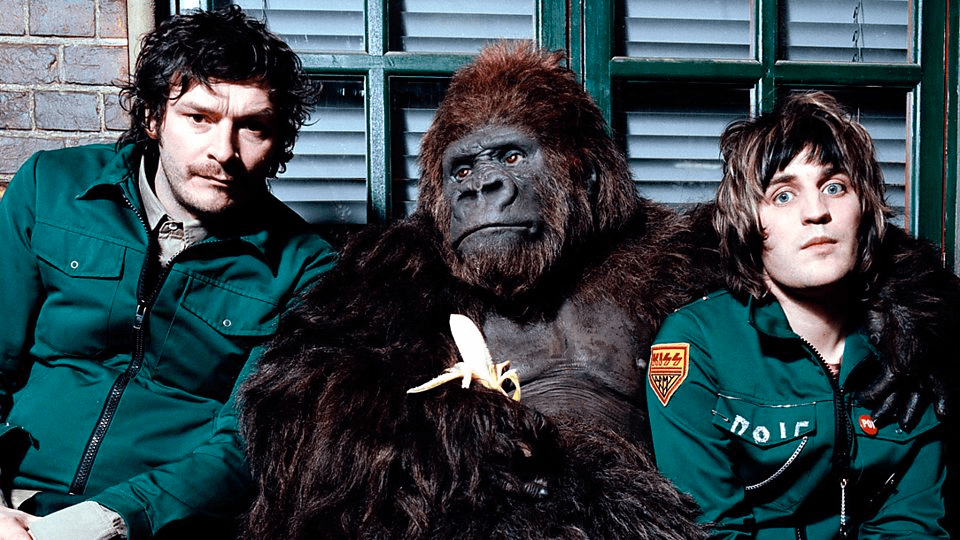
Which is why kids today would still love Monty Python. Because a load of old grannies beating up young people will always be silly. Silly, silly, silly. It’s why my kids love The Mighty Boosh.
It’s all silly. Childish at times. Pointless and annoying to those who don’t like it, I’m sure. But I love it. LOVE IT.
My English teacher told me when I was 11 that “humour is incongruity”: when the thing you least expect happens and you can’t help but be surprised by the “what the hell was that?!” and then be delighted when you ‘get it’. Quite a lot for an 11-year-old but it’s stuck with me, and the idea that humour is incongruity is every joke, every punchline, every laugh you’ve ever had, right there.
Add in a sprinkle of silliness and you get a much deeper flavour to your humour.
Most “jokes” are formulaic really. And the vast majority of stand-up comedy is just a series of observations dressed up in a fairly predictable, never-actually-happened anecdote. It’s obvious. It’s conventional. Yet silliness [you can call it surrealism or absurdity if you want to go a bit more highbrow] is deliberate freedom from any convention; from expectations. There are no rules – apart from incongruity, perhaps.
Which is why silliness has such a strong connection to childhood. You can imagine someone being called a ‘silly boy’ but never a ‘silly man’ (or if they are, there’s a suggestion of childishness, immaturity, a lack of common sense) and that’s because despite there being plenty of rules about what to do when you’re a kid (bedtime, homework) there’s also so much more freedom in how you think.
Kids love being silly, and love it even more when adults are silly with them. You tell a 7-year-old you once jumped up so high you hit your head on the moon and came down with cheese in your hair and you’re in an absurd conversation that will last as long as you both want it to.

My younger son had his last day at primary school a couple of weeks back [I know, I can’t believe it either; another reminder of my ever-increasing age], and as tends to happen towards the end of term towards the end of primary school, it all got a bit loosely goosey in the last few weeks. The learning was all done, and things just became about making sure the kids had a good experience in their final days in the safe, loving bubble of being the oldest in the school before they were sent off to be the youngest in a much bigger, much less structured and much more scary school environment.
It was in one of these final weeks that I dropped him off, and as they were all lined up to go inside their teacher came out and they all started chatting with her and joking and you could tell how much they all really liked her. As I walked out of the playground, another parent and I were talking about that and came to the agreement that it was because whilst she was strict and stern when she needed to be, she also allowed them to be silly sometimes, and did that by being silly herself sometimes too. Allowing herself to play the fool enabled her to connect with the kids on their level, in a way that not all teachers do. In fact, in a way that some of his previous teachers definitely would not do, ever. So much so that you couldn’t really imagine them ever being anything other than strict and stern.
And I was left wondering – why do some adults keep hold of that silliness when others don’t? Why do some people put it away in a box in the attic along with their old school memorabilia, whereas some people just refuse to ever let it be out of arm’s reach?
I’m silly at least once a day I reckon. Just for the hell of it, more often than not. I might tell my wife that my legs are broken so unfortunately unable get the milk out of the fridge, for example. I might tell my kids that I’ve run out of “Cuddle Power”, which they know means I am totally paralysed until they come and give me a hug. If I believe I have been slighted whilst in public by one of my family, I may well stop totally still, put my head down to my chest and say “meh, meh, meh” in a sad voice over and over again until everyone is nice to me. It’s incredibly effective. And yes, you’re right, incredibly silly. Just this morning, as my wife was lying in bed, I stood at the end of the bed, pretended I was an Olympic high diver, went through all the prep and breathing and hands up in the air and then dived onto the bed and her.
A few years ago on a road trip through California I made up a character called Jerry who’s an old guy who used to be in the movies and is still in love with his former wife, Margie (or Marsha – it varies), but also has a crush on my actual wife. To this day, my younger son, Jack, will ask me if he can speak to Jerry, and now and then Jerry will pop out to say hello to the family. Jack once told me that of all the people in the world he knows, Jerry holds the joint gold medal position alongside me, his mum and his big brother. There was a point where Jerry was coming out on top.
Being silly with kids is a joy, because they immediately, instinctively ‘get it’. And with some kids you can find yourself in an impromptu improvisation where the only rule is you have just to build on whatever the last person said, no matter how silly: “yes, and…”
And I love being silly with fellow “grown-ups” too. Sometimes it’s slightly surprising but the incongruity of it – particularly in lives bound by so many societal and social conventions – brings back a childishness and suddenly we’re all kids again. Thinking about it, all my strongest relationships have a foundation of silliness; the comforting certainty that we can be as deliberately idiotic as we like, without judgement or boundaries.
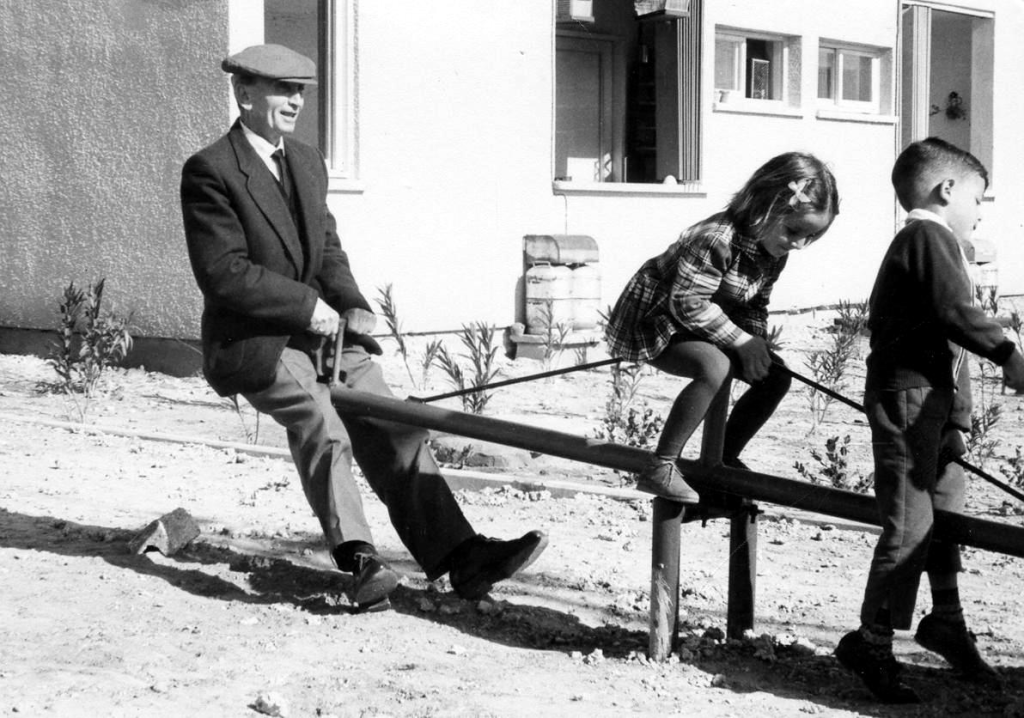
Funnily enough, I find that elderly people enjoy silliness too. Perhaps it’s because, like children, they are more free – from the pressures of work, the worries of looking after their own children. Watch a grandfather (or, if you’re lucky, a great-grandfather) with his young (great-) grandkids and it’s like there’s no adult there at all.
Yet we all know so many “grown-ups” who eschew silliness in all its forms. Hell, I even knew a lot of kids growing up who would sneer at something being “just silly”, without ever getting that was the whole point. People who are always serious and ‘businesslike’ [like business doesn’t actually need freedom to think and humour to raise the spirits?!] and for whom silliness is just… well… silly.
And trust me: I have not a single doubt in my tiny mind that all the above will not only sound “silly” to some people, but actually really annoying. Unbearable, actually. I’ve met some of them over the years. People who find me really, really childish and irritating. That’s okay: I’m aware that I’m not for everyone. But even if I wanted to change to be less silly to keep those people on the Bartlett Train, I’m really not sure I’d be able to. And, as you might have gathered, I don’t want to. I love being silly. LOVE IT.
I believe that people choose to leave silliness behind because they don’t think there’s a place for it in the adult world. But I also believe it’s still in there somewhere, waiting to be found again like that old band t-shirt/stripy dress/straw hat/banana costume [delete as appropriate] you used to wear all the time but had been shoved behind the sham and drudgery of broken dreams in your second drawer down.
It’s still in there because the child you once were is still part of you. In fact, there are even a couple of bits of you that haven’t even grown since you were born – the cornea of the eye and part of the inner ear. So you see and hear with the same exact bits as that kid you used to be. You can be them again, with a little bit of silliness now and then.
So go on, give it a try. You don’t have to start big. Maybe just try out a silly walk, on your own. Pull a silly face in the mirror. Hey, you can just think something silly when you’re in a “grown-up” conversation, and you’re in it.
And you’ll find that silliness is a unique combination of freedom from convention and the incongruity that creates humour.
A generous helping of liberty with a side order of laughter? Tell me you don’t fancy some of that, and I’ll tell you not to be so silly.









 The Bartlett Bubble