Wherefore International Men’s Day?

Good question. There is an argument that, in a world created by men and for men, a world where men hold most of the power, every day is “Men’s Day”.  We all know there are more male CEOs than female, but to put that into context the latest data tells us there are more men called John running FTSE 250 companies than there are women. Not women called John, in case you’re wondering. Women. In total. And we all know there are more male heads of government than female, but to follow through and put that into context, just 19 of the 193 member states of the United Nations currently have female head of state. More than two thirds have never had a female head of state in their entire history.

And some of those male heads of state we are subjected to now really are some of the most caricatured examples of toxic masculinity you could ever hope to avoid, building their palaces and breeding their bullshit authoritarianism as a shield to protect their eggshell thin egos. Trump, Putin, Netanyahu, Orban, Jong Un, Milei. And many more like them, or hoping to be. I’m not sure what the question is for this bunch of bullies but the answer is “unresolved childhood trauma”. I can’t make up with my father/mother/teacher/first girlfriend so I’ll build up an armour made up of sycophants and wealth and as much power as I can possibly hold in my little hands.

When I took my first steps into my work on diversity, equity and inclusion, there was a shared belief that things were getting better, particularly around gender equality. The dictionary definition of feminism is the belief that women should have the same rights, opportunity and, yes, “power” as men, and that seemed to be shifting, albeit very slowly. But thanks to this lot, and their acolytes, we’ve taken a few big steps backwards over the last couple of years.

[Yeah, I did drop it in there, didn’t I? The dreaded curse of DEI which is now put forward as the reason why society is a so fractious and divided, conveniently and maliciously ignoring the fact that it all stems from wealth inequality which started with ideological free market economics, wandered through the failed experiment of privatisation, jogged past the systematic deindustrialisation of swathes of countries and communities wearing nothing but a flimsy coat of consumerism, skipped into a garden of easy access to credit and slammed right into the greed-fuelled banking bubble of the 2008 financial crisis.
People have been sold the story that the problem is “woke”, forgetting that they were actually there and saw it happen. Don’t you remember? It was the banks! Billions of your taxes went to bail out a bunch of (overwhelmingly male) bankers that had become gorged on greed. You must remember that? It wasn’t giving more opportunity to those who didn’t have as much in an effort to level the playing field. It was the fucking banks! You were there! REMEMBER?
Hmm, this might be a separate blog now I come to think of it. Where was I? Oh yeah “power”]

It’s not just “power” of course. Data from the World Economic Forum tell us that whilst there has been change in the gender gap in Economic Participation and Opportunity (money, basically) since 2006, if we keep going at the current rate it will take 169 years to close the gender gap completely. [Yeah, I know, that’s such a long time that it almost seems silly counting it doesn’t it?]. A big part of that is because women still do around 60% more unpaid work – cooking, cleaning, childcare, caring – than men, none of which is recognised in the economy but all of which impacts on time and, by extension, the need for more flexible working to fit it all in.

So yeah, it’s a man’s world. Then why on Earth do we need International Men’s Day?

Well, because the day is less about celebrating men in general, and more about recognising the need for positive conversations around manhood and masculinity. And about stripping back some of the baggage, too.

And there is baggage that comes with being a man. I mentioned in these pages a while back a book I’d read called The Mask of Masculinity (you can find it here if you’re interested, it’s very good) by a nice chap called Lewis Howes. In this the empathetic and erudite Mr Howes [no I’m not sure why I’ve suddenly gone all formal and pseudo posh either] explains that there are a whole bunch of masks that men ‘wear’ to function in society.

The Know-It-All Mask where you pretend to know stuff you don’t know because admitting you don’t know shows weakness. Best example of this is me looking at the engine in a car, pretending to understand when the roadside repair man arrives at my broken down vehicle and tells me there’s something wrong with the “crank shaft” or “big end” or something else which, because I’m quite childish sometimes, sounds slightly risqué in a very Carry On film kind of way.
The Joker Mask, which makes light of everything things – particularly things that might be emotionally difficult – to avoid having to deal with them properly. Yeah, I’ve known that one a fair bit.
The Material Mask, where showing off an expensive watch or an expensive car or about an expensive holiday is a demonstration of how successful you are. Money can’t buy me love but it can help me pretend I’m happy and powerful. I’m very fortunate that I’ve never really put this one on. I don’t really care about watches or cars or designer clothes and the idea of ‘conspicuous consumption’ seems kind of pathetic to me. But
The Alpha Mask where you never back down or admit fault, doubling down when challenged and becoming even more Alpha. Think all of those dickhead “leaders” mentioned above. Especially Trump,  
The Stoic Mask, where you pretend everything is okay when it’s really not. Hmm, yeah. That one fits me like an old pair of slippers, perfectly moulded from years of use.

There are others, of course. But it all conflates into one big theme…

Pretending.

Pretending things don’t hurt. Pretending you care about stuff that you don’t care about. Pretending you don’t have emotions. Pretending everything is okay when it’s really, really not.

Boys don’t cry, remember?

When I was a young man we never talked about negative emotions. Ever.

Trouble at home? Worried about school? Disappointed about not getting into the sports team? Heartbroken because the girl you liked and who you thought liked you too has started hanging around with a lad from the year above? Grieving over the death of a beloved pet?

Bury it. Deep.

Don’t show weakness or it will be ruthlessly exploited by your own very best friends, not because they want to hurt you but because that’s what boys do because “it’s just a bit of banter, lads”. No need to take it personally mate. Can’t take a joke?

So if you’re the one on the receiving end, you have precisely two choices: suck it up, or give as good as you get. Stoicism or alpha? Your choice.

That’s what we’re conditioned with, and that’s how a lot of men’s relationships with other men stay for ever. Never really get to anything deep. Pretend everything is going great. Give as good as you get.

Suck it up. Man up. Grow a pair.

Let’s leave all that emotional stuff to the ladies, eh lads arf arf wink wink?

Just because men don’t talk about emotions with each other, doesn’t mean they don’t have the emotions of course. It just means they can’t talk about them, or process them, or get advice, or support, or just plain old filial love. An arm round the shoulder.

And the absence of these necessities is killing us.

Suicide is the biggest killer of men under the age of 45 in the UK. Men make up over three quarters of suicides. There are lots of reasons for this, but many will come back to the way men hide their emotions. From each other, and often from their partners too.

That’s one bloody good reason why International Mens Day is an important time to stop and talk. A moment in a busy year to talk about what modern masculinity should be all about, talking about the expectations society puts on men (and men put on themselves) which can lead to anxiety and depression, and worse. It’s not a celebration. It’s a time to reflect.

I know about this stuff because I’ve been there myself. I’ve not handled all the expectations brilliantly over the years. I’ve worn a lot of the masks mentioned above, some for so long I almost forgot I was wearing them, and thought they were the real me. And I’ve found that constantly pretending to be something you’re not is fucking exhausting, and confusing, and can leave you wracked with anxiety and down from there into depression.

I’m one of the lucky ones, because I’ve never really gone to the darkest of places, but I’ve been close enough that I can have at least a sense of it. Slowly slipping down a muddy bank, scrabbling for a foothold yet picking up speed, then tumbling and clawing and snatching at brambles and branches and bracken that cut the hands to ribbons. A thousand cuts, each of them minor, irrelevant, laughable, as the sky falls away above. Unable to shout for help for the fear that no one will come.

I can’t quite imagine the place that ends up in. Not really. But I know two men who took their own lives in the last couple of years.

One I only knew in passing, but always seemed cheerful and chatty and generally a ‘good bloke’. He’d struggled since leaving the armed forces, as so many do. His wife had no idea he was struggling. Neither did his kids.

The other one I’d known since I was 8 years old, and was one of my best friends for a big chunk of my life. His difficulties were more well known to us all, and horribly complex in a bunch of ways. But in the end he made a decision all on his own.

Most men of my age will know someone who’s gone the same way.

Again, I’m lucky, because along my journey I’ve grown into someone who is a talker. Perhaps that’s because I found my soulmate when I was 20 and she was 19, and so I’ve always had a partner alongside me. Perhaps it’s because I’ve picked up some friends along the way whom I love like family, and who love me too.

As I’ve got older and experienced more of the world and made a million mistakes, I’ve also grown into someone who doesn’t conform to the more “traditional” tropes of masculinity. I’m really open about my emotions and I make a point of talking to my friends, and colleagues [some of whom span those categories, I’m happy to say] and even to relative strangers about my vulnerabilities and struggles, partly because I’m not ashamed of any of it and partly because I want to show that being in a conversation with me is a “safe space” for them. And I’ve found that the more I open up, the more others open up to me. And we all know by now that vulnerability builds trust, right? So my relationships have become much more real and much richer than they would be if I kept my emotions to myself.

So, what’s my message for International Men’s Day? Well, there are a couple.
First, if you’re not a man, please be assured that this isn’t about men just saying how ace men are. It’s much more nuanced than that. In a lot of ways it’s about showing how gender inequality damages everyone, men and women, and that breaking down societal expectations around gender would be good for everyone, too.

It is also a time for empathy, rather than antipathy or even (as sometimes can happen) indignance. Whilst I have no question in my mind that [in a sweepingly simplistic and borderline flippant generalisation] men have it easier than women in a society that was largely created by men, for men, I also know that with all the innumerable pressures and stereotypes and masks and pretending and bottling up, it’s often far from easy being a man in this messy world too.

And if you are a man, then it’s really, really simple. Partly it’s about taking off whatever mask you happen to habitually reach for of course. And then from there I’ll borrow from one of my comic heroes, if I may?

I saw a clip of an interview with Adrian Edmonson (star of The Young Ones, Comic Strip and Bottom) a while back, where he said that whilst he and co-writer and co-star Rik Mayall had showed their love for each other in loads of ways, “the thing we never did was tell each other than we loved each other, and it’s a huge regret”. Regret he can’t do anything about now, as Rik died in 2014 at the tender age of 56. The expressive and eloquent Mr Edmondson [there I go again] then went on to say the following:

“If you’re a man… and you’ve got a best friend: just tell him you love him.”

That’s as good a “call to action” as I’m going to get I think.

Love you mate. Happy International Men’s Day
ADHD and me

As you may or may not know, October is ADHD Awareness Month. Now that I missed the entire month, meaning to write something about it but procrastinating for a bit then forgetting about it for a bit then meaning to get round to it but getting distracted by something or other [is that a Jay I can see out of the window? They really are quite beautiful aren’t they?] I think it’s probably about time I let you, dear reader, into the incredible time of enlightenment and understanding that I’ve experienced in the last few months.

In a nutshell, I have ADHD.

If you know me even at all well, that revelation will likely illicit the response “no shit, Sherlock” [please feel free to replace this wonderfully idiosyncratic British term with anything you might prefer which shows a total lack of surprise at something you probably assumed anyway] because it’s kind of obvious really in the way I act and interact, the way and, I suppose, in the way I write as well [I mean, what kind of person has all these parenthesised ‘by the way’ bits throughout everything they write? Yes, that’s right, someone whose brain flits off in different directions like a hummingbird seeking out the finest, sweetest droplets of nectar from the flowers in the forest. Someone with ADHD, basically].

Certainly my father [hi Dad – hope you’re enjoying your holiday] wasn’t exactly surprised. “It does explain all your school reports I suppose” was his reaction to my telling him about my diagnosis. And he’s right: my memory of those reports was littered with talk of my “potential”, “easily distracted” and of course “distracting”, talkative, . And the times where I really got into proper “trouble” it was never malicious: more often than not it was just something that happened on the spur of the moment where I impulsively did something daft to make people laugh and it all went wrong somehow.

So yeah, I’ve got ADHD. No massive surprise to lots of people. And actually, not really a surprise for me, either, which needs a little explanation. If I’ve suspected it for a while, why bother getting assessed and diagnosed? What difference does it make?

For quite a long time I’ve had the thought in my head [which is where most of my thoughts tend to wander, in case you were wondering] that, had ADHD been a ‘thing’ when I was a kid, I would have been diagnosed. I’ve even said that to people. After all, I left school in 1993 [I know, you’re shocked because I look so youthful, right?] and ADHD wasn’t recognised as a valid condition in the UK until 2000 when the National Institute of Clinical Excellence (the organisation who decide about conditions and treatments – they’re the ones who you hear about in news reports referred to as NICE) brought out their first report on the condition. I hadn’t heard of it until after I’d long gone from the school room, and to be honest, I thought ADHD was just a childhood thing anyway: more about behaviour and self-discipline than anything else. So I thought I might have had it. But adults can’t have it, and I am an adult so I must have grown out of it.

I can’t remember when I first heard about Adult ADHD. “A while back” is about as accurate as I’m going to get on that one. But I do remember still getting hooked up on the H bit of it.

The H of ADHD stands for hyperactivity of course, and whilst yeah, I fidget a bit and jig my leg when I’m sitting down and I sometimes stand up whilst I’m in a meeting because I need to stretch my legs and I’m always fiddling with whatever’s on the table in front of me… (!!) I’ve always thought that hyperactivity is about not being able to sit down and constantly jumping all over the place and running around and that ain’t me. I’m really pretty good at sitting in one place for ages when I’m doing something I’m into, like playing the piano or reading or writing something like this…

That’s another thing. I’ve always had the sense that if I concentrate on something I can be absolutely prolific. Especially if there’s a deadline coming. I’ve always had this belief that I can get things done really, really quickly when I need to. I’ve never, ever been phased by a deadline. In fact, I’ve found that I work better under pressure. I’ve even said, to close friends or colleagues in the past, that I’ve got this belief that I can smash through 4 or 5 days’ work in a couple of days, but I know that after I’ll be exhausted so if I’ve got a weeks’ work to do I’ll do it in 2 or 3 days and then coast a bit for a couple of days.

I’ve always felt that my brain worked differently from other people’s brains.

But what got me thinking that I should get a diagnosis in the first place, it in the first place and what I’ve learnt since? That’s been surprising, and enlightening, and actually life-changing. Let’s start at the beginning.

As regular readers of these pages will know, I’ve had my fair share of struggles with anxiety over the last few years. In fact, I think I’ve always struggled with it, really. I’ve always felt that if I could just turn my brain off, just for a bit, then I’d be able to relax more. I’ve always thought that I overthink things. I’ve always had a really uneasy sense of self – of who I really am. Sometimes I’m the joker, who’s irreverent and somewhat rebellious and makes people laugh and is good fun to be around, and yet in my heart of hearts I’m actually very thoughtful and introspective and sensitive and actually quite an introvert… all wrapped up in a very (sometimes excessively) extroverted package. Which one is the “real me”? Does anyone really know me at all?

I’ve always felt that it’s exhausting, being me.

[Yes, I know that using the phrase “psychodrama” underplays the emotional strain of that time and that making light of things can be counterproductive and reinforce the outdated notion that emotions and feelings are somehow not appropriate, particularly for men who find themselves, as we all do, constrained by the shackles of expectations that come with the tropes of masculinity. But if I want to make light of things for comedic effect as a way of avoiding having to get into things from time to time then by great Zeus’ mighty beard I shall do precisely that and there’s nothing you can do about it.]

If I’m honest, the end of the year once I’d come back wasn’t great either. I was pretending to be okay most of the time, whilst trying to convince myself that I was okay too. Whilst very much not being okay. Some of the pressures that had built up had dissipated but I can tell you from experience that if you ever get to the point where you feel you need to take a month off, you probably need to take more than a month off.

Anyway, I made it through with a few bumps and bruises along the way. Other things I picked up along the way included a rediscovered love of poetry, mostly via my new yoga teacher [hi Lucy – see you Friday!] which I also picked up and now can’t imagine my life without. I also learned to meditate and started journaling. Basically, all the good things that I always thought I should do but never really got round to because… well, because I have ADHD and actually getting round to things is actually quite difficult with my brain.

And perhaps the most important thing I stumbled across this year is the diagnosis itself.

That came about through a colleague who became a friend. Nice when that happens, isn’t it. [And hello to you Farhat – looking forward to eventually sorting out that date for lunch!]. This woman is probably more open and honest and direct than anyone I’ve ever met, yet kind and thoughtful with it. Deeply committed to driving change in all aspects of diversity and inclusivity, she pushes me to consider my own perspective on lots of things. I find myself questioning my beliefs in anticipation that I might need to have a friendly and vulnerable toe-to-toe debate with her, and that forces me to challenge my own thinking along the way which always ends up with a clearer perspective, more considered and more rounded than when I started. Sounds good, right?

Perhaps part of the reason for her directness, and something she was disarmingly open about from our first meeting, was that she knew she was neurodiverse, and had recently been diagnosed with autism. I have both friends and family who are “on the spectrum” and there’s a clarity of thought that can result from a neurodiverse mind that I always find fascinating to be honest.

So when she told me that she’d also been previously diagnosed with adult ADHD, I was intrigued. I knew that Adult ADHD was a thing, but I’d always had that thing about the H bit that I didn’t connect with. But my friend isn’t physically hyperactive either, really. I was keen to hear more.

She talked about how she had had to learn about how to use her energy to allow for, or indeed take advantage of, her ADHD. She told me that she was able to “hyperfocus” on a subject that interested her, but would then be exhausted afterwards…

Hmm.

She told me that sometimes she struggled to focus on things, and would jump from one thing to another and back again. I always thought I was good at multi-tasking, but she pointed out that really I was just jumping from one thing to another and back again…

Hmm.

We talked a lot about her ADHD as I was keen to learn how to make sure she felt included and that she belonged, and also so I could make sure I knew how to get the best out of her. Because the level of work that she was able to produce through harnessing that hyperfocus was just off-the-chart incredible.

The more she told me about what she had learned about her ADHD, the more I found myself sitting there thinking “That’s me”. Eventually, I asked her how she started her assessment, and she smiled and said “I do see a lot of me in you”.

That’s where the ADHD part of the story started for me. I did an assessment and I ticked virtually every box. I then did the full clinical assessment and got my diagnosis.

So, what’s changed?

Honestly, pretty much everything.

For years I’d been suffering under a cloud of anxiety, and in the end it drove me right to the edge of breakdown and depression. Yet now I felt I could reframe that anxiety as the result of undiagnosed and untreated ADHD, and now I’m being treated for the ADHD, I don’t have the anxiety in the same way at all.

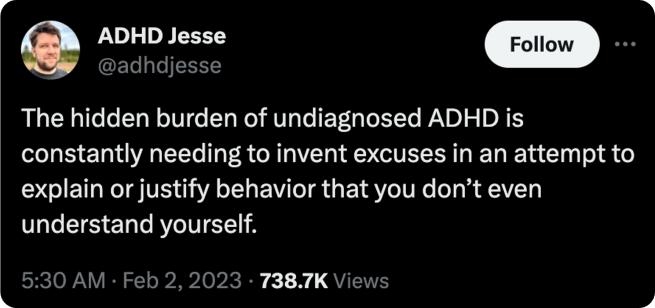
As I was just starting to explore the idea of Adult ADHD I saw this tweet, and it really summed up not just my childhood but large swathes of my adult life too:

In another nutshell, this is me.

The way I’ve come to describe ADHD is that it’s your mind, and then immediately afterwards your body, overreacting to outside stimuli. The mind sees fun, or threat, or danger, or excitement and primes the body to deal with it. I’ve never been able to stop myself from making a joke, even when it’s probably not the right time. I’ve never been good at taking criticism in the moment.

ADHD doesn’t define me. But damn, it sure explains a hell of a lot.

ADHD often comes with a lower ability to regulate emotions, so it’s hard to put the breaks on when emotions start off. It’s why I’ve always worried about being very ‘up and down’ emotionally and the impact that has on the people I care about and who care about me.

The name of it really doesn’t help. ADHD isn’t a lack of attention: it causes us to pay too much attention, to everything, most of the time. Not being able to stop reacting to outside stimuli. A lack of filter.

And the hyperactivity sounds like something physical, but in fact:

The vast majority of adults with an adhd nervous system are not overtly hyperactive. They are hyperactive internally

Dr William Dodson, M.D., LF-APA

A hyperactive mind. A mind that doesn’t stop. No wonder I’ve always felt like it’s exhausting being me.

What I’ve learnt about my ADHD is just as important as getting the right treatment for it. As much as the new meds have made a big difference, just understanding myself (and my self) has allowed me to reassess how I can manage things differently in the future. In my view, it’s about pills and skills, not either/or.

Last year I was worried that my mental health problems would overwhelm me. I don’t worry about that any more. I’ve got lots more to learn, but whilst I don’t subscribe to the “ADHD is my superpower” idea I’ve seen a lot of on social media, I also don’t think it’s a burden that will drag me down either.

I was sitting up after watching the Rugby World Cup Final with an old school friend of mine last weekend [hello Nobby – hope the whisky hangover has completely gone by now] and he pointed out that whilst the ADHD might have made things difficult sometimes, on balance I’ve also had a shitload of fun along the way, and it’s probably made me good fun to be around too. He’s a wise man, my friend.

Now that I understand it better, I’m better able to understand how to harness the benefits and manage the difficulties. Now I understand it better, I can see that whilst it’s caused me problems, my ADHD has also been part of my successes too.

Now that I understand it better, I’m not sure I’d want to get rid of it even if I could.

ADHD awareness month has come and gone, but for me the awareness of my own, personal experience of ADHD has only just begun. I’m going to learn more as I go, and as I learn I’ll fill you in on anything that I think you’ll find interesting if that’s cool?

Until then, I’m just off to change a lightbulb which will end up with me having to fix my car. To find out what the hell I’m talking about – and to see the most perfect example of an ADHD day that I’ve ever come across, have a look at this little clip.

Speak again soon. Love and peace x

How to be a rock star

Rock star. Ooh just the sound of it. It evokes leather trousers, bright lights, screaming guitars and screaming fans. A life of excess – stimulation and perspiration, passion and parties, and never a dull day.

Rock stars bring in the crowds and send them home woozy with exhilaration and energy. They are the people in the bright lights, right at the front, performing and strutting and drinking in the applause and adulation.  They are the people who have that certain something that you can’t make and can’t fake.

In my industry of advertising, it’s both a truism and a cliché [funny how those often come together] to say that talent is everything. And just like in any industry where talent is key you can hear people using “rock stars” to talk about that talent. I once had a boss who always talked about who the “rock stars” were in the agency and across the industry, and that was the highest accolade anyone could get.  If you were someone they considered a “rock star”, you were someone to watch. You were cool, and exciting, and (most crucially) you were “in”. You were going places, goddammit!

So what does real rock ‘n’ roll look like? Allow me to help you take a little peak behind the safety curtain…

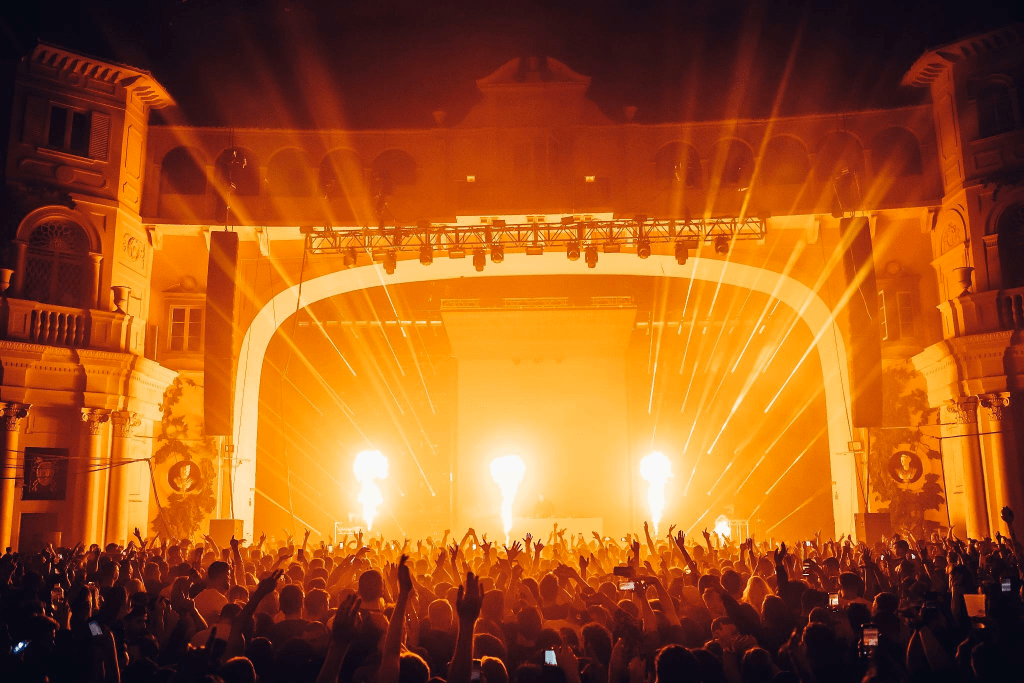
I once got VIP backstage passes for the last night of a European tour for a band you’ve probably heard of, which I got because I happen know one of them [in the least rock ‘n’ roll way you can imagine – my goddaughter was best friends with the daughter of one of the band members at nursery]. They were closing at my favourite venue on the planet, Brixton Academy in South London, and the gig was, as ever, absolutely epic.

South London’s finest

As the lights came on and the general public filed blinking out into the foyer, I flashed my Access All Areas wristband at the security guards with the giddy excitement of a kid at Christmas who thinks he might be getting the console he asked for because his dad gave a knowing look to his mum when there was an ad for it on the telly. I knew I was hitting the big time. I could only imagine what it was going to be like.

The closing party of a European tour! At South London’s premier venue. This is it folks:

THIS IS ROCK AND ROLL!!

ROCK

But of course it wasn’t at all. It was a load of very tired people having a quiet bottle of beer (or perhaps two) and sharing crisps from a big bowl.  No one drove a Rolls Royce into a pool. No one bit the head off a bat. No one smashed a guitar. The only drug in evidence was the paracetamol that the wife of one of the band asked for because she had a bit of a headache after all the loud music.

The guy I know from the band thanked me for coming (!) and asked if I’d enjoyed the show. And then he made a ‘ting ting ting’ noise on the side of his beer bottle and thanked all the people from the venue who had made the gig a success, and all the assistants and crew and management for their hard work over the previous weeks of the tour, and said that none of it would have been possible without every single one of them. They all clapped and then the band’s assistant got a bunch of flowers and cried a bit and said she loved her job.

So here we are, trying to bring some rock ‘n’ roll glamour to our weird creative industry, and it turns out the real rock stars aren’t like rock stars.  They’re humble and kind and thoughtful, and most importantly, they know that they’re nothing without the people around them.

Don’t get me wrong – I’m not saying that top, top talent isn’t crucially important. There’s no question that you need someone to come up with a melody that people sing on the way home. You need someone to be at the front to make the right noises at the right times.

What I am saying is perhaps the idea of the “rock star” creative or “rock star” account person or “rock star” strategist is… well… a bit narrow? It’s based on something that doesn’t really exist and it assumes that right up front in lights is where everyone should aspire to be. Which isn’t even the case in real bloody rock bands!

Yes, by all means celebrate the ones with their names in lights. Again, they’re crucial and you’re not going to make much memorable music without a few of them scattered across your organisation like the cushions which get scattered across your bed every single day only to be moved off at bedtime and then wait to get scattered again in the morning… [sorry, is that just me?]

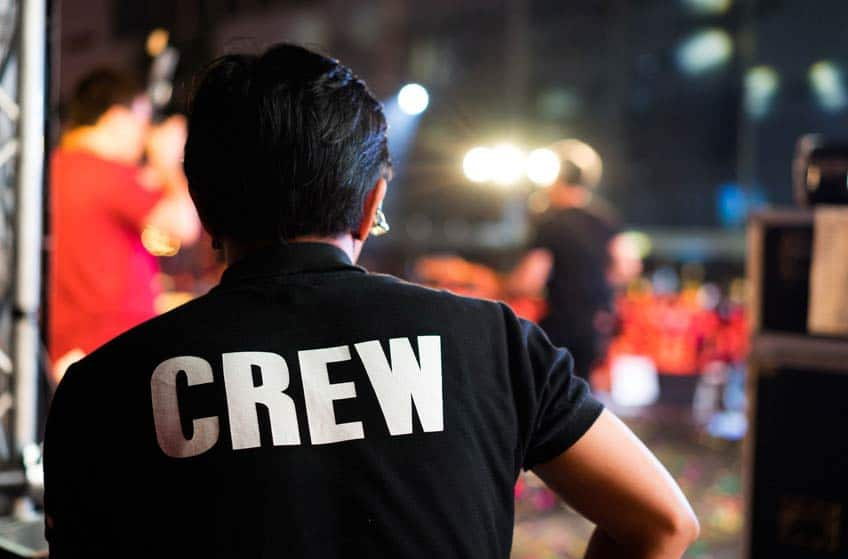
But remember that there’s not a single band in the world who can do a damn thing without the lighting guy from the venue. Or the person who books the travel. Or the backing singers, or the brass section. Or the stage crew guy in black who runs on in a crouch mid-song and fiddles with a wire and runs off in a crouch as though he thinks that by crouching he makes himself invisible. Those are the people who make the night happen at all, let alone one to remember.

“Because I wear black no one can see me”

So take a moment, today if you can, to celebrate those people around you who don’t enjoy the limelight – who in fact would scuttle off stage into the velvety darkness of the curtains like a startled theatre mouse if the limelight came anywhere near them – and give them the appreciation that there’s no show without them.

Wait, before you do that.. maybe bear in mind that they might not enjoy being singled out publicly, so perhaps just a private message or word would do.

Or even just keep it to yourself in a moment of private gratitude, with the hope that the energy of the world will give them a warm feeling about something they can’t quite put their finger on.

Whatever you choose to do, the important thing is to do it. And know that when you do, you’ll be more like a rock star than you ever realised.

The interconnectedness of all things (via a pint of water).

Okay, you’re going to need to stick with me on this one. It’s been one of those ideas that has rattled around in the back of my brain for as long as I can remember, and over the years I keep coming back to it and trying to explain it to people a bit and then getting a bit self-conscious about it and letting it tail off. 

Thankfully, in the last couple of years I’ve found a couple of willing (by which I mean captive) listeners who have kind of got into it… or at least pretended to because a) I’m driving and they’re in the passenger seat and can’t escape, and b) they know that by humouring me they may get to stay up a bit later than usual. [Clever boys!] Of course I’m very aware that you’re not one of my children, so if at any point you want to hit the figurative ‘eject button’ then feel free. But I do think there’s something in all this, somewhere.

With all that said, I’ll give you the overall theme and see how we go from there. It is, quite simply:

WATER.

Still with me? Great. You’re already doing better than some people.

Some water

On a macro level, we really have no concept of water – or only a very, very basic understanding which really isn’t all that connected to anything we actually get.

For a moment let’s set aside the metric vs imperial measurements – whether we’re talking about a teaspoon or a half a pint or half a litre is less relevant than an idea. And because I was born in the 70s in the UK, I dance happily between the two without really noticing, like a bumblebee flitting from lily flower to lilac flower without ever really getting the difference. Or something like that.

So here’s the thing. I know what a pint* of water looks like, and I know what it feels like to drink one. It’s not an unusual thing. Yet what never fails to be shocking is just how very wet you can be when what looks like a relatively small amount of water is knocked into your lap by one of the aforementioned passengers. You’re totally soaked. Like, ‘ruined meal’ soaked. Trust me on that. If I had a pound etc etc…

A pint* of water

So let’s take it up a notch from there. How many pints in a sink full of water? Depends on the sink, obviously, but you could probably have a guess, right? Maybe 20, or 30? But it’s already pretty vague. Now imagine a nice, steaming hot bath. How many in that? 100? 150? One hundred and fifty times the thing that gets you totally soaked and ruins the meal? Maybe double that??

Get to a garden pond, let alone a swimming pool, and unless you happen to know then you’re just guessing. How many pints in an Olympic swimming pool? A million? A billion??*

The point where this always gets me is when I go to the seaside. I’m lucky enough to live only 40 minutes’ drive or so from the beach, and we’re often drawn there of a weekend. And looking out at that huge expanse, as far as the eye can see, creating the very horizon, I can’t help thinking the following:

It doesn’t just go unimaginably far… it also goes down.

A lot of water

As far as the eye can see. And down further than the highest mountain. And I can’t work out how much there is in a pond. It’s a level of incomprehensibility that frankly I find hard to comprehend.

We have a strong connection with water which we also don’t really understand. Countless studies have shown that being close to water increases the levels of hormones that make us feel motivated (dopamine) or calm and safe (oxytocin) whilst reducing our stress hormone (cortisol) [If you’re interested in this bit then check out the book Blue Mind available here and at all non-globally monopolistic bookshops.]

Who knew that “Oh, I do like to be beside the seaside” was actually a tune about hormonal balance and psychological welfare?

We humans are about 60% water. Our brains are more like 80%. Perhaps there’s something in that? That we feel connected to water because… well… we actually are connected. At a molecular level?

[Right, this is where I’m going to go for it. Strap in compadre]

From the macro of the depth of the sea, the micro of our molecular structure then drags me inexorably into my own mind.

Our planet, the place we call Earth, is effectively a closed system. Stuff just moves around within it. So every molecule of water that has ever existed, and will ever exist, is on Earth right now as you read this.

More water, this time really really small and close up

Some of it is in you. Some of it is in me. Some of it is in the tree just outside. A decent chunk of it is in the seas and oceans of course. If you look up, you can see some of it in the sky, tiny drops condensed into clouds, which will continue to grow until they can’t float any more and fall out of the sky as rain.

You know when you go outside in the winter and you can see your breath? What you’re seeing there is water. The water coming out of your body as a vapour which cools and forms little droplets of water. You are making a personal cloud of your very own.

Your own little cloud.

So come with me on this little journey…

Imagine you go outside on a crisp winter’s morning, and your breath pours out as this little cloud. As you watch it drifts up and dissipates and you think no more of it. In time one of those little water molecules in the air drifts up and become part of a bigger cloud, high up in the sky, buffeted by the wind. This molecule travels in the wind for hundreds of miles, over land and sea and eventually over to Spain, where it falls on a lemon grove. Taken up by the lemon tree, it travels through the roots and the trunk and the branch to end up in a lemon.

Don’t ask me how, but by incredible coincidence, 6 months down the line I’m sitting with my wife after a long day considering the universe, and we decide that we deserve a little gin with a little tonic. A couple of pieces of ice and we’re ready to chink glasses and go. But no! We are not heathens after all, and we know that a drop or two of lemon will turn good into great. So I reach for the lemon we bought at the weekend, cut out a couple of chunks and with a squeeze there we have it.

You and me

Yes, my wife and I are living the dream. But also yes – a molecule that was once part of you is now part of me.

We are connected in a way that neither of us can ever really comprehend, but trust me: this is as real as the hand at the end of your arm. It’s not an idea, or an ideal. This is science, and the great thing about science is that it’ll be as true in a thousand years as it is today.

If you’re still with me all this way down into my psyche [and bless you for your perseverance if you are] then you’ll be glad that we’ve arrived at the point.

On a molecular level we are, subjectively and scientifically speaking, all one.

You, me, them. Us. Every person on Earth, every animal, every plant and flower. The people you love and the people you don’t even like. The fish in the ocean, the birds in the sky. Insects in the garden and every blade of grass. Like it or not, you could have a bit of Piers Morgan in you right now and not know anything about it apart from a vague sense of nausea.

Once you get into that, suddenly the interconnectedness of all living things isn’t just some kind of spiritual, sitting on a mountain top, crystals and horoscopes level of bullshit: it’s biochemistry.

And once it’s true, and real, and scientifically accurate that we are all connected like this, then surely the idea of selfishness or conflict or division just disappears, just like your breath on that cold day?

I know, I know: I have just massively overcomplicated the concept of a body of water, and then followed that up by just massively oversimplifying the solution for world peace. Not bad for a couple of pages eh?

But there we have it. All the stuff that goes on in my brain to do with water. My brain which is, lest we forget, basically a load of water held together by the odd bit of something else.

Now we’ve come all this way together, through macro and micro, I think that rather than leave you hanging, I should probably leave you with a couple of suggestions…

First, get yourself down by some water in the next few days. Doesn’t need to be the coast – a lake or pond or even the “dirty old river” Thames will do. And stop for a moment, to consider how you feel when you’re doing it. Perhaps you might get a little boost of the ‘feel good’ hormones and a bit less of the stress one if you’re lucky.

And second… just take a moment to look around at the people and things around you – the water going into your morning cuppa; the tree you always go past on your commute; that bloke on the train – and consider how that maybe one day a little piece of that might be a little piece of you. It might just give you that little feeling of connectedness, or the idea of it, if only for a second.

And lastly, just forget about that thing I mentioned about Piers Morgan – I’m not sure any of us need to think too much about that.

[Incidentally, Buddhist teaching came up with the interconnectedness of all things thousands of years before anyone had heard of a molecule – if you want to learn more about that then I’ll share the book I read a while back which, alongside a modern understanding of psychology, discusses Why Buddhism Is True with a good dose of common sense and wit along the way]

*In doing the “research” [pushing it a bit there] for this, I found out that a pint is different in the US than in the UK***. For our purposes here, I am specifically thinking of an “imperial” pint of 568ml, not the freakish and frankly unnecessary US version which comes in at a paltry 473ml.

**In case you won’t be able to sleep for wondering, an Olympic swimming pool contains almost 4.5 million (UK) pints of water. 2.5 million litres to be precise.

***I also found out that the US have more than one kind of pint for liquids and dry stuff. From the website Britannica: “a U.S. dry pint is 33.6 cubic inches (550.6 cubic cm), while a U.S. liquid pint is 28.9 cubic inches (473.2 cubic cm)”. I know, right? No wonder they can’t make their mind up about gun laws.

Double Down

My wife’s grandfather [not he from my earlier story – her other one. She’s lucky enough to have both grandfathers and one grandmother still around to drop a good amount of wisdom] once told me a story – possibly apocryphal, but no less of a story for that. As with all great stories, the subject was something each of us have a connection with in our own, unique way, which transcends time and connects us back to a place where we were more innocent… more carefree… more elemental.

Yes that’s right, we’re talking about ice cream.

The story went something like this…

It’s the mid-1970s, and in the small seaside town just down from the Garw Valley where the family lived in South Wales are two ice cream parlours. And in the ice cream trade, times are tough.

Because this isn’t the glitter-filled shiny 1970s of disco, platforms and Space Hoppers, this is the grey 1970s of economic struggle in underpaid mining communities, toiling to make ends meet between the three-day week and the Winter of Discontent.  Times are tough for everyone, but tougher still when you’re selling something as intrinsically non-essential as ice-cream.

The 1970s in South Wales

So, with ice-cream quite a way down on the priority list, one of the ice-cream parlours decides to do the prudent thing.

They cut back a bit.

They cut back on their local advertising. They put off the paint job they were going to do. They even start using some cheaper suppliers for the ice cream ingredients. Individually all small things, which people probably won’t notice, or perhaps even forgive as a ‘sign of the times’.

Except…

The other ice-cream parlour has another idea.

They double down.

They don’t advertise less, they advertise more. They do up the front of the parlour, repaint the chairs and tables out front and get some umbrellas in case of the sun or (because this is South Wales, remember) the rain. They source even better ingredients for their ice cream, from local suppliers wherever possible.

At every opportunity, they recommit to the service of their customers; double down on what an ice cream parlour should all be about. If it’s going to be an occasional treat, then let’s make it the best experience it can be.

You know the rest, of course. Only one of the parlours survived the tough times and came out the other side.

Now I’m very aware that this story is almost too perfect – like a fable almost. But hey, let’s not let the truth get in the way of a good story, right? [Did I mention I work in advertising?]

Times are tough, right now. We’re going into probably the biggest recession in living memory, with unemployment sky-high and well-known companies adding to the lay-offs every week. We may not have a 3-day week – if anything, working from home has blurred the lines of work & home more than ever – but make no mistake, this is going to be tougher than anything most of us have experienced.

And on top of our economic outlook, we’re right in the middle of a social shift too. Something that sparked from what we saw in Central Park and Minneapolis and enflamed in Bristol and London and every other part of the world. It’s not the first time the world has been rocked and shocked by racial inequality – even by police brutality – but this time does feel different.

Perhaps it’s because for the first time we’ve all had a shared collective experience of lockdown and isolation and fear, that now that’s translated into a shared collective determination to make a change in the world? Perhaps it’s just because it’s all been there, shot on shaky iPhone, for us all to see, our heads shaking slowly in disbelief? Perhaps it’s just because without the daily commute there’s more time and headspace for the daily trawl through the daily news? Wherever it comes from, this feels like a time of change.

Tough times. Uncertain times. No idea of what the times to come will look like.

So what are you going to do about it? Play it safe, or double down?

Double down comes from Blackjack – after seeing what you’ve got in your first 2 cards, you can double your bet and get one more card, so you have twice the money on the table and thus twice the winnings (if you do win, of course). Based on what’s in front of you, you can make a decision to take more risk with potentially a higher reward.

Apparently this is when to “Double Down” in Blackjack, but please bear in mind I know nothing about gambling apart from the fact that “the house always wins” (which I guess is the only one I really need to know in order to know I don’t want to know anything more about gambling)

And so in common parlance it’s taken to mean “to engage in risky behaviour, especially when one is already in a dangerous situation” (according to the Oxford English Dictionary).

But who decides what is “risky”? Perhaps now, like in South Wales in the 1970s, the risk lies in shadows: doubting, worried, holding back. Perhaps by doubling down on an idea, a belief, a course of action you believe in… perhaps this is about conviction and commitment; resilience and resolve. 

That’s an illusion of risk – something that seems risky or even reckless to the people on the outside, but only because they don’t know what you know, what you believe, how you feel, or how deep your commitment goes.

Consider what you have committed to – as an individual, as a group of people, as a company – and have no doubt that this is the time to recommit, to go even further and deeper.

If you have committed to being part of a group – whether that’s at work or outside – then this is the time to really, really be a part of that group. Give more of yourself. Be open, and brave, and authentically yourself, and get more out of it than you ever thought you could.

If you’ve committed to being a caring, thoughtful, open and honest leader or manager… go further. Push yourself to care more than you expected you’d have to – more than the people who work alongside you would have ever expected from you.

If you’ve committed to the belief that that culture and values can really mean something for your business, then recommit to that culture and those values being the most solid foundation possible for whatever you build out of the situation we’re in.

Times may be tough, difficult, strange, “unprecedented”. But it’s precisely because of that uncertainty that this is the time to work out what you really care about, what you really believe in, and double down. Go out and be the ice cream parlour with the fancy paint job and the delicious flavours, and the pride of knowing that you refused to go down without a fight.

Now, who wants to double down on a double cone 99 with sprinkles and raspberry sauce? I’m buying.

Where the hell do I start?

With the incredible sense of entitlement that allows someone to feel vindicated in doing pretty much whatever they like because their situation is so much more nuanced and complex than your situation and anyway they’re actually more important and intelligent than you and really you wouldn’t understand?

With the strategy to combat a deadly virus conflated with partisan politics?

With lies openly told by governments but everyone too exhausted or bored or disengaged to bother to do anything but sigh?

With full on, simple, bare-faced racism which has never been addressed with truth and honesty but just ignored and constantly re-booted in big and little ways because it’s too difficult and uncomfortable to unpick?

With peacefully protesting citizens being tear gassed by police to make way for their own fucking president on his way to a photo opp?

Wait, what??

With the leader of the free world using language inextricably linked to historical, racist police brutality (oh but “that’s not what I meant” so don’t worry that’s okay)?

With deliberately provocative groups of white vigilantes armed with golf clubs and baseball bats taking to the streets seemingly without challenge from the police?

With the systematic militarisation of police resulting almost inevitably in dehumanisation of the individuals dressed like something out of an unrealistic dystopian film?

With members of the UK Parliament currently unable to vote on behalf of their constituents because a very small amount of very entitled people need that parliament to look, sound and act more like a public school common room than a place where important decisions need to be made?

With the hypocrisy of people who voted for years against actual policies that might have supported “our” NHS, clapping and banging outside their houses every week in areas where front line NHS workers could not afford to live and will never hear the empty noise echoing into the dusky evening?

Spotted in a town in Northern England. Not selling anything.

With corporations around the world talking about their inclusive culture whilst actively failing to actively support or actually invest in inclusivity programmes which might actually do something… or worse, actually actively and openly putting D&I on the back burner in “these unprecedented times”?

With video after video being shown of police hitting unarmed protestors as hard as they possibly can, protestors who were standing still, or trying to cycle home, or reacting to being groped, or just getting ‘too close’?

With the retort of “yeah, but don’t all lives matter?” glibly thrown like a smarmy, clever little hand grenade full of deliberate ignorance?   

With a growing dread that because every media outlet has some kind of agenda, it’s getting harder and harder to find objective truth beyond hastily shot iPhone footage?

With the sense that no one really cares about truth anyway, they just want to hear from sources who reinforce what they already think?

With the horrible feeling that your faith that kindness and love will ultimately conquer all might just be a naïve fantasy?

Okay, wait a minute.

Yeah, maybe I’ll start with the last one.

Because I’ve seen white cops taking off helmets and laying down batons and walking alongside their communities.

Sheriff Christopher Swanson, Genesee County Michigan

Because I know that the outpouring of sadness for what’s happening in America is real, and that sadness comes from a good place.

Because we may not know what to do, but knowing something has to be done is the first step.

Because the further things go, the more people will decide that enough is enough.

Because regardless of political or social predilections, I do think that the idea of “fairness” is one that transcends most divisions, and there’s nothing fair about what’s happening at the moment.

Because there’s a fine line between frustration and injustice, which drive action, and dejection and gloom, which make you give up. And I need to actively keep myself on the right side of that.

Because I do believe, with all my heart and soul, that hope and love are stronger than despair and hate. That the light side of the force will ultimately overcome the dark side of the force. Even if it takes 9 feature films to get there.

Unusual that I turn to Rocky for wise words, but just this once…

“The world ain’t all sunshine and rainbows. It is a very mean and nasty place It will beat you to your knees and keep you there permanently if you let it. You, me or nobody is going to hit as hard as life. But it ain’t about how hard you hit, it is about how hard you can get hit and keep moving forward, how much can you take and keep moving forward. That’s how winning is done”

Rocky Balboa, 2006, written & directed by Sylvester Stallone.

Because we will move forward.

Love and peace x

Maintaining Momentum

Sometimes starting is actually the easiest part. It’s not so hard to get people to commit to action on a particular issue when everything is pretty crap and therefore kind of embarrassing, especially if that embarrassment could be linked back to some kind of innate injustice or wrongdoing or privilege that makes us feel uncomfortable…

Take any issue you like. If on a scale of 1 (bad) to 10 (great) we’re all basically somewhere between 1 and 3, then it’s clear that we need to do something and do it right now then there’s energy and action and movement. People get involved because 2 “just isn’t good enough” and “we have a responsibility to do something” and “it’s only by pulling together that we can shift the needle on this crucial issue”…

But if we’re getting up to 5, or 6 (or even 7 on a good day)… well, do we really need to carry on making such a fuss?

“From a scale of 0 to 10, how crap are things currently?”

“I know it’s not perfect but it’s a damn sight better than it used to be…”

Oh, no. Not this. I know where this is going…

“Okay, so we’re not where we want to be on gender equality but you should have seen us two years ago…”

“We’ve done a load of outreach stuff to bring in more people from different ethnic backgrounds but it’s not really landed yet… we’ll just have to wait and see how that goes…”

“I think we’re really accepting of gay people already – I don’t see we can do much more…”

They’re not direct quotations but there’s an underlying feeling that we’ve kind of “done” some of these things. Gender, some stuff on race, maybe LGBTQI+ in some vague way. Used to be a 2, now we’re a strong 5 aspiring for a 6 or even 7!

The moment we think this stuff is in any way done is the moment we lose any momentum we’ve built up.

There’s no question that things have moved on in the last few years – particularly on gender equality (which was given real impetus through the #MeToo movement) but we’re only just starting to see the slightest movement on anything that will allow good intentions to result in lasting change.

The vast majority of D&I work is still done effectively voluntarily – by people giving their own time, energy, thinking and effort for nothing. That’s not just true for charities, that’s true for some of the biggest, richest corporations on the planet.

Good will and personal energy will get things moving and keep them going for a couple of years; perhaps more for people whose passion and resilience mean they refuse to give up.

But finding the energy to start again, from scratch, every year? Always on top of the day job? That’s tough. Especially when the momentum isn’t there.

Events that used to sell out in minutes suddenly find they’re only just breaking even.

There used to be 10 or 15 people who said they wanted to help, then suddenly you’re down to the same 3 or 4.

Movements that started with passion and energy and forward movement suddenly slow to almost glacial levels, so slow that any movement is imperceptible to the naked eye. Is it moving or is it… dead?

This is happening. I know it’s happening because I’m seeing it with some of the people, organisations and events I’m close to personally, and that can’t be a coincidence. [Unless… wait, am I the bloody bad luck charm??!!]

That’s why I believe this is a crucial moment in the shift towards a more inclusive world of work.

The initial shift from things being totally crap to being kind of okay has brought with it a low level of complacency which threatens to bring the whole thing to a grinding halt.

Just when things have started moving up is not the time to stop pushing. It’s the time to find more people to help with the push. By bringing together not just individuals but groups of like-minded people the effort is shared and the energy amplified.

And there’s no better time for that than right now.

If this crazy time we’re in the middle of has done anything, it’s re-established what’s important to people – or at least amplified the sound of what’s important. Connection, community, co-operation – it’s all been amplified along with the sound of balcony singing in Milan and Thursday night clapping in Manchester, and pans bashed in Manhattan.

By being forced apart we’ve ended up more together than ever. More thoughtful, more empathetic. And that, my friends, is where inclusivity starts.

We’re going to have a hiatus this year because of coronavirus – no question of that. No marches, no conferences, smaller meetings. So let’s use that time to regroup, recharge, and find our groups of like-minded, committed, stubborn idealists.

Never doubt that a small group of thoughtful, committed citizens can change the world. Indeed, it is the only thing that ever has.

Margaret Mead, Cultural Anthropologist
 (December 16, 1901 – November 15, 1978) 

Find your group, make your mark. Push harder, aim higher. Never settle.

Hold the line.

Who’s with me?

[Take care. Be safe. Stay inside. Stop touching your face.]

Forged In Crisis

Nothing will ever be the same again. How we think about ourselves, our families, our friends. How we connect, how we work. What we value, whom we value. What we’re prepared to sacrifice or forego, and what fulfils a basic need.

This will be how our time is remembered. Everything will be pre- or post- in a way that we can’t comprehend and could never have imagined. Any more than people living in the 1920s and 1930s could have imagined their time would be talked about as “between the wars”. [Imagine the dread, if they had known – that after the devastation of “The Great War” as they knew it, there was another to come…]

With such a seismic shift, and a world economy that will take years to recover, the business decisions we make will also change. Businesses that have just hung on will find the road ahead a tough and bumpy one. Even seemingly strong organisations may find that their customers have moved on, priorities changed. Jobs that seemed “essential” in their own way before may simply cease to exist.

Across our country we are already seeing that small businesses are really struggling. The independent coffee shop which may not ever open their doors again, the small theatre, the local pub.

And even the big boys will creak, across the board. Of course we’ll lose a couple of high street stores which were holding on by their fingertips anyway; maybe an airline or two won’t make it back. But every business will be affected. There will be unemployment – already we see people who used to walk down the aisles of intercontinental aeroplanes stacking shelves in the aisles of the local supermarket.

It doesn’t feel like a time for trying something new, for innovation. Certainly not a time for risk. It’s a fact of life that, in times of financial struggle, many companies – big and small – will be tempted, encouraged, mandated even, to “play safe until things settle down”.

Let’s go with what we know. Don’t rock the boat. Low risk, yeah?

In this context, is there time or space to be thinking about this diversity stuff? Really, shouldn’t we just come back to that when things are a little more settled?

Especially when it was kind of hard to practically implement anyway…

And we’ve all done the unconscious bias training and had those rainbow flags up for Pride month…

Hmm…

In her book Forged In Crisis [it’s very good, I’d read it if I were you] Harvard history professor, Nancy Koehn, describes crisis as a “crucible” for courageous leadership in turbulent times, where the means may be flexible but the end has more dedication and determination than ever. Great leaders are born from necessity in a crisis.

And innovation is born from crisis and tension too. The Renaissance (French for “re-birth”, of course), an explosion of art, literature, and learning across Europe, came out of the crucible of a culturally barren and brutally war-torn Middle Ages. The incredible advanced of the second half of the last century came, in part at least, out of the crucible of a world decimated by two wars.

Our world is shaped by its crises. Always has been. Ask the dinosaurs.

Perhaps in a world where everything is new and different and nothing will ever be the same again… perhaps that’s actually somewhere that we need new thinking, new ideas? New ways of solving new problems?

So in this context, isn’t the real risk in trying to recreate the old? In reverting to what used to work, what used to make sense, before everything changed?

When everything is up in the air, the ability to adapt to ambiguity is the most precious quality we can hope to find. Innovation isn’t about sameness, it’s about newness – new thinking, new outlooks, new ideas. You don’t get that by trying to recreate, reverting to conservative, non-inclusive, type. You get that by embracing inclusive thinking, creating the environment for a diversity of ideas to flourish.

We all know that it’s difficult to make room for diverse thinking – it takes time, and effort, and active decisions, and it often comes down to committed individuals driving initiatives on their own time, crowd-sourcing/funding their activities, using their own energy.

So this is a time that those committed individuals should look to assemble like-minded people around them, to connect, convince and then collaborate in new ways. To lead us out from this crucible.

A clever dude with a beard* once said:

It is not the strongest of the species that survive, nor the most intelligent, but the one most responsive to change

*Sir Charles Darwin, On the Origin of the Species, 1859

Responsive to change, eh?

Hmm.

Feels like right now we might actually need a bunch of people with different ways of seeing the world to help shape a new world, doesn’t it?

Now, dear leader… go and lead.

We are all animals

Imagine the situation – you’re in a whimsical conversation with a group of people, and someone asks “If you were an animal, what animal would you be?”. It’s a classic question. What’s your answer? A bear, because you’re strong but cuddly? An eagle, because you’d like to float over the world seeing things from on high? A sloth, because you’re incurably lazy and haven’t cut your fingernails for a year?

Well when I’m asked this question, I’ve developed a habit of saying “I’d be a 40-something male human”.

Partly I give this answer because I’m a clever-dick/smart ass [delete as appropriate for your geography] and take a kind of weird pleasure in being pedantic and low-level irritating [a trait I inherited from my old man along with various other things including gout – thanks so much Dad!], but partly I give it because it reveals a simple, irrefutable truth that we often choose to forget about ourselves:

We are animals.

And that’s what our current crazy situation has reminded me. That when you strip it all away, in a way that we tend not to do, you land on perhaps the plainest truth of all.

We are all just animals.

We are strategically shaved monkeys, and despite everything we have built up around ourselves over the last few thousand years we’re at the whim of a miniscule little virus. We can’t see it, we can’t fight it.

We have little computers in our pocket which can tell us any fact on earth within a minute or two [just think about that for a second – it really is incredible isn’t it?] and we’ve developed a society where we all know where to stand on the escalator and how to order a very, very particular kind of coffee with a particular kind of milk and even a particular way to make that milk hot and put it in the coffee.

But all of that means nothing in the face of that fact that we are the same animals we always were, just as vulnerable to a tiny little virus as our ancestors were thousands of years ago. As our descendants will be in thousands of years to come.

And as animals – simple, needs-driven animals – Maslow’s hierarchy of needs tell us we first need food and shelter, then safety (personal, economic, psychological) and so on.

Maslow's Hierarchy of Needs | Simply Psychology
Maslow, A.H. (1943). “A theory of human motivation”. Psychological Review. 50(4): 370–96.

But in a developed country today the lower levels are, for most at least, all ticked off. Not only do we have “shelter”, we have spare rooms, underfloor heating, an app to turn on the heating before we get home.

So we create a new world of needs around us. We convince ourselves that we ‘need’ a pizza with cheese in the crust, a haircut, that new pair of Nikes, a phone with a better camera. Faster wifi, better holidays, a bigger house.

And then it’s all stripped away, by a tiny little invisible virus that closes our society down within a matter of weeks. Can’t get the pizza delivered. No point in the new Nikes if there’s nowhere to go and no one to show.

If this weird time has done anything for us, it’s taken us back to basics, exposing the real needs in our lives.

The need to get out of our homes, if only for an hour a day, to get our fix of fresh air, exercise, nature.

The need to connect with friends or families, virtually as we can’t do it in person.

The need to show our support for each other, be that through clapping into the quiet night air or by singing across balconies or by picking up medicines for those who can’t get out.

Think about these – they’re all, in their own way, a little rebellion against the feeling of having our freedom curtailed. Like any animal, we’re not happy in a cage – even an imaginary cage made of social responsibility and societal peer pressure which is protecting us from potential danger.

As animals, there’s no question that we’ve got too big for our boots. Drugged by the intoxicating idea that we are special – as individuals and as a species – and have some kind of right to have whatever we want.

So this is a unique time to reassess what is really valuable to us, and re-evaluate how we’ve been living our lives. To really establish what our true needs are, as communal animals. Because we’ve been shown that we only function as part of a wider society.

And we all need that society. In its true sense: the word comes from the Latin ‘socius’ meaning companion. Companionship, togetherness, collaborative association with others.

Surely we can come out of this with more balance than we came into it, right?

Less hubris, more humility. Less ‘me’, more ‘we’.

Yes we are all animals. Yes, individually we are vulnerable, weak, susceptible. But together, we have shown we can love and protect each other and build civilisations the like of which our ancestors could never have imagined.

And what we build from here? Well, that’s down to us to decide from this point on. Let’s not forget what feels important to us right now.

Take care. Be safe. Stay inside. Stop touching your face.

Time flies

We all know the feeling of time just flying past. Every year, around September, offices all over the world are filled with conversations about how they can’t believe that it’s September already and hasn’t the year gone quickly and it’ll be Autumn/Spring soon (deleted as geographically appropriate).

And I know I’m not alone feeling like this January went way beyond 31 days. When asked, a friend of mine claimed it was the 87th of January with everyone around giving a “I know, right?” sigh or tut or roll of the eyes.

A meeting about the timeline for a project which seems to go on FOR EVER.

That same project a month later when there’s suddenly a week to go and where the hell did all the time go?

And it’s something we’ve all experienced since we were kids – the extra half an hour before bed that goes by in a split second; the car journey where it feels like you’re going to get to bloody Greenland before you get to the next motorway junction on the way to the Highlands of Scotland from Cheshire when your dad piled you into the Vauxhall Carlton before dawn to “beat the traffic” [sorry got carried away for a second there].

So how come we all still have an unshakeable certainty in the “fact” that time is this constant, steady, objectively measurable thing? When every single one of us has personally experienced something different to that? It’s the exact opposite of faith – rather than believing in something we can’t prove, here we are disbelieving something we have personal proof of, in our own lives…

I know that according to Einstein time is relative (see here for proof that he was actually right) but I’m talking about a more personal relativity here – time being related to an individual’s own experience of a situation.

[By the way, I do believe that one day people look back at our beliefs about constant, linear time with as much derision as we look at the idea of the flat Earth – as something that people used to believe before we knew more and left such fantasies behind us… wait, what? Seriously?? Oh. Oh dear.]

And here’s the thing – my experience of time isn’t the same as yours. Your hour isn’t the same as mine. It depends on what we’re doing. That’s true even if we’re in the same room.

If I find the subject fascinating and wide-reaching and challenging, then the time we’ve got to talk about it goes way too fast. If you’re thinking it’s all bullshit and you’ve got something more important to be doing, then you can’t believe we haven’t ended yet.

It all related to a single, human truth – something that defines every interaction we have with the world in which we live and the people within it:

Perception is reality.

If I think it’s difficult, it’s difficult for me. The fact that you get it really easily doesn’t change that (and you telling me that really doesn’t help!)

If I think it’s hot in here, I’m hot. The fact that you are cold doesn’t change that.

[If anything, it probably reflects that I’ve spent the last twenty-odd years surrounding myself in a protective layer of fat just in case I fall into the North Sea. Always prepared, that’s me.]

If I think it’s boring, then I’m bored. The fact that you think it’s interesting doesn’t change that

And lo and behold if I’m not silently judging you for not thinking it’s boring when it clearly is because that’s my perception and [all together now]…

Perception is reality

I’m not sure that’s getting us anywhere. So let’s rewind, shall we?

Instead of accepting our own, personal perception as the only reality, how about accepting that everyone has their own perception. Their own reality.

Then how about considering what someone else’s perception might be? Trying to see the things from their perspective, understanding their view of the world?

You have to stop for a moment. It’s not always easy to take a step back from your own reality. It’s not always easy, and it takes a good deal of imagination.

But that’s the start. The start of of connection, of empathy, and ultimately of trust. It’s the start of inclusive thinking, and seeking out diverse perspectives on the world. Not less challenge, but more.

So here’s a call to action for you.

Think of a conflict you’re in at the moment. Find that person and take a minute to ask them to share their perception of the world – without judgement. Accept that, for them, that perception is 100% real and, to them, 100% right. Then share your own.

I can’t promise that it’ll solve things in a minute. But I can promise that it’ll open up a much better conversation than the one you were (or more likely weren’t) having.

And I reckon that’s worth a minute of anyone’s time, right?