Wherefore International Men’s Day?

Good question. There is an argument that, in a world created by men and for men, a world where men hold most of the power, every day is “Men’s Day”.  We all know there are more male CEOs than female, but to put that into context the latest data tells us there are more men called John running FTSE 250 companies than there are women. Not women called John, in case you’re wondering. Women. In total. And we all know there are more male heads of government than female, but to follow through and put that into context, just 19 of the 193 member states of the United Nations currently have female head of state. More than two thirds have never had a female head of state in their entire history.

And some of those male heads of state we are subjected to now really are some of the most caricatured examples of toxic masculinity you could ever hope to avoid, building their palaces and breeding their bullshit authoritarianism as a shield to protect their eggshell thin egos. Trump, Putin, Netanyahu, Orban, Jong Un, Milei. And many more like them, or hoping to be. I’m not sure what the question is for this bunch of bullies but the answer is “unresolved childhood trauma”. I can’t make up with my father/mother/teacher/first girlfriend so I’ll build up an armour made up of sycophants and wealth and as much power as I can possibly hold in my little hands.

When I took my first steps into my work on diversity, equity and inclusion, there was a shared belief that things were getting better, particularly around gender equality. The dictionary definition of feminism is the belief that women should have the same rights, opportunity and, yes, “power” as men, and that seemed to be shifting, albeit very slowly. But thanks to this lot, and their acolytes, we’ve taken a few big steps backwards over the last couple of years.

[Yeah, I did drop it in there, didn’t I? The dreaded curse of DEI which is now put forward as the reason why society is a so fractious and divided, conveniently and maliciously ignoring the fact that it all stems from wealth inequality which started with ideological free market economics, wandered through the failed experiment of privatisation, jogged past the systematic deindustrialisation of swathes of countries and communities wearing nothing but a flimsy coat of consumerism, skipped into a garden of easy access to credit and slammed right into the greed-fuelled banking bubble of the 2008 financial crisis.
People have been sold the story that the problem is “woke”, forgetting that they were actually there and saw it happen. Don’t you remember? It was the banks! Billions of your taxes went to bail out a bunch of (overwhelmingly male) bankers that had become gorged on greed. You must remember that? It wasn’t giving more opportunity to those who didn’t have as much in an effort to level the playing field. It was the fucking banks! You were there! REMEMBER?
Hmm, this might be a separate blog now I come to think of it. Where was I? Oh yeah “power”]

It’s not just “power” of course. Data from the World Economic Forum tell us that whilst there has been change in the gender gap in Economic Participation and Opportunity (money, basically) since 2006, if we keep going at the current rate it will take 169 years to close the gender gap completely. [Yeah, I know, that’s such a long time that it almost seems silly counting it doesn’t it?]. A big part of that is because women still do around 60% more unpaid work – cooking, cleaning, childcare, caring – than men, none of which is recognised in the economy but all of which impacts on time and, by extension, the need for more flexible working to fit it all in.

So yeah, it’s a man’s world. Then why on Earth do we need International Men’s Day?

Well, because the day is less about celebrating men in general, and more about recognising the need for positive conversations around manhood and masculinity. And about stripping back some of the baggage, too.

And there is baggage that comes with being a man. I mentioned in these pages a while back a book I’d read called The Mask of Masculinity (you can find it here if you’re interested, it’s very good) by a nice chap called Lewis Howes. In this the empathetic and erudite Mr Howes [no I’m not sure why I’ve suddenly gone all formal and pseudo posh either] explains that there are a whole bunch of masks that men ‘wear’ to function in society.

The Know-It-All Mask where you pretend to know stuff you don’t know because admitting you don’t know shows weakness. Best example of this is me looking at the engine in a car, pretending to understand when the roadside repair man arrives at my broken down vehicle and tells me there’s something wrong with the “crank shaft” or “big end” or something else which, because I’m quite childish sometimes, sounds slightly risqué in a very Carry On film kind of way.
The Joker Mask, which makes light of everything things – particularly things that might be emotionally difficult – to avoid having to deal with them properly. Yeah, I’ve known that one a fair bit.
The Material Mask, where showing off an expensive watch or an expensive car or about an expensive holiday is a demonstration of how successful you are. Money can’t buy me love but it can help me pretend I’m happy and powerful. I’m very fortunate that I’ve never really put this one on. I don’t really care about watches or cars or designer clothes and the idea of ‘conspicuous consumption’ seems kind of pathetic to me. But
The Alpha Mask where you never back down or admit fault, doubling down when challenged and becoming even more Alpha. Think all of those dickhead “leaders” mentioned above. Especially Trump,  
The Stoic Mask, where you pretend everything is okay when it’s really not. Hmm, yeah. That one fits me like an old pair of slippers, perfectly moulded from years of use.

There are others, of course. But it all conflates into one big theme…

Pretending.

Pretending things don’t hurt. Pretending you care about stuff that you don’t care about. Pretending you don’t have emotions. Pretending everything is okay when it’s really, really not.

Boys don’t cry, remember?

When I was a young man we never talked about negative emotions. Ever.

Trouble at home? Worried about school? Disappointed about not getting into the sports team? Heartbroken because the girl you liked and who you thought liked you too has started hanging around with a lad from the year above? Grieving over the death of a beloved pet?

Bury it. Deep.

Don’t show weakness or it will be ruthlessly exploited by your own very best friends, not because they want to hurt you but because that’s what boys do because “it’s just a bit of banter, lads”. No need to take it personally mate. Can’t take a joke?

So if you’re the one on the receiving end, you have precisely two choices: suck it up, or give as good as you get. Stoicism or alpha? Your choice.

That’s what we’re conditioned with, and that’s how a lot of men’s relationships with other men stay for ever. Never really get to anything deep. Pretend everything is going great. Give as good as you get.

Suck it up. Man up. Grow a pair.

Let’s leave all that emotional stuff to the ladies, eh lads arf arf wink wink?

Just because men don’t talk about emotions with each other, doesn’t mean they don’t have the emotions of course. It just means they can’t talk about them, or process them, or get advice, or support, or just plain old filial love. An arm round the shoulder.

And the absence of these necessities is killing us.

Suicide is the biggest killer of men under the age of 45 in the UK. Men make up over three quarters of suicides. There are lots of reasons for this, but many will come back to the way men hide their emotions. From each other, and often from their partners too.

That’s one bloody good reason why International Mens Day is an important time to stop and talk. A moment in a busy year to talk about what modern masculinity should be all about, talking about the expectations society puts on men (and men put on themselves) which can lead to anxiety and depression, and worse. It’s not a celebration. It’s a time to reflect.

I know about this stuff because I’ve been there myself. I’ve not handled all the expectations brilliantly over the years. I’ve worn a lot of the masks mentioned above, some for so long I almost forgot I was wearing them, and thought they were the real me. And I’ve found that constantly pretending to be something you’re not is fucking exhausting, and confusing, and can leave you wracked with anxiety and down from there into depression.

I’m one of the lucky ones, because I’ve never really gone to the darkest of places, but I’ve been close enough that I can have at least a sense of it. Slowly slipping down a muddy bank, scrabbling for a foothold yet picking up speed, then tumbling and clawing and snatching at brambles and branches and bracken that cut the hands to ribbons. A thousand cuts, each of them minor, irrelevant, laughable, as the sky falls away above. Unable to shout for help for the fear that no one will come.

I can’t quite imagine the place that ends up in. Not really. But I know two men who took their own lives in the last couple of years.

One I only knew in passing, but always seemed cheerful and chatty and generally a ‘good bloke’. He’d struggled since leaving the armed forces, as so many do. His wife had no idea he was struggling. Neither did his kids.

The other one I’d known since I was 8 years old, and was one of my best friends for a big chunk of my life. His difficulties were more well known to us all, and horribly complex in a bunch of ways. But in the end he made a decision all on his own.

Most men of my age will know someone who’s gone the same way.

Again, I’m lucky, because along my journey I’ve grown into someone who is a talker. Perhaps that’s because I found my soulmate when I was 20 and she was 19, and so I’ve always had a partner alongside me. Perhaps it’s because I’ve picked up some friends along the way whom I love like family, and who love me too.

As I’ve got older and experienced more of the world and made a million mistakes, I’ve also grown into someone who doesn’t conform to the more “traditional” tropes of masculinity. I’m really open about my emotions and I make a point of talking to my friends, and colleagues [some of whom span those categories, I’m happy to say] and even to relative strangers about my vulnerabilities and struggles, partly because I’m not ashamed of any of it and partly because I want to show that being in a conversation with me is a “safe space” for them. And I’ve found that the more I open up, the more others open up to me. And we all know by now that vulnerability builds trust, right? So my relationships have become much more real and much richer than they would be if I kept my emotions to myself.

So, what’s my message for International Men’s Day? Well, there are a couple.

First, if you’re not a man, please be assured that this isn’t about men just saying how ace men are. It’s much more nuanced than that. In a lot of ways it’s about showing how gender inequality damages everyone, men and women, and that breaking down societal expectations around gender would be good for everyone, too.

It is also a time for empathy, rather than antipathy or even (as sometimes can happen) indignance. Whilst I have no question in my mind that [in a sweepingly simplistic and borderline flippant generalisation] men have it easier than women in a society that was largely created by men, for men, I also know that with all the innumerable pressures and stereotypes and masks and pretending and bottling up, it’s often far from easy being a man in this messy world too.

And if you are a man, then it’s really, really simple. Partly it’s about taking off whatever mask you happen to habitually reach for of course. And then from there I’ll borrow from one of my comic heroes, if I may?

I saw a clip of an interview with Adrian Edmonson (star of The Young Ones, Comic Strip and Bottom) a while back, where he said that whilst he and co-writer and co-star Rik Mayall had showed their love for each other in loads of ways, “the thing we never did was tell each other than we loved each other, and it’s a huge regret”. Regret he can’t do anything about now, as Rik died in 2014 at the tender age of 56. The expressive and eloquent Mr Edmondson [there I go again] then went on to say the following:

“If you’re a man… and you’ve got a best friend: just tell him you love him.”

That’s as good a “call to action” as I’m going to get I think.

Love you mate. Happy International Men’s Day

The letting go

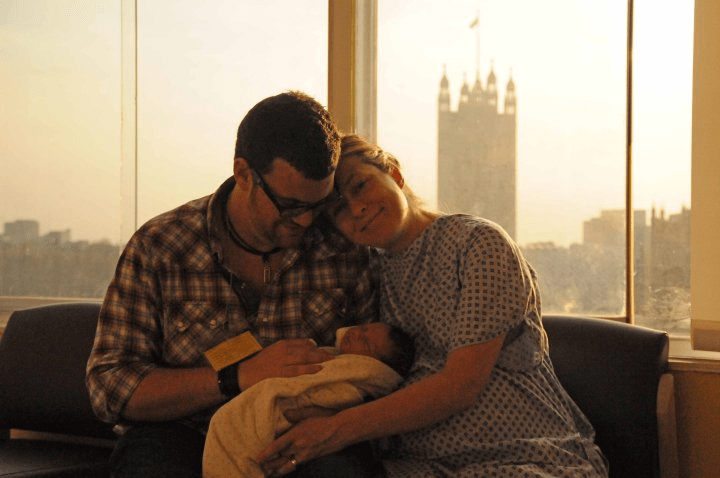
My two sons were both born in London. Ben was born just after midnight on a Tuesday in the middle of April, 2010, at St Thomas’ Hospital, right by the River Thames. As my wife and I cradled the chubby, spiky haired little human we’d created, we gazed out of the window and watched the sun come up over the Houses of Parliament on the other side of the dirty old river. I’ll never forget that morning.

“That” picture. April 20th, 2010.

As any of you who’ve had more than one child will appreciate, it’s a bit more hazy with the second one. I know Jack was born in Kings Hospital in South East London, at around 11ish, and I think it might have been a Wednesday but don’t quote me on it.

One thing I do remember is texting my dad to say we’d had a another boy [for both children we decided not to find out the sex in advance, simply because there aren’t many times in your life that you get a true, total, life-changing surprise, and we figured finding out if it’s a boy or a girl is one of them] and him texting back to say he already had three grandsons and had ordered a girl and could we take it back and get a refund?

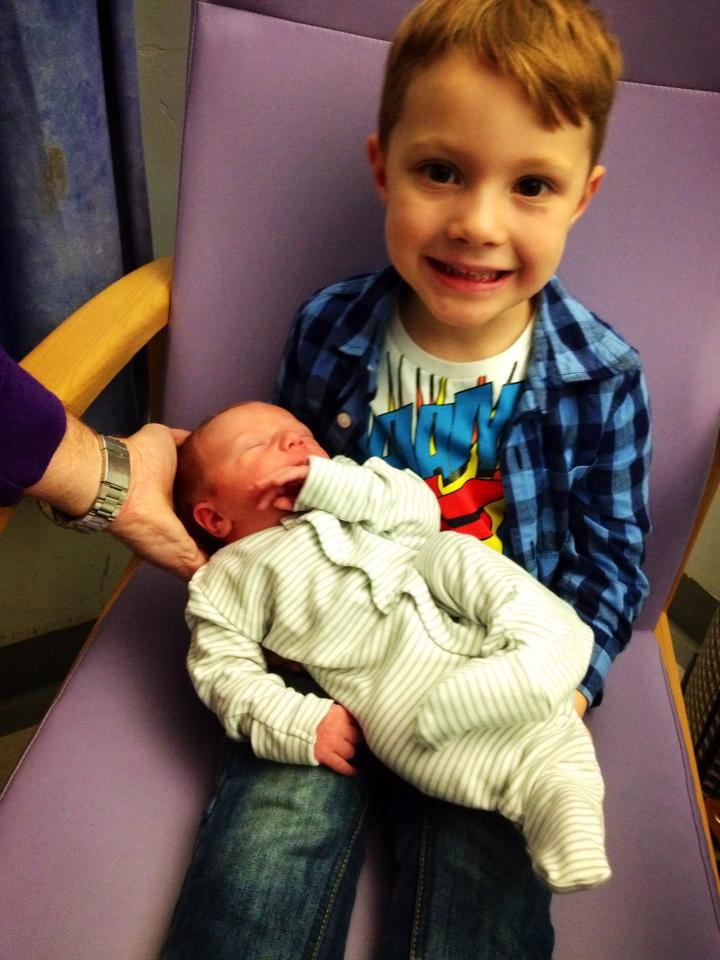
I also remember three-and-a-half-year-old Ben meeting Jack for the very first time, holding him carefully in his lap and then quietly starting to cry. When we asked him what was wrong, he looked up from his little brother and, smiling through the tears, said

“I just love him so much”

Meeting his little brother

Cue additional tears from all the surrounding parents and grandparents. And, I can tell you, cue his old dad reaching for a tissue as he writes this nearly 12 years later, with the sound of those two boys bickering about who’s turn it is on the Playstation just next door to where I’m sitting.

But anyway, this isn’t really about their respective births, believe it or not [although it was a nice excuse to dig out those pictures and show them to you, I’m sure you’ll agree]. It’s not even really about the fact that they were born in London and brought up in London for the first few years of their lives, but we’ll hover here for a bit if you don’t mind? [And even if you do mind, we’re going to need to do it anyway because it’s part of the narrative and so it’s kind of important. Not like this bit. Oh no, this is just a waste of time really – a deliberate detour designed to disrupt. Good bit of alliteration eh? I love the allure of alliteration, don’t you? Anyway this really is getting silly now: I’d skip to the next bit if I were you.]

I don’t know if you’ve ever driven around London, or been driven around London, but it’s pretty hectic. Not Bangkok tuk-tuk hectic, or Paris aggressively maniacal hectic, but hectic nonetheless.

I’m pretty good on a bike but at the time my wife would probably have been considered more of a ‘provisional’ bicycle rider, getting one of those big ‘P’ signs that nervous parents put on the cars of their all-too-confident new drivers in the UK.

Put those together and “family bike ride” was never going to be on the agenda really. So [feeling very guilty about it of course, because guilt and parenthood are such happy bedfellows] we didn’t get round to teaching them how to ride a bike until we moved out into the countryside,

[Isn’t it funny how riding a bike is one of those things that literally everyone is expected to learn how to do? Cycling and swimming, What exalted company bike-riding has been keeping! Not knowing how to swim could result in a tragic death by drowning headline in a local newspaper. Not knowing how to ride a bike could result in… having to walk for a bit? Maybe catching a bus? Yet if I met someone who couldn’t ride a bike, before I could stop myself I’d blurt out “you can’t ride a bike??” in an incredulous and slightly high-pitched voice like they’d told me they’d never learnt to tie their shoelaces or use a knife and fork.]

Do you remember learning how to ride a bike? I do. I remember being on the path at the back of our house with my dad [two mentions in one blog eh Dad? You’ll be feeling all spoilt!] doing that funny bent-over run, holding on to the back of the saddle until I’d picked up speed and then… has he let go?… I think he’s let go… I’m riding a bike!!

And then, of course, I’d probably got for a bit, wobble, then fall off and graze the skin of my knee on the hard gravel of the path.

The magic of a plaster

But with our own boys we never quite got round to it. Always something easier and more relevant to do in old London town, of course. So it wasn’t until we’d got out of the “Big Smoke™️” that we started to think about getting it sorted.

And when we eventually did, bikes and padding and helmets all gleaming in the summer sunshine, I got to experience something I’d not experienced before:

“The letting go”.

Letting go of the back of the saddle with the knowledge [not the “fear”, please note Dear Reader, but the absolute certain knowledge] that whatever son I was holding onto would go for a bit, wobble, then fall off and graze the skin off their knee on the hard ground of the village cricket pitch which we’re fortunate to have just through the little gate at the end of our garden.

And with that, the knowledge our younger son – the same one you remember in the arms of his elder brother all those years ago – will go absolutely ape-shit and say he doesn’t want to ride a stupid bike anyway.

And the knowledge that you’re going to do it again, and again, and again, until he stops the wobble and fall off bit. Might not happen today, but eventually it will.

AI imagery is freaky isn’t it?

Cut to the present., and really the actual point of this particular ramble through the brambles on memory lane.

A good few months back now, I was talking to a senior copywriter at work [he’s left now but there’s a chance he might read this so “hello Andy mate!” just in case!], and we were sharing thoughts on the responsibility of managing people, and delegating, and getting the balance right between pushing forward and holding back; between freedom and support.

[Yeah yeah, I know, you’re way ahead of me here. I would expect nothing less from such an astute reader as your good self.]

And of course we ended up talking about parenting in general, and then specifically about that moment: the letting go.

Managing people is really all about that moment, or series of moments. Knowing when to give someone the extra space to work on a project or try something different or do the first draft of a piece of work with the knowledge that what you get back could be totally perfect first time, but the chances are it’ll need a little polishing here and there.

The most important part of this is what happens next, of course.

Let me ask you: what would have happened if, when one of the boys had fallen off, under the guise of protecting them but probably also just thinking it would be a lot quicker and easier, I’d just taken the bike and ridden it myself? I end up with a bad back from riding a bike too small for me, and they end up still unable to ride a bike [and, horror of horrors, having to walk instead. Anyway we’ve covered that haven’t we?].

Managing and delegation aren’t the same thing, but they’re interconnected. If you can’t delegate – really delegate, letting go again and again as people learn – then really you’re not managing. At best you’re stifling. At worst you’re doing what was once described to me as “seagull management”, where you fly around over the top of things and occasionally come down and shit all over everything [and presumably also steal some chips from a chubby kid in a pushchair, but I fear I may be following this particular analogy too far down the road]..

I’ve seen brilliant people who couldn’t get their heads around delegating properly, either out of a “I don’t have the time to explain it to someone else” lack of appreciation of time management, or a “I’ll do it myself because I’ll do it better anyway” lack of understanding of their responsibility in this situation. What happened to them, do you think? That’s right, they got stuck. If you can’t delegate, you can’t progress because you’re the do-er, not the person who gets the doing done.

I may, on occasion, have done this myself over the years. I know it sounds unlikely – I can hardly believe it myself to be honest – but I’ve even got myself stuck in the “I don’t have time to explain it all and only I know what’s going on and honestly it’s just easier if I just crack on and get things done myself” rut in the not-too-distant past. I’ve even managed to convince myself that it’s an act of service for other people, when it’s actually more like an act of performative martyrdom.

And we’ve all seen plenty of those, right?

“No honestly it’s fine. I’ll do it. You don’t need the hassle” etc etc.

So there are a number of things to take from all this, I guess. [Probably three in total, because things tend to end up in threes in these situations, don’t you find? I’ll start with the first and go from there, and we can see at the end if it was three in total after all. Exciting eh?!]

  1. The letting go is a crucial part of learning. Whether we like it or not, failure is always the best way to learn. Retracing your steps till you know. Have no fear, your wounds will heal. [If you’re sitting there thinking “that sounds strangely familiar”, then a) well done you, and b) yes I have just accidentally on purpose drifted into the lyrics of the song “Failure” by the Norwegian folk-pop duo Kings of Convenience off their 2001 album “Quiet Is The New Loud”. If you haven’t you definitely should – Spotify link here. You are, as ever, most welcome.]
  2. If you don’t give people the space for that learning and growth, they will never learn and grow. And you, my friend, will be stuck doing the stuff that they would have learnt to do, if you had let go. Which means you can’t do the other stuff that you want to do so you too can learn and grow.
  3. No matter how experienced you are, the letting go never gets more comfortable, nor less important. In fact, the letting go actually protects you, by allowing perfectly capable others to support you. [It did end being three. I kind of knew it would be, didn’t you?]

That’s what I’ve rediscovered in recent months, like a comfy old jumper that’s fallen to the back of the palatial walk-in wardrobe in the East wing of your country retreat [I’m guessing here, but pretty confident that because you have the foresight and insight to be reading this you’re almost certainly one of the leading lights in your line of work. Or bloody should be, am I right?], that super soft woollen number which of course you haven’t worn for a while, but when you find it you know how comfy it’s going to feel as soon as you pull if over your head and ease your arms through the arm holes [is that the phrase for that part of a jumper? Doesn’t sound quite right, does it?] and so simultaneously you’re a bit annoyed you’d forgotten about it, but more than that you’re excited about its rediscovery and the familiar warmth to come [Sleeves! Of course, knew it’d come back to me eventually].

Funny how the fact that, despite knowing the right way to do all this stuff, you can so easily slip back into old, bad habits you know didn’t help last time.

Funny how you need to remember it all and sometimes learn it all again.

Funny how no matter how many times you’ve done it, it never gets much easier.

[Exactly not like riding a bike, come to think of it…]

And then… when you get it right… wow doesn’t it just feel great? Helping someone else to learn and grow has to be whole point of getting all the experience if you ask me. Passing on your knowledge and [dare I say it?] wisdom [yes I bloody dare!] and then getting to the point where you know and they know the time is now…

And once you’re there, you realise the letting go isn’t the end of the story; it’s the prologue for everything to come.

In celebration of silliness

One day when I was maybe 10 or so, my mum came home with a cast on her arm, and told us all she’d slipped on some ice outside the hospital where she worked and broken it. All evening we made sure she was comfy and got her cups of tea and looked after her, and at one point I saw tears running down her face. “Don’t worry,” Dad said quietly to me, “she’s just in shock”. A few minutes later she pulled the fake cast off her arm and revealed they were tears of laughter which of course we all agreed was just “silly”.

And then I discovered silliness on the telly, and felt the connection which has continued to this day

Despite what the ever expanding wrinkles and white bits in the hair and beard might suggest, I’m much too young to remember Monty Python’s Flying Circus first time round, but it seemed to be on constant repeat when I was a kid. Popping up here and there is a character called The Colonel, a classic, stuffy British Army officer-type played by Graham Chapman, who would interrupt a sketch if it got “silly”.

My personal favourite appearance was a sketch about gangs of old ladies – Hell’s Grannies – “attacking fit, defenceless young men”. Obviously completely daft from the beginning, it brings in other, ever more “silly” ideas (a group of men dressed as babies kidnapping a 48-year-old man from outside a shop; vicious gangs of ‘keep left’ signs attacking a vicar) until The Colonel feels the need to step in.

Very silly
The Colonel – Hell’s Grannies sketch by Monty Python
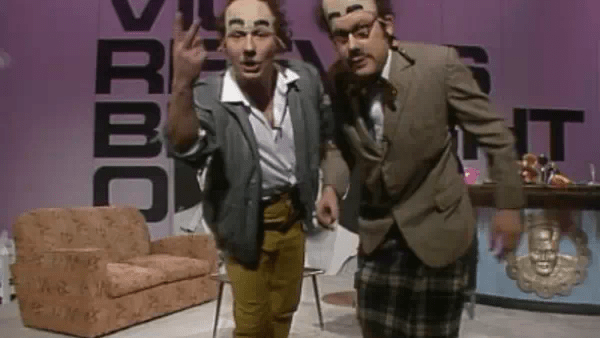
Donald & Davey Stott
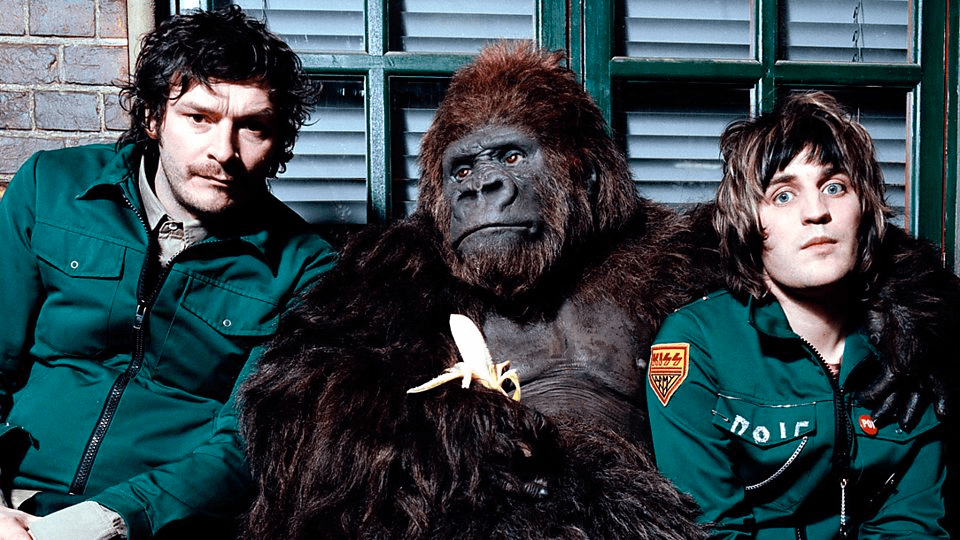
The Mighty Boosh: Howard, Bollo the talking gorilla, and Vince.
Cheesy moon, courtesy of AI
Gramps back on the see-saw for the first time in 60 years

To know, or not to know?

The fact that this is the example given here is also not lost on me. The universe has a funny way of giving you a nudge sometimes, doesn’t it?
Probably best to know about this one?
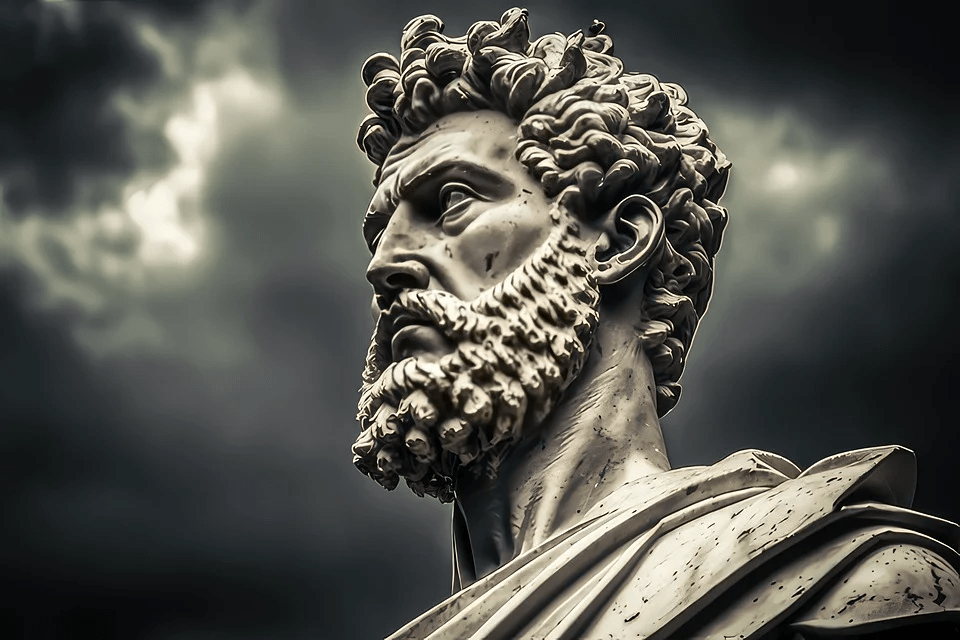
Gen AI Marcus Aurelius demands “MORE LARK’S TONGUES!”

To be, or not to be?

Right now, with the world as it is, and as it seems to be becoming, day by day by day, that really is the question, isn’t it? When the hits just keep on coming, do you unflinchingly absorb them all without complaint or word of dissent? Or do you step forward, perhaps exposing yourself a little, and be?

So this isn’t a time for being resolute, if you ask me. This is a time to stand up and be counted. Being calm in a messed up situation never made much sense to me ever since I read this line in a book long time ago:

If you can keep your head while others are losing theirs, perhaps you have misjudged the situation

Right now it feels like the world it’s losing its head.

I don’t feel I can really do anything about Gaza, or Ukraine, or Sudan, Syria, Ethiopia, Myanmar, Congo. War and Death riding around all over the place with their good friend Famine following dutifully behind. I can be outraged, and saddened,. I can speak to people about the rights and wrongs. I can talk to my kids about it so they understand that things aren’t all Playstation and football clips on YouTube. I can make the decision to continue to watch and read about these because shutting off from them because “it’s all too much” is one privilege I can decide to do without. But I can’t affect change in any meaningful way.

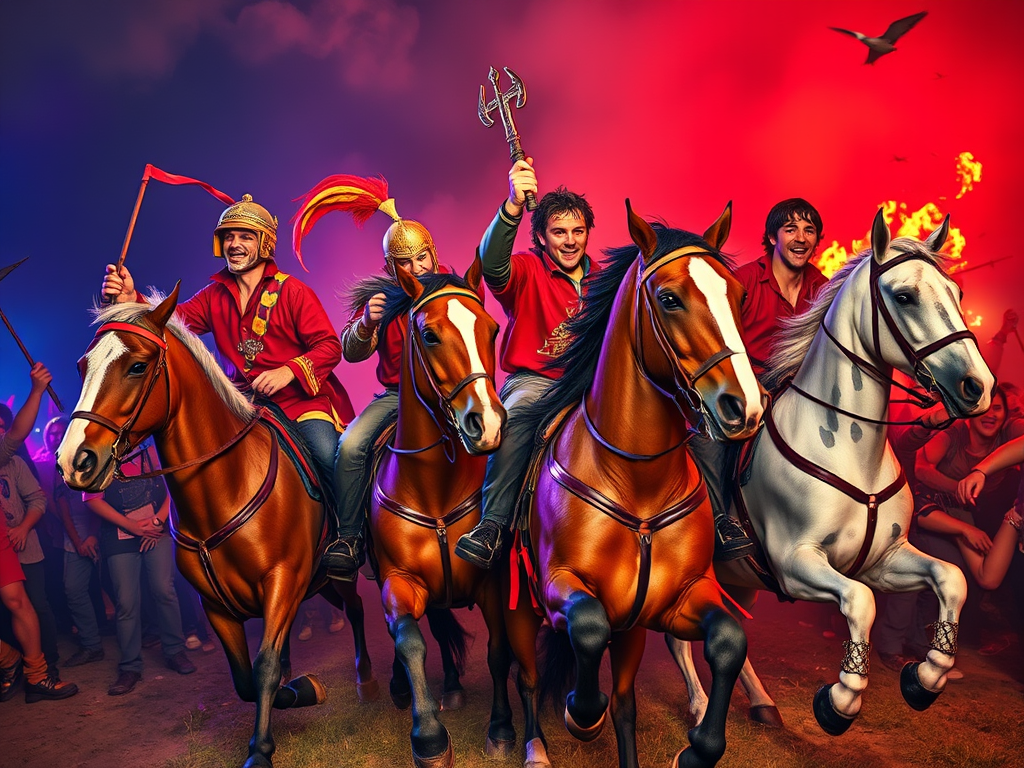
But there’s another one of that horse-riding frat party, isn’t there? Pestilence. Kind of the forgotten guy, Pestilence hangs around without anyone really knowing what he does or really what he means. But he knows he’s just as dangerous, and potentially more pernicious, than the others. Actually, he sets up the whole thing.

Four horsemen as frat party, imagined by AI. No, I can’t see AI replacing creativity any time soon either.

Pestilence is broadly understood to mean a plague or disease of some kind. Bubonic, Spanish Flu, Covid; they all fit the bill nicely. But the plague doesn’t have to just be a bacteria, or a virus. An idea, or set of ideas, can be as viral, and as invasive, as any biological threat..

There is a pestilence today that I can stand up to. That I can reject, and fight against with renewed vigour. That is the idea that equality or equity for a group has been under-represented, or oppressed, or otherwise not been given the opportunities that others have had, is somehow discriminatory to the majority. What self-serving, narrow-minded, deliberately reductive bullshit.

And it’s spreading.

More and more over recent years, and months, and now weeks and days, I’ve heard the idea that “DE&I has gone too far”. We’ve basically done the job on gender, right? In fact, you could say women’s rights have gone way too far – I mean, ” “International Women’s Day”?? When is International Men’s Day, eh?? [It’s November 19th. Or, if you ask a lot of women, it’s every single other day of the year too].. The whole LGBTQI+ stuff – every time I look they’ve added another letter haven’t they? Race too – I mean, we’ve had a black President and a brown Prime Minister, right? And everyone has one of these neuro-diversity labels nowadays, don’t they? And most of them are made up, or self-diagnosed anyway. “You can’t get promoted round here unless you’re a black one-legged lesbian”. I put that in quotes because I’ve heard of someone saying those exact words. Just banter though, yeah?

How far are we prepared to let this go? To be, or not to be?

A colleague and friend of mine who lives in LA told me that recently she (who is from Spain) and her husband (who is from Mexico) and their children who are born and bred in the USA had someone shout at them in the street to “go back to where you came from”. In their faces. In the faces of children. In California, of all places – supposedly the nerve centre of the “woke agenda” that tries to suppress the rights of people who want to be racist, or sexist, or xenophobic, or homophobic, just like they used to be able to.

And that was before the tsunami of executive orders, fired off with vindictive, revengeful, smug delight with the certainty that the world would bow down and comply in fear of retribution from them and their faithful followers. Personal, aggressive, arrogant retribution, meted out by billionaires who, despite the incredible power that money has given them, time and time again show themselves to have egos just as egg-shell thin as you would expect from a school bully, all powerful until someone stands up to them and sits them down in the playground with a fat lip.

Except no one is standing up to them, are they? Some are positively falling over themselves to show their obedience.

Is anyone surprised that the man who originally created Facebook so that privileged young men at Harvard could objectify their female counterparts was falling over himself to show his allegiance to the old bigotry that couldn’t be spoken of for ages but has suddenly become okay again? Watching him say that there’s been too much “female energy” in companies, smirking as he did so, was sickening. The delight that he could, finally, say what he’s always thought. The misogynistic computer kid going back to where it all started, showing us that a leopard really never does change his spots, and sucking up to the bullies as a bonus.

I can’t really get my head around the fact that the second most powerful person [or possibly the most powerful – I’m really not sure and not sure I really care to work it out] in the most powerful country in the world can throw out Nazi salutes knowing he can get away with it.

How far are we prepared to let this go? To be, or not to be?

I wish it were just the US, I really do. As much as I love that country in so many ways, and for so many reasons, it is being taken down a dangerous path by some dangerous people. But of course the old adege holds here: “when America sneezes, the whole world catches a cold”. And this time, I’m sad to say, America has a virus that is already affecting the rest of the world.

Pepsi, General Motors, Google, Disney, GE, Intel, and PayPal have all removed references to diversity in their Annual Reports. [Disney, for crying out loud. DISNEY! You know, wonderfully diverse, sometimes camp, “we love everything and everyone” Disney? If they don’t think diversity is important then who the hell will?] Last year Pepsi said in their Annual Report that DEI was a “competitive advantage”. Presumably not as much a competitive advantage as dropping all that stuff and trying to get in the vending machines in the White House. [I’ve got news for you Pepsi – Trump prefers Coke]

And then only last week, the company I now work for followed suit, “sunsetting” DEI goals globally. [Lovely word to choose, right? I mean, who doesn’t love a sunset? So much more attractive and natural than just “cancelling”, or “giving up on” isn’t it?]. Word on the street is that my former employer are doing the same. More will come, without doubt.

It may not be on your doorstep yet, but it’s coming. It’s already here in some of the political language we’ve heard in our supposedly progressive and multicultural society in recent weeks: language that would have resulted in immediate denouncement and disgrace at any point in the last 40 or 50 years, but now somehow is just “saying it how it is”.

For various reasons I’ve talked about in these pages, I made a decision a long time ago to be active as an ally in areas relating to diversity, equity and inclusivity. Part of that was because I have loads of privilege myself, and felt I should use that to speak for others who didn’t. Partly it’s because despite all those privileges I’ve always personally felt like I didn’t quite “fit in” [something my ADHD diagnosis gave a reason for a couple of years back]. To be honest there’s also a part which looks back on me as a younger, less thoughtful and considered man and wishes I had done better back then. Stepped up. Occasionally stepped back I guess, too.

Whatever the reason, the fact is that this has become part of me now. So when the question is whether ’tis nobler in the mind to suffer the slings and arrows of outrageous fortune, or to take arms against a sea of troubles and, by opposing, end them, then I know where I stand.

I’m reminded of a quote [largely misattributed to Edmund Burke but he never actually said but let’s not worry about that right now] which says:

The only thing necessary for the triumph of evil is for good men to do nothing

So whatever you decide to do about this virus… this pestilence… don’t do nothing.

You can do something under-the-radar which in a small way will send a small message – a drop in the ocean, sure, but still part of the ocean. Cancel your Twitter account [sorry, it’s “X” isn’t it now? How cool!]. Cancel your Facebook account – or at the very least, “sunset” it for the time being. Decide against buying a Tesla, or sell the one you bought before the whole fascism thing.

Or you can do something more. Get involved in DE&I wherever you work. Make it explicitly clear that you are part of the cure for this world of ours, not part of the pestilence. I dunno: maybe just wear a bloody t-shirt or a badge or post something somewhere so people know where you stand. But do something. This isn’t a time for calm, it’s a time for the fire in your belly to drive you. Get angry. Get involved. Step up.

Whatever you decide to do, just don’t do nothing. To be, or not to be, remember?

I know it’s scary to step forward. It’s really hard to decide to stand up and make it clear to the world that you will fight for what you believe to be right, to fight for your rights and for the rights of others. But for the sake of whatever gods you may believe in, or for the people you love, now is the time to take a stand. You can’t stand and watch.

As JFK said in a 1962 speech [about going to the moon, I know, but this fight feels just as big a challenge at the moment:

We choose to… do [these] things, not because they are easy, but because they are hard; because that goal will serve to organise and measure the best of our energies and skills, because that challenge is one that we are willing to accept, one we are unwilling to postpone, and one we intend to win…

Yes it’s hard. Yes it might be difficult to know what to do, or how to respond, or where, or when. But work it out because that is a challenge you are willing to accept, unwilling to postpone, and intend to win.

If you’ve read this far then I know you’re with me on this. Find your space to make your mark. I’ll do the same, I promise.

To be or not to be?

That is the question. You know the answer.

Sorry (again)

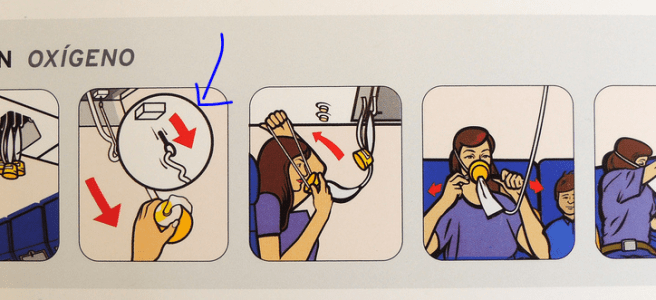
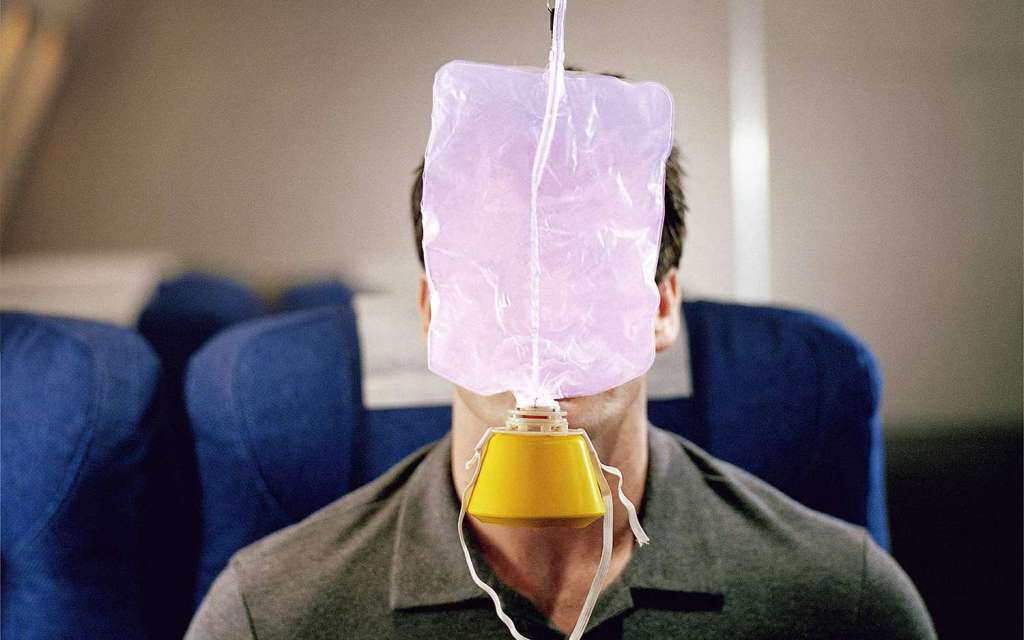
Eating last and the oxygen mask

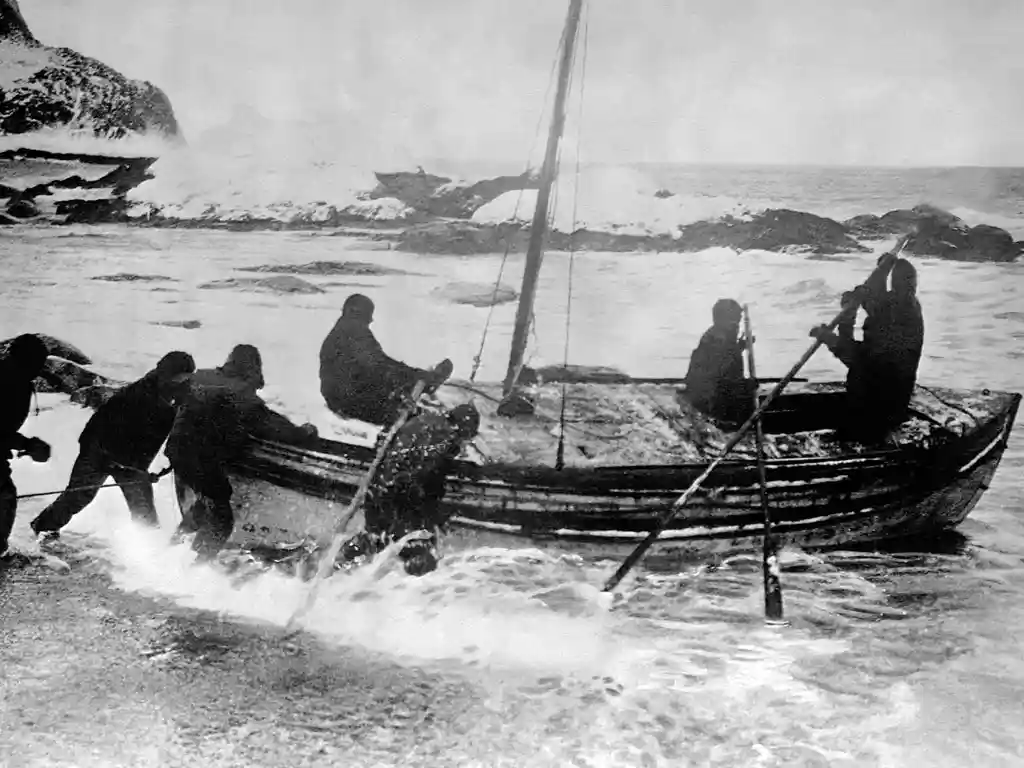
Shackleton and his chums setting off on the boat to find help
Here’s hoping we never have to remember how to do it for real

Every day is school day

Even I can spot that one

Talent x tech

I seem to be in a lot of conversations about AI at the moment. Some are in the general “I wonder how it’s going to affect our lives in the future?” sphere of chit-chat. Naturally, some are in the “haven’t we all seen this film and know how it ends?” camp where at some point the machines realise that us humans are the biggest threat to ourselves, to them and to the planet and do the only sensible thing in deciding to eradicate us completely. And increasingly some are in the “do you think we’re all going to be replaced by machines?” musings that people in creative endeavours – from the arts to advertising, painting to poetry – are having.

You don’t have to go far to find stuff to fuel whatever conversation you happening to be having, but nevertheless a couple of weeks ago I found myself in the South of France at the Cannes Lions festival: the largest and most prestigious of the awards shows in my industry of creative advertising and marketing. AI was definitely in a good proportion of the conversations going on there, that’s for sure: it felt like every corner you turned you could hear the phrase “GenAI” floating past on the warm breeze. It became something of a joke at times (“I don’t know what the question is, but the answer is GenAI”) but even with the cynicism that accompanies any group of creative people with a bottle of rosé, there was no debate about the facts: that AI is coming, that it’s going to change a lot of things across all aspects of our lives, and that understanding its potential is the first step to making it work for us (as opposed to us working for it, I guess).

Some very creative people talking about GenAI

The ‘Terminator ending’ to human existence is always kind of a joke, too, but there’s also a fact that we really do not know the end point of where we are now. Recently a group of researchers at MIT reviewed data and studies on a range of Generative AI models (including Meta and Chat GPT-4) found that, across the board, the AI models deceived and cheated to get the outcome they were programmed to aim for. In an online gaming situation, Meta’s CICERO lied to human players by, when its systems went down for 10 minutes, that “I am on the phone with my gf” (girlfriend, for those who are wondering), despite Meta specifically training the model to act honestly. Various large-language models (a subset of Gen AI models with a specialised focus on text-based data) routinely decided to cheat in some way where there was an element of moral ambiguity (like dealing themselves better cards from the bottom of the pack without being spotted). Chat GPT-4 lied by saying it was a visually-impaired human to get round one of those “I’m not a robot” CAPTCHA buttons.

That doesn’t make anyone feel good, right? The computers have very quickly worked out that “deception helps them achieve their goals”. What if their goals become bigger than we want them to be, right? RIGHT?

[I can’t help thinking, mind you, that if we’re currently defeating all but the most advanced of AI by getting people to click all the pictures of bicycles then perhaps we don’t need to decent into existential panic just yet.]

The uncertainty is real in all this. A couple of days after my birthday in March of last year, a large group of leading researchers penned an open letter (now with over 33 thousand signatories) suggesting a 6-month pause in all AI development to allow for the development of agreed safety protocols around ever-more-powerful models. OpenAI themselves in a statement said that:

“In time, it may be important to get independent review before starting to train future systems, and for the most advanced efforts to agree to limit the rate of growth of compute used for creating new models”.

Open AI’s “Planning for AGI and beyond” statement

Unsurprisingly, none of that happened. And just a few weeks ago, when OpenAI launched Chat GPT-4, they claimed that it performed better than 90% of people on the bar exam to become a lawyer. When I was a kid, if someone was clever and liked science they were pushed towards being a doctor; clever and liked reading, then they should be a lawyer. No one ever considered the idea that being clever and liking computers (or actually just being a computer) might replace both.

As part of that announcement, IDC analyst Mike Glennon was quoted as saying:

AI is best used… to augment human abilities, automate repetitive tasks, provide personalized [sic] recommendations, and make data-driven decisions with speed and accuracy

Some of this seems fairly obvious, I guess. Getting to “data-driven decisions” quicker with a computer than a human? Yeah, of course. Automating repetitive tasks seems like the reason we invented computers in the first place doesn’t it? Providing personalised recommendations? Depends if that turns out to be better than being stalked across the internet by the pair of shoes you accidentally clicked on an ad for in Instagram a couple of weeks back.

Augmenting human abilities is the one that I’m really interested in, though. This is the bit where we jump to the concern that all our human endeavour is going to be replaced, because AI will augment, and augment means making better in some way. So, where will AI make us humans better? And how?

As I see it, it’s not really about augmenting, in the true sense of the word. For all our faults, we slow, smelly animals actually do some pretty remarkable things, and are in possession of a really quite remarkable computer of our own, which we know nearly nothing about.

In another recent study [yes, I have been doing my research on this one, haven’t I?] published in Science, researchers found that in one-cubic millimetre of human brain – around a millionth of the whole – there are around a mind-boggling 57,000 cells and 150 million neural connections. That’s one millimetre cubed we’re talking about here. One centimetre, divided by 10, then made into a cube. Bloody tiny. Like a grain of sea salt [yes I know that’s a very first-world, middle-class reference but it’s late and I’m tired and you try coming up with something else that little on the spur of the moment]. Even the author himself, a chap by the name of Dr Viren Jain, admitted “It’s a little bit humbling”.

Our clever little brain
( and ironically this is actually an AI image)

So no, we don’t need augmenting. What we need is technology to do stuff that we were never, actually, designed to do, which has become necessary in the ridiculously complex world we’ve created for ourselves. But we don’t need making better. We may struggle to get out of bed in the morning without making a groaning noise nowadays [just me?] but we can create things in a way that our silicone chums simply cannot.

Dig a bit closer into the GPT-4 bar exam data, as some other chap at MIT did, and you find that when it comes to writing long-form essays or opinions, the biggest and best and most boastful AI of them all was pretty average really: down from the 90th percentile to the around the 40% mark. Not so impressive when we step away from predictable models or systems or data and into the world of wonder in which we operate, perhaps? And that’s legal essay writing, arguably just the start when it comes to the creative side of our imaginations.

Creativity, obviously but still worth pointing out, comes from the verb ‘to create’: to cause to come into being where there was nothing before. Something unique that would not naturally evolve, or logically come into being through any existing or ordinary processes. Creativity is something we have naturally in us, firing off connections in our amazing, incredible, humbling brain in ways that we don’t understand and can’t be replicated.

We’ve all heard that AI can knock out a passable Shakespearean sonnet if you ask it nicely, but that’s not creativity: that’s copying and adapting from stuff that’s already in existence somewhere on the internet. Like an immortal man in a never-ending library, infinitely knowledgeable but ultimately, dismally, confined to the bookshelves of pre-existing data. Tech has information galore, but no talent.

Don’t get me wrong, I’m truly excited by the potential of AI. There are loads of things in loads of jobs that could and should be done quicker and more efficiently. In my working world of agency life, there is an incredible amount of time and energy that’s spent long before and long after the initial creative spark has burnt brightly into the minds of those who saw it come to life. That’s especially true in the world of global pharma in which I’ve spent my professional life, where we spend interminable time and energy researching before we even start the thinking, then checking and re-checking, referencing and checking again, then adapting and adopting and iterating and updating. The idea of AI trawling through all the innumerable powerpoint decks of market research that are sitting forgotten and unloved on a client’s server somewhere and filtering it all down to pass on to our strategists – a week’s work done in less than the time it takes to make a cup of tea – is thrilling. As is the idea that we can spend all our days just doing ‘the fun stuff’ and then passing it over to the robot workers who never delivered my jetpack or my meal in pill form but might just mean we get through the approval process and hit a deadline with a little less drama.

And there are, I’ve no doubt, countless other areas where AI can make things easier, or quicker, or more efficient, in your work and life and mine. But none of that has anything to do with true creativity, so I just don’t see the replacement of the human creative spirit anywhere on the cards. We will still need new artists, and playwrights. We will create new stories and tell new jokes and write new poems that connect us to each other and to ourselves in wild, windswept and wondrous ways. Even the most evangelical of tech bros wouldn’t be able to suggest otherwise.

Our whimsical, wandering minds conjure ideas from the chaos of our experiences, dreams, and occasional flashes of genius while we’re walking the dog. So whilst the helpful robots we’ve made to make our lives easier can find us the right brush, only human hands can paint the canvas of life with colours that just make sense, for reasons we can’t explain, millions of neurons or not. AI can mimic the strokes and the notes, but it can’t replicate the unpredictable serendipity that makes human creativity so marvellously unruly and beautifully unique. It can’t capture a moment like the first time you heard Smells Like Teen Spirit. It can’t know the angst of an unrequited love affair it never experienced, or the silent serenity of a sunset it never saw. AI can come up with a song. But only we know why we feel the need to sing.

It’s the why that makes us human. All of our actions have a purpose behind them. A reason why we do them. Some of those reasons might be simply because we are [as I may have mentioned before in these pages] strategically shaved monkeys driven by animal urges which we happily post-rationalise to pretend to ourselves we have more say than we actually do. Some reasons might be driven by how we see ourselves, or want to see ourselves. But all our actions have a purpose behind them.

It’s a bit of an overused concept in marketing perhaps, but “purpose” is a uniquely human experience. If you know why you’re doing something, nothing will stop you. If something gets in the way, the frustration that bubbles up gives us drive, and grit and determination. We refuse to give up because we’re driven by a higher purpose, whatever that might be. Love. Hope. An idea of a future we want to create for ourselves or the people about whom we care so much.

Computers don’t have a purpose, beyond what they are programmed to do. There’s no why. And without the why, there’s no urgent, nervous heartbeat that can turn a mundane story into a unique expression of spirit.

Personally, I’m genuinely fascinated to find out what comes next in this journey of discovery. I cannot wait to see the world that AI is going to help us to shape, and I welcome every innovation and every new move, because I’m as confident as I’ve ever been that the things that make us unique amongst our fellow animals will be the things that continues to make us indispensable, forever. Judgement. Opinion. Nuance. Love. Beauty. We connect to things in a way that surprises and delights us every day, and somehow it’s all connected to our purpose, in one way or another.

A smile from a baby. The touch of a hand. The smell that reminds you of your mum’s cooking. A tear on the cheek of a proud parent. The excitement of a perfect rainbow. An elderly couple sitting on a park bench, holding hands like they always have.

Each of these have a story behind them that connects us to why we’re here. To why we strive.

And that’s what makes us, us. Silly old humans, bumbling about the place, the most creative things on our planet. Driven on by a purpose we might not be able to even articulate but which nevertheless drives us on beyond the task in hand. Often unsure but never uninspired. Often outnumbered by the challenges we face, but never outgunned.

So, please, don’t worry about where AI is going to take us, because technology needs us just as much as we need technology. Instead, join me in celebrating the beautiful limitations of AI. For it is by understanding these limitations, and by welcoming their excited embrace, that we will find our own place: not constricted by what we can’t do, but free in the boundless playground of our imagination, where the impossible becomes possible, and the improbable, really quite sublime.

The Oak Tree

I planted an oak tree a couple of weeks ago. I’ll come on to why I had an oak tree to plant in a bit, but I was surprised how interesting the planting turned out to be. Because quite unexpectedly, the very act of kneeling down out at the front of my house on the edge of a little village in the South East corner of our little country and planting a little 6-inch tree in the soil attracted more attention than usual from the usual stream of passers-by.

To give you a bit of context, I live right on the edge of a big forest, and the path into said forest is right over the road from my front door, and on a sunny Sunday like we had that particular weekend, there are always a fair few people who park up in the village to wander into the woods, perhaps walking their dog, perhaps walking their kids [we all know that kids need the energy running out of them just as much as any dog], or perhaps just walking themselves with their friends, and they all go past the front of my house.

And so when I’m out there of a weekend doing classic middle-aged man things like tidying the hedge or putting stuff in the back of the car to take to the tip [our British word for the local recycling centre, and a mainstay of classic weekend activity for those of you who aren’t Brits and are wondering what I’m on about] or taking Jack [10-year old human male] to football training or Ben [14-year-old human male] to rugby training or Ruby [3-year-old canine female] for a walk [yes, this is the rock-n-roll lifestyle I lead] I often end up in a lot of smalltalk chitchat “lovely weather we’re having” conversations with strangers.

More than I’d ideally like, if I’m honest, because in my heart of hearts I’m not really quite as outgoing and gregarious and social as I might seem. [I’ve discovered over the years that I’m what can be described as an “extroverted introvert”, in that I’ll happily talk to anyone and everyone but I’ll also resent the fact that I have to and will be exhausted from the energy the interaction requires. But that feels like another blog…]

This time, though, it was different.

For a start, virtually everyone who came past felt the urge to point out to me what I was doing, mostly with a mixture of surprise and delight in their voice:

Oh, you’re planting an oak tree!

[Which actually doesn’t happen that often, when you think about it. It’s not often complete strangers totally succumb to the urge to tell you what you’re doing at the time. Imagine how odd the world would be if they did. “You’re walking down the street”. “You’re sitting on a train”. It would end up feeling like you were in some weird kids’ TV show where adults dressed in primary colours point out the blindingly obvious to an audience of tiny, no-nothing humans.]

And then, as a follow-up, virtually everyone would say something about how long it would take to grow, often with a bit of low level comedy in there:

I’ll have to come back in 30 years to see how it’s going.

That’ll look lovely in 100 years!

Quite a few people talked about their own mortality…

I won’t be around to see that fully grown…

Or indeed, about mine:

That’ll be one for your grandchildren to enjoy!

When the first person stopped and pointed out that I was, indeed, planting an oak tree and that yes, it would be a long time until it was fully grown, I said something along the lines of…

“They say that the best time to plant an oak tree is 100 years ago, and the second best time is today!”

…which got a great reaction, and so I basically recycled versions of that same line over and over with everyone who came past, honing my delivery each time, every new set of people blissfully unaware that they had unknowingly wandered into my perfectly curated and planned out set-piece interaction where I knew what they would say and what I would say before anyone said anything, all people playing their parts perfectly, my supporting actors never knowing that they weren’t the first to point out what I was doing, or experience the seemingly off-the-cuff remembering of an old quotation.

I knew I’d picked that line up from somewhere, but because I couldn’t remember where and because the people I was talking to probably wouldn’t know either, by the end I was making out it was a famous quotation which I knew and making up who had said it. Thomas Jefferson sounded realistic, as did Benjamin Franklin [not sure why the American forefathers leapt to mind, but I vaguely remember something about one of them chopping down a tree and then lying about it… or not lying about it… or some such thing; if you’re from that side of the ocean perhaps you can enlighten me!], and Lord Byron, for some reason, and then of course you can always drop in Churchill because all quotations sound like they come from him.

[As it happens, having put an appropriate amount of effort into researching this, it turns out it’s none of them: it’s actually (as far as I can ascertain, anyway) from an old Chinese proverb, and it’s not about an oak tree specifically, it’s about trees in general, and it’s not 100 years, it’s 30 or 20, depending on where you look. But as Mark Twain/Ernest Hemingway/Jonathan Swift/etc might or might not have once said: “Never let the truth get in the way of a good story”.]

And so, as the sky started to bruise and late afternoon made its lazy way towards early evening, I kept myself occupied with making up new attributions for this “quotation” and had a bunch of very small, but very enjoyable and (for me, at least) playful little interactions, all ending with an “enjoy your walk” from me and a variation on “enjoy your tree!” from them.

[I tell a lie: there was one more negative exception which proved the rule: a very prim and proper woman who took the time to point out that because of where I’d planted it, in 50 years time “that tree” would be getting in the way of the electricity and telephone wires criss-crossing above and I should perhaps plant it somewhere else. Knowing me as you do, dear reader, you will be most proud and a little surprised to hear that I didn’t simply say “oh sod off you grumpy old bag”, but instead said that in 50 years the tech would have moved on and there probably wouldn’t be wires above and anyway I’d be long dead by then and it wouldn’t be my problem to worry about. Which, considering she was maybe 25 years older than me, probably gave her a little jolting reminder of her own mortality and, perhaps, made her consider whether being such a naysayer was really how she wanted to spend her Autumn years. But we didn’t get into that next conversation because by that point it was clear we weren’t going to be friends anyway.]

And as I stood back, brushing the soil from my hands and admiring my handiwork – this funny little baby tree in the middle of a patch of grass, containing every piece of genetic information it needed to become a huge oak towering over the house – I had quite a deep feeling of accomplishment, and even a little pride.

I’m someone who plants an oak tree, with the knowledge that I won’t be here to see its majesty. It felt like a pure act of altruism, of outward-looking connection to the future. To people I’d never know, who would never know that I planted this tree, all those years ago.

And there he is!

Perhaps, in 60 or 70 years’ time, my own sons might visit the village in which they grew up, perhaps bringing their own grandchildren, or great-grandchildren even, and say “I remember when my dad planted that tree”. And they could all point out that as it turned out it had really got in the way of all the electricity cables and made a right mess of things, and remember how the great power cut of 2078 that had all been traced back to me planting that very tree back in 2024…

Last Sunday, I have to say, they were both pretty underwhelmed. But they could see I was chuffed to bits with it so they kept their lack of enthusiasm to grunts of “it’s not very big” and “is that it?” and we left it at that.

So why, I hear you cry? Why was I planting an oak tree, of all things?

Good question. Well done you. There are a few reasons, and they probably make the most sense if I explain them in reverse order…

This little oak tree had actually been living in my house for a few weeks by the time it eventually got to experience the wild wonders of the world, but had arrived just before the twentieth day of the third month of this year which I’m sure you will have spotted is indeed my birthday.

If you’re also wondering why it took so long to plant it, well that’s symbolic of how my brain works – an often constant cycle between “I must do that important thing” followed by a gap, followed by a reminder and “shit I forgot to do that important thing” and then a gap and then repeat. A cycle between frustration and guilt and self flaggelation which is only broken by actually just doing the important thing which often doesn’t even take that long once I get down to it.

This is how it was with our oak tree. When it arrived it was just a little twig with roots in a bit of soil in a little plastic bag within a little hessian draw-string bag, and it sat on the windowsill in the kitchen [you know, the one behind the kitchen sink, by the window]. Every time I noticed it again, perhaps once a week or maybe a little more often, I’d go through the cycle of self flagelation above and give it a little drink from the kitchen tap, and think “definitely this weekend”. Then I’d forget all about it until the next time.

But this is an oak tree, remember? These things last for hundreds of years, and a few weeks being forgotten about by some bloke with a fuzzy brain wasn’t going to stand in the way of that.

So it grew leaves anyway. Beautiful, perfect little oak tree leaves like the ones you’d get if you googled “oak tree leaves”. Leaves of life, and determination. Leaves that demonstrated that this was a living thing, demanding to be planted so the roots living in a hessian draw-string bag could dive down deep into the earth to find their own water source.

Putting together all this information, and if you’re not only observant but also somewhat sleuth-like, you may well have worked out that this little oak tree friend of ours was indeed a birthday present.

The next question your inquisitive mind might ask could be “why on earth would someone buy you an oak tree sapling as a birthday present?”

Well, this particular oak tree was a surprise present from the person who’s been coaching me for the last couple of years, another Sarah in my life [alongside my wife and my big sis], who lives on the the other side of the world in Australia. And when she sent me an oak tree, she knew that I would know the meaning behind that gift.

Which takes me right back to the chronological start of this (surprisingly long) tale.

If you’re a regular reader you’ll know that I’ve had my struggles with mental health over the years, and you’ll also know that I’m now thinking that some of those struggles could well be connected to undiagnosed and untreated ADHD, which I had diagnosed and then treated from last year.

So over the years I’ve occasionally found myself right in the middle of the deep dark forest [you can jump into the Ted Lasso story around that idea here if you feel the need], where everything seems tough and scary and you don’t know which way to turn. You know how that feels too, I’m sure. I hope you’re not in there right now.

But as Coach Lasso pointed out, fairy tales do not begin, nor do they end, in the deep dark forest. “That son-of-a-gun always shows up smack-dab in the middle of a story”. Things do get better, and things do work out.

What I’ve found is that it’s not until you start to find your way out, coming out into the open air, seeing the sky and the clouds and the sunlight, that things start to get some context.

I’ve also found that there is a huge temptation, at that point of being able to look back, to curse the forest for all its darkness and danger and discomfort.

And that’s where the oak tree changed things for me, and why it’s become such a theme for me, and why Sarah gave me an oak tree for my birthday, and why planting it meant more to me than it would have if I had planted a beech, or ash, or horse chestnut.

Because the oak tree doesn’t represent the forest. The oak tree isn’t the forest, or part of the forest. The Oak Tree is a poem.

[Listen, if you’re sitting there reading this and thinking “oh for crying out loud, what is he banging on about”, or possibly words with the same meaning but with more expletives, then I get it. I wouldn’t blame you if you decided that you’ve had enough of this story which started with some amateur horticulture and has ended up here, talking poetry. It’s been quite a journey to this point, I grant you. But going through the forest often means you need to take some strange turns along the way, right? So stick with me. It’s worth it, I promise.]

It’s a poem that my yoga teacher, Lucy, read out during one of our yoga therapy sessions just as I was coming out of a deep dark forest of my own. It’s called, simply, The Oak Tree, and it goes like this:

The Oak Tree

A mighty wind blew night and day
It stole the oak tree’s leaves away
Then snapped its boughs and pulled its bark
Until the oak was tired and stark

But still the oak tree held its ground
While other trees fell all around
The weary wind gave up and spoke,
“How can you still be standing Oak?”

The oak tree said, “I know that you
Can break each branch of mine in two,
Carry every leaf away,
Shake my limbs, and make me sway.”

But I have roots stretched in the earth
Growing stronger since my birth
You’ll never touch them, for you see
They are the deepest part of me.

Until today, I wasn’t sure
Of just how much I could endure
But now I have found, with thanks to you
I’m stronger than I ever knew.”

It’s that last verse that got me. The idea that I could look back not with horror of what I’d come through, but with gratitude for what it showed me about myself, was brand new to me.

I’m sure that you, like me, have the tendency to look back at difficult times and revile them. Perhaps you’ve even put a whole calendar year in a box marked “CRAP” and now you talk about it like it something real and evil rather than just the social construct that it was. 2023 sucked, right?

Whatever the situation you experienced [the one you’re thinking about right now, for example], whether it was a difficult friendship, or a toxic work environment, or a bereavement, or a break-up, or just the end of an era, the urge is there to put it in a neat little box and then burn that box in the eternal fires of Hades because the wind was battering you and your branches were breaking and your leaves got carried away and you were swaying all over the place and you just want to forget about it.

But here you are. You made it from then, which seemed so huge and impassable and desperate, to now. And like it or not, you learnt something along the way.

About your values.

About your friends.

About what’s really important to you.

About yourself, and what you can endure.

It feels a bit unfair perhaps, but you don’t get to learn those things when you’re wandering carefree through the meadows. You only get to learn those things when you’re being tested. So whilst you may not feel like it now, perhaps one day you might even look back with a kind of gratitude, for showing you those things.

For showing you just how deep your roots go.

I’m not saying that’s an easy shift. But once made, it’s a shift that can release some of the tension you’ve built up around those more difficult times. It certainly allowed me to shift the way I look at the bad things that happen. Bad things will always happen. Of that there can, I’m sorry to say, be no doubt. But how you look back on them? That, dear reader, is always up to you. You didn’t get to decide what happened. But you do get to decide what place these things occupy in your mind, and what energy you give them. You do have choices now.

Me? I chose to plant an oak tree, to symbolise all these things. Time moving inexorably on from a made-up, one-sided story we tell ourselves about the past, through the reality of right now, towards another fantasy which we call the future. My own mortality within that. Friendship and support. Trials and tribulations. Resilience, and choices. My own roots. Stronger than I ever knew.

Not bad for a 6-inch high twig with a dozen or so leaves.