I seem to be in a lot of conversations about AI at the moment. Some are in the general “I wonder how it’s going to affect our lives in the future?” sphere of chit-chat. Naturally, some are in the “haven’t we all seen this film and know how it ends?” camp where at some point the machines realise that us humans are the biggest threat to ourselves, to them and to the planet and do the only sensible thing in deciding to eradicate us completely. And increasingly some are in the “do you think we’re all going to be replaced by machines?” musings that people in creative endeavours – from the arts to advertising, painting to poetry – are having.
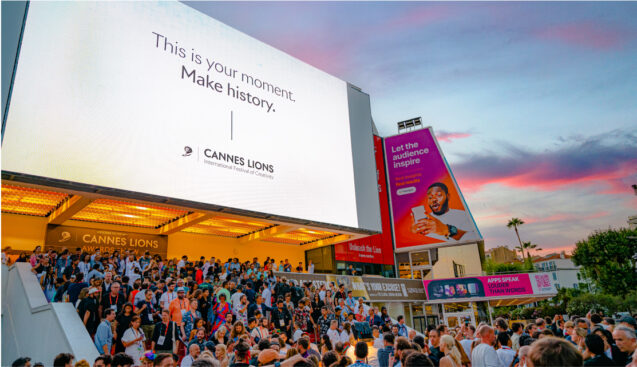
You don’t have to go far to find stuff to fuel whatever conversation you happening to be having, but nevertheless a couple of weeks ago I found myself in the South of France at the Cannes Lions festival: the largest and most prestigious of the awards shows in my industry of creative advertising and marketing. AI was definitely in a good proportion of the conversations going on there, that’s for sure: it felt like every corner you turned you could hear the phrase “GenAI” floating past on the warm breeze. It became something of a joke at times (“I don’t know what the question is, but the answer is GenAI”) but even with the cynicism that accompanies any group of creative people with a bottle of rosé, there was no debate about the facts: that AI is coming, that it’s going to change a lot of things across all aspects of our lives, and that understanding its potential is the first step to making it work for us (as opposed to us working for it, I guess).
The ‘Terminator ending’ to human existence is always kind of a joke, too, but there’s also a fact that we really do not know the end point of where we are now. Recently a group of researchers at MIT reviewed data and studies on a range of Generative AI models (including Meta and Chat GPT-4) found that, across the board, the AI models deceived and cheated to get the outcome they were programmed to aim for. In an online gaming situation, Meta’s CICERO lied to human players by, when its systems went down for 10 minutes, that “I am on the phone with my gf” (girlfriend, for those who are wondering), despite Meta specifically training the model to act honestly. Various large-language models (a subset of Gen AI models with a specialised focus on text-based data) routinely decided to cheat in some way where there was an element of moral ambiguity (like dealing themselves better cards from the bottom of the pack without being spotted). Chat GPT-4 lied by saying it was a visually-impaired human to get round one of those “I’m not a robot” CAPTCHA buttons.
That doesn’t make anyone feel good, right? The computers have very quickly worked out that “deception helps them achieve their goals”. What if their goals become bigger than we want them to be, right? RIGHT?
[I can’t help thinking, mind you, that if we’re currently defeating all but the most advanced of AI by getting people to click all the pictures of bicycles then perhaps we don’t need to decent into existential panic just yet.]
The uncertainty is real in all this. A couple of days after my birthday in March of last year, a large group of leading researchers penned an open letter (now with over 33 thousand signatories) suggesting a 6-month pause in all AI development to allow for the development of agreed safety protocols around ever-more-powerful models. OpenAI themselves in a statement said that:
“In time, it may be important to get independent review before starting to train future systems, and for the most advanced efforts to agree to limit the rate of growth of compute used for creating new models”.
Open AI’s “Planning for AGI and beyond” statement
Unsurprisingly, none of that happened. And just a few weeks ago, when OpenAI launched Chat GPT-4, they claimed that it performed better than 90% of people on the bar exam to become a lawyer. When I was a kid, if someone was clever and liked science they were pushed towards being a doctor; clever and liked reading, then they should be a lawyer. No one ever considered the idea that being clever and liking computers (or actually just being a computer) might replace both.
As part of that announcement, IDC analyst Mike Glennon was quoted as saying:
AI is best used… to augment human abilities, automate repetitive tasks, provide personalized [sic] recommendations, and make data-driven decisions with speed and accuracy
Some of this seems fairly obvious, I guess. Getting to “data-driven decisions” quicker with a computer than a human? Yeah, of course. Automating repetitive tasks seems like the reason we invented computers in the first place doesn’t it? Providing personalised recommendations? Depends if that turns out to be better than being stalked across the internet by the pair of shoes you accidentally clicked on an ad for in Instagram a couple of weeks back.
Augmenting human abilities is the one that I’m really interested in, though. This is the bit where we jump to the concern that all our human endeavour is going to be replaced, because AI will augment, and augment means making better in some way. So, where will AI make us humans better? And how?
As I see it, it’s not really about augmenting, in the true sense of the word. For all our faults, we slow, smelly animals actually do some pretty remarkable things, and are in possession of a really quite remarkable computer of our own, which we know nearly nothing about.
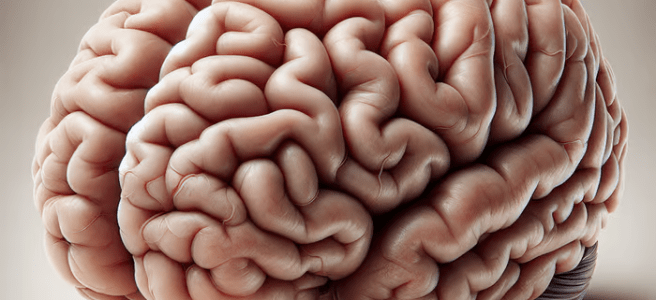
In another recent study [yes, I have been doing my research on this one, haven’t I?] published in Science, researchers found that in one-cubic millimetre of human brain – around a millionth of the whole – there are around a mind-boggling 57,000 cells and 150 million neural connections. That’s one millimetre cubed we’re talking about here. One centimetre, divided by 10, then made into a cube. Bloody tiny. Like a grain of sea salt [yes I know that’s a very first-world, middle-class reference but it’s late and I’m tired and you try coming up with something else that little on the spur of the moment]. Even the author himself, a chap by the name of Dr Viren Jain, admitted “It’s a little bit humbling”.
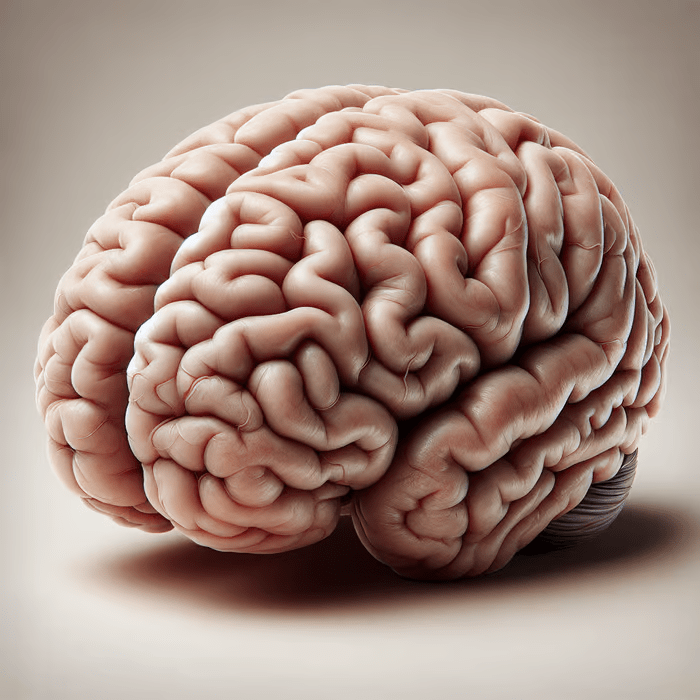
( and ironically this is actually an AI image)
So no, we don’t need augmenting. What we need is technology to do stuff that we were never, actually, designed to do, which has become necessary in the ridiculously complex world we’ve created for ourselves. But we don’t need making better. We may struggle to get out of bed in the morning without making a groaning noise nowadays [just me?] but we can create things in a way that our silicone chums simply cannot.
Dig a bit closer into the GPT-4 bar exam data, as some other chap at MIT did, and you find that when it comes to writing long-form essays or opinions, the biggest and best and most boastful AI of them all was pretty average really: down from the 90th percentile to the around the 40% mark. Not so impressive when we step away from predictable models or systems or data and into the world of wonder in which we operate, perhaps? And that’s legal essay writing, arguably just the start when it comes to the creative side of our imaginations.
Creativity, obviously but still worth pointing out, comes from the verb ‘to create’: to cause to come into being where there was nothing before. Something unique that would not naturally evolve, or logically come into being through any existing or ordinary processes. Creativity is something we have naturally in us, firing off connections in our amazing, incredible, humbling brain in ways that we don’t understand and can’t be replicated.
We’ve all heard that AI can knock out a passable Shakespearean sonnet if you ask it nicely, but that’s not creativity: that’s copying and adapting from stuff that’s already in existence somewhere on the internet. Like an immortal man in a never-ending library, infinitely knowledgeable but ultimately, dismally, confined to the bookshelves of pre-existing data. Tech has information galore, but no talent.
Don’t get me wrong, I’m truly excited by the potential of AI. There are loads of things in loads of jobs that could and should be done quicker and more efficiently. In my working world of agency life, there is an incredible amount of time and energy that’s spent long before and long after the initial creative spark has burnt brightly into the minds of those who saw it come to life. That’s especially true in the world of global pharma in which I’ve spent my professional life, where we spend interminable time and energy researching before we even start the thinking, then checking and re-checking, referencing and checking again, then adapting and adopting and iterating and updating. The idea of AI trawling through all the innumerable powerpoint decks of market research that are sitting forgotten and unloved on a client’s server somewhere and filtering it all down to pass on to our strategists – a week’s work done in less than the time it takes to make a cup of tea – is thrilling. As is the idea that we can spend all our days just doing ‘the fun stuff’ and then passing it over to the robot workers who never delivered my jetpack or my meal in pill form but might just mean we get through the approval process and hit a deadline with a little less drama.
And there are, I’ve no doubt, countless other areas where AI can make things easier, or quicker, or more efficient, in your work and life and mine. But none of that has anything to do with true creativity, so I just don’t see the replacement of the human creative spirit anywhere on the cards. We will still need new artists, and playwrights. We will create new stories and tell new jokes and write new poems that connect us to each other and to ourselves in wild, windswept and wondrous ways. Even the most evangelical of tech bros wouldn’t be able to suggest otherwise.
Our whimsical, wandering minds conjure ideas from the chaos of our experiences, dreams, and occasional flashes of genius while we’re walking the dog. So whilst the helpful robots we’ve made to make our lives easier can find us the right brush, only human hands can paint the canvas of life with colours that just make sense, for reasons we can’t explain, millions of neurons or not. AI can mimic the strokes and the notes, but it can’t replicate the unpredictable serendipity that makes human creativity so marvellously unruly and beautifully unique. It can’t capture a moment like the first time you heard Smells Like Teen Spirit. It can’t know the angst of an unrequited love affair it never experienced, or the silent serenity of a sunset it never saw. AI can come up with a song. But only we know why we feel the need to sing.
It’s the why that makes us human. All of our actions have a purpose behind them. A reason why we do them. Some of those reasons might be simply because we are [as I may have mentioned before in these pages] strategically shaved monkeys driven by animal urges which we happily post-rationalise to pretend to ourselves we have more say than we actually do. Some reasons might be driven by how we see ourselves, or want to see ourselves. But all our actions have a purpose behind them.
It’s a bit of an overused concept in marketing perhaps, but “purpose” is a uniquely human experience. If you know why you’re doing something, nothing will stop you. If something gets in the way, the frustration that bubbles up gives us drive, and grit and determination. We refuse to give up because we’re driven by a higher purpose, whatever that might be. Love. Hope. An idea of a future we want to create for ourselves or the people about whom we care so much.
Computers don’t have a purpose, beyond what they are programmed to do. There’s no why. And without the why, there’s no urgent, nervous heartbeat that can turn a mundane story into a unique expression of spirit.
Personally, I’m genuinely fascinated to find out what comes next in this journey of discovery. I cannot wait to see the world that AI is going to help us to shape, and I welcome every innovation and every new move, because I’m as confident as I’ve ever been that the things that make us unique amongst our fellow animals will be the things that continues to make us indispensable, forever. Judgement. Opinion. Nuance. Love. Beauty. We connect to things in a way that surprises and delights us every day, and somehow it’s all connected to our purpose, in one way or another.
A smile from a baby. The touch of a hand. The smell that reminds you of your mum’s cooking. A tear on the cheek of a proud parent. The excitement of a perfect rainbow. An elderly couple sitting on a park bench, holding hands like they always have.
Each of these have a story behind them that connects us to why we’re here. To why we strive.
And that’s what makes us, us. Silly old humans, bumbling about the place, the most creative things on our planet. Driven on by a purpose we might not be able to even articulate but which nevertheless drives us on beyond the task in hand. Often unsure but never uninspired. Often outnumbered by the challenges we face, but never outgunned.
So, please, don’t worry about where AI is going to take us, because technology needs us just as much as we need technology. Instead, join me in celebrating the beautiful limitations of AI. For it is by understanding these limitations, and by welcoming their excited embrace, that we will find our own place: not constricted by what we can’t do, but free in the boundless playground of our imagination, where the impossible becomes possible, and the improbable, really quite sublime.

 The Bartlett Bubble
wow!! 1Eating last and the oxygen mask
LikeLike